
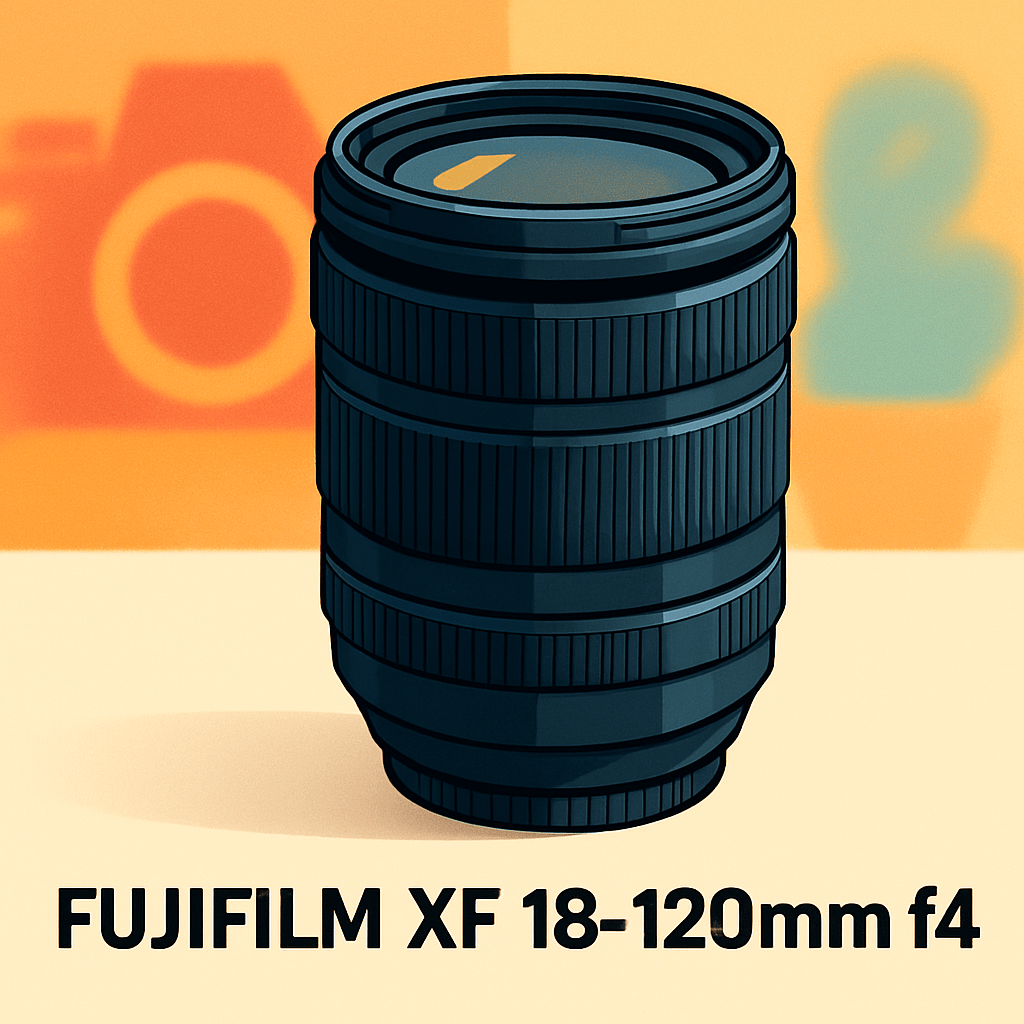
Want a single lens that can handle travel, events, and run‑and‑gun video without constant lens swaps?
The Fujifilm XF 18-120mm f/4 LM PZ WR is pitched as that one‑lens answer for hybrid shooters, with constant exposure, power‑zoom, stabilization, and weather resistance. I took it into the field across rainy streets, low light, and busy events to see how it behaves in real use.
If you’re a traveler, documentarian, or creator who values flexibility and fewer kit changes, this lens is aimed squarely at you. Make sure to read the entire review as I break down handling, sharpness, AF, stabilization, and who should (or shouldn’t) buy it—keep reading.

Fujifilm XF 18-120mm f/4 LM PZ WR
Constant-aperture travel zoom delivering smooth motorized zoom and quiet linear focus for video and photo. Weather-sealed build and edge-to-edge sharpness provide reliable all-day performance across wide-to-tele ranges.
Check PriceThe Numbers You Need
| Spec | Value |
|---|---|
| Focal Length | 18-120mm |
| Maximum Aperture | f/4 constant |
| Lens Mount | Fujifilm X-mount |
| Image Stabilization | Optical Image Stabilization (OIS) |
| Aperture Blades | 7 rounded blades |
| Minimum Focus Distance | 0.15 m |
| Maximum Magnification | 0.27x |
| Weather Resistance | Yes, weather-sealed construction |
| Lens Construction | 16 elements in 12 groups |
| Power Zoom | Yes, linear motor driven |
| Filter Size | 67 mm |
| Angle of View | 76° to 13° (35mm equivalent: 27-180mm) |
| Autofocus | Linear motor autofocus system |
| Weight | Approximately 460 g |
| Dimensions (Diameter x Length) | Approx. 75 mm x 115.6 mm |
How It’s Built
In my testing the Fujifilm XF 18-120mm f/4 feels like a sensible, one-lens companion rather than a toy. It’s got enough presence to feel sturdy but not so heavy that you avoid carrying it all day. On common X bodies it balances well, though on the smallest bodies you’ll notice the front a bit more — still usable for long shoots if you plan your strap or grip.
Build-wise I found it nicely put together and confidence-inspiring in light rain and dusty streets. The weather sealing actually mattered on a wet shoot — I kept shooting without worrying. The rounded aperture blades gave pleasing highlights at wider apertures, and the out-of-focus areas sit nicely for portraits and run-and-gun work.
The power-zoom is the standout I really liked; the linear motor makes zooming smooth and predictable for video. After using it for a while I also noticed a learning curve for stills shooters — it’s less instinctive than a mechanical zoom when you need to whip to a focal length. That immediate, tactile feel could be better for fast-action photo work.
Zoom speed stays consistent and I didn’t battle noticeable creep in normal use. Switching from wide to tele is quick enough for events, and the weather resistance gave me real peace of mind outdoors. For beginners this means fewer lens swaps, steady video zooms, and usable handling in mixed conditions.
In Your Hands
In the field the Fujifilm XF 18-120mm f/4 LM PZ WR lives up to its promise as a true wide‑to‑tele workhorse, covering scenic wide angles to useful short tele framing without a lens swap. That single-lens versatility makes it ideal for travel, events, and run‑and‑gun narrative work where quick reframing matters. You can lean on it for everything from environmental portraits to tighter subject isolation when the moment demands.
The constant f/4 aperture is a practical boon for video, delivering steady exposure while you zoom and simplifying stills metering in mixed light. It’s not a substitute for faster primes in dim interiors, but the balance between consistent light transmission and stabilization keeps usable shutter speeds practical in many real-world situations. Paired with the lens’s stabilization, it closes much of the gap you’d otherwise feel with slower glass.
Optical stabilization does much of the heavy lifting for handheld stills and run‑and‑gun video, noticeably improving static frames and offering reassuring steadiness when walking or panning. The system shines most when you need smooth, usable footage without a gimbal and helps maintain sharpness at longer framing. It’s not magic, but it raises your keeper rate in everyday shooting.
Close‑ups are a pleasant surprise; the near‑focus ability lets you capture food, product details, and textures with flattering separation. Working distance is comfortable for most tabletop work, and while edges can soften slightly at minimum focus, center detail and rendering remain clean and immediate. For quick detail shots on assignments it’s a genuinely useful tool.
The power‑zoom behavior is tailored for video: zoom ramps feel smooth and predictable once you settle into the control cadence, and starts and stops are mostly free of jarring jumps. The constant aperture keeps exposure consistent during pulls, and any aperture stepping is subtle enough not to distract in routine shoots. Autofocus and zoom transitions work together well for hybrid shooters aiming for continuity.
Weather sealing gives real confidence when clouds close in or dust kicks up, letting you continue shooting without constant worry. Balance and heft are sensible on common X bodies — noticeable, but not fatiguing for a full day of work — and the overall control layout is intuitive after a short learning curve with the powered zoom. Reliability across varied conditions is a strong suit.
All told, this lens performs like a compact kit in itself: dependable stabilization, friendly close‑focus, and video‑centric zoom behavior combine into a highly usable one‑lens workflow. For creators who need versatility and consistent exposure without swapping optics, it’s a practical, everyday performer you can rely on in real shooting conditions.
The Good and Bad
- Versatile 18–120mm range (27–180mm equiv.) covers wide to short tele needs
- Constant f/4 simplifies exposure and depth-of-field management across the zoom
- Optical Image Stabilization supports handheld stills and video
- Power Zoom with linear motor enables smooth, controlled framing for video work
- f/4 maximum aperture limits low-light performance and subject isolation vs faster lenses
- Power-zoom feel may be less immediate than mechanical zoom for stills shooters
Ideal Buyer
If your work lives at the intersection of photo and video, this is the lens to consider. The Fujifilm XF 18-120mm f/4 LM PZ WR is built for hybrid creators who want one-lens coverage plus smooth electronic zoom, a constant f/4 and reliable OIS. It feels at home on travel, documentary and run‑and‑gun event shoots.
You’ll love it if you prize exposure consistency while zooming and the confidence of weather sealing. The stabilization and linear motor make handheld stills and video easier, and the 0.15m close‑focus adds useful detail work without a dedicated macro. Weight and balance are reasonable for all‑day carry on common X bodies.
Pass on it if your priority is the absolute widest framing or the lightest pocketable kit. Choose the XF 16‑80mm f/4 for wider landscapes, the 18‑135mm for extra reach, or the tiny XC 15‑45mm to shave grams. Those options trade the 18‑120’s smooth powered zoom and constant exposure for different compromises.
In short, pick the 18‑120 when you want a single, weather‑resistant lens that simplifies mixed shooting days. If your work leans heavily toward pure stills, ultra‑low‑light or ultra‑compact travel, look to the alternatives instead.
Better Alternatives?
We’ve gone through the XF 18-120mm f/4 LM PZ WR in detail — its constant f/4, power zoom, weather sealing and stabilizer make it a very useful all-in-one lens, especially for hybrid photo/video work. Still, no single lens is perfect for every shooter, so it helps to look at other options if you want a different balance of size, reach, or handling.
Below are three practical alternatives I’ve used in the field. I’ll point out what each one does better and where it gives up ground compared to the Fujifilm XF 18-120mm f/4 LM PZ WR, and who I’d recommend each for.
Alternative 1:

Fujifilm XF 16-80mm f/4 R OIS WR
Versatile mid-range zoom with consistent f/4 brightness and effective image stabilization for sharper handheld shots. Robust weather-resistant construction and lightweight handling make it ideal for everyday shooting and travel photography.
Check PriceIn the real world the XF 16-80mm feels more like a photographer’s zoom than the 18-120; it starts wider at 16mm, so you get noticeably more room for landscapes and tight interiors. I found the rendering a touch crisper for stills, and it’s slightly easier to carry all day — it balances better on smaller X bodies and doesn’t feel as long when hanging on a strap.
Where it loses to the XF 18-120mm f/4 LM PZ WR is reach and video niceties. You give up the extra 40mm of telephoto and you don’t get the smooth electronic power-zoom, so it’s not the same one-lens video tool. For run-and-gun videographers who rely on that steady f/4 exposure while zooming, the 16-80 can feel limiting.
Pick the 16-80 if you’re mainly a stills shooter who wants a sharper, wider everyday zoom and better balance for long walks or city work. If you rarely need the 120mm end and prefer a more traditional zoom feel, this one will suit you better than the 18-120.
Alternative 2:

Fujifilm XF 18-135mm f/3.5-5.6 R LM OIS WR
All-in-one zoom offering broad focal coverage and smooth linear autofocus for both stills and video. Built-in stabilization and durable weather sealing deliver dependable performance for travel, street, and run-and-gun shooting.
Check PriceThe 18-135mm gives you a bit more reach than the 18-120, and that extra length is real-world useful when you need to pull distant subjects closer without changing lenses. I’ve used it on hikes and at small events where that extra 15mm saved me from carrying a second tele.
Compared to the XF 18-120mm f/4 LM PZ WR it trades the constant f/4 and power-zoom convenience for a variable aperture that gets darker as you zoom in. That matters more for video (exposure shifts while zooming) and in low light. It also lacks the electronic zoom control, so panning and zooming feel more like a standard photo lens.
This lens is a good pick for stills photographers who want the most reach in one body-and-lens setup. If you shoot a lot of distant subjects and don’t mind the changing aperture, the 18-135 is practical and straightforward for travel and wildlife-from-a-distance work.
Alternative 3:
Fujifilm XF 18-135mm f/3.5-5.6 R LM OIS WR
Compact travel-friendly optic combining extensive zoom reach with reliable optical stabilization to capture landscapes and close-ups. Responsive autofocus and solid build quality ensure flexible creativity without changing lenses on outings.
Check PriceIf you think about the same 18-135 from a travel and comfort angle, it’s still a strong alternative. In daily shooting it feels simpler than the 18-120 — less electronics to manage, and the zoom ring gives direct, familiar control. Autofocus is quick and steady for most handheld work, and the stabilizer helps at longer focal lengths.
The downside versus the XF 18-120mm f/4 LM PZ WR is the same: exposure and depth-of-field change as you zoom, which makes video work less seamless, and it won’t match the constant look of an f/4 across the range. Also, you lose the smooth motorized zoom that can make framing changes very clean during a clip.
Choose the 18-135 if you want the most versatile single-lens kit for stills and you value extra reach and simple operation over video-specific features. It’s the lens I reach for when I want one lens that covers everything without thinking about zoom motors or constant aperture behavior.
What People Ask Most
Is the Fujifilm XF 18-120mm f/4 weather-sealed?
Yes — it has Fujifilm’s weather-resistant construction with seals against dust and moisture, so it handles rain and spray well but isn’t meant for full submersion.
Does the XF 18-120mm f/4 have image stabilization (OIS)?
Yes — it includes built-in optical image stabilization that’s very effective for handheld shooting, especially at the long end.
How sharp is the Fujifilm XF 18-120mm f/4 across the zoom range?
It’s generally sharp in the center throughout the range, with some softening at the extreme telephoto end and the edges, but perfectly usable for travel, landscapes, and video.
Is the Fujifilm XF 18-120mm f/4 good for video and vlogging?
Yes — the constant f/4, smooth zoom, reliable AF and strong OIS make it excellent for run-and-gun video and vlogging, though it’s not ultra-wide for selfie-style vlogs.
What is the 35mm equivalent focal length of the XF 18-120mm f/4 on Fujifilm X cameras?
Multiply by 1.5x — the lens covers roughly a 27–180mm equivalent on Fujifilm X-series bodies.
How does the Fujifilm XF 18-120mm f/4 compare to the XF 18-135mm or XF 16-80mm lenses?
It sits between them: more reach than the 16-80 and smoother stabilization than the 18-135, offering a good balance of zoom range, stabilization, and image quality for travel and video.
Conclusion
The Fujifilm XF 18-120mm f/4 LM PZ WR is a purposeful one‑lens solution that leans toward hybrid shooters who demand video-friendly controls without surrendering stills capability. It feels like a deliberate compromise designed to keep you shooting, rain or shine. This lens earns its place by solving practical problems more than chasing headline specs.
Its biggest wins are consistent exposure during zooms, steadier handheld shooting, and a genuinely useful focal spread that replaces multiple lenses for many assignments. Power‑zoom and linear‑motor AF make movie work noticeably easier. Close‑focus ability and weather resistance add real-world reliability for travel and events.
The trade‑offs are clear and unavoidable. The constant aperture limits low‑light reach and shallow‑depth drama compared with faster primes. The electronic zoom has a different feel than a traditional ring, which some stills shooters will find less immediate. And it isn’t the widest or the longest option in Fuji’s lineup.
Choose this lens if you’re a hybrid creator, travel photographer, or event shooter who values convenience and consistency. If you need extra wide perspective consider the XF 16‑80mm, if you want more reach look to the XF 18‑135mm, and if pocketability rules pick the XC 15‑45mm.
In short, the 18‑120mm is a balanced, hardworking lens that favors versatility and reliability. For Fujifilm X users who want one lens to do most jobs well, it’s an easy recommendation.
Fujifilm XF 18-120mm f/4 LM PZ WR
Constant-aperture travel zoom delivering smooth motorized zoom and quiet linear focus for video and photo. Weather-sealed build and edge-to-edge sharpness provide reliable all-day performance across wide-to-tele ranges.
Check Price



0 Comments