
How to learn photography?
This guide gives clear steps, short drills, and a simple 6–12 week plan to get you shooting better, fast.
You will learn the six best ways to learn photography. They include deliberate practice, structured courses, books and eBooks, free video tutorials, mentors and critique groups, and project-based learning with examples of who each method suits.
The guide also explains the exposure triangle, shooting in manual, core composition rules, and low-cost ways to improve without buying new gear. You get example settings, exposure diagrams, before/after images, a downloadable 6-week syllabus, a printable checklist, and three quick drills to start today.
No fancy gear is needed — light, composition, practice and feedback matter most. Ready to learn photography step by step? Scroll down to start the first short drill.
How to Learn Photography: The 6 Best Ways
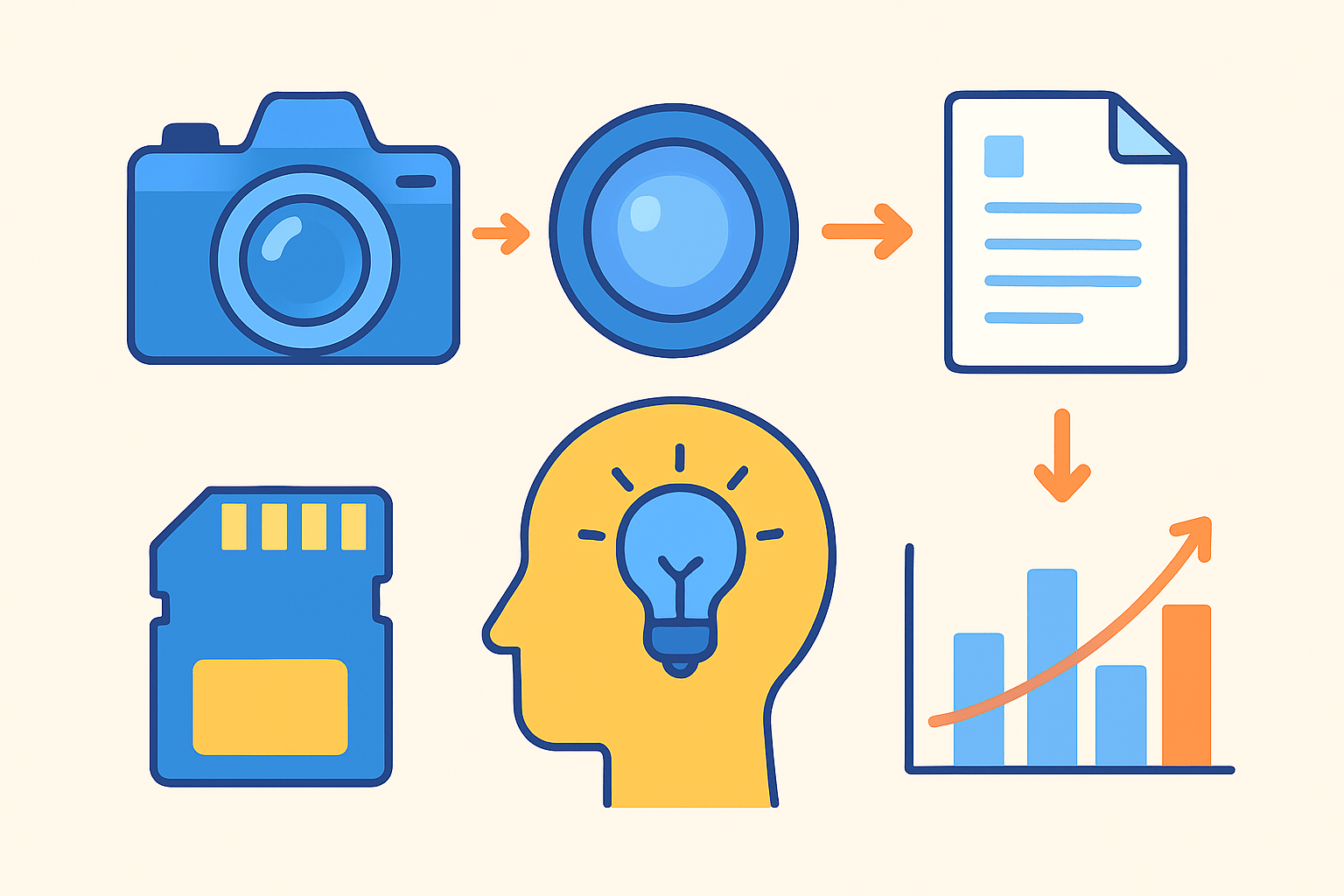
If you are wondering how to learn photography, here are the six best, practical ways — and how to blend them into a simple plan you can follow. You will see progress faster when you mix practice with feedback and a bit of structure.
Deliberate practice and small projects suit hands‑on learners who improve by doing. The pros are faster skill growth and a real portfolio; the con is staying disciplined without guidance. Expect clear gains in 2–4 weeks, and it can be free except for your time.
Structured courses, online or in-person, help anyone who wants a step‑by‑step path and feedback. You get lessons and assignments, but some courses move too fast or feel generic. Time to improvement is often 2–6 weeks, with costs from free to premium.
Books and eBooks are best for readers who like to learn concepts deeply. The upside is clarity and timeless principles; the downside is no instant feedback. You can see better results in 1–3 weeks if you practice after each chapter, and prices range from library free to moderate.
Free video tutorials on YouTube are great for visual learners and tight budgets. You get many examples and gear demos, but quality varies and rabbit holes waste time. Set a playlist, practice after each video, and you can improve in a few days without paying anything.
Mentors, critique groups, and photowalks help you avoid blind spots. Honest critique and seeing others shoot speed up growth, though schedules can be tricky. Expect a leap in 2–3 sessions, and costs are usually free to low, depending on the group.
Self-directed, project‑based learning fits curious people who like to set themes. The pro is ownership and creativity; the con is lack of structure if you stall. Plan 2–4 week projects with a clear goal, and it is free unless you print or travel.
Combine these into a 6–12 week plan. Weeks 1–2: fundamentals and daily practice, with two short shoots and a simple edit each day. Weeks 3–4: composition focus and a mini project like “seven portraits,” sharing work for critique at week’s end.
Weeks 5–8: pick one genre like street, landscape, or portraits and build a small series. Add one photowalk, one mentor chat, or one group critique every two weeks so you get outside eyes and stay honest.
Use a quick checklist so you know you are moving forward. Set measurable goals like “10 sharp panning shots” or “one clean portrait in golden hour.” Track progress with a simple portfolio folder, captions, and EXIF notes so you can see what settings made each result.
Move to the next stage when you can repeat a result three times in a row. If you cannot, repeat the drill for another day and keep your notes short and clear. A downloadable 6‑week syllabus and a printable practice checklist make this easy to follow.
For extra reading, start with Understanding Exposure by Bryan Peterson and The Photographer’s Eye by Michael Freeman. You can learn from CreativeLive and KelbyOne for paid, or YouTube channels for free; label your resources so you do not get lost. If you prefer a quick primer, this beginner’s guide sums up key steps in plain language.
Join critique communities like local clubs, Reddit photo subs, or Flickr groups, and ask specific questions like “Is my shutter too slow for this?” or “How is the subject separation?” Add captions with EXIF when you post, for example, “50mm, f/2.8, 1/250s, ISO 200,” so feedback becomes actionable.
Understanding Shutter Speed, Aperture and ISO
The exposure triangle is the link between shutter speed, aperture, and ISO, and it matters because it lets you control both brightness and creative look. Learn it once, and every camera becomes predictable.
Picture a simple triangle diagram with shutter, aperture, and ISO at each corner. Add three paired image sets that change only one setting at a time so you can see blur, depth of field, and noise with your own eyes.
Aperture is the lens opening measured in f‑numbers, where lower f‑numbers like f/1.8 are wider and blur backgrounds more. Wide apertures give shallow depth of field and creamy bokeh for portraits; narrower apertures like f/8–f/16 keep more of the scene sharp, perfect for landscapes and many macro shots.
Shutter speed controls time, so fast speeds like 1/1000s freeze motion and slow speeds like 1/15s blur it for feeling. As a rule of thumb, keep shutter at least 1 over your focal length to avoid camera shake, and go long on a tripod for silky water or light trails.
ISO is the sensor’s sensitivity and a tradeoff with noise. Use base ISO for the cleanest files, and only raise ISO when you cannot change aperture or shutter without ruining the look or adding blur. Test your camera to learn where noise becomes too much for you.
Portrait in daylight often works at f/2.8–f/5.6, 1/125–1/500s, ISO 100–400. Start wide for background blur, then raise shutter to freeze small movements in the eyes and hands.
Landscape on a tripod is happy at f/8–f/16, 1/60–1s, ISO 100. Use a remote or timer to avoid shake and check corners for sharpness after each setup.
Action and sports need f/2.8–f/5.6, 1/500–1/2000s, ISO 400–3200. If light is low, bump ISO first, then open the aperture, and only then slow the shutter if you also want motion blur.
Night street often sings at f/1.8–f/4, 1/30–1/125s, ISO 800–3200. Hold steady, lean on walls, and watch for blown signs; expose for the highlights, not the shadows.
Try an Exposure Bracketing Walk for 30 minutes and shoot each scene at −1, 0, and +1 EV. Then do a three‑shot drill changing only one variable each time and compare both EXIF and visual results side by side.
Common mistakes include blown highlights that cannot be saved, noisy shadow fixes from underexposure, and motion blur from too‑slow shutter speeds. Enable highlight warnings, check the histogram, and keep a mental “minimum shutter” for every lens.
If you prefer a clear, structured path through fundamentals, this concise study path can guide your early practice. Use alt text on your learning images like “Aperture comparison: f/1.8 vs f/16 showing depth of field — EXIF: 50mm, f/1.8, 1/200s, ISO 100” so even your files teach you later.
Learning to Shoot in Manual Mode
Manual mode matters because it gives you full creative control and repeatable results in any light. You do not need to jump all at once; move step by step through P, A, S, and then M.
Start by learning metering modes like Matrix, Center‑weighted, and Spot, and watch how the histogram shifts. Your goal is a histogram that is not slammed against either edge unless the scene demands it.
Practice first in Aperture Priority to see how depth of field affects the frame, then in Shutter Priority to control blur. Use exposure compensation to teach your eye when the meter gets fooled by bright or dark scenes.
Try Manual with Auto‑ISO as a bridge so you set look with aperture and shutter, and the camera handles brightness. Cap your Auto‑ISO at a noise level you accept to protect image quality.
Move to full Manual by setting aperture for the look, shutter for motion, and ISO to balance exposure. Take a test frame, check the histogram and highlight warnings, and fine‑tune one click at a time.
Run a One‑Light Manual Drill for 10 minutes: pick a window, set ISO 100, choose f/2.8, and adjust shutter until the histogram looks right. Change aperture by one stop, then shift shutter by one stop the other way to keep exposure, and note the look changes.
Do a 50‑Shot Analysis in 45 minutes on one scene using P, A, S, and M. Compare the results, note which mode gave the look you wanted, and write two lines on why.
Try a Manual‑Only Week with one lens and no auto exposure. You will make mistakes on day one, but by day seven you will predict settings before the camera does.
Use Live View with a live histogram, highlight warnings, and a loupe for manual focus when needed. If the scene is high contrast, bracket exposures, or use a tripod and expose for the highlights to protect the file.
If the image is too dark, raise ISO or slow shutter, but watch for blur; if you see motion streaks, shorten the shutter and open the aperture. If depth of field is too thin, stop down or take a step back to increase subject distance.
A good milestone is feeling comfortable changing settings without looking in two weeks. In about a month you should make consistent exposures across varied light, a key step in how to learn photography for life.
Composition in Photography
Composition turns technically correct images into photographs that stop people and make them feel something. It is how you guide the eye, create meaning, and add rhythm to a frame.
The rule of thirds puts key elements near third lines to increase energy and balance. Place eyes on an upper third in portraits or the horizon on a lower third in landscapes to add depth.
Leading lines pull viewers into the scene and toward the subject. Roads, fences, or shadows can all point, so move your feet until lines converge where you want the eye to rest.
Framing uses elements like windows, branches, or doorways to surround your subject. It adds depth and context while hiding distractions at the edges of the frame.
Negative space gives the subject room to breathe and puts shape and silhouette in the spotlight. Clean backgrounds help the story land without visual noise.
Balance and symmetry calm the frame and feel formal. A central subject with strong symmetry can break the rule of thirds and still look powerful.
Depth comes from layering foreground, middle ground, and background. Include a small foreground element to create scale and make the viewer feel present.
Viewpoint and angle change the story more than most settings. Shoot high for patterns, low for power, and straight on for honesty; try all three before you leave.
Color and contrast control mood and subject separation. Complementary colors pop, while a limited palette simplifies; raise contrast around the subject to draw attention.
Patterns and repetition add rhythm, and a single break in the pattern becomes a strong focal point. Look for tiles, windows, or crowds to play with visual beats.
Every frame needs a focal point, which might be eyes, a highlight, or the brightest area. If you are unsure, simplify until one thing clearly wins.
Set up side‑by‑side examples as you shoot by making a quick “before” and “after” crop. Save versions with notes so you can see which small shifts changed the read of the picture.
Try the Five Versions Challenge for 20 minutes on one subject: thirds, centered, framed, leading lines, and with strong negative space. You will feel your choices expand with each version.
Do a limit‑your‑focal‑length day with only 50mm to train your eye to see that angle. Then run a Move‑Your‑Feet drill and make ten frames from different heights and distances of the same subject.
For portraits, keep the eyes sharp, clear the background, and fill the frame with intention. Watch headroom and crop above joints, not through them, to keep poses natural.
Rules are guidelines, not laws. Break thirds when symmetry is the story, or embrace motion blur for energy when a tack‑sharp frame would feel static.
Common mistakes include busy backgrounds, crooked horizons, and weak subject separation. Fix them by simplifying the frame, using a level indicator, and opening the aperture or moving the subject away from the background.
For more practice ideas, browse these composition exercises and then adapt them to your own projects. Save captions with EXIF for each result so your learning sticks.
Improving Your Photos Without Buying More Gear
Most improvement does not come from new cameras; it comes from skill, light, composition, and post‑processing. This is good news when you are learning on a budget.
First, learn to see light and use it well. Shoot during golden hour, try backlight for glow, and use diffused window light for soft portraits that flatter skin.
Use simple modifiers like a white card or cheap reflector to bounce light into shadows. A sheer curtain can soften hard sun and costs almost nothing.
Stabilize for sharp images with proper handholding, a wall lean, or a tripod. Use a 2‑second timer or remote to avoid shake on long exposures.
Shoot RAW and run a basic edit flow in Lightroom or RawTherapee: crop for composition, set exposure and white balance, then add contrast, color, sharpening, and modest noise reduction. Save a “before/after” pair so you can see your choices clearly.
Ask for feedback with specific questions and post work‑in‑progress, not just polished images. Keep a short “what I learned” log after each shoot to spot patterns and fix them next time.
Before you call it done, check focus, exposure, crop, distractions, and color cast. Then try small experiments like a new angle, stronger light, or a 2‑stop under and over test so you know your file’s limits.
Use the printable practice checklist and the 30‑day photo challenge PDF to stay active. This steady habit is how to learn photography without more gear and with results you can see week by week.
What People Ask Most
What’s the best way to start learning photography?
Look for simple guides on how to learn photography and practice basic techniques like composition and exposure every day.
How much time will it take before I see improvement?
You can notice improvement within weeks if you practice regularly and review your images to learn from mistakes.
Do I need an expensive camera to learn photography?
No, you can learn the core skills with a smartphone or basic camera since technique matters more than gear.
What are three easy exercises for beginners to practice?
Try shooting the same subject in different light, using the rule of thirds, and doing a daily portrait or landscape project.
What common mistakes should beginners avoid?
Avoid relying only on auto mode, ignoring light and composition, and not reviewing or learning from your photos.
Should I take classes or learn photography on my own?
Both work: classes give structure and feedback, while self-study offers flexibility and faster hands-on practice.
How can I start building a simple portfolio as a beginner?
Pick your best images, show a few different styles, update it often, and ask for feedback to improve.
Final Thoughts on How to Learn Photography
If you set aside something like 270 focused minutes over a few weeks, you’ll be amazed how quickly habits form and photos improve. This guide’s true benefit is practical momentum: it turns vague goals into small, repeatable steps — drills, paired theory and projects, and feedback — so you actually get better instead of collecting gear. It’s aimed at curious beginners and hobbyists who want a clear, do-able path, and it answered the opener by listing the six best methods and showing how to mix them into a 6–12 week plan with checklists and example drills.
Be realistic: steady progress needs time, honest critique, and occasional frustration, so don’t expect overnight mastery or perfect shots every session. Keep measuring results through a portfolio and EXIF notes, lean on the drills and printable checklists in the piece, and treat missteps as useful data. You’re on a good track — keep shooting, reflecting, and trying new combos of light, composition, and practice, and you’ll see your vision and confidence grow.



0 Comments