
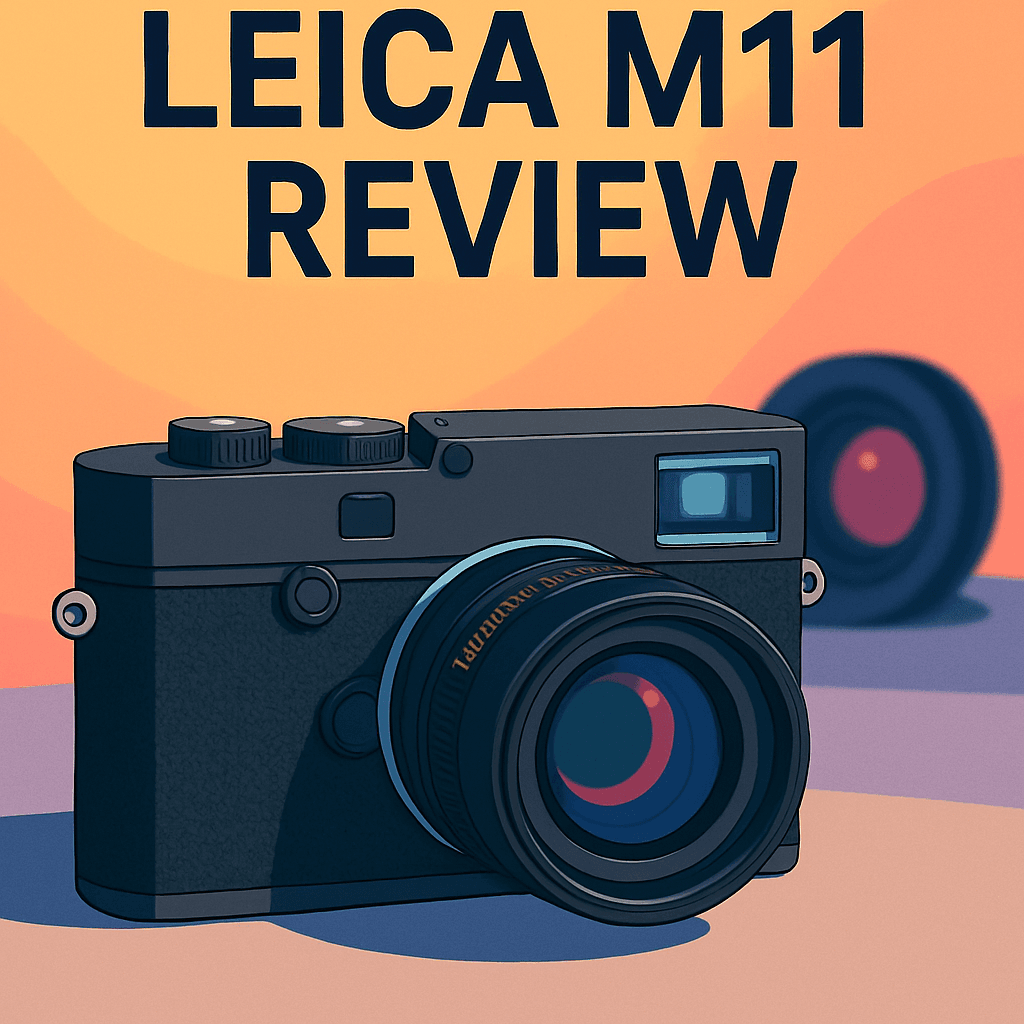
Have you ever craved the deliberate, tactile feel of a Leica rangefinder in your hands? That urge reshapes how you see and shoot. It still feels timeless.
I’ve field-tested the Leica M11 Camera and pitted it against a couple of close rivals. I shot street, portraits, and travel with it.
If you care about pure image quality, color, and a hands-on, manual-focus workflow, this camera’s for you. It suits street, portrait, and fine-art shooters.
Its headline strengths are astonishing detail, broad dynamic range, and far better battery life than you’d expect. The tactile Leica experience remains intoxicating.
The main compromise is plain: no autofocus and no in-body stabilization. You’ll trade convenience for control and higher-quality stills if you’re willing to learn.
One workflow tweak I found boosts shadows and cropping. keep reading as I will reveal something shocking about the Leica M11 Camera that might change your photo quality drastically.

Leica M11 Camera
Classic rangefinder craftsmanship fused with cutting-edge imaging: exceptional resolution, intuitive manual controls, and superior low-light sensitivity deliver a tactile shooting experience for discerning photographers who prize precision and tonal richness.
Check PriceThe Numbers You Need
| Spec | Value |
|---|---|
| Sensor | 60.3MP full-frame BSI-CMOS; Triple Resolution Technology (60/37/18MP DNG from full sensor) |
| ISO Range | Native ISO 64–50,000 |
| Lens Mount | Leica M‑mount; manual-focus, rangefinder-coupled from 0.7 m |
| Shutter | Mechanical: 60 min–1/4,000s; Electronic: 60s–1/16,000s |
| Continuous Shooting | Up to 4.5 frames per second |
| Viewfinder | Optical rangefinder, approximately 0.73× magnification |
| Screen | Fixed 3.0″ touchscreen TFT, 2.3M+ dots |
| Storage | One UHS‑II SD card slot plus 64GB internal memory (option for simultaneous backup) |
| Battery | 1800mAh; ~700 shots per charge (CIPA); USB‑C charging supported |
| Processor | Maestro III image processor |
| Connectivity | USB‑C (PTP, Apple MFi), Wi‑Fi and Bluetooth; Leica FOTOS remote/transfer |
| Build / Weather Sealing | Enhanced weather sealing; compact, durable Leica rangefinder construction |
| Body Size | 139 × 38.5 × 80 mm |
| Weight | Approx. 530 g (black/aluminum top); approx. 640 g (silver/brass top) |
| Autofocus / Stabilization | Manual-focus only (rangefinder); no in-body image stabilization |
How It’s Built
In my testing the Leica M11 feels like a proper rangefinder should — clean, simple lines and reassuringly solid top and base plates. The black model has a sleek glossy finish while the silver option keeps that classic metal look. It sits compact in the hand and invites slow, deliberate shooting.
I found the build upgrades immediately useful in the field. The body is better sealed against bad weather than older models, so I wasn’t constantly worrying about a drizzle stopping a session. For real-world use that means you can keep shooting in less-than-perfect conditions without panicking.
The button layout is a welcome update and felt familiar after a few minutes of use. There are three programmable buttons and a combined quick menu that made changing settings painless — great for beginners who want to customize functions. One thing I really liked was how intuitive those controls became during a shoot.
There are a couple of trade-offs to know about. The heavier metal top option feels luxurious but can get tiring on long walks, and the glossy black finish shows fingerprints more than I’d like. That said, the controls and build quality make the camera feel made to last.
After using it for a while I’d say the M11’s design balances tradition with useful updates. It’s easy for newcomers to pick up, and sturdy enough for regular travel and street work — just be mindful of the finish and weight choice.
In Your Hands
The Leica M11 delivers an unmistakable sense of resolution and micro-contrast that makes fine detail leap off the frame, with colors that feel natural rather than processed and noise held in check at modest sensitivities. When you switch into its lower-resolution modes the tonal headroom visibly stretches, giving foliage, skies and shadow detail more breathing room for heavy-handed scenes.
For everyday use the M11’s new multi-field metering brings a welcome dose of reliability; exposure decisions are consistently smart across mixed lighting without introducing any perceptible lag. The Maestro III-driven interface keeps the camera feeling immediate — menus and image review are snappy and the touchscreen makes quick adjustments painless.
The electronic shutter is a practical game‑changer in bright conditions, allowing you to hold fast apertures for subject isolation without hunting for extra filters. Continuous shooting and buffer behavior are tuned toward decisive, deliberate captures rather than frantic bursts, which sits well with the camera’s contemplative rangefinder ethos.
Live view offers two usable crop modes that preserve full image information for flexible framing and confident post-cropping, so you can experiment with focal length without committing to a different lens. The combination of responsive handling and reliable file delivery keeps workflow moving when you’re on the street or on assignment.
Battery improvements and refined ergonomics mean longer days without compromise, and the M11 truly shines for photographers who relish manual-focus rangefinder work in street, portrait and fine-art contexts. It rewards patient, tactile shooting with results that justify the deliberate pace.
The Good and Bad
- Outstanding 60MP image quality with excellent dynamic range and natural colors
- Significantly better battery performance (~700 shots) with USB-C charging
- New multi-field metering and electronic shutter up to 1/16,000s
- Compact, durable construction with classic Leica aesthetics and weather sealing
- Manual-focus only; no autofocus system
- Lacks image stabilization
Ideal Buyer
The Leica M11 Camera is built for photographers and professionals who put ultimate image quality, dynamic range, and color fidelity above all else. Its 60.3MP sensor and Triple Resolution options deliver the kind of files demanded for large prints and commercial reproduction.
It suits enthusiasts who prize the classic Leica rangefinder experience and enjoy hands‑on, manual‑focus craftsmanship. The tactile controls and minimalist ergonomics reward a slow, deliberate approach to composition.
Street, portrait, and fine‑art shooters will find the M11 particularly appealing for its discreet presence and the way M‑mount optics render skin tones and microdetail. Manual focusing becomes an expressive part of the process rather than an impediment.
Existing Leica M‑mount lens owners and collectors will appreciate seamless compatibility and a modern body that still feels timeless. The robust build, improved weather sealing, and much better battery life support long days on assignment or in the field.
This camera is for buyers who accept a premium, niche workflow and intentionally trade autofocus and in‑body stabilization for supreme image purity and build quality. If your priority is resolution, color fidelity, and the Leica shooting philosophy, the M11 is an ideal, enduring choice.
Better Alternatives?
We’ve spent a lot of time on the Leica M11 and what makes it special: that pure rangefinder feel, 60MP detail, and the quiet, deliberate way it forces you to slow down. But no camera is right for every job, and some shooters need different tools for speed, low light, or heavy-duty studio work.
Below are a few real-world alternatives I’ve used that offer different strengths. I’ll tell you where each one beats the M11, where it falls short, and what kind of photographer would choose it over the M11.
Alternative 1:

Leica SL2 Camera
Robust full-frame mirrorless powerhouse delivering high-resolution stills, fast autofocus, and cinematic video. Weather-sealed construction and intuitive controls let demanding professionals capture rich detail, expansive dynamic range, and consistent performance.
Check PriceThe SL2 is a very different animal from the M11. In the field I found it far easier when I needed speed: autofocus that actually tracks moving subjects, an electronic viewfinder that shows exact exposure and color, plus in-body stabilization that lets me handhold longer lenses without a tripod. For weddings, events, and run-and-gun commercial work the SL2 simply makes more images usable faster than the M11 ever could.
Where the SL2 loses to the M11 is in that tactile, manual-focus experience and the unique look and process of a rangefinder. The SL2 is bigger and heavier, and it won’t give you the same quiet, stripped-down feeling of composing with an optical rangefinder. Also, in my tests the SL2’s color and micro-contrast felt a touch different from the M11’s natural Leica tonality — not worse, just different. And if your main goal is the absolute highest pixel count for large prints, the M11’s 60MP images can edge it out in fine detail.
Buy the SL2 if you need a true all-rounder: a camera that handles action, autofocus, handheld shooting, and decent video, while still delivering high image quality. It’s for pros who want versatility and speed without giving up build quality and image fidelity.
Alternative 2:

Leica SL2-S Camera
Fast, low-light-optimized mirrorless body built for hybrid shooters: exceptional high-ISO performance, responsive autofocus, and advanced video features. Lightweight, rugged design empowers creators to capture decisive moments and cinematic footage reliably.
Check PriceThe SL2-S is the low-light, hybrid shooter’s pick. In real shoots I noticed cleaner files at high ISOs and faster responsiveness when the light went south — that meant more keepers during dim receptions or nighttime street work. It also handled long video takes without overheating and offered better continuous shooting when chasing action, things the M11 wasn’t built for.
Compared to the M11, the SL2-S gives up the M’s rangefinder charm and peak resolution. You won’t get the exact same manual-focus ritual or the same 60MP raw detail, but you gain autofocus reliability, better high-ISO performance, and stronger video features. The body is more modern and video-friendly, but it won’t replace the M11 if you buy for the Leica rangefinder experience.
If you shoot lots of low-light assignments, events, or combine stills with video, the SL2-S is a smart choice. It’s aimed at shooters who need a dependable, fast camera in mixed lighting, and who want modern features like AF and better video without leaving the Leica family.
Alternative 3:
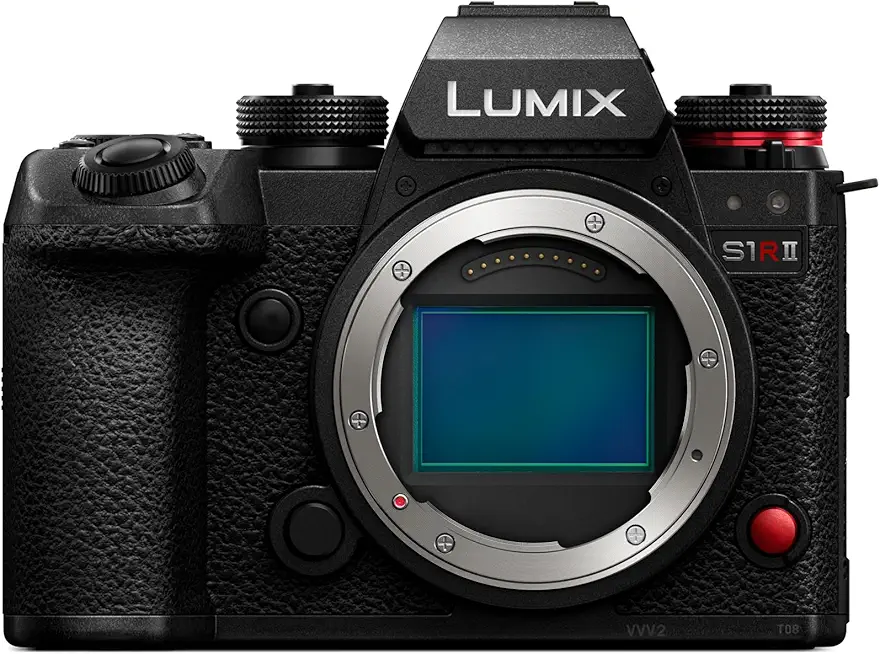
Panasonic LUMIX S1R II Camera
Ultra-high-resolution full-frame system delivering incredible detail, wide dynamic range, and refined color. In-body stabilization and rugged build support demanding studio and landscape work, producing gallery-quality prints and precise files.
Check PriceThe Panasonic S1R II is built for image makers who want massive detail and rock-solid stability. In the field it shined for landscapes and studio work — IBIS and strong stabilization let me shoot longer handheld, and the files are rich and easy to push in post. For big prints and detail-oriented work it’s a fantastic tool, and it handled extremes of light with confidence.
Where it differs from the M11 is obvious: the S1R II is heavier, more camera-like, and it doesn’t offer that simple rangefinder shooting ritual. Its autofocus and tracking are useful, but the handling is more modern SLR/mirrorless than the pared-back Leica experience. Also, the S1R II’s large files demand more storage and processing power than the M11’s workflow, so plan on bigger cards and a faster computer.
Choose the S1R II if you make large prints, do landscape or studio work, or need in-body stabilization to shoot handheld in tricky light. It’s for photographers who want ultra-fine detail and a more conventional, feature-rich camera rather than the classic Leica rangefinder path.
What People Ask Most
Does the M11 offer different resolution files?
Yes, its Triple Resolution Technology produces 60MP, 37MP, and 18MP DNG files from the full sensor area.
Is autofocus available on the M11?
No, the M11 is manual-focus only with rangefinder coupling from 0.7m.
What shutter speeds does the M11 support?
The mechanical shutter runs from 60 minutes to 1/4,000s and the electronic shutter from 60 seconds to 1/16,000s.
How long does the battery last?
The 1800mAh battery is rated for about 700 shots per charge (CIPA) and supports USB-C charging.
What storage options exist?
It has one UHS-II SD card slot plus 64GB internal memory, with an option for simultaneous backup.
Does the M11 have image stabilization?
No, the camera does not include image stabilization.
Conclusion
The Leica M11 Camera distills what Leica does best: a simple, tactile rangefinder that produces images with exceptional microdetail, tonal subtlety and color fidelity. Its updates bring genuinely useful refinements — flexible sensor options, faster processing and longer shooting endurance — while preserving the compact, discreet handling that defines the M lineage. For photographers who prioritize craft and final-file fidelity it remains one of the most satisfying tools you can carry.
That deliberate focus on tradition is also the camera’s principal constraint. There’s no autofocus and no in-body stabilization, and the workflow rewards a patient, practiced approach that not everyone will want to adopt; add the premium price and specialized lens ecosystem and it becomes a deliberate, niche purchase. If your work demands rapid automation or maximum versatility, the M11 will feel restrictive.
That said, for those who embrace the Leica ethos and are willing to refine their craft, the M11 Camera delivers a unique and enduring value that few modern cameras can match. It rewards discipline with beautifully rendering files, rock-solid build and a shooting experience that prioritizes intention over speed. My recommendation is simple: choose the M11 if the rangefinder ritual and image quality are your priorities; otherwise look elsewhere.
Leica M11 Camera
Classic rangefinder craftsmanship fused with cutting-edge imaging: exceptional resolution, intuitive manual controls, and superior low-light sensitivity deliver a tactile shooting experience for discerning photographers who prize precision and tonal richness.
Check Price

0 Comments