

Want to elevate your black‑and‑white images with a camera made for that purpose?
The Leica Q2 Monochrom is a full‑frame compact with a 47.3MP monochrome sensor and a fast Summilux 28mm, all in Leica’s premium build.
It’s aimed at shooters who want superior tonality, microdetail, and clean high‑ISO B&W for street, reportage, and low‑light work.
I’ve been shooting it in rain, alleys, and dim interiors, so this review leans practical. I’ll test handling, AF, high‑ISO files, lens rendering, EVF/LCD use, stabilization, and weather reliability.
If you’re curious whether a mono‑only tool will change your work, this review will help. Make sure to read the entire review as I unpack real‑world payoffs — keep reading.
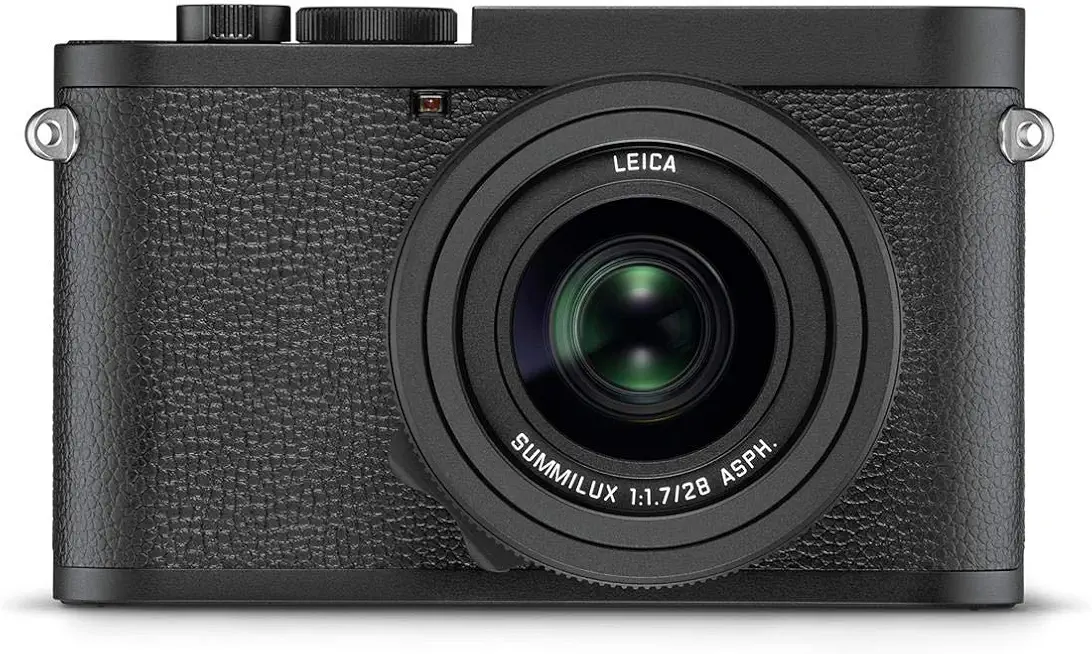
Leica Q2 Monochrom Camera
Dedicated full-frame monochrome sensor delivers extraordinary detail and tonal depth, paired with a fast 28mm lens and weather-sealed body for confident street and fine-art imaging even at high ISO.
Check PriceThe Numbers You Need
| Spec | Value |
|---|---|
| Sensor | 47.3 MP full-frame monochrome |
| Lens | Fixed Summilux 28mm f/1.7 |
| Sensor type | Monochrome (black-and-white only) |
| ISO range | 50–50,000 |
| Autofocus | Fast autofocus system |
| Shutter speed range | 1/2000s to 60 minutes |
| Continuous shooting | Up to 10 fps |
| Video | 4K video recording capability |
| Viewfinder | 3.68 million-dot OLED electronic viewfinder |
| Rear LCD | 3-inch touchscreen, 1.04 million dots |
| Image stabilization | Sensor-shift image stabilization |
| Weather sealing | Fully weather-sealed body |
| Storage | Dual UHS-II SD card slots |
| Dimensions | Approx. 130 × 80 × 92 mm |
| Weight | Approx. 734 g (including battery and card) |
How It’s Built
In my testing the Leica Q2 Monochrom Camera feels like a tight, purposeful package thanks to its fixed, fast Summilux lens built into the body. That setup keeps the camera compact and properly sealed for real-world shooting. It also means the lens and sensor are tuned together for consistently pleasing monochrome results.
Handling is reassuring — the materials feel dense and the dials have a satisfying click. I really liked how confident the weather sealing felt when I kept shooting in drizzle and dusty streets. For beginners that translates to less worry about light rain or accidental splashes while you concentrate on framing.
The EVF is sharp and immediate in my use, so composing and judging B&W tones is straightforward. The touchscreen is handy for quick focus and reviewing shots, but the menus can be a bit deep for first-timers. A slightly simpler menu layout would make the learning curve gentler.
Sensor-shift stabilization made slower handheld exposures usable and steadied video monitoring in practice. The shutter is discreet and nearly silent, which is perfect for street work and quiet moments. The manual focus ring feels smooth and precise when you want to fine tune.
Balance in the hand is good on a strap, but after a long day I noticed the weight — it’s not the lightest carry and the grip could be a touch deeper for true one-handed comfort. Dual SD card slots are a practical win for backup and workflow, and the button layout is intuitive enough to get comfortable fast.
In Your Hands
Autofocus on the Leica Q2 Monochrom is quick and sure in good light, locking with the kind of confidence street photographers need. In dim or low-contrast scenes it can hesitate, but a small reframe or gentle nudge usually gets it back on target. That steadiness means fewer missed moments and more keepers in fast-moving environments.
Crisp burst performance makes following fleeting scenes feel natural, and the buffer behavior keeps sequences intact when timing matters. The camera’s exposure latitude gives real freedom in mixed lighting, letting you preserve highlights or deepen shadows while maintaining rich monochrome tonality. Handheld low-light shooting becomes far less stressful as a result.
Monochrome video carries the same tonal intent as the stills, and sensor-shift stabilization does the heavy lifting for steadier handheld clips. The EVF and touchscreen make judging contrast and critical focus in live view straightforward, so monitoring exposure for black-and-white capture feels intuitive. Stabilization also helps when you deliberately use slower shutter speeds for creative effect.
Leica’s Summilux wide lens renders with crisp center-to-edge detail and an organic microcontrast that highlights texture and fabric beautifully on the mono sensor. Close-focus capability adds versatility for environmental portraits, while tasteful flare control and smooth out-of-focus areas keep frames feeling tactile and immediate. The pairing really emphasizes microdetail and tonal nuance.
The weather-sealed body inspires confidence when shooting in rain or dusty streets, and everyday handling is a pleasure thanks to snappy startup, minimal shutter lag, and responsive menus. Battery planning is sensible for long days and extended video work, and the body may warm under prolonged use but rarely interrupts a shoot. In practice the camera simply gets out of the way and lets you concentrate on composition and light.
The Good and Bad
- 47.3 MP full-frame monochrome sensor with standout tonality, microcontrast, and detail
- Summilux 28mm f/1.7 integrated lens—fast aperture, optimized pairing, consistent performance
- Fast autofocus and up to 10 fps for responsive shooting
- Fully weather-sealed body for reliable field use
- Black-and-white only—no color capture; requires commitment to mono workflow
- Fixed 28mm focal length may not suit all subjects or preferences
Ideal Buyer
The Leica Q2 Monochrom Camera is aimed at photographers who prioritize native black‑and‑white tonality, microcontrast and the cleanest possible high‑ISO files. If you favor texture, shadow detail and nuanced gradations over color flexibility, this camera rewards that intent. It asks you to commit to a mono workflow but delivers tonal subtlety and microdetail few Bayer conversions can match in practical shooting and large‑print work.
It’s a natural fit for street, documentary, travel and architectural shooters comfortable with a 28mm field of view and the fixed‑lens ethos. Low‑light and night specialists will value the sensor’s extreme ISO usability and long‑exposure control for handheld and available‑light work, as well as environmental portraits. Fast AF, steady stabilization and up to 10 fps make it reliable for decisive moments and sustained sequences.
Buyers who want a premium, weather‑sealed body with tactile controls, an integrated Summilux 28mm and dual card slots will feel at home with the Q2 Monochrom and confident shooting in the elements on assignment. It is not for photographers who need color capture, interchangeable lenses or a budget‑minded option, and the Leica price places it squarely in the specialist category. In short, it’s for mono purists and professionals who want a single, uncompromising tool that makes black‑and‑white the point of view.
Better Alternatives?
We’ve gone deep on the Leica Q2 Monochrom: its 28mm Summilux, the way the mono sensor renders tones, and where it shines in low light and street work. That camera is very specific — it asks you to shoot in black and white and to live with a fixed 28mm view.
If that commitment to mono, or that focal length, doesn’t fit your shooting all the time, there are a few cameras that scratch similar itches in different ways. Below are three real-world alternatives I’ve used — each one gives you something the Q2 Monochrom doesn’t, and each one asks you to give up something in return.
Alternative 1:

Leica Q2 Camera
High-resolution full-frame sensor captures 47MP color images with a luminous 28mm f/1.7 lens, offering 4K video, weather sealing, and intuitive controls for versatile street, landscape, and travel photography.
Check PriceI’ve used the color Leica Q2 alongside the Monochrom, and the first thing you notice is how much flexibility color gives you in the field. It shares the same Summilux 28mm, the same weight and weather sealing, and the same feel in hand, but it shoots in color first — so you can switch to color frames, do color grading, or convert to B&W later if you want more control.
Where the Q2 color wins is obvious: you get full-color files and the option to push tones in post. For travel and mixed work where you sometimes need color and sometimes want moody B&W, it’s a much more forgiving tool. Where it loses to the Monochrom is in pure black-and-white tonality and extreme high-ISO B&W files — when I shot the same night scenes with both, the Monochrom kept cleaner shadows and finer texture when rendered as monochrome.
If you want the same handling and lens look as the Monochrom but need color, or you want a single-camera solution for travel, weddings, or mixed editorial work, the Leica Q2 color is the better pick. If your heart is set on the absolute best native B&W files and you shoot mono most of the time, stay with the Monochrom.
Alternative 2:

Sony RX1R II Camera
Pocket-sized full-frame shooter pairs a 42MP sensor with a legendary 35mm Zeiss lens and adjustable low-pass filter, delivering stunning dynamic range, sharpness, and a built-in viewfinder for confident framing.
Check PriceThe RX1R II is a very different tool in feel — it’s far more pocketable and it gives you a 35mm field of view instead of 28mm. I loved taking it out when I wanted to travel light; the Zeiss 35mm is insanely sharp and gives pictures a different, tighter look that works great for portraits and classic street framing.
Compared to the Q2 Monochrom, the RX1R II’s strengths are size, lens character, and sheer image detail in color files. But in practice it falls short where the Monochrom shines: low-light, native B&W tonality, and modern autofocus speed. On long nights or when I needed to grab a fleeting moment, the RX1R II’s AF felt slower and less confident than Leica’s system, and its small body gives less weather confidence.
This camera suits a buyer who values a tiny full-frame camera with one superb 35mm lens — someone who travels light, wants the classic 35mm look, and is okay trading faster AF, weather sealing, and native monochrome rendering for portability and image micro-detail.
Alternative 3:
Sony RX1R II Camera
Uncompromising image quality from a full-frame sensor and fast 35mm optic yields rich color and fine detail; discreet, travel-friendly design and quick controls make it ideal for reportage and portrait work.
Check PriceUsed as a reportage camera, the RX1R II feels almost invisible in a way the larger Leica does not. Its built-in viewfinder and fast lens let you work close and quietly. When you want a camera that disappears in the street and gives crisp, contrasty images, the RX1R II is a joy to shoot with — especially in daylight.
Where it’s worse than the Q2 Monochrom is in modern usability: battery life, buffer and continuous speed, and weather resistance are all behind the Leica. And again, if your goal is the cleanest possible black-and-white at high ISO, the RX1R II’s Bayer sensor can’t quite match the Monochrom’s microcontrast and shadow cleanliness when you convert to B&W.
Pick the RX1R II if you want supreme image quality in a stealthy package and you prefer 35mm over 28mm. It’s also a good, often cheaper path to full-frame detail if you don’t need native monochrome files or Leica-level weather sealing and burst performance.
What People Ask Most
What is the Leica Q2 Monochrom and how does it differ from the Leica Q2?
It’s a Q2 with a dedicated 47MP black‑and‑white full‑frame sensor and the same 28mm Summilux lens. Unlike the color Q2, it records only monochrome files for finer tonal detail and higher apparent sharpness.
Is the Leica Q2 Monochrom worth buying for monochrome photography?
If you shoot mostly black‑and‑white and want top image quality in a compact package, yes — it’s one of the best dedicated B&W cameras available.
How is the image quality and dynamic range of the Leica Q2 Monochrom?
Image quality is exceptional with excellent micro‑contrast and rich tonality, and the dynamic range is very good for preserving shadow detail in high‑contrast scenes.
How does the Leica Q2 Monochrom perform in low light and at high ISO?
Performance in low light is outstanding; the monochrome sensor produces much cleaner high‑ISO images with less noise than comparable color sensors.
Is the fixed 28mm Summilux lens on the Q2 Monochrom limiting for everyday use?
The 28mm is versatile for street, landscape and documentary work, but it can feel tight for portraits or subjects that need reach, so a second body or cropping may be needed.
How are the battery life and autofocus performance on the Leica Q2 Monochrom?
Battery life is decent but bring a spare for long days, and autofocus is fast and reliable for most stills and street photography though not as snappy as the latest sports‑focused mirrorless systems.
Conclusion
The Leica Q2 Monochrom is not an incremental novelty; it is a purpose-built instrument that elevates black-and-white photography with native monochrome capture and a lens/sensor partnership that sings together. Its build and responsiveness let you shoot confidently in difficult conditions and chase decisive moments. High‑ISO performance and microcontrast are the real differentiators in the field.
It demands commitment — you trade color and focal flexibility for images you simply cannot get from a converted Bayer file. That makes it ideal for photographers who live for tonal nuance: street shooters, reportage photographers, and low‑light specialists who prioritize pure monochrome. For mixed-use shooters or those who need zooms, a color alternative will be a smarter everyday tool.
Against alternatives the choice is clear: the color Q2 buys versatility, the RX1R II offers a different sensor and lens feeling at another focal sweet spot, and the X100V delivers an affordable, highly portable path to beautiful B&W. The Q2 Monochrom is expensive and opinionated, but for the right photographer it repays that premium immediately in character and confidence. Shoot with it and you’ll find the sensor doesn’t just record scenes — it changes how you see them.
Leica Q2 Monochrom Camera
Dedicated full-frame monochrome sensor delivers extraordinary detail and tonal depth, paired with a fast 28mm lens and weather-sealed body for confident street and fine-art imaging even at high ISO.
Check Price




0 Comments