
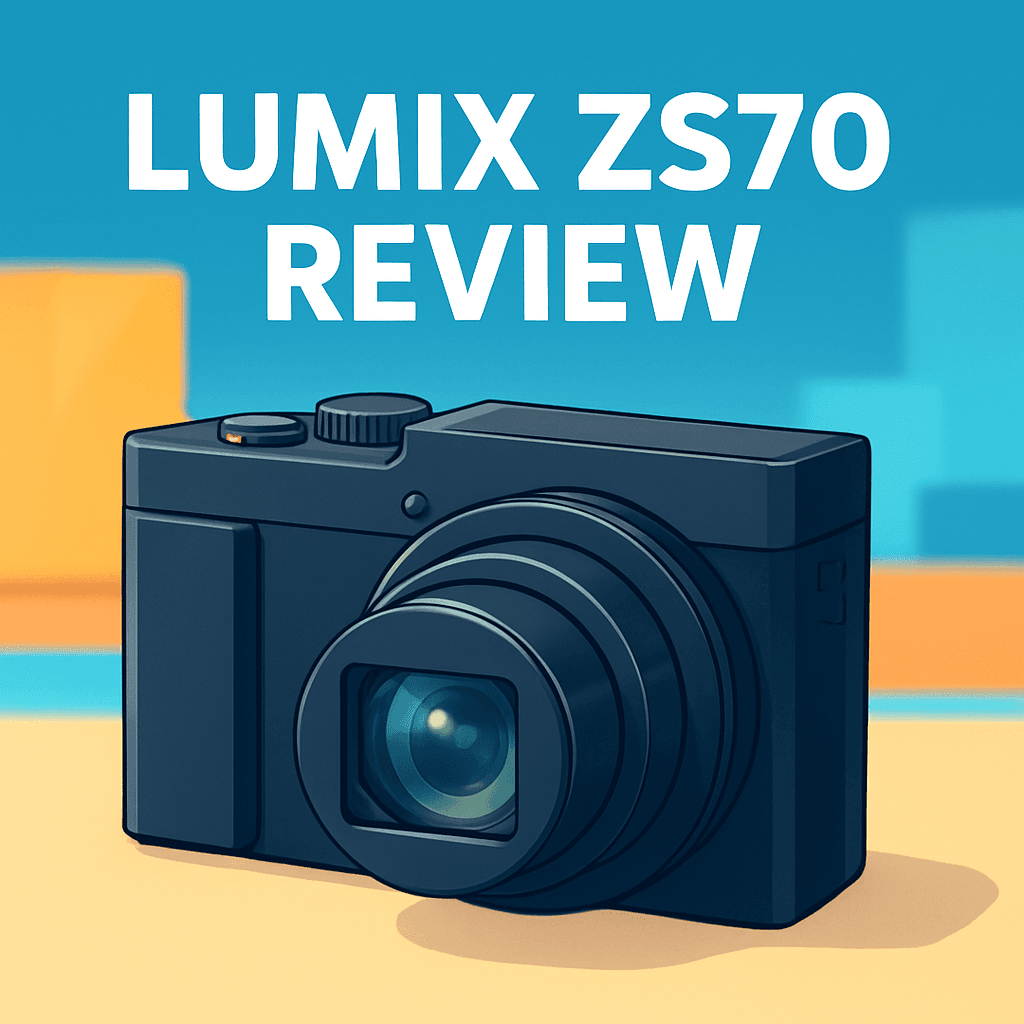
Want better travel shots without hauling a DSLR or a bulky mirrorless kit? The Panasonic Lumix ZS70 Camera promises serious reach, an EVF and 4K video in a pocketable body. I took it on city breaks and hikes to see how it holds up in the real world.
It’s aimed at travelers, family shooters and anyone who wants a lot of zoom and flexible shooting without extra weight. The long reach, tilting touchscreen, RAW capture and stabilization point to useful photos and solid 4K clips for everyday scenes.
Of course, that convenience comes with small-sensor trade-offs in low light and at extreme telephoto reach. Make sure to read the entire review as I dig into image quality, handling and real-world pros and cons — keep reading.

Panasonic Lumix ZS70 Camera
Pocketable travel camera with 30x optical zoom, 4K video and photo capture, tilting touchscreen and built-in electronic viewfinder—delivers crisp images and flexible framing for trips and everyday shooting.
Check PriceThe Numbers You Need
| Spec | Value |
|---|---|
| Sensor | 20 MP |
| Sensor Type | 1/2.3″ |
| Lens | 30x Optical Zoom |
| Focal Length | 24–720mm |
| Viewfinder | Built-in Electronic |
| Screen | Tilting Touchscreen |
| Video | 4K |
| RAW Capture | Yes |
| Image Stabilization | Optical |
| ISO Range | Typically 80-3200 |
| Shutter Speeds | Up to 1/2000s |
| Continuous Shooting | Up to 10 fps |
| Weight | Approximately 322 grams |
| Dimensions | 112 x 66 x 42 mm |
| Battery Life | Around 380 shots |
How It’s Built
In my testing the Lumix ZS70 felt like a true grab-and-go camera. It’s small enough to slip into a jacket or daypack, so you actually end up using it instead of leaving it behind. For travelers and beginners that means you’re more likely to catch moments because the camera is never a burden to carry.
The built-in electronic viewfinder was a surprise favorite of mine. I found myself reaching for it in bright sun and when zooming in, because it makes framing steadier and more confident. If you’re new to long zooms, an EVF takes a lot of the guesswork out of holding the camera steady.
The tilting touchscreen is flexible and responsive in real shooting, letting me nail low shots and selfies without awkward contortions. The hinge feels solid enough for travel use and the touch controls work like you’d expect from a phone. One thing I really liked here was how quickly I could compose unusual angles on the fly.
Stabilization does a good job letting you handhold at longer focal lengths during everyday outings. Overall the build felt dependable for travel, though the small grip could be more secure when you’re fully zoomed in — that’s the one thing I’d improve. For beginners, a comfy strap and two-handed hold make all the difference in getting steady, usable shots.
In Your Hands
The Panasonic Lumix ZS70 Camera’s long-range zoom proved endlessly useful on the road, letting me go from sweeping cityscapes and tight museum interiors to distant architectural details without changing lenses. That reach turned many “missed” shots into keeper frames—standing on a crowded bridge or tucked into a café I could isolate subjects far away while still keeping a usable wide option for context.
In real-world shooting the burst mode is genuinely practical for fleeting moments; I caught candid gestures and quick street scenes more often than not, and autofocus felt steady for casual action. The shutter speed range is generous enough to freeze most everyday motion, and the optical stabilization meaningfully improves handholdability at long focal lengths, though longer sessions still benefit from a stable stance or brief bracing.
A full day of mixed stills and short clips is realistic without constant battery anxiety, but intensive 4K video or nonstop bursts will prompt you to consider a spare for peace of mind. Having 4K in such a compact body makes short travel movies effortless, and RAW capture gives real post-processing flexibility to tame highlights, recover shadow detail, and correct tricky white balance in mixed lighting.
The Good and Bad
- 30x optical zoom covering 24–720mm for versatile travel reach
- Built-in electronic viewfinder for bright conditions and steadier framing
- 4K video capability for high-resolution clips
- RAW capture support for post-processing flexibility
- 1/2.3″ sensor with 20 MP density limits low-light and high-ISO performance
- Long-zoom compromises such as edge sharpness and telephoto softness
Ideal Buyer
If you travel light but want reach, the Panasonic Lumix ZS70 is built for you. It slips into a jacket pocket yet gives a 24–720mm 30× range for landscapes, cityscapes and detail shots. Think city breaks, family outings, and trail days when lugging a kit isn’t an option.
Video-centric travelers will appreciate 4K in a palm-sized body and the tilting touchscreen for quick composition and selfies. Enthusiasts who like to tweak will welcome RAW capture and an EVF for bright-day shooting and steady framing. Optical stabilization and up to 10 fps make it a confident tool for fleeting moments and casual telephoto work.
If you prioritize post-processing flexibility and a single-camera carry solution, the ZS70 balances features and portability well. Its battery life and ergonomics suit a day of mixed stills and short clips without feeling like a compromise.
Be realistic about low-light expectations and shallow depth-of-field — the small 1/2.3″ sensor means noise rises sooner and background blur is limited. For buyers who value reach and convenience above large-sensor image quality, this is one of the most practical pocket superzooms.
Better Alternatives?
We’ve already walked through what the Panasonic Lumix ZS70 does well: a crazy long 24–720mm reach in a pocketable body, an EVF for bright days, a tilting screen for awkward angles, and 4K video and RAW when you want to push files in post. That mix makes it a solid travel companion for city trips, hikes, and family days out.
If the ZS70 fits most of your needs but you’re still curious about other small superzooms, here are a few real-world alternatives I’ve owned and used. Each one trades a little of what the ZS70 offers for something different—grip, handling, sharing, or just a different in-camera look—so I’ll tell you when those trade-offs actually matter out in the field.
Alternative 1:

Panasonic Lumix TZ99 Camera
Travel-ready compact featuring long-range zoom, 4K video, RAW capture, integrated electronic viewfinder and responsive touchscreen—designed for sightseeing, street photography and versatile low-light performance without bulk.
Check PriceThe TZ99 (same family as the ZS70) feels very familiar when you pick it up. In real shooting it gives you the same long reach, the same EVF for bright sun, and the same 4K and RAW flexibility. If you like the ZS70’s overall package, the TZ99 will feel almost identical out on a walk or during a city shoot—so you get the same practical strengths without surprises.
Where the TZ99 differs from the Panasonic Lumix ZS70 Camera is minor: I noticed small changes in color rendering and menu flow, and sometimes different default processing in JPEGs. It doesn’t suddenly fix the small-sensor limits you see in low light or give you noticeably better telephoto sharpness. So don’t expect better night shots or a big boost at 720mm—those limits are mostly down to sensor size.
If you already like the ZS70, the TZ99 is for you if you want a nearly identical camera with slight tweaks—maybe a different feel in the menus or a touch of a different color look. It’s a safe pick for travelers who want the same compact reach and workflow, not a big step up for people chasing better low-light performance.
Alternative 2:

Nikon Coolpix A1000 Camera
Versatile bridge-style compact offering extensive zoom reach, 4K UHD video, OLED viewfinder and tilting LCD—combines manual controls and stabilization for travel photographers who need reach and reliable image quality.
Check PriceThe Nikon Coolpix A1000 stands out in hand. I found its grip and zoom control a bit more natural when shooting at long focal lengths—holding it feels steadier when you’re reaching for distant subjects. The A1000’s color and JPEG processing also give you punchy images straight out of camera, which is nice when you don’t want to edit every shot.
Compared to the Panasonic Lumix ZS70 Camera, the A1000 doesn’t beat it in every way. AF and responsiveness aren’t quite as snappy as the ZS70 in my experience, and the 4K photo-style tricks I rely on with Panasonic feel a bit less fluid on the Nikon. Low-light performance is similar too—both cameras run into the small-sensor limits once the sun drops.
Pick the A1000 if you want a camera that feels more like a small bridge model—better grip, longer-feel zoom handling, and punchy JPEGs for quick sharing. It’s a good fit for travelers who shoot lots of telephoto scenes and want a firmer handhold, but not for photographers who need the ZS70’s faster feel and 4K-photo workflow.
Alternative 3:
Nikon Coolpix A1000 Camera
All-in-one travel companion with pro-style controls, built-in stabilization, Wi-Fi/Bluetooth connectivity and intelligent scene modes—captures steady telephoto shots, effortless sharing, and dependable performance in a compact package.
Check PriceThe A1000 also shines when you want easy sharing and simple on-camera helpers. I used its Wi‑Fi and Bluetooth a lot for quick transfers, and the scene modes and steadying features are handy when you hand the camera to a friend or shoot video on the go. For casual travel video and fast social uploads, it’s very practical.
When you put it side-by-side with the Panasonic Lumix ZS70 Camera, the A1000’s sharing and mode convenience are better, but it still doesn’t beat the ZS70 in autofocus speed or the feel of Panasonic’s touch-driven menus and 4K-photo tools. Image noise in dim light and telephoto softness also remain comparable—neither camera can overcome the small sensor’s limits by much.
Choose the A1000 in this role if you want an all-in-one travel tool that makes sharing and simple shooting painless—street travelers, family vacation shooters, and social photographers will like it. If you prize Panasonic’s snappier AF and 4K workflow, stick with the ZS70 instead.
What People Ask Most
Is the Panasonic Lumix ZS70 (TZ90) a good camera?
Yes — it’s a versatile, pocketable travel zoom with a 30x lens and useful features, but its small sensor limits low-light and high-ISO performance compared with larger-sensor cameras.
Is the Lumix ZS70 worth buying?
Yes if you want a compact camera with long zoom, 4K video and a built-in EVF; skip it if you need the best image quality or fast continuous autofocus for action work.
Does the Lumix ZS70 have a viewfinder?
Yes, it has a built-in pop-up electronic viewfinder for better composing in bright light.
Does the Lumix ZS70 shoot 4K video?
Yes, it records 4K UHD video up to 30fps and includes 4K Photo modes for extracting stills from footage.
How does the Lumix ZS70 compare to the Canon PowerShot SX740 HS?
The ZS70 wins on features with a pop-up EVF, touchscreen and 4K video, while the SX740 is simpler and often slightly cheaper with similar zoom reach.
What is the battery life of the Lumix ZS70?
Battery life is modest — roughly 250–300 stills per charge under mixed use, and much lower if you use the EVF or shoot a lot of 4K video.
Conclusion
The Panasonic Lumix ZS70 Camera is a travel-ready superzoom that packs serious reach and useful video tools into a pocketable body. Its combo of long zoom, 4K capture, an EVF and a tilting touchscreen makes it versatile for city trips and family outings. For everyday shooters it delivers a level of convenience that’s hard to beat.
It does trade off some image finesse for that compact convenience, especially in low light and at the long end of the zoom. Telephoto softness and limited low‑light headroom are practical limits you’ll notice in real shooting. Still, stabilization and RAW capture help recover many challenging scenes.
If you prioritize reach, portability and a friendly shooting experience, this camera offers very strong value. It’s ideal for travelers who want one compact tool for stills and short clips. Photographers demanding large‑sensor performance should look elsewhere.
Consider the ZS80, Nikon A1000 or Sony HX99 if you want slightly different ergonomics, handling, or tuning rather than a radical upgrade. For most users, though, the ZS70 represents a clear, sensible compromise between reach, features and everyday usability. I recommend it as a go‑to pocketable travel camera.
Panasonic Lumix ZS70 Camera
Pocketable travel camera with 30x optical zoom, 4K video and photo capture, tilting touchscreen and built-in electronic viewfinder—delivers crisp images and flexible framing for trips and everyday shooting.
Check Price


0 Comments