
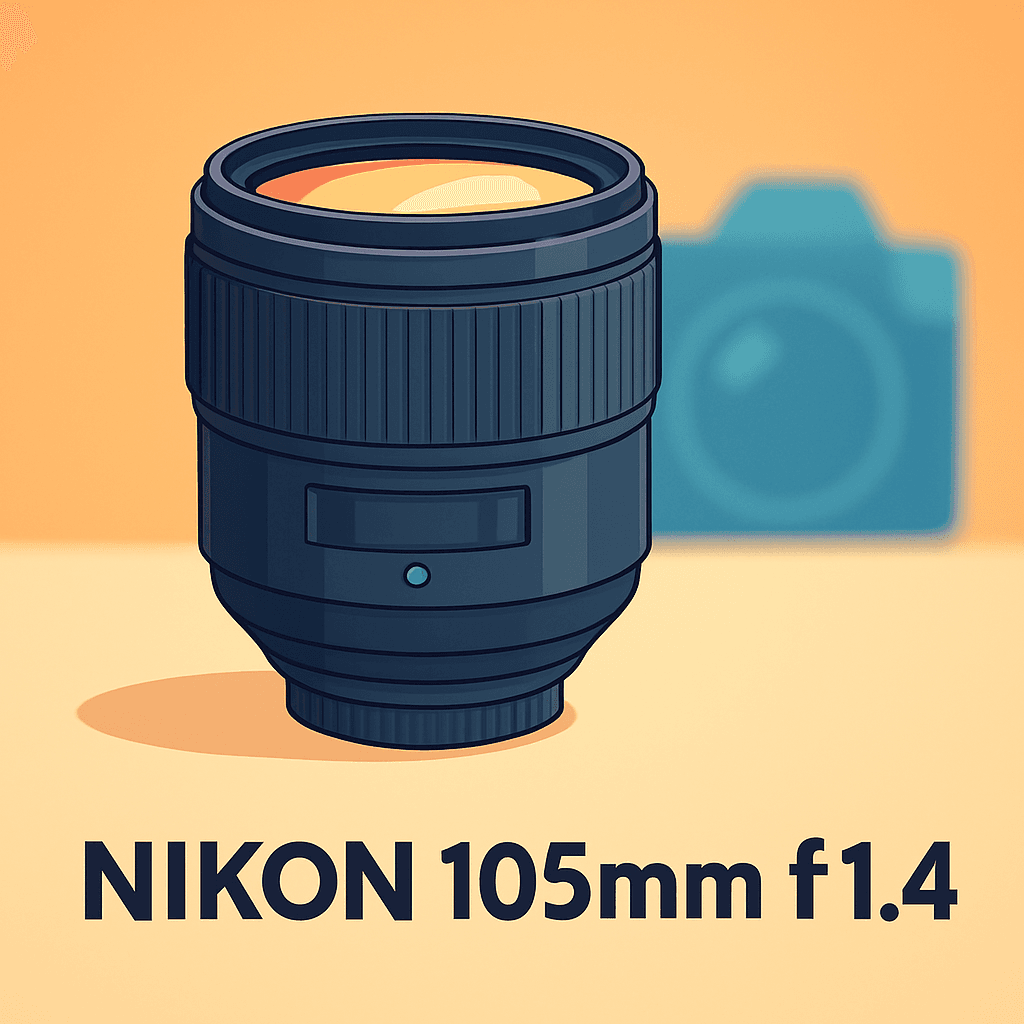
Want to know if a fast 105mm lens can genuinely lift your portraits and low-light work?
The Nikon F Mount AF-S FX NIKKOR 105mm f/1.4E ED is Nikon’s ultra-fast short-telephoto prime meant for F‑mount shooters, built for subject isolation and available-light situations.
Portrait, event, and studio shooters who want creamy bokeh, strong subject separation, and more shutter speed will be most interested, and I took it into real shoots to see how it behaves.
It isn’t a tiny, grab-and-go piece, so we’ll be weighing reach, handling over long sessions, and the trade-offs that come with maximum aperture — keep reading to see if it’s worth your kit.

Nikon F Mount AF-S FX NIKKOR 105mm f/1.4E ED
Long portrait prime delivering dreamy background separation, razor-sharp subject detail and superb low-light performance. Advanced optics and precise diaphragm control produce smooth bokeh and professional-grade contrast in demanding shoots.
Check PriceThe Numbers You Need
| Spec | Value |
|---|---|
| Focal Length | 105mm |
| Aperture | f/1.4 – f/16 |
| Lens Type | Prime lens |
| Mount | Nikon F-mount |
| Optical Design | 14 elements in 9 groups |
| ED Glass | Yes |
| Nano Crystal Coat | Yes |
| Focus Type | Autofocus (AF-S) |
| Minimum Focus Distance | 1 meter |
| Macro Capability | No |
| Image Stabilization | No |
| Filter Diameter | 82mm |
| Weight | Approximately 985 grams |
| Dimensions | 94 x 106 mm |
| Chromatic Aberration Correction | Yes |
How It’s Built
In my testing the Nikon F Mount AF-S FX NIKKOR 105mm f/1.4E ED feels like a serious tool — solidly built and pleasingly precise in the hand. It’s on the heftier side, so you notice it when you carry it all day, but that weight also gives a sense of quality. For real-world work that means it won’t feel toy-like on a heavier Nikon body, but lighter cameras can get a bit front-heavy during long sessions.
The focus ring is one of the highlights I really liked; it’s smooth with just the right resistance for easy manual tweaks while shooting wide open. Switches are well-placed and click confidently, so there’s no fumbling when you need to change modes quickly. After using it for a while I appreciated how the finish and fit felt durable and professional.
The big front element and wide filter thread mean you’ll likely need larger ND and polarizer filters, which is worth knowing for budgeting and packing. The lens hood is solid and works well to cut flare in backlit scenes, helped further by the special glass and coatings Nikon uses. Beginners should know this: bring larger filters and a good strap, because the size and lack of in-lens stabilization can make handheld slow-shutter work more challenging.
If I had to nitpick one thing that could be better it would be the overall weight and the large filter needs for everyday carry. On the plus side, the build quality and control feel give a lot of confidence from the first shoot onward. For portrait shooters who value feel and handling, that combination really matters in real sessions.
In Your Hands
At 105mm the lens establishes a portrait workflow that rewards distance and patience; I frame headshots by stepping in until the subject fills the frame and back off for half-body compositions, letting the focal length gently compress backgrounds into a soft, layered backdrop that pulls attention to the eyes. The rendering favors subject isolation, so placement relative to background elements becomes part of the creative decision rather than a technical fix.
Wide-open shooting is where this optic shines in low light, letting me keep shutter speeds usable without leaning excessively on ISO, though the lack of in-lens stabilization means I choose my shutter discipline carefully. In practice that means balancing a willingness to raise sensitivity with a preference for crisper images through steadier technique and available-light placement.
For moving subjects I rely on short, deliberate bursts and a steady stance; a steady breath and anchored elbows make the difference when depth of field is shallow. Continuous AF on compatible bodies can keep up for gentle motion, but for expressive, moving portraits I favor anticipation and cadence over reckless chase.
The relatively close focus limit curbs how tightly you can crop for detail work, so I either reposition or embrace looser compositions and crop later. A large front element benefits wide-open looks but invites neutral density and careful sun placement; coatings tame most flare, and after long sessions a two-handed grip, supportive strap technique or a monopod keeps shoulder fatigue in check.
The Good and Bad
- Ultra-fast f/1.4 aperture at 105 mm for strong subject isolation
- ED glass and Nano Crystal Coat; optical design of 14 elements in 9 groups
- AF-S autofocus with seamless Nikon F-mount integration
- Full-frame (FX) coverage and a professional portrait-friendly focal length
- No image stabilization
- Weight of approx. 985 g and substantial physical size (94 x 106 mm)
Ideal Buyer
This lens is built for Nikon F‑mount photographers who want the ultimate 105mm portrait tool. If you chase subject isolation, creamy bokeh and low‑light capability at f/1.4, it’s right in your wheelhouse. Ideal users include pro and serious amateur portraitists shooting headshots, half‑body frames, and environmental portraits.
Studio shooters and location portraitists who don’t mind a heftier optic will appreciate the lens’s build and optical pedigree. Its lack of in‑lens stabilization makes it best for photographers comfortable with faster shutter speeds, solid technique, or using support like monopods and grips. Wedding and event photographers who need quick subject acquisition in dim light will also find value, provided they prioritize shallow depth of field over slower handheld shooting.
This lens favors those who own higher‑end Nikon bodies where AF‑S performance and native integration shine. Retouchers and commercial shooters who rely on high resolution and minimal post corrections will benefit from its ED glass and coatings. If you lean on tight close‑ups, macro work, or need a featherweight travel kit, look elsewhere.
In short, pick this 105mm f/1.4 if you prioritize creamy bokeh, subject separation and optical excellence and you can handle the size and technique tradeoffs. Skip it if you need image stabilization, sub‑meter close focusing, or ultra‑compact setups. For portraitists who demand the look more than the lightest carry, it’s a compelling native choice.
Better Alternatives?
We’ve gone deep on the Nikon 105mm f/1.4E ED — how it feels, where it shines, and the trade-offs you get with a heavy, ultra-fast short-telephoto. If that lens seems like overkill for your work, or you want something lighter, cheaper, or with a different look, there are a few good options to consider.
Below I’ll run through three alternatives I’ve shot with in real situations, saying what each does better and worse compared to the 105mm f/1.4E ED, and who I’d recommend each for.
Alternative 1:
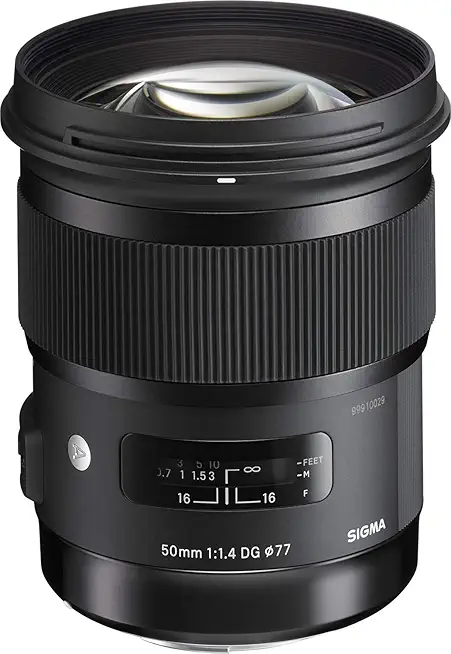
Sigma 50mm f/1.4 Art DG HSM Nikon F Mount
Classic standard prime tuned for studio and street work, offering exceptional edge-to-edge sharpness, tactile rendering and fast, quiet focusing. Versatile for low light, environmental portraits and creative shallow-depth imagery.
Check PriceI’ve used the Sigma 50mm Art a lot for studio headshots and street portraits. Compared to the 105mm f/1.4E, the 50mm is much more versatile in tight rooms — you can get half-body and environmental portraits without backing way up. It’s also lighter and easier to hand-hold for long sessions, so you tire less when you’re shooting all day.
Where it loses to the Nikon 105 is in subject compression and isolation. The 105mm gives that “pulled-in” look and creamy background separation at f/1.4 that’s hard to match with a 50mm at the same aperture. I also find the 105mm holds up slightly better on skin tones and highlights in very contrasty backlit scenes, but the Sigma 50mm still gives very pleasing, punchy results and is easier to move around with.
Who should pick the Sigma 50mm? If you need a do-it-all lens for studio work, environmental portraits, and low-light street shooting — and you want a lighter, less expensive option — this is for you. It’s a great choice when you want fast glass but don’t need the extra reach and compression of a 105mm.
Alternative 2:

Nikon F Mount AF-S FX NIKKOR 85mm f/1.4G
Iconic short-telephoto lens prized for luminous skin tones, cinematic subject isolation and silky bokeh. Fast aperture enables dramatic low-light capture while delivering reliable autofocus and pro-level build quality.
Check PriceThe Nikon 85mm f/1.4G is a classic I’ve carried to weddings and editorial shoots. Versus the 105mm f/1.4E, it’s more compact and easier to use in tight venues. It gives beautiful subject separation and a flattering look on skin, though the feel is a bit more “classic” — softer wide open than the 105mm’s modern, punchy sharpness.
On the down side, the 85mm doesn’t compress the background as much as the 105mm, so backgrounds feel a touch more part of the scene. I’ve also noticed the older coatings and design sometimes produce more flare or color fringing in very contrasty backlight compared to the newer 105mm. That said, many shooters prefer the 85mm’s character for portraits and love its handling during long events.
This lens is best for photographers who want that traditional portrait look in a lighter package — wedding shooters, event photographers, and anyone who needs a fast portrait lens that’s easier to carry and use in tighter spaces than the 105mm.
Alternative 3:
Nikon F Mount AF-S FX NIKKOR 85mm f/1.4G
Signature portrait optic that isolates subjects with buttery out-of-focus highlights and sharp mid-frame detail. Excellent for weddings, editorial shoots and low-light situations thanks to robust mechanics and smooth focus.
Check PriceI’ll add a slightly different take on the 85mm f/1.4G from real shoots: it’s a lens that helps you work fast. The autofocus and feel are comfortable for active sessions where you need to move with the subject. Compared to the 105mm f/1.4E, you’ll gain mobility and lose just a bit of the dreamy extreme separation the 105 provides.
In practical use, the 85mm is friendlier for group portraits and for clients who don’t want you stepping far back. The 105mm gives a more isolated, studio-like look, but the 85mm delivers a warm, cinematic look that many wedding and editorial photographers prefer. If you often work in tighter church aisles or crowded venues, the 85mm will be much easier to use.
Pick the 85mm if you want a proven portrait lens that balances image quality, size, and handling. It’s for shooters who value classic rendering and ease of use over the extreme reach and ultra-modern sharpness of the 105mm f/1.4E ED.
What People Ask Most
Is there a Nikon 105mm f/1.4 lens?
Yes — Nikon sells the AF-S NIKKOR 105mm f/1.4 (often listed as the 105mm f/1.4E ED) for F‑mount cameras.
Is the Nikon 105mm f/1.4 worth buying?
If you want ultra‑shallow DOF, creamy bokeh and pro portrait rendering and can afford it, yes; if you need value or lighter gear, cheaper 85mm or third‑party options may be smarter.
How sharp is the Nikon 105mm f/1.4?
Very sharp in the center at f/1.4 with excellent microcontrast, and it sharpens up across the frame when you stop down a bit.
Is the Nikon 105mm f/1.4 good for portraits?
Yes — it gives flattering compression, strong subject isolation and beautiful bokeh that make it ideal for headshots and tight portraits.
How much does the Nikon 105mm f/1.4 cost?
New it typically sells around $2,000–$2,300 US; used prices vary but are usually lower depending on condition.
How does the Nikon 105mm f/1.4 compare to other portrait lenses like the 85mm f/1.4 or Sigma alternatives?
The 105mm gives tighter framing, more background compression and a unique bokeh signature but is heavier and pricier, while 85mm and Sigma options often deliver similar sharpness with better value and portability.
Conclusion
The Nikon F Mount AF-S FX NIKKOR 105mm f/1.4E ED is unapologetically a portraitist’s tool. It delivers that shallow depth of field, creamy rendering, and low‑light authority you buy a lens like this for. In real use it consistently produces the kind of images that separate paying clients from snapshots.
Its optical pedigree and native Nikon integration are clear strengths that make shooting predictable and pleasing straight out of camera. That capability comes with trade‑offs in size, handling and the need to work around the lack of in‑lens stabilization and close‑up reach. Those are practical limitations that will shape how and where you use it.
If you shoot headshots, event portraits or controlled location work and prioritize subject separation above all else, this lens is a compelling professional choice. If you rely on long handheld sessions, very tight working distances, or want a lighter, more versatile kit, look to other options first. The decision hinges on priorities more than on a single technical metric.
In short, this 105mm f/1.4E ED is a specialty masterpiece for photographers who demand maximum isolation and premium rendering. It’s not a do‑everything optic, but for the right shooter it’s worth the commitment; test it in your workflow and let your shooting style decide.
Nikon F Mount AF-S FX NIKKOR 105mm f/1.4E ED
Long portrait prime delivering dreamy background separation, razor-sharp subject detail and superb low-light performance. Advanced optics and precise diaphragm control produce smooth bokeh and professional-grade contrast in demanding shoots.
Check Price



0 Comments