
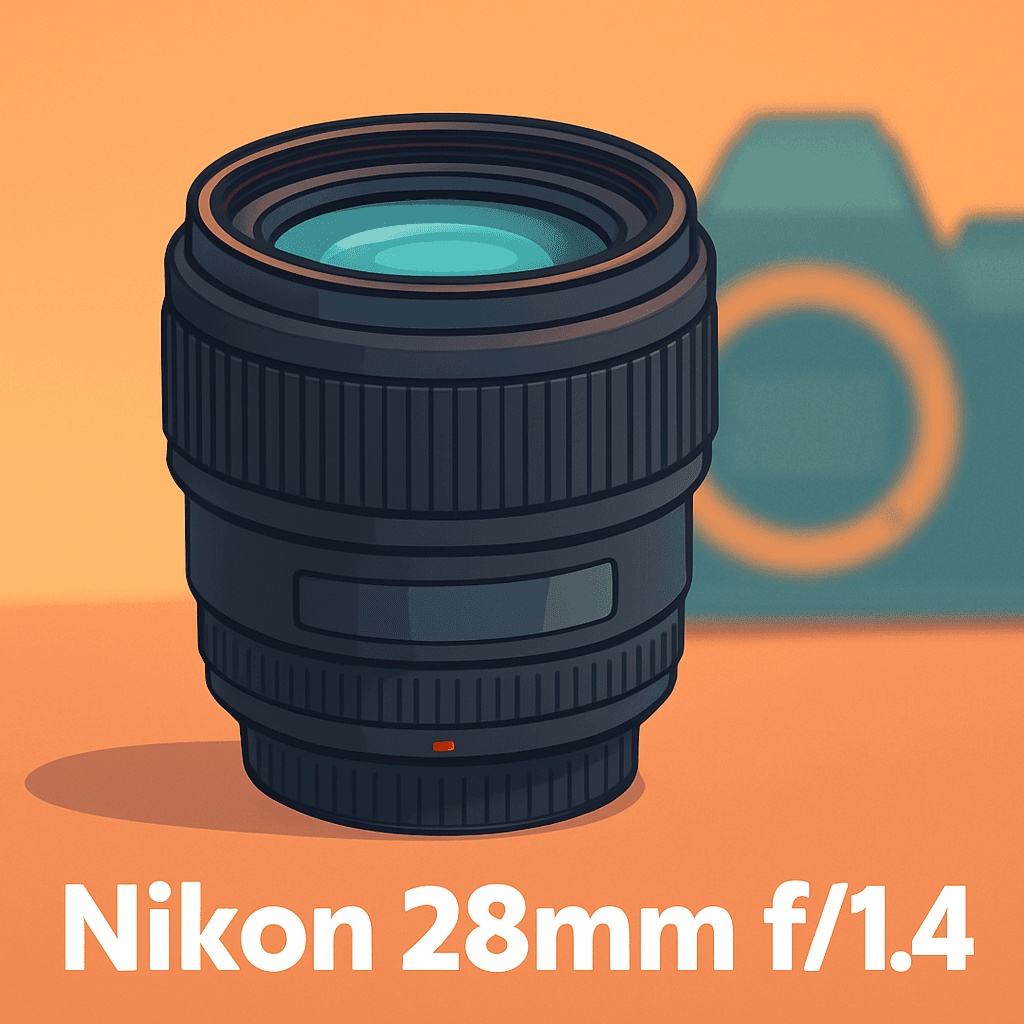
Want to make your wide-angle images sing in dim light?
The Nikon AF-S NIKKOR 28mm f/1.4E ED is a fast, professional wide-angle prime for Nikon F mount, promising creative control and subject separation at shorter distances.
After field-testing it across events, interiors, and night shoots, I’ve got hands-on takeaways that go beyond lab charts and press releases.
If you shoot portraits, street, weddings, or interiors and want more control at wide angles, this one’s for you. Make sure to read the entire review as I dig into what really matters in the field — keep reading.

Nikon AF-S NIKKOR 28mm f/1.4E ED
Stunning 28mm f/1.4 wide-angle optic delivers razor-sharp detail, superb low-light performance and creamy bokeh. Advanced ED elements and coatings minimize aberrations for pristine landscapes, astrophotography, and environmental portraits.
Check PriceThe Numbers You Need
| Spec | Value |
|---|---|
| Focal length | 28mm |
| Maximum aperture | f/1.4 |
| Lens type | Prime (fixed focal length) |
| Format compatibility | Full-frame (FX) |
| Optical construction | Includes ED and aspherical elements |
| Autofocus | Yes (Nikon AF-S, Silent Wave Motor) |
| Manual focus override | Yes |
| Minimum focus distance | 28 cm |
| Filter size | 77 mm |
| Weather sealing | Yes |
| Front element coating | Fluorine-coated |
| Lens mount | Nikon F |
| Image stabilization | No |
| Material | Metal barrel and mount |
| Focus system | Internal focusing, non-rotating front element |
How It’s Built
In my testing the Nikon AF-S NIKKOR 28mm f/1.4E ED feels like a serious tool from the moment you pick it up. The metal barrel and mount give it a solid, reassuring weight that says it’ll take plenty of real-world use. For beginners that means you won’t worry about dinging the lens on a busy shoot.
I liked how the focus ring is smooth and nicely damped, so manual focus feels natural when you need it. The AF-S motor and full-time manual override worked quietly and predictably in my hands, which made switching between AF and MF painless. The internal focusing and non-rotating front element are great if you use polarizers or big filters.
The lens also has useful weather sealing and a fluorine-coated front that actually makes cleaning easier after shoots in the rain. The “E” electronic diaphragm behaved cleanly on my bodies, with no weird aperture quirks during normal shooting. One thing that could be better is the heft; it sits a bit front-heavy on smaller Nikon bodies and can feel tiring on long walks.
Filter size is common and easy to find, and the overall build inspires confidence in the field. After using it for a while I can say the solid construction and sealing are the highlight, while the weight is the main trade-off to consider before you buy.
In Your Hands
On camera the 28mm f/1.4E feels solid and purpose-built, balancing naturally on both pro and enthusiast Nikon bodies without tugging the rig forward. The internal focusing keeps the front element stationary, which makes using polarizers and dense ND filters far less fiddly in the field. The hood and larger front face add presence, but the handling never feels top‑heavy during long shoots.
Wide-open the lens gives you genuine low-light reach and a degree of subject separation that’s rare at this focal length, letting you pull people from backgrounds in dim interiors or evening streets. That shallow depth of field is gorgeous when it’s nailed, but it demands precise focusing at close ranges—there’s little margin for error when you’re working wide open. For run‑and‑gun work I often stop down a hair to trade a touch of atmosphere for more keepers.
Bokeh is creamy and coherent for a wide-angle, with smooth transitions between subject and background that favor environmental portraits and editorial scenes. Color and contrast feel lively straight from camera, offering punchy midtones and pleasing skin rendition without heavy processing. Micro‑contrast holds up in textured subjects like brick and fabric, delivering a sense of three‑dimensionality in files.
Coatings do a lot of the heavy lifting against flare; pointing the sun near the frame will sometimes introduce a gentle veil, but aggressive ghosting is uncommon. Backlit scenes retain color and edge detail better than many older wide primes, though I’ll still reach for the hood when working into bright light. The lens tolerates direct light well enough for night streets and environmental portraits without constant compositing.
Close-focus capability turns the 28mm into a flexible tool for intimate environmental portraits and editorial detail shots, letting you get near subjects while keeping context. The lack of optical stabilization is a practical caveat—compensate with good technique, higher ISO judiciously, or support when needed. In practice this lens excels on streets, in confined interiors, and at low-light events where its speed and rendering create distinct, usable looks straight out of camera.
The Good and Bad
- Fast f/1.4 aperture for creative depth control and low-light work
- AF-S autofocus with manual override
- Internal focusing with non-rotating front element
- Weather sealing and fluorine-coated front element
- No image stabilization
- Exact groups/elements count, weight, and dimensions must be confirmed from official spec sheet
Ideal Buyer
If you’re shooting on a Nikon F‑mount full‑frame body and crave a fast, modern wide prime, the Nikon AF‑S NIKKOR 28mm f/1.4E ED is aimed squarely at you. It delivers f/1.4 speed in a practical focal length that rethinks what wide‑angle separation can do.
Photographers who work run‑and‑gun—street, editorial, events—and those who make environmental portraits or shoot interiors at available light will love the control this lens gives. The ability to drop to f/1.4 changes shutter speeds and depth of field choices in dim rooms and night scenes.
Pros and serious enthusiasts who prize rugged build, dependable weather‑sealing and a fluorine‑coated front element will find the lens feels like it belongs on a pro kit. Internal focusing and a non‑rotating front element make using polarizers and large ND filters straightforward in the field.
If native AF‑S behavior, repeatable autofocus at wide apertures and clean integration with Nikon bodies matter to your workflow, this lens will repay the investment. Manual‑focus override and the “E” electronic diaphragm help with exposure and on‑camera consistency during fast shoots.
Buyers who prioritize minimal weight, lower cost, or in‑body stabilization might lean to third‑party alternatives, but those who want predictable handling, precise AF and professional sealing will get the most from the 28mm f/1.4E. In short: choose this when native performance and field durability are your top priorities.
Better Alternatives?
We’ve gone through the Nikon AF-S NIKKOR 28mm f/1.4E ED in depth — how it feels on the camera, how it focuses, and what its images look like in real shoots. It’s a strong, fast 28mm that gives you shallow depth and good low-light reach, but it’s not the only way to get that look.
If you’re thinking about different options — maybe you want a different price, a wider view, or a different build and feel — here are a few alternatives I’ve used in the field and how they stack up against the 28mm f/1.4E ED.
Alternative 1:

Nikon 28mm f/1.4 DG HSM Art
Professional-grade 28mm f/1.4 Art-series design offers exceptional microcontrast, edge-to-edge sharpness and smooth autofocus. Rich color rendering and sculpted bokeh make it perfect for editorial, portrait and low-light work.
Check PriceThe 28mm f/1.4 Art (branded here as the Nikon 28mm f/1.4 DG HSM Art) is the closest shoot-for-shoot alternative to the Nikon 28/1.4E. In my experience it delivers very similar center sharpness and a slightly punchier microcontrast that makes textures pop. Wide open its bokeh is smooth but the edges and corners can be a touch softer on some copies compared with the Nikon 28/1.4E — stop down a stop and the frame evens out nicely.
Where it beats the Nikon 28/1.4E is value and character: it often costs less and gives images a slightly different tonal feel that some editors and portrait clients like. Where it loses is build and weather sealing — the Nikon 28/1.4E feels more solid on a working body, and the E-type diaphragm behavior and sealing on the Nikon can make a difference in tough shoots. Autofocus on the Art lens is fast and accurate in most light, but I’ve seen occasional body-to-body quirks that the native Nikon tends to avoid.
Choose the Art-style 28mm if you want top image quality for less money and don’t need every pro-level build feature. It’s great for editorial work, portraits in low light, and anyone who values microcontrast and image character over the absolute newest mechanical refinements.
Alternative 2:
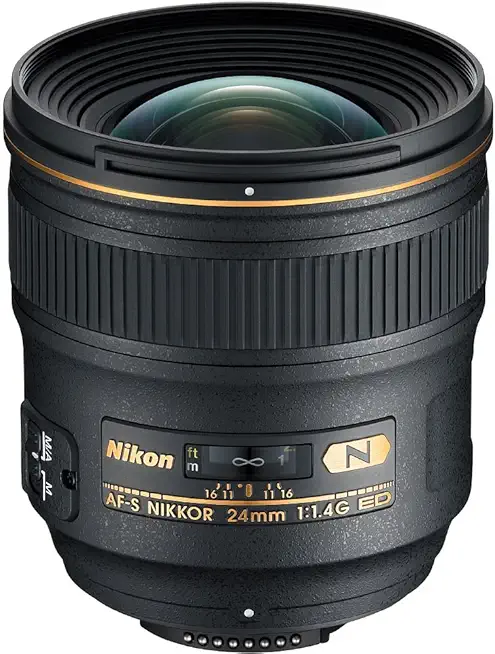
Nikon AF-S FX NIKKOR 24mm f/1.4G ED
Expansive full-frame 24mm f/1.4 lens delivers dramatic wide-angle perspective with exceptional sharpness and control of coma. Fast aperture captures stars and night scenes while producing velvety out-of-focus areas.
Check PriceThe 24mm f/1.4G is a different animal because it gives you a noticeably wider view. I’ve used it for landscapes, interiors and night sky work where that extra width makes composition easier — you can show more of a scene without stepping back. Compared with the 28/1.4E it frames subjects differently, so background separation at f/1.4 feels less intimate but the wider context can be more dramatic.
Optically it shines in the center wide open and it controls coma well, which matters for astro and street scenes with bright points. It’s not as modern in build and handling as the 28/1.4E — it can feel older and lacks some of the newer coatings and handling refinements — so in backlit or stormy conditions I prefer the 28/1.4E’s newer flare control and sealing. Autofocus is solid for stills, but the Nikon 28/1.4E feels a touch more refined for fast, repeatable focus in run-and-gun work.
Pick the 24mm f/1.4G if you need true wide-angle reach with a fast aperture — landscape, architecture, interiors, and astro shooters who want f/1.4 on a wider field will like it. If you prioritize modern sealing, slightly better close-distance subject isolation, or a tighter framing, stick with the 28/1.4E.
Alternative 3:
Nikon AF-S FX NIKKOR 24mm f/1.4G ED
Robust pro-grade construction and weather sealing pair with a wide 24mm field and bright f/1.4 performance for striking landscapes and interiors. Optical coatings reduce flare for consistent contrast in backlit conditions.
Check PriceLooking at the same 24mm lens from a build-and-use angle: in my shoots it handles heavy use well, and the weight and balance pair nicely on pro bodies for long handheld sessions. Compared to the 28/1.4E, the 24/1.4G can feel a bit bulkier on smaller cameras and its handling differences are immediately obvious when you switch lenses — you either love the wide reach or miss the slightly tighter, more portrait-friendly 28mm field.
In the real world the 24mm gives you consistent contrast and fewer flare surprises if you’re shooting into bright light, which can be a plus over the 28/1.4E in backlit situations. On the downside, it won’t give you the same subject isolation at the same distance as the 28mm, and if your work relies on the latest sealing and diaphragm behavior that Nikon added to the 28/1.4E, you might notice those practical differences on a long wet shoot.
Choose this 24mm again if you’re a pro who needs a reliable, wide f/1.4 for landscape, interior, or night work and you value the wider perspective. If you want a slightly tighter angle with a bit more modern handling and subject separation, the 28mm f/1.4E will likely suit you better.
What People Ask Most
Is the Nikon 28mm f/1.4 worth buying?
Yes — it’s worth it if you want a fast, high-quality 28mm prime with excellent low-light ability and pleasing bokeh; compare prices and the Sigma Art if budget or ultimate edge sharpness matters.
Is the Nikon 28mm f/1.4 full-frame (FX) or crop-sensor (DX) compatible?
It’s a full-frame (FX) lens and works natively on FX bodies, and it will also work on DX cameras with the usual crop factor applied.
How sharp is the Nikon 28mm f/1.4 wide open at f/1.4?
Center sharpness is very good at f/1.4, but expect some edge and corner softness that improves noticeably by f/2–f/2.8.
How does the Nikon 28mm f/1.4 compare to the Sigma 28mm f/1.4 Art?
The Sigma Art often matches or surpasses the Nikon in outright resolution and value, while the Nikon offers native mount integration, dependable AF, and slightly different color and flare control—try both if you can.
Is the Nikon 28mm f/1.4 good for low-light photography and astrophotography?
Yes — the f/1.4 aperture makes it excellent for low-light work and very usable for astrophotography, though check reviews for corner coma if you need pinpoint stars across the frame.
What is the autofocus performance of the Nikon 28mm f/1.4?
Autofocus is generally fast and accurate on modern Nikon bodies and reliable for stills and run-and-gun work, but exact performance depends on your camera’s AF system and firmware.
Conclusion
The Nikon AF-S NIKKOR 28mm f/1.4E ED is a rare blend of wide-angle reach and f/1.4 speed built for working pros. Native AF-S behavior, weather sealing, internal focusing and modern coatings make it a reliable field tool.
In practice it balances well on Nikon bodies and focuses confidently in most light, giving subject separation I use for environmental portraits, interiors and low‑light reportage. Rendering favors punchy mid‑tone contrast with smooth background transitions, while corners and the lack of image stabilization are its main limits. Stop down a touch and it becomes a very usable workhorse.
Against the Sigma 28/1.4 Art you trade a lower price for slightly different handling and compatibility—Sigma often matches center resolution but may not offer the same sealed fit and native conveniences. The Nikon 24/1.4G is the pick if you need a wider view, and the Samyang is viable for budget manual‑focus shooters. Buy based on whether native AF, sealing and ergonomics matter to your shooting.
Verdict: for pros and serious enthusiasts who need f/1.4 speed, dependable AF and weather resistance in a 28mm prime, this lens is an easy recommendation. Confirm weight and handling on your body before buying, but if those practicalities check out you’ll have a versatile, pro‑grade wide‑angle tool.
Nikon AF-S NIKKOR 28mm f/1.4E ED
Stunning 28mm f/1.4 wide-angle optic delivers razor-sharp detail, superb low-light performance and creamy bokeh. Advanced ED elements and coatings minimize aberrations for pristine landscapes, astrophotography, and environmental portraits.
Check Price

0 Comments