
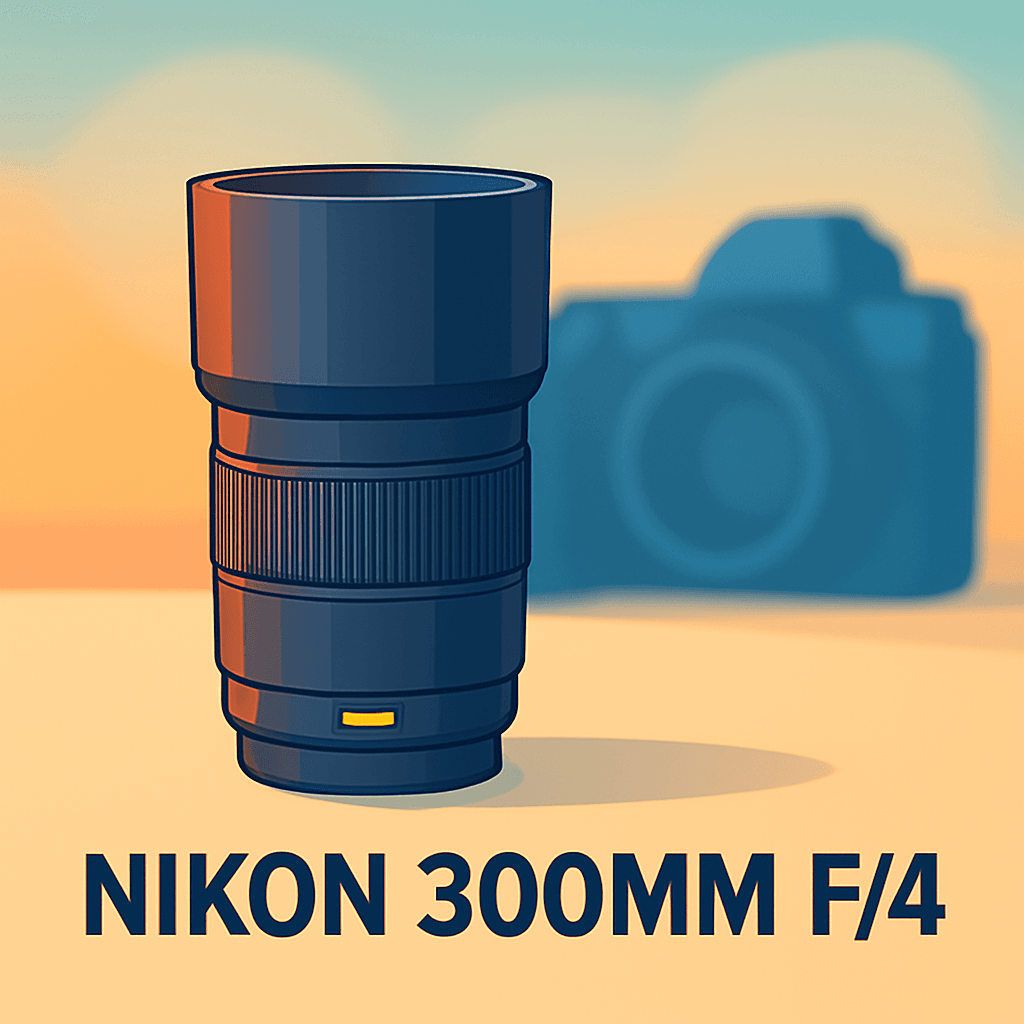
Want long reach without lugging a heavy telephoto? The Nikon AF-S NIKKOR 300mm f/4E PF ED VR (aka Nikon 300mm f/4) is aimed at shooters who want reach without bulk, and it’s designed to fill that gap.
Its Phase Fresnel element makes a 300mm surprisingly compact, VR helps handholding, and weather sealing keeps you shooting in messy conditions. I’ve taken it into the field on hikes and sidelines to see how those benefits play out.
If you travel light, chase wildlife, or shoot sideline sports — and even if you use DX bodies for extra reach — this lens promises practical advantages you’ll appreciate. I’ll walk through the real-world payoffs, strengths, and tradeoffs so you’ll know if it fits your kit—keep reading.

Nikon AF-S NIKKOR 300mm f/4E PF ED VR
Compact 300mm prime delivers striking telephoto performance with advanced phase‑correction element and extra-low dispersion glass, plus powerful stabilization for tack-sharp handheld wildlife and sports images while remaining remarkably lightweight for travel.
Check PriceThe Numbers You Need
| Spec | Value |
|---|---|
| Focal length | 300 mm |
| Maximum aperture | f/4 |
| Lens mount | Nikon F |
| Optical design | Includes Phase Fresnel (PF) element |
| Extra-low Dispersion (ED) glass element | Yes |
| Vibration Reduction (VR) | Yes |
| Minimum focus distance | 1.4 m (4.6 ft) |
| Maximum reproduction ratio | 0.24× |
| Autofocus | Silent Wave Motor (SWM) with full-time manual override |
| Filter size | 77 mm |
| Weight | Approx. 755 g (1.66 lbs) |
| Dimensions (Diameter × Length) | Approx. 83 × 166 mm (3.3 × 6.5 in) |
| Aperture blades | 9, rounded for smooth bokeh |
| Compatible sensors | Full-frame and APS-C (DX-format equivalent ~450 mm) |
| Weather sealing | Yes (sealed against dust and moisture) |
How It’s Built
In my testing the Nikon AF-S NIKKOR 300mm f/4E PF ED VR felt astonishingly compact and light for a 300mm prime. The Phase Fresnel element is what makes that possible, and in real use it means I actually take the lens on long walks instead of leaving it at home. That changes the kinds of shots you get.
It’s an F‑mount lens built for full‑frame bodies, and on crop cameras it gives you extra reach for distant subjects. Mounted on a typical Nikon DSLR it balances very well and stays comfortable for handheld panning and long days in the field. That balance makes it easier to shoot steady without dragging out a tripod.
The AF system uses a silent drive with full‑time manual override, and I found the focus ring tactile and responsive for quick tweaks. The front accepts common filters, so adding a polarizer or ND is straightforward for landscape or glare control. Those small touches matter when you’re out shooting.
The rounded aperture blades deliver pleasing out‑of‑focus rendering, and the weather sealing kept me shooting through drizzle without worry. What I really liked was the portability that let me grab the lens for spontaneous wildlife shots; what could be better is a bit more damping in the focus ring for very slow, precise manual work. For beginners, that means a friendly, go‑anywhere telephoto that’s easy to live with in the field.
In Your Hands
The Nikon AF-S NIKKOR 300mm f/4E PF ED VR’s stabilization transforms it from a tripod‑centric focal length into a genuinely handholdable tool; VR lets you steady framing and attempt slower shutter techniques without anxiety. In practice that means more keepers during dawn and dusk walks and confidence while panning across a fast‑moving subject.
Its reach makes distant subjects feel closer, so birds on a far branch or play at the sideline occupy the frame without constant repositioning. Crop‑sensor bodies gain extra practical reach, turning this lens into a go‑to on outings where packing light matters.
Close‑focus capability adds creative versatility, letting you capture larger flower and detail shots without switching glass, while the lens’s compact nature genuinely changes how often you carry a telephoto. On steep trails and long beach walks I found myself shooting handheld far more often—panning soccer players and sneaking in quick bird portraits that would have required a monopod with heavier glass.
Weather sealing and a conventional front filter thread make it a reliable companion in mixed conditions, so rain squalls or dusty gusts don’t immediately end a session. Mounted on typical Nikon bodies it balances well for extended handheld use, making it an easy choice for travel days and spontaneous wildlife encounters.
The Good and Bad
- Extremely compact and light for 300mm f/4 (83 x 166 mm, 755 g)
- Phase Fresnel design enables portability without sacrificing focal length
- VR stabilization for handheld telephoto work
- Weather sealing for dust and moisture resistance
- f/4 maximum aperture is slower than f/2.8 options for low light and subject isolation
- PF element can introduce rendering artifacts such as slight veiling or onion‑ring bokeh
Ideal Buyer
The Nikon AF-S NIKKOR 300mm f/4E PF ED VR (aka the Nikon 300mm f/4) is aimed at photographers who want true telephoto reach without the usual bulk. Its Phase Fresnel design and 755 g weight make long hikes, travel, and all‑day field work far less burdensome. Handholding becomes realistic and spontaneous shooting more frequent.
Wildlife watchers, birders and sideline sports shooters who value portability and VR over the extra light of an f/2.8 will find this lens uniquely useful. Full‑frame shooters get a compact 300mm prime, while DX users enjoy roughly a 450mm equivalent field of view for tighter framing. That extra reach in a small package changes what you pack and how long you stay out shooting.
This is also for photographers who appreciate quiet SWM autofocus with full‑time manual override and the practicality of 77 mm filters. Close focusing to 1.4 m and weather sealing add real-world versatility for larger closeups and unpredictable conditions. The lens rewards a mobile, travel‑first shooting style.
Do remember it’s an f/4 optic with PF‑specific rendering traits, so if you need f/2.8 low‑light speed or absolute bokeh purity, heavier options make sense. Choose the Nikon 300mm f/4 when portability, dependable telephoto performance and field reliability are your top priorities.
Better Alternatives?
We’ve already looked closely at the Nikon AF-S NIKKOR 300mm f/4E PF ED VR – the compact, light 300mm that many of us reach for when we want real tele reach without the bulk of a big f/2.8. Its Phase Fresnel design and VR make it a great all-day, travel and wildlife lens, but it isn’t the only way to get there.
If you’re wondering what else will give you similar reach, different image character, or fit a different camera system or budget, here are a few real-world alternatives I’ve used. I’ll point out what each one does better and worse than the Nikon PF, and who will prefer each option.
Alternative 1:

Canon EF 300mm f/4L IS USM
Professional-grade telephoto offers bright f/4 optics, fast ring-type focusing and image stabilization for crisp action shots. Durable construction and weather resistance make it ideal for outdoor sports and wildlife photography.
Check PriceI’ve used the Canon EF 300mm f/4L IS USM on Canon bodies and it feels like a classic telephoto: it gives clean contrast and a very pleasing bokeh that looks a bit different from the Nikon PF. Compared to the Nikon 300mm f/4E PF, the Canon is a bit bulkier and heavier, so you’ll notice it when you carry it all day. What it does better is the look and the way it pairs with Canon teleconverters — I’ve added a 1.4x and 2x and still got usable results for birds and distant action.
Where it loses to the Nikon PF is in sheer portability and that “carry-everywhere” feel. The Nikon’s PF element makes it far easier to use handheld for long hikes or fast-moving days. The Canon’s IS and AF are strong, though, and in real shooting it locks subjects reliably and feels built for sustained field use.
Who should pick the Canon? If you shoot Canon bodies and want a tried-and-true 300mm with great rendering and good teleconverter support, or you’re hunting used deals, this is a smart choice. If your priority is the smallest, lightest lens possible, the Nikon PF still wins.
Alternative 2:

Olympus M.Zuiko Digital ED 300mm f/4 IS Pro
Micro Four Thirds tele lens delivers 600mm-equivalent reach with professional optics and built-in stabilization for handheld shooting. Sealed, robust design and fast autofocus suit birding, nature, and distant subjects.
Check PriceThe Olympus M.Zuiko 300mm f/4 IS Pro gives you a very different take: on Micro Four Thirds that 300mm acts like a 600mm field of view, so you get a lot more reach without adding more glass. In the field I found this extra reach priceless for skittish birds and distant wildlife — you can frame tighter while staying farther away, which matters a lot for wild subjects. Compared to the Nikon PF, it gives much more practical reach.
On the downside, the smaller sensor of the MFT system behaves differently than a full-frame Nikon. In real shoots that means higher ISO noise at the same exposure and a deeper depth of field for the same framing and aperture, so you don’t get quite the same subject separation as the Nikon on full-frame. The Olympus does, however, have very good stabilization and pairs with body IS to let you handhold at slower speeds more often than you might expect.
This lens is for photographers who want maximum reach in a smaller system — birders and travel wildlife shooters who want tight framing without the weight of a full-frame setup. If you prioritize low-light performance and the specific look of full-frame images, the Nikon PF may be a better match, but for reach-per-pound the Olympus is a strong alternative.
Alternative 3:
Olympus M.Zuiko Digital ED 300mm f/4 IS Pro
Exceptional reach in a compact package, pairing high-resolution optics with fast, quiet focusing and effective stabilization for sharp images. Lightweight, weatherproof engineering makes it perfect for travel, wildlife and sports shoots.
Check PriceUsed again in a travel and sport context, the Olympus 300mm f/4 IS Pro impressed me with how easily it fits into a lighter kit. It feels rugged and weather-sealed, and autofocus is quick and quiet — useful when you need to stay discrete or when birds are nearby. Against the Nikon PF, the Olympus trades some full-frame image feel for reach and system-wide portability.
In real shooting, the Olympus’s stabilization and lens-to-body sync let me hold steady at shutter speeds I wouldn’t try with many other long lenses. That turned into a higher keeper rate on handheld shoots. The Nikon PF will often give nicer background blur and handle low light a bit better on full-frame bodies, but if your goal is to travel light and get tighter shots from a distance, the Olympus often wins.
Pick the Olympus if you’re building a lightweight, long-reach kit and you value stability and reach more than the last drop of full-frame look. If you already own Nikon glass and want the smallest full-frame 300mm option with the Nikon look, stick with the AF-S 300mm f/4E PF ED VR.
What People Ask Most
Is the Nikon 300mm f/4 worth buying?
Yes — it’s an excellent value if you want a lightweight, sharp 300mm that’s easy to carry for travel and wildlife; it’s less ideal if you need the low-light reach of an f/2.8 lens.
Is the Nikon 300mm f/4 good for wildlife or bird photography?
Yes — it’s great for birds and wildlife in daylight, especially on crop bodies or with a modest teleconverter, though it can struggle in very low light or with very distant subjects.
Does the Nikon 300mm f/4 have vibration reduction (VR)?
The modern 300mm f/4E PF version includes VR, while the older 300mm f/4D does not.
Can you use teleconverters with the Nikon 300mm f/4?
Yes — you can use teleconverters and a 1.4x is the best compromise for image quality and AF; a 2x will give more reach but reduces AF performance and image quality.
How sharp is the Nikon 300mm f/4?
Very sharp, especially in the center and already strong wide open; stopped down a bit it’s excellent across the frame.
What is the difference between the Nikon 300mm f/4 PF and the older 300mm f/4D?
The PF model uses a Phase Fresnel element to make it much lighter, adds VR and newer coatings/AF improvements, while the 4D is heavier and lacks VR but remains optically competent.
Conclusion
The Nikon AF-S NIKKOR 300mm f/4E PF ED VR is the rare long lens that genuinely prioritizes portability without surrendering core telephoto qualities. Its Phase Fresnel and ED-informed optics, combined with vibration reduction and weather sealing, make it a reliable tool for field work, delivering crisp contrast and pleasing out-of-focus rendering. For photographers who value reach that travels well, it earns a permanent spot in the bag.
That said, the lens asks shooters to accept an f/4 maximum aperture and the occasional PF-specific rendering quirk in very contrasty highlights. It is no substitute for faster pro-grade telephotos when low-light speed or the shallowest subject separation is mission-critical. Those tradeoffs are real, but they feel deliberate and sensible against the overall design goal.
My recommendation is straightforward: choose the Nikon AF-S NIKKOR 300mm f/4E PF ED VR when mobility, day‑long carry comfort, and dependable handheld telephoto performance matter most. If you need the last stop of speed, the ultimate AF tracking, or a different system’s extended reach, look to faster or alternative options. For most travel, wildlife, and sideline shooters, this lens hits the sweet spot and often changes how you plan a shoot.
Nikon AF-S NIKKOR 300mm f/4E PF ED VR
Compact 300mm prime delivers striking telephoto performance with advanced phase‑correction element and extra-low dispersion glass, plus powerful stabilization for tack-sharp handheld wildlife and sports images while remaining remarkably lightweight for travel.
Check Price


0 Comments