
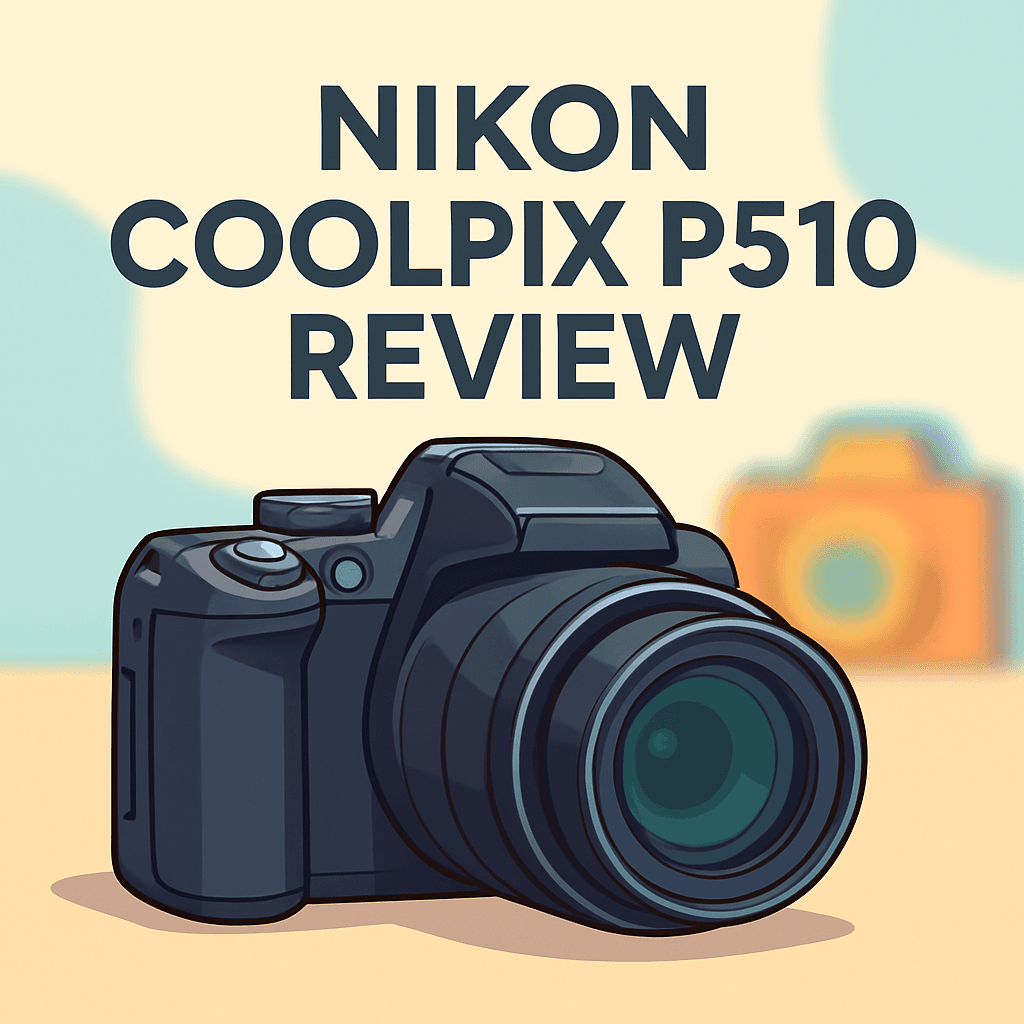
Want one camera that lets you shoot wide landscapes and pull in distant wildlife without swapping lenses?
The Nikon COOLPIX P510 Camera is a superzoom bridge option that promises long reach, a vari-angle screen, an EVF, 1080p video, stabilization, manual controls and built-in GPS—all in a single travel-friendly body.
Having spent days shooting travel scenes and long-tele handheld wildlife with it in the field, I’ll walk you through how those features pay off in real-world use, not just on paper.
If you’re a traveler who wants one versatile kit, a casual wildlife shooter, or a learner eager to try manual modes, this review will show the trade-offs and real shooting tips—make sure to read the entire review as we dig into handling, tele performance, stabilization, video, and ISO behavior. Keep reading.

Nikon COOLPIX P510 Camera
Long-range bridge camera delivering impressive zoom reach, flexible exposure controls, fast autofocus, and a tilting LCD for versatile framing. Perfect for travel and wildlife shooters seeking lens-like performance without extra gear.
Check PriceThe Numbers You Need
| Spec | Value |
|---|---|
| Sensor | 1/2.3-inch CMOS |
| Resolution | 16 MP |
| Optical Zoom | 42x |
| Focal Length | 24–1000mm (35mm equivalent) |
| Aperture Range | f/3.3–5.9 |
| LCD Screen | 3.0-inch vari-angle |
| Viewfinder | Electronic |
| ISO Range | 100–3200 (expandable to 6400) |
| Continuous Shooting | 7 fps |
| Video | 1080p Full HD |
| Image Stabilization | Dual-detection VR |
| Manual Shooting Modes | Yes (P, S, A, M) |
| RAW Support | Yes |
| GPS | Built-in |
| Weight | ~555g (including battery) |
How It’s Built
Handling the Nikon COOLPIX P510 Camera feels familiar and friendly right away. The grip is deep enough for secure one-handed framing at short focal lengths, but in my testing I reached for two hands once the lens pushed far out. That means it’s easy to wander with on trips, but you’ll steady up for long-telephoto work.
The vari-angle LCD is the thing I really liked; I used it for low-angle travel shots and awkward video framing and it made life simple. The electronic viewfinder is handy in bright sun, though I noticed it can look a bit soft at times. In practice I switched between the two depending on light and motion.
Controls are straightforward and friendly for beginners. The mode dial gives quick access to manual shooting and the zoom lever sits where your thumb wants it, so zoom transitions feel natural. Menus and some buttons show their age, but they’re not hard to learn.
Build feels solid for a travel bridge camera, with mostly good material choices. After using it for a while I noticed a little play in the lens when fully extended, so a tripod or careful hand technique helps at long reach. That small wobble is the main downside.
GPS is a quiet win for travel workflow and tagging shots without extra steps. Mounting on a support works fine, but plan to use extra stability for long shots—this camera invites exploration, just bring a steadying plan.
In Your Hands
With the Nikon COOLPIX P510 Camera’s impressive reach, tracking distant subjects becomes an exercise in steady technique as much as gear. The dual-detection VR meaningfully reduces visible shake and raises the keeper rate for opportunistic handheld shots, but it doesn’t negate the value of bracing, a solid stance, or a quick monopod at the far end of the zoom. Framing moving wildlife is achievable, yet patience and anticipation matter more than rapid reflexes.
For everyday travel and landscapes the P510 is a joy—wide-to-mid compositions feel natural and family moments are easy to capture on the fly. Manual and priority exposure modes let you tame shutter speeds when zooming in, so you can choose sharpness over motion blur without fighting the camera’s default settings. Mid-tele reach reveals distant detail without constant lens swapping.
In video use the camera produces clean Full HD clips that hold up for social and travel storytelling, and VR makes handheld pans noticeably smoother. Autofocus during recording is competent for casual clips but can hunt when you push to extreme reach or low-contrast scenes, and the zoom mechanism can be heard on the internal audio unless you mic externally.
Composing in bright sun or awkward angles is where the P510’s viewfinder and vari-angle screen shine; the EVF keeps scene visibility in glare while the tilting LCD frees up creative low and high viewpoints. Switching between them becomes second nature as conditions change.
The built-in GPS proved useful for travel workflows, reliably tagging images once it locks and simplifying post-trip organization and mapping. In tight urban canyons the lock can take a moment, but the payoff is immediate when you’re sorting shots by location after a long day of shooting.
The Good and Bad
- 42x optical zoom covering 24–1000mm equivalent for maximum flexibility
- Dual-detection VR to support handheld shooting at long focal lengths
- Manual P/S/A/M modes for creative control and learning
- 3.0-inch vari-angle LCD for flexible composition angles
- Small 1/2.3-inch sensor with limited dynamic range and high-ISO performance versus larger sensors
- Narrow maximum aperture (f/3.3–5.9) requiring more light or higher ISO, especially at the telephoto end
Ideal Buyer
Pick the Nikon COOLPIX P510 if you want a single, travel-friendly camera that covers everything from wide scenes to distant subjects without swapping glass, thanks to its true superzoom reach. It’s perfect for travelers and daylight shooters who prioritize reach for wildlife, moon shots, airshows and distant sporting moments. Enthusiasts and learners who want hands-on practice with P/S/A/M controls, plus the convenience of built-in GPS and a vari-angle screen for awkward angles, will appreciate its all-in-one practicality.
Avoid the P510 if your work lives in low light or depends on clean high‑ISO files and smooth background blur, since the small sensor and modest aperture limit image quality in dim conditions. Videographers who need 4K, advanced video features or faster modern AF tracking for fast action will want something newer. And if you demand rock‑steady autofocus and absolute speed at extreme tele focal lengths, plan to look at alternatives—at 1000mm the camera rewards careful technique, support and patience more than raw speed.
Better Alternatives?
We’ve gone through the P510’s strengths and where it struggles in real use — the huge all-in-one reach, handy controls, and the compromises that come with a small sensor and 1080p video. If what you shoot is satisfied by that balance, the P510 is a great package. But a lot of photographers want one of three things the P510 doesn’t do as well: more reach, 4K video and RAW flexibility, or the absolute longest reach possible for moon and distant wildlife.
Below are practical alternatives I’ve used in the field that pick different trade-offs. I’ll tell you how each one shoots differently from the P510, what they do better and worse, and the kind of buyer who’ll be happiest with each choice. These are real-world notes — what worked in travel light, handheld telephoto work, and tripod sessions.
Alternative 1:

Canon PowerShot SX70 Camera
Powerful travel zoom with crisp 4K video, stabilized optics, and a high-resolution electronic viewfinder. Ergonomic controls and reliable autofocus make it a go-to all-in-one solution for versatile everyday shooting.
Check PriceThe Canon SX70 is the practical step up from the P510 if you want more reach and modern video without jumping to a bulky system. In real shooting I liked having the extra zoom for tighter framing on distant subjects and the 4K clips are a big plus when you want to grab a still from video or deliver sharper footage. Autofocus felt faster and more reliable than the P510 when tracking slower wildlife or kids on the move.
Where it loses to the P510 is in sheer simplicity and light carry. The SX70 is a bit bigger and heavier, so it’s less of a grab-and-go travel camera. And while the 4K and RAW help in editing, the small sensor still limits low-light shots — you’ll still see noise and less depth of field compared to larger-sensor cameras.
If you’re a travel shooter who wants one camera to cover wide scenes, distant subjects, and better video for social use, the SX70 is a good match. Choose it if you value tighter framing and 4K video but still want a single-lens solution that doesn’t require swapping glass.
Alternative 2:

Nikon COOLPIX P1000 Camera
Extraordinary ultra-telephoto capability paired with image stabilization and detailed manual controls. Ideal for photographing wildlife, distant sports, and celestial subjects where extreme reach and steady handling are essential.
Check PriceThe P1000 is in another league when it comes to reach — I used it for moon shots and long-distance birding where the P510 simply can’t get close enough. That extra reach lets you nail a subject in-camera rather than cropping hard later, and the stabilization goes a long way toward usable handheld shots at moderate long distances.
That reach comes with real trade-offs. The P1000 is noticeably bigger and heavier than the P510, and at the far end you often need a tripod and patience. I saw softness, atmospheric haze, and focus hunting more often when pushing it to the extreme; it’s brilliant for getting closer, but it doesn’t magically fix the limits of a small sensor or bad weather.
If your priority is getting as close as possible — birding, moon photography, airplane spotting, or watching distant sports — the P1000 is for you. It’s not the best pick for casual travel where you want a light, pocketable camera for quick snaps.
Alternative 3:
Nikon COOLPIX P1000 Camera
Unmatched long-distance performance for moon shots, birding, and surveillance, featuring advanced processing and tripod-friendly ergonomics. Delivers surprising detail from afar while keeping menus intuitive for focused shooting sessions.
Check PriceSeen in the field a second way, the P1000 shines when you’re prepared to use it as a specialist tool. I liked its tripod-friendly handling and the way the controls let me tweak exposure and focus without fighting the camera. For planned shoots — a lunar session or a stakeout for a shy bird — it gives image detail the P510 can’t reach.
But it’s not a daily driver for everyone. Compared to the P510, setup time and weight are real considerations: you’ll spend more time framing and steadying shots. Also, air and heat between you and the subject will blur detail more at extreme ranges, so expect to work around weather and use careful technique.
Buy the P1000 if ultimate reach is your main goal and you don’t mind carrying a bigger camera or using a tripod. If you want the P510’s easy, travel-friendly balance, stick with the P510; if you need to get as close as possible to distant subjects, the P1000 is the tool that makes those shots possible.
What People Ask Most
Is the Nikon Coolpix P510 worth buying?
Yes if you want a bargain superzoom with huge reach for travel or wildlife, but it’s dated compared with modern compacts and not ideal for serious low-light or professional work.
How good is the image quality of the Nikon Coolpix P510?
The 16MP 1/2.3″ sensor delivers acceptable daylight JPEGs but falls short on detail and dynamic range, and gets noisy at higher ISOs.
How much zoom does the Nikon Coolpix P510 have?
It has a 42x optical zoom covering roughly 24–1000mm equivalent, giving very long reach for a compact-style camera.
Does the Nikon Coolpix P510 shoot in RAW?
No, the P510 only records JPEG files and does not support RAW capture.
How is the low-light performance of the Nikon Coolpix P510?
Poor to mediocre because of the small sensor and limited high-ISO capability — use flash, a tripod, or shoot in bright conditions for best results.
What are the pros and cons of the Nikon Coolpix P510?
Pros: massive zoom, comfortable handling, and low street price; Cons: small sensor, no RAW, noisy high-ISO images, and slower AF/burst than modern cameras.
Conclusion
The Nikon COOLPIX P510 Camera is still compelling as an all‑in‑one travel tool thanks to its huge 24–1000mm reach, steady VR that makes handheld tele work practical, and built‑in GPS for effortless trip organization. Manual P/S/A/M controls and an articulating LCD/EVF pair give you real creative control without swapping glass. It also shoots solid Full HD video for casual clips.
Those strengths come with familiar trade‑offs: a small sensor and modest tele aperture mean you’ll be compromising low‑light image quality and shallow depth‑of‑field. The 1080p‑only video and a user interface that can feel dated are reminders this is a purpose‑built bridge camera, not a mirrorless pro body. At extreme focal lengths the camera rewards careful technique more than brute force.
If your priority is daytime travel, moon and birds‑from‑a‑distance or a single lightweight camera that covers everything, the P510 remains a sensible, portable choice. If you need longer reach, 4K, RAW workflow or faster AF, the Canon SX70 HS, Nikon P1000 or Panasonic FZ82 are worth a hard look. For buyers who want reach without carrying lenses, the P510 still earns a clear recommendation—within its practical limits.
Nikon COOLPIX P510 Camera
Long-range bridge camera delivering impressive zoom reach, flexible exposure controls, fast autofocus, and a tilting LCD for versatile framing. Perfect for travel and wildlife shooters seeking lens-like performance without extra gear.
Check Price



0 Comments