
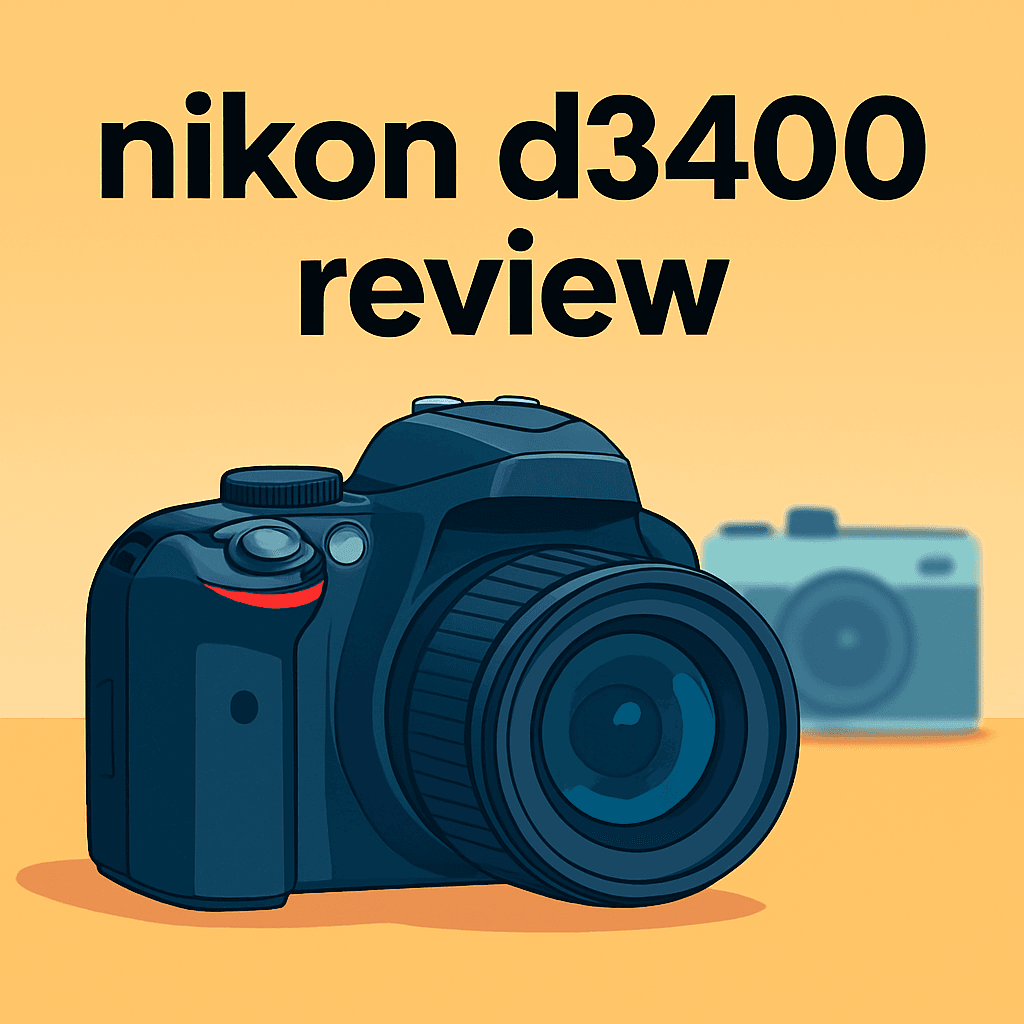
Want to take noticeably better photos without getting buried in menus and jargon?
I field-tested the Nikon D3400 Camera on real shoots. It’s lightweight, has long battery life, and a useful Guide Mode that’ll help beginners start shooting confidently.
This review concentrates on stills and everyday shooting workflows. Video features are basic, so it’s not aimed at serious vloggers.
I’ll cover handling, image quality, and where it truly shines for real photographers. Make sure to read the entire review as I dive into the details — keep reading.

Nikon D3400 Camera
Compact entry-level DSLR offering 24.2MP resolution, crisp image quality, intuitive controls, excellent battery life, and Bluetooth for effortless image transfer—perfect for beginners growing their photography skills.
Check PriceThe Numbers You Need
| Spec | Value |
|---|---|
| Sensor | 24.2 MP DX-format CMOS |
| ISO range | 100–25,600 |
| Autofocus points | 11 |
| Continuous shooting | 5 fps |
| Max video resolution | 1080p at 60 fps |
| LCD screen | 3.0-inch fixed, 921k-dot |
| Viewfinder | Optical pentamirror, 95% coverage |
| Wi‑Fi / Bluetooth | Bluetooth only (SnapBridge) |
| Battery life | 1200 shots per charge |
| Storage | Single SD card slot |
| Microphone input | No |
| Built-in flash | Yes |
| LCD touchscreen | No |
| Weight | 395g (body only) |
| Lens mount | Nikon F |
How It’s Built
In my testing the Nikon D3400 Camera felt wonderfully light and easy to carry all day. That low weight really cuts down on fatigue during travel or family outings. For a beginner it makes picking the camera up and shooting much less intimidating.
I found the Nikon F mount to be a real practical win. Swapping lenses is straightforward and you can grow into better glass without changing systems. For real-world use that means better photos over time as you upgrade lenses.
Guide Mode is where this camera shines for new shooters. After using it for a while I liked how it walks you through common tasks instead of throwing terms at you. That makes learning exposure and composition feel like a friendly tutorial, not a lecture.
The fixed screen and optical viewfinder are usable but show their limits. The non-touch LCD makes menu navigation slower and the viewfinder doesn’t show quite everything at the edge of the frame, so you learn to leave a tiny margin when composing. This is the one area I wished was a bit more modern.
Practical touches like the built-in flash and a simple single card slot kept my workflow easy to manage. The lack of a mic input is a clear limit for anyone serious about video, but for stills-focused beginners the package is clean and sensible.
In Your Hands
The Nikon D3400’s autofocus system is straightforward rather than flashy, with a modest AF array that rewards thoughtful composition; place your subject toward the active points and it locks predictably for stills. Its burst capability is competent for casual action—perfect for kids and pets—but not aimed at high-speed pro sports. Its simplicity is an advantage for beginners learning to compose and anticipate motion.
Daylight performance is where the sensor really shows itself, and using the camera’s lowest sensitivity setting delivers clean, detailed files for landscapes and portraits. Higher sensitivity options let you push into dimmer situations, but noise becomes a factor, so exposure discipline and faster glass remain the best tools for low-light work.
One of the D3400’s most practical strengths is its endurance — you can comfortably get through a full day of sightseeing or family events without frequent battery swaps. That reliability changes how you shoot: more relaxed, more retries, and fewer interrupted moments to worry about power levels.
The single memory card slot keeps file management simple and predictable when importing to a laptop, but it does mean there’s no in-camera redundant backup. For travel shooters I recommend a straightforward off-camera backup routine to complement the camera’s uncomplicated workflow.
Video is serviceable for family clips and short web pieces—Full HD at higher frame rates looks fine—but the fixed screen and lack of an external mic input limit serious vlogging or run-and-gun sound work. In everyday use the D3400 excels as a learning-focused travel companion: think family outings, travel diaries, and beginner projects where thoughtful shooting beats flashy features.
The Good and Bad
- 24.2 MP DX-format sensor for detailed stills
- Outstanding battery life (1200 shots)
- Lightweight body (395g)
- Guide Mode for beginners
- Bluetooth-only connectivity (no Wi‑Fi)
- No microphone input
Ideal Buyer
If you’re stepping up from a phone or a compact, the Nikon D3400 is tailored for first-time DSLR owners. Guide Mode walks you through settings and creative choices without jargon. Controls are simple, forgiving and intuitive.
Stills-first shooters who travel, shoot family moments, or work on learning projects will appreciate what it offers. The 24.2MP sensor delivers plenty of detail and the camera’s stamina and light weight let you shoot all day. That combination makes it easy to focus on composition instead of battery anxiety or camera fatigue.
It isn’t aimed at creators who need advanced video tools. There’s no mic input, no 4K, and the screen doesn’t swivel, so vlogging and pro-level video work require another tool. If video is secondary, the D3400 stays out of your way.
Buyers who are happy with Bluetooth-based transfers and a single SD slot will get a lot for the price. It’s also a solid platform for learning lenses on the Nikon F mount as you grow. In short: a forgiving, portable stills camera for students, travelers, and families who want to learn.
Better Alternatives?
We’ve gone through the Nikon D3400 and what makes it a great starter DSLR: that 24MP sensor, the huge battery life, and the simple Guide Mode that helps you learn. If the D3400 mostly fits what you need, great. But some shooters will want different handling, better connectivity, or a camera that feels a little nicer in the hand.
Below are a few practical alternatives I’ve used in the field. I’ll explain what each one does better and worse compared with the D3400, and who I think would prefer each body based on real shooting experience — not just the spec sheet.
Alternative 1:

Nikon D3500 Camera
Lightweight, beginner-friendly camera with responsive autofocus, 24.2MP sensor, timeless ergonomics, outstanding battery endurance, and simple guided modes to help novice shooters capture sharp, vibrant photos every time.
Check PriceThe D3500 is basically the D3400’s cleaner, more comfortable sibling. Image quality is extremely similar — same 24MP feel in daylight — but the D3500 sits nicer in my hand and the buttons are a little more intuitive when you’re changing settings on the fly. For long walks, travel days, or family shoots I noticed less hand fatigue and fewer fumbling moments than I did with the D3400.
Where it beats the D3400 is in everyday handling and tiny refinements to battery efficiency; you still get great endurance so you can shoot a full day without panic. What it doesn’t fix are the D3400’s limits: no mic input, a fixed non-touch screen, and basic OVF autofocus remain the same, so it won’t suddenly make video or fast-action shooting much easier.
If you want almost the same pictures as the D3400 but prefer a nicer grip and a slightly tidier user experience, the D3500 is a smart step up. It’s the choice for beginners who value comfort and long outings — the kind of shooter who keeps a camera on their shoulder all day and wants it to feel good.
Alternative 2:
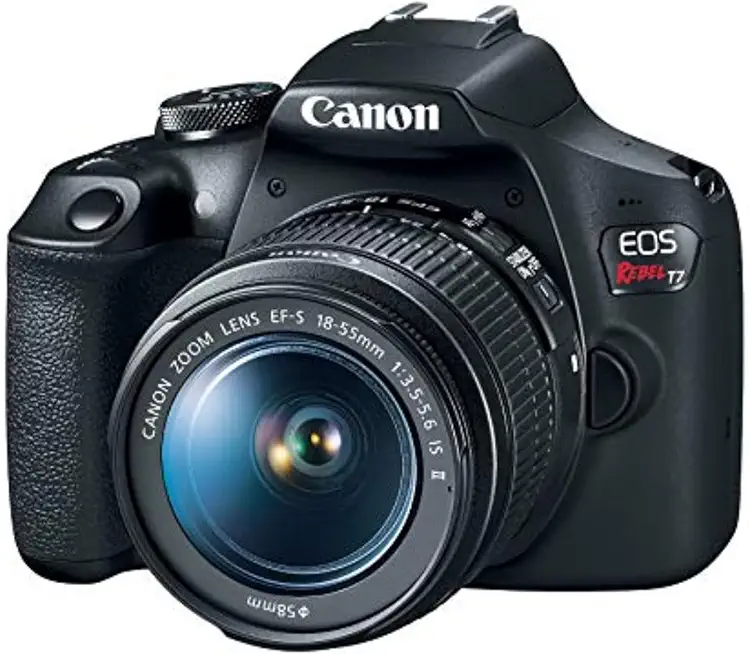
Canon EOS Rebel T7 Camera
Affordable, easy-to-use DSLR with a 24MP sensor, reliable autofocus, Full HD video recording, built-in Wi-Fi for quick sharing, and intuitive controls ideal for everyday hobbyists.
Check PriceThe Canon T7 is more of a straightforward budget pick and it shines where the D3400 is stingy: built-in Wi‑Fi and often more pleasing straight-out-of-camera JPEGs. In practice that means easier sharing to your phone and fewer steps to get family photos online. I’ve found its color and skin tones forgiving for quick portraits and snapshots, which is handy when you don’t want to fuss with editing.
On the downside, the T7’s autofocus and low-light performance can feel slower than the D3400’s when you’re trying to catch fast kids or dim indoor moments. Live view is also slower to focus, so using the screen for action or casual video feels sluggish. Battery life and continuous shooting aren’t as strong, so it’s not my first pick for long event days.
If you’re buying on a tighter budget and you care about easy sharing and pleasing JPEGs more than every feature, the T7 works well. It’s best for hobbyists, newcomers who want to post images quickly, and anyone who values a simple point-and-shoot DSLR feel over long battery endurance or fast AF.
Alternative 3:
Canon EOS Rebel T7 Camera
Compact body with a comfortable grip, renowned color rendering, versatile kit-lens performance, expandable lens ecosystem, and simple scene modes that help newcomers explore creative shooting and improve composition quickly.
Check PriceSeen from another angle, the T7’s compact feel and easy scene modes make it a gentle learning camera. The kit lens behaves well for everyday zoom ranges and the Canon lens lineup gives you easy upgrade paths later. When I handed it to friends and family to shoot, they liked how forgiving the auto modes were and how the camera interpreted color and skin tones.
Compared to the D3400, the T7 is friendlier for casual shooters but loses out in endurance and speed. The D3400’s battery and slightly more reliable AF in low light give it an edge when you need to work longer or capture moving subjects. The T7’s live view and video handling stay basic, so it’s not a big step up for people wanting more advanced video or faster live-AF.
Choose this T7 variant if you want a compact, easy-to-use Canon experience with nice colors and simple shooting modes. It’s ideal for new photographers or families who want attractive photos straight away and plan to upgrade lenses over time rather than rely on advanced camera features.
What People Ask Most
Is the Nikon D3400 worth buying?
Yes, if you want a cheap, reliable entry-level DSLR with great still-image quality and long battery life; skip it if you need 4K, a touchscreen, or modern connectivity.
Is the Nikon D3400 good for beginners?
Absolutely — it’s easy to learn on, has a helpful Guide mode, and produces excellent results with basic lenses.
How is the image quality of the Nikon D3400?
Very good for its class: the 24MP sensor delivers sharp, low-noise JPEGs and RAWs up to moderate ISOs.
Nikon D3400 vs D3500 — which should I buy?
The D3500 is the slightly improved, newer model with better ergonomics and battery life, so choose the D3500 if prices are similar; pick the D3400 only if it’s significantly cheaper.
Is the Nikon D3400 good for video?
It’s fine for casual 1080p video, but it lacks a mic input and advanced video features, so it’s not ideal for serious videography.
What lenses are best/compatible with the Nikon D3400?
Use Nikon F-mount AF-S/AF-P DX lenses for full autofocus — popular choices are the 18-55mm kit, 35mm f/1.8 DX for low light and portraits, and a 70-300mm for telephoto.
Conclusion
The Nikon D3400 Camera is a compact, stills-first DSLR that punches above its class for photographers learning the craft. Its DX-format sensor delivers detailed images and the light, long-lasting design invites all-day shooting without fuss. Beginner-friendly Guide Mode makes real-world learning feel intentional rather than intimidating.
It’s not perfect — video capabilities are basic and the camera lacks an external mic port and a touch or articulating screen. Bluetooth-only connectivity keeps transfers simple but limits speed and remote control flexibility compared with Wi‑Fi-equipped rivals. If you rely on modern live-view autofocus, advanced video tools, or wired accessories you’ll notice those gaps right away.
For stills-first newcomers, travelers, and anyone who values simplicity, portability and battery endurance, the D3400 offers clear, practical value. For hybrid shooters or creators who need 4K, on-camera mics, or a flexible touchscreen, a more modern alternative will be a smarter buy. In short, buy the D3400 if you want a straightforward, dependable DSLR to learn with and shoot all day; look elsewhere if video and connectivity are priorities.
Nikon D3400 Camera
Compact entry-level DSLR offering 24.2MP resolution, crisp image quality, intuitive controls, excellent battery life, and Bluetooth for effortless image transfer—perfect for beginners growing their photography skills.
Check Price

0 Comments