
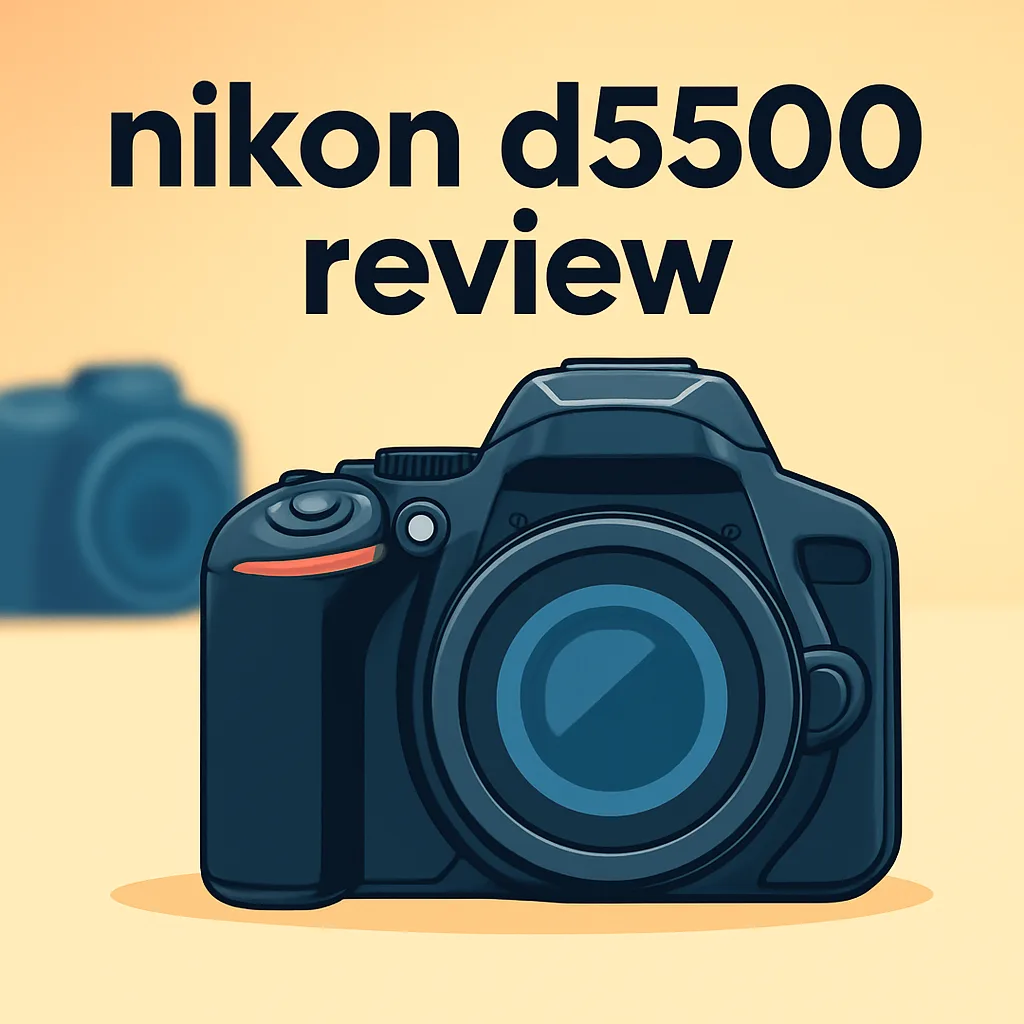
Want better photos without lugging a heavy camera?
I’ll take a practical look at whether the Nikon D5500 Camera fits that bill in everyday shooting situations.
I’ve put it through real shoots to see how it behaves in the field, focusing on handling, autofocus, image quality in mixed light, battery life, and sharing workflow.
If you want a compact DSLR that’s easy to carry, shoots smooth video, and won’t die halfway through a day, this review is for you — keep reading.

Nikon D5500 Camera
Lightweight DSLR with a 24.2MP APS-C sensor and responsive 39-point autofocus; an articulating touchscreen and refined ergonomics deliver sharp images and easy handling for travel and creative photography.
Check PriceThe Numbers You Need
| Spec | Value |
|---|---|
| Sensor | 24.2 MP APS-C CMOS |
| Lens Mount | Nikon F-mount |
| ISO Range | 100–25,600 |
| Autofocus | 39-point (9 cross-type) |
| Continuous Shooting | 5 fps |
| Video | 1080p at 60 fps |
| Viewfinder | Optical pentamirror, 95% coverage |
| Screen | 3.2″ fully articulated touchscreen LCD |
| Image Format | JPEG, RAW (NEF) |
| Storage | SD/SDHC/SDXC (1 slot) |
| Connectivity | Wi-Fi, Micro-USB, Mini-HDMI |
| Battery Life | Approx. 820 shots per charge |
| Weight | 420 g (body only) |
| Dimensions | 124 x 97 x 70 mm |
| Built-in Flash | Yes |
How It’s Built
In my testing the Nikon D5500 felt like a true take-anywhere DSLR. The body is compact and light, so it was easy to tote around all day without getting tired. That makes it a great pick for beginners who want DSLR control without the bulk.
I found the touchscreen pleasantly responsive and useful for quick menu taps and touch-to-focus. The flip-out screen really changed how I framed low or high shots and made self-recording way less awkward. One thing I really liked was how natural the touch controls felt compared with older button-heavy cameras.
The optical viewfinder gives a clear, traditional shooting experience, but it doesn’t show every last pixel at the edges. In practice that means I double-checked critical edge details on the LCD after composing, which is an easy habit to learn. If you care about perfect edge framing, it’s worth a quick review shot.
Physically it’s sensible: a handy built-in flash for fill, wireless sharing for fast offloads, and the usual ports for cable and video out. The single memory card slot and lack of built-in GPS are realities to be aware of, so plan backups or geotagging workflows ahead of time.
The grip is comfy and balances well with common kit lenses, letting you hold one-handed for short bursts. The hinge is solid for normal use, though the screen struggles a bit in harsh sunlight—nothing a little shade or a quick preview can’t fix.
In Your Hands
The D5500 feels brisk for everyday shooting—single frames fire instantly and the viewfinder AF picks subjects up reliably—making it a natural for kids, pets, and casual sports. Its continuous-shooting capability covers short action sequences well, but prolonged bursts expose the camera’s buffer and you’ll notice it settling before you can resume long sequences. Overall responsiveness favors deliberate photographers who need quick capture more than marathon frame rates.
Battery endurance is one of the camera’s real strengths in the field; it comfortably gets you through a full day of mixed stills and intermittent video when you rely on the optical viewfinder. That said, heavy live-view use, frequent touchscreen operation, and wireless transfers will shorten runtime, so plan for a spare when you know the shoot will be heavy on monitoring or sharing. For travel and events it’s reassuringly dependable.
Wireless connectivity is handy for rapid sharing and remote triggering, though the initial pairing can be a little fiddly and transfers favor smaller JPEGs by default. In practice I found the Wi‑Fi best suited to on-the-go social uploads and quick client previews rather than as a replacement for a tethered workflow. Remote control via phone is genuinely useful for self-portraits and low-angle setups.
Video mode delivers smooth motion and a pleasing look for run‑and‑gun clips, but focus in live view can be less confident than the viewfinder AF and will hunt in dimmer light. The built‑in mic handles ambient sound acceptably, though interviews benefit from an external microphone. A single card slot means no in-camera redundancy, so plan your recording and card-swapping strategy to avoid interruptions.
The Good and Bad
- 24.2 MP APS-C sensor for detailed stills
- 3.2″ fully articulated touchscreen for flexible shooting angles and touch control
- 1080p at 60 fps for smooth motion capture
- Strong battery life rated at ~820 shots
- Optical pentamirror viewfinder with 95% coverage (not full coverage)
- Single SD card slot (no in-camera redundancy)
Ideal Buyer
The Nikon D5500 is for photographers who want a compact, lightweight DSLR that still feels like a proper camera in the hand. Its 24.2MP sensor, comfortable grip and fully articulated touchscreen make it a sweet spot for shooters who value image quality and creative framing without hauling a pro body. The long battery life means you can roam all day without hunting for an outlet.
If you shoot hybrid stills and video, the D5500’s 1080/60p capability, responsive touchscreen and built‑in Wi‑Fi make everyday storytelling and quick sharing effortless. Vloggers, travel photographers, parents and street shooters will appreciate the flip screen for low and high angles and the simple wireless workflow for social uploads. Don’t expect pro‑grade continuous speed or dual‑card redundancy — it’s tuned toward practical, enjoyable use rather than marathon event coverage.
Be comfortable with the optical viewfinder’s 95% coverage and a single SD slot, and you’ll find the D5500’s image quality, RAW latitude and Nikon F‑mount compatibility very compelling. Choose this camera if you want a portable, versatile tool that delivers great results in real hands‑on shooting situations. Skip it if your work demands faster burst rates, full viewfinder coverage or in‑camera backup.
Better Alternatives?
We’ve gone through the D5500’s handling, image quality, battery life and real-world autofocus, so you know what the camera does well and where it falls short. If you still want something a little different—better phone pairing, stronger live-view AF, or a different color look—there are a few close options worth considering.
Below are three alternatives I’ve used in real shoots. I’ll point out what each one does better and worse than the D5500 and who is likely to prefer it, based on real shooting, not just numbers.
Alternative 1:

Nikon D5600 Camera
Connected enthusiast camera offering a 24.2MP sensor, reliable 39-point AF and seamless Bluetooth sharing; long battery life and intuitive controls keep you shooting and uploading with minimal fuss.
Check PriceI’ve shot with both the D5500 and D5600 and the big real-world change is the D5600’s SnapBridge Bluetooth pairing. In practice that means you can get photos onto your phone more easily and keep a steady background transfer going—handy for quick social uploads or instant backups during a shoot.
What it does worse? It’s mostly the same camera underneath, so you don’t gain faster burst speed or better AF tracking over the D5500. Early SnapBridge versions also like to send lower-res JPEGs by default and can be a little fussy to set up the first time, so don’t expect miracles if you want full-size RAW transfers to your phone.
This one is for people who love the D5500’s feel and image quality but want simpler, more automatic phone sharing and remote control. If you value seamless phone workflow more than raw speed or an AF upgrade, the D5600 is the sensible, practical step up.
Alternative 2:
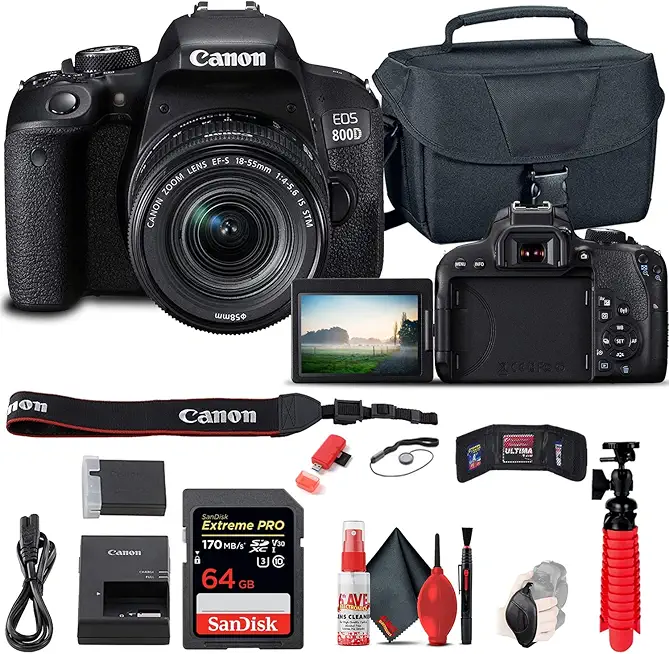
Canon EOS Rebel T7i Camera
Responsive performer with a 24.2MP sensor, fast 45-point autofocus and Dual Pixel live-view AF; intuitive menu, strong low-light capability and silky continuous shooting make it perfect for learning photographers.
Check PriceJumping to the T7i (800D) gives you a very different live-view and video experience. Canon’s Dual Pixel AF is noticeably smoother and faster in live view and video compared with the D5500’s contrast-based live-view focusing, so if you shoot a lot of video or use the screen to track moving subjects, the T7i feels much more confident.
On the downside, while I like Canon’s out-of-camera colors and how skin tones come straight out of the camera, the T7i can have a slightly shorter battery life in long shoots compared with the D5500 and it doesn’t match the D5500’s stamina when you’re out all day without spare batteries. Also, for stills at very high ISO I sometimes preferred Nikon’s noise handling and highlight latitude in the D5500.
Pick the T7i if you make a lot of videos, use live view often, or want a camera that’s very friendly for learning and quick portrait work. It’s a good fit for vloggers, hybrid shooters and anyone who values steady autofocus while recording motion.
Alternative 3:
Canon EOS Rebel T7i Camera
Versatile tool for creators: articulating touchscreen, dependable Dual Pixel autofocus in video, built-in Wi-Fi/Bluetooth for quick sharing and user-friendly controls that support fast setup and confident shooting.
Check PriceSeen from another angle, the T7i’s touchscreen and menus are very approachable—you can get set up fast and start shooting without digging through complicated controls. The built-in Wi‑Fi and Bluetooth make phone sharing easy, though in daily use I found Canon’s sharing a bit more focused on speed of control and live-view remote than on continuous background syncing like SnapBridge.
Compared to the D5500, the T7i wins for anyone who needs reliable video AF and smooth subject tracking in live view. It loses a bit in pure battery endurance and the D5500 still feels a touch lighter and more pocketable for long walks. Also, if your priority is the absolute best high-ISO files for large prints, I’ve sometimes favored the Nikon images for that use.
If you’re a content creator who shoots mixed stills and video and wants easy touch controls, fast live-view focus and straightforward phone control, the T7i is a strong alternative. If instead you want the best battery life and slightly better high-ISO stills on long shooting days, stick with the D5500 or the D5600.
What People Ask Most
Is the Nikon D5500 still worth buying?
Yes — it’s a solid, affordable 24MP APS-C DSLR with great image quality and a handy touchscreen, but you’ll miss newer features like Bluetooth, improved battery life, and 4K video found in newer models.
How does the Nikon D5500 compare to the Nikon D5600?
The D5600 adds Bluetooth SnapBridge and minor battery/firmware improvements, but both share nearly identical image quality and core features.
What are the pros and cons of the Nikon D5500?
Pros: sharp 24MP sensor, lightweight body, articulated touchscreen and good stills AF; Cons: no built-in Bluetooth/Wi‑Fi, no 4K video, and older low‑light AF performance compared to newer cameras.
Is the Nikon D5500 good for beginners?
Yes — it’s user-friendly with clear controls and guide features that help you learn, though beginners wanting modern connectivity might prefer a newer model or mirrorless option.
Does the Nikon D5500 have Wi‑Fi and a touchscreen?
It has a responsive touchscreen but no built‑in Wi‑Fi or Bluetooth, so transfers are usually via SD card or USB unless you use an external adapter or third‑party solutions.
What lenses are compatible with the Nikon D5500?
The D5500 uses the Nikon F‑mount and works best with AF‑S and AF‑P DX/FX lenses (autofocus only with lenses that have a built‑in focus motor); older AF lenses that require a body motor will not autofocus.
Conclusion
The Nikon D5500 Camera remains one of the most satisfying compact DSLRs I’ve shot in years, delivering sharp, characterful images and a tactile, nimble shooting experience. Its fully articulated touchscreen, confident viewfinder autofocus and fuss‑free wireless workflow add real‑world flexibility for travel, portraits and everyday assignments. Built around efficient ergonomics and long battery endurance, it simply makes full days of mixed shooting less stressful.
No camera is perfect, and the D5500 shows its consumer roots in a few tangible compromises. Burst speed and pro‑level redundancies are modest, and the optical finder doesn’t mask framing surprises at the edges as well as higher‑tier bodies. Those tradeoffs matter for sports, wedding pros and heavy studio shooters, but they won’t derail most enthusiast workflows.
For photographers who prize portability, intuitive touch control and dependable image quality, the D5500 Camera represents strong value and a pleasurable user experience. If you need obsessive speed, dual‑card safety or the absolute best tracking in live view, step up to a more specialist body. Otherwise, this is a camera I’d recommend without hesitation as a versatile, capable keeper for everyday creators.
Nikon D5500 Camera
Lightweight DSLR with a 24.2MP APS-C sensor and responsive 39-point autofocus; an articulating touchscreen and refined ergonomics deliver sharp images and easy handling for travel and creative photography.
Check Price



0 Comments