
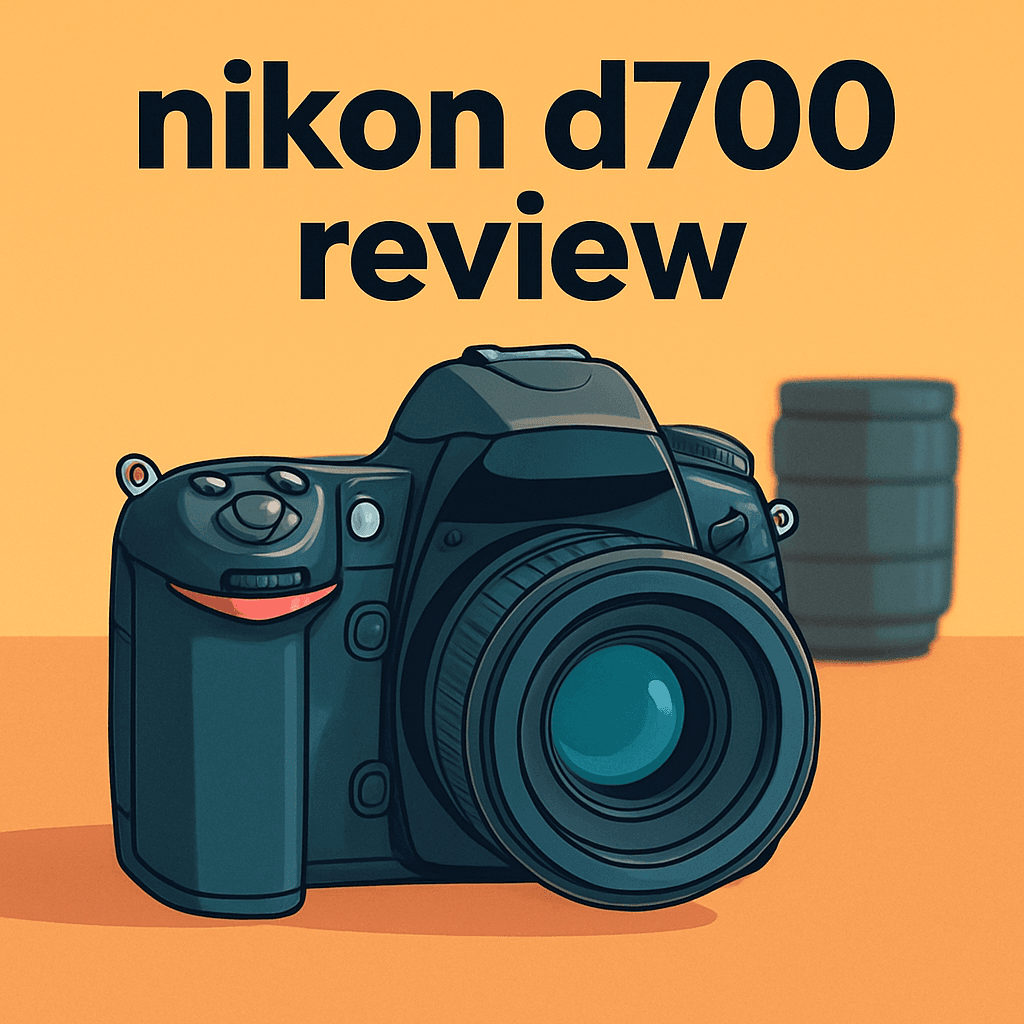
Want to know if the Nikon D700 Camera can still lift your image quality and keep up on real shoots?
I’ve field-tested it across events and locations, so you’ll get a grounded take. It’s a stills-first, rugged full-frame DSLR with classic handling and no video.
You’ll get dependable AF, quick shutter and burst cadence, and a straightforward workflow that makes shooting feel intuitive. If you shoot events, reportage, or location work and value handling over megapixels, this one speaks your language.
Expect trade-offs versus newer bodies—lower resolution and fewer modern conveniences—but the real-world payoffs are where this camera shines. Make sure to read the entire review as I unpack how the D700 performs where it matters most—keep reading.

Nikon D700 Camera
Professional full-frame DSLR offering a rugged magnesium-alloy body, outstanding low-light performance, and fast responsive handling. Ideal for wedding and event shooters seeking reliable autofocus, excellent dynamic range, and durable build quality.
Check PriceThe Numbers You Need
| Spec | Value |
|---|---|
| Sensor | 12.1 MP full-frame (FX) CMOS |
| ISO | 100−6400 (expandable to 25600) |
| Shutter speed | 1/8000 to 30 sec (bulb) |
| Continuous shooting | 8 fps (with optional battery grip), 5 fps (standard) |
| Autofocus | 51-point Multi-CAM 3500FX (15 cross-type) |
| Viewfinder | Pentaprism, 95% coverage, 0.72x magnification |
| LCD | 3.0″ (922,000-dot) |
| Video | None |
| Storage | CompactFlash (Type I, UDMA compatible) |
| Body | Magnesium alloy, weather-sealed |
| Weight | 995 g (body only) |
| Battery | EN-EL3e |
| Connectivity | USB 2.0, HDMI |
| Image processor | EXPEED |
| Dynamic Range | 12.2 EV |
| Sync speed | 1/250 sec |
How It’s Built
In my testing the D700’s metal chassis and weather sealing felt reassuringly solid. It gave me confidence shooting in rain, wind, and dusty outdoor locations. That sort of build means you can keep working when the conditions get messy.
The control layout is classic Nikon pro — big dials and direct-access buttons that click into place. I really liked how fast I could change settings without digging through menus. Beginners will find this handy because you learn by doing, not by scrolling.
The optical viewfinder is big and easy to compose through, though it won’t show every last edge of the frame. In real shoots that means I double-check tight compositions to avoid surprises at the margins. The rear screen is clear and detailed enough for quick reviews and menu navigation.
Storage and power feel straightforward and professional, even if the card format is older than what many people carry today. File transfers are slower than newer gear, so I offloaded when I had downtime. The battery life held up well in the field and kept me shooting through long sessions.
Overall the D700’s feel inspires confidence for event and location work, and the weight helps steady handheld shots. The flip side is it adds fatigue on marathon days, so plan a strap or grip for comfort. After using it for a while I loved the tactile controls, but I wished it was a touch lighter for extended handheld use.
In Your Hands
The autofocus system is a workhorse—quick to lock in good light and surprisingly tenacious when subjects are moving. Its dense array of sensors, with several cross-type zones, gives confident center performance and useful coverage across the frame, though the outermost edges are less forgiving in very low light. In practice it means you spend more time composing and shooting and less time hunting for focus.
The shutter and drive feel satisfyingly mechanical and immediate, with a crisp release and minimal lag that makes burst shooting intuitive. Cadence holds up for event work and short action sequences, but very long sustained runs expose the buffer limits—adding the optional grip smooths that out and improves handling in those moments. Overall responsiveness keeps you in the flow when timing matters.
Flash behavior is predictably reliable for both on-camera and off-camera use, letting you balance ambient light without surprises. The optical pentaprism viewfinder is bright and easy to read, though its slightly less-than-full coverage can introduce edge surprises if you rely on pixel-perfect framing. That trade-off is easy to manage with a quick look at the LCD when precision matters.
Using CompactFlash cards gives a reassuringly professional feel and robustness for heavy shooting days, but tethering and file transfer through the camera are noticeably slower than modern alternatives—plan on card-based offloads. The image engine keeps operations snappy: fast startup, simple menus and modest blackout between frames make the camera feel like a purposeful tool rather than a gadget.
The battery endurance is solid in real-world use and the optional grip not only extends stamina but also improves handling for long assignments. Combined with its metal, weather-sealed construction, the D700 performs like a dependable field camera: heavy enough to inspire confidence, compact enough to carry all day when the job demands it.
The Good and Bad
- Rugged magnesium-alloy, weather-sealed body inspires confidence
- 51-point AF (15 cross-type) with dependable acquisition and coverage
- 1/8000 sec max shutter and 1/250 sec flash sync for flexible light control
- 5 fps standard; 8 fps with grip for action and event bursts
- No video capability (stills-only)
- 12 MP limits heavy cropping and very large prints compared to modern high-res bodies
Ideal Buyer
If you shoot stills above all, the Nikon D700 rewards classic DSLR habits and tactile control. It trades modern video frills for a confident optical viewfinder and pro-feel ergonomics.
Event, reportage and action shooters will appreciate the D700’s steady 5 fps cadence and the option of 8 fps with a grip. The 1/8000 top shutter and 1/250 flash sync give you real-world light control.
Portrait and wedding photographers printing modest-to-medium sizes will like the 12.1 MP FX files’ per-pixel “bite.” The images feel sturdy and are easy to grade without fighting ultra-high megapixel files.
Flash and location shooters benefit from the magnesium-alloy, weather-sealed body and reliable handling in mixed conditions. CompactFlash support and straightforward controls keep fast-paced workflows moving.
If your kit already leans on Nikon FX glass or CF-based workflows, the D700 slots in without compromise. It’s a strong pick for pros and advanced amateurs who prioritize reliability and tactile controls over headline specs. Avoid it if you need video, ultra-high resolution, or the latest connectivity, but love rock-solid stills performance.
Better Alternatives?
We’ve talked a lot about the D700 itself — how it feels in the hand, how reliable its AF is, and what its 12 MP files mean in the real world. That camera is a pure stills workhorse, but it isn’t the only way to get great full‑frame pictures. If you want more pixels, video, a lighter body, or newer focusing and connectivity features, there are solid alternatives worth considering.
Below I’ll walk through three cameras I’ve used in real shoots alongside the D700. I’ll point out what each one does better in practice, where it falls short compared to the D700, and what type of photographer will actually prefer each option.
Alternative 1:

Canon EOS 5D Mark III Camera
Advanced full-frame camera combining high-resolution imaging, precise multi-point autofocus, and continuous shooting for demanding photo assignments. Delivers cinematic video, robust weather sealing, and professional controls for studio and field work.
Check PriceHaving shot weddings and portraits with the 5D Mark III, the first thing you feel is the extra resolution and the smoother autofocus tracking on moving subjects. Compared to the D700’s 12 MP files, the 5D III gives you more room to crop and more detail for big prints. In low light it holds up well, and the Canon colors and skin tones are often easier to work with straight out of camera.
Where it’s worse than the D700 is in some practical ways: files are larger, so you need more storage and a bit more time in post. On high-contrast scenes I sometimes had to be more careful with highlights — the D700’s tones can be a little kinder in certain lighting. Also, the D700’s simple, rugged control layout still feels faster to work with for quick stills-only jobs.
If you shoot portraits, weddings, or mixed photo/video assignments and want cleaner video plus more pixels for cropping, the 5D Mark III will likely suit you. If you prize the D700’s classic handling and slightly friendlier highlight roll-off for stills-only work, you might stick with the Nikon instead.
Alternative 2:

Nikon D750 Camera
Versatile full-frame body with a tilting high-resolution LCD, strong low-light performance, and wide dynamic range. Lightweight ergonomic design and built-in Wi‑Fi streamline travel, portrait, and landscape photography workflows.
Check PriceThe D750 is the modern, everyday successor I reach for when I want better image quality without changing my lens kit. In the field its higher-resolution sensor and improved high-ISO behavior mean cleaner images in dim halls and better recoverable shadows than the D700. The tilting screen and built-in Wi‑Fi make quick checks and sharing easier on location — small conveniences that add up on long shoots.
Compared to the D700, the D750 is lighter and feels more nimble for travel, but some shooters miss the D700’s very solid, pro-heavy grip and button layout. The D750’s files are larger and let you crop more, but that also means more card space and slightly slower file handling if you’re used to the D700’s compact workflow.
Choose the D750 if you want a strong all‑around camera for portraits, travel, and events where low-light performance and a lighter body matter. If you want the old-school rugged feel and the simplest, fastest stills-only handling, the D700 still has an edge.
Alternative 3:
Nikon D750 Camera
High-performance full-frame shooter delivering fast autofocus, excellent ISO handling, and impressive battery life for extended sessions. Ideal for event and location photographers seeking flexible controls, precise metering, and consistently sharp results.
Check PriceUsed on long event days, the D750’s modern ergonomics and battery life keep me shooting longer without fatigue. Its autofocus feels more confident on moving subjects than the D700 in many tricky scenes, and the metering and exposure behavior are easier to trust when the light keeps changing. That reliability matters when you can’t afford missed frames.
On the downside, the D750 gives up the D700’s charmingly simple, button-forward control layout that some pros prefer for fast, tactile adjustments. Also, if you love the D700’s compact 12 MP look — which can have a certain “bite” — the D750’s higher resolution renders images differently, and that change isn’t always what every photographer wants.
If you’re an event or location shooter who needs longer runs, better tracking, and modern conveniences like a tilting screen and Wi‑Fi, the D750 will likely make your kit easier to work with day to day. If you’re after the D700’s old-school handling and prefer smaller files for a lean workflow, the D700 remains a very valid choice.
What People Ask Most
Is the Nikon D700 still worth buying?
Yes—if you want a solid-built full-frame body with excellent image quality for a bargain used price, but be aware it lacks many modern features like high-res sensors and advanced AF.
How is the image quality and low-light performance?
Excellent for its age—its full-frame sensor delivers clean files and usable high-ISO performance up to around ISO 3200–6400 for many shooting situations.
How does the D700 compare to newer models like the D750 or D810?
Newer models beat it on resolution, autofocus and features, but the D700 still holds up for color, dynamic range and handling at a lower cost.
Is the autofocus system good for action or sports photography?
The 51-point AF with 3D tracking is reliable for many action scenarios, but it’s not as fast or as sophisticated as modern AF systems.
Can I use the D700 for video work?
It can record 720p video that’s usable for casual clips, but it lacks full HD/4K and modern video tools, so it’s not ideal for serious videography.
Should I buy a used D700 and what should I check?
Yes if the price is right—inspect shutter count, sensor for scratches or fungus, test metering and AF, and check all buttons/dials and the viewfinder for wear.
Conclusion
The Nikon D700 Camera remains a ruthless stills-first workhorse—rugged, full-frame, and built to get the shot when it matters. Its autofocus and mechanical performance feel utterly dependable in the field, and the image character still reads very well for print and client work. This is a camera that rewards decisive, tactile shooting.
Ergonomics, tactile controls, and a substantial optical viewfinder make deliberate shooting a pleasure, and the metal construction gives real confidence in adverse conditions. It sits comfortably in the hands of event, reportage and location shooters who need no-nonsense reliability. Paired with a good battery grip the handling becomes even more businesslike.
That said, the D700 asks you to accept compromises: resolution and modern conveniences trail newer bodies, it omits video entirely, and data transfer and viewfinder coverage show their age. Be prepared to manage workflow around legacy storage and slower tethering. The weight also becomes a factor on long handheld days, and tight compositions sometimes reveal surprises at the edges.
If you prize classic DSLR handling, proven autofocus, and dependable file character over cutting‑edge features, the Nikon D700 Camera still represents excellent value. If your priority is higher resolution, integrated video, or modern connectivity, more recent models are a better fit. For a photographer who values reliability and feel above specs, it remains a very smart, purposeful choice.
Nikon D700 Camera
Professional full-frame DSLR offering a rugged magnesium-alloy body, outstanding low-light performance, and fast responsive handling. Ideal for wedding and event shooters seeking reliable autofocus, excellent dynamic range, and durable build quality.
Check Price



0 Comments