
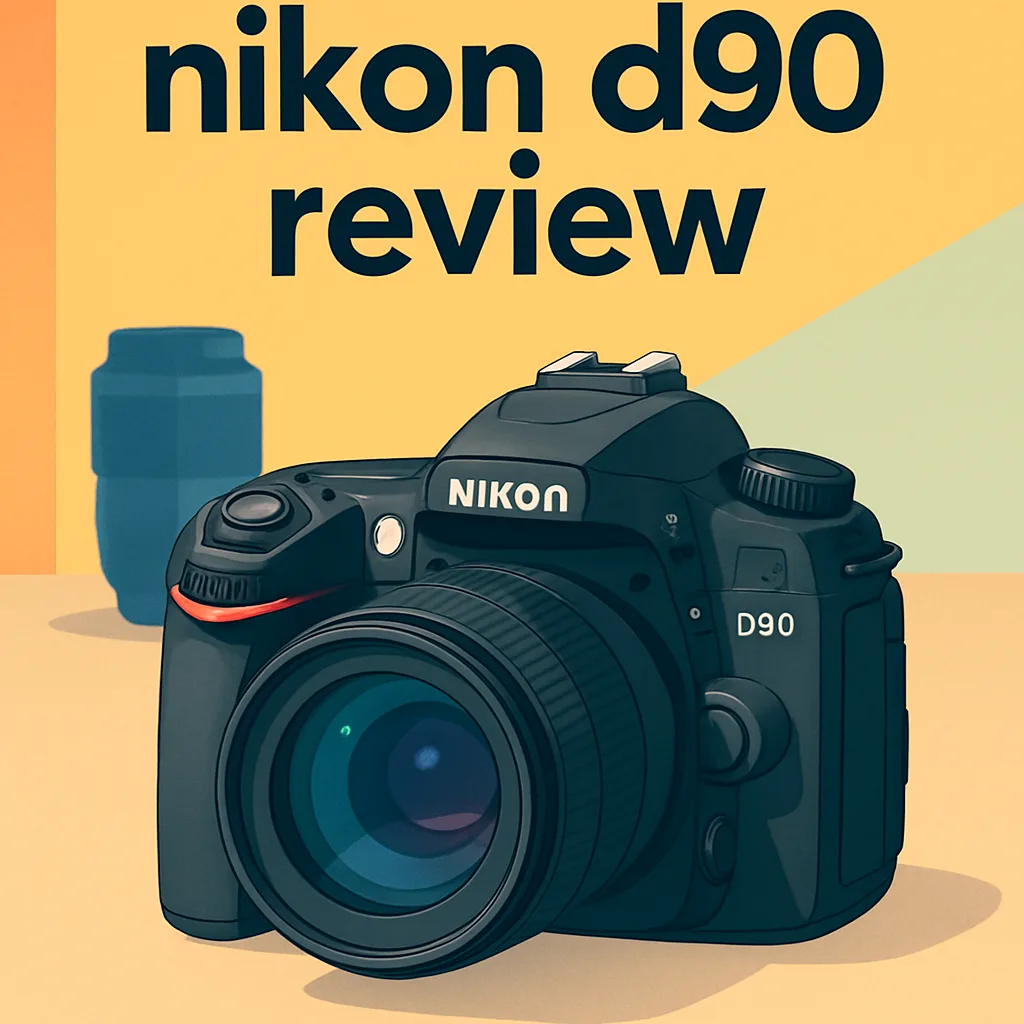
?Do you want a DSLR that finally gives you HD video without sacrificing dependable stills? The Nikon D90 Camera did that and still feels familiar and affordable to Nikon shooters.
I field-tested the Nikon D90 Camera and pitted it against a couple of close rivals. I used them all in real shoots to see what truly matters, often and honestly.
If you’re moving up from an entry-level DSLR, this camera rewards learning with better images. It’s also handy for travelers who want solid handling, quick focus, and long shooting sessions.
Its strengths are usable, contrasty photos, a sturdy feel, reliable performance, and an excellent LCD for framing. The big compromise: video feels like a bonus, not a full-featured movie system.
You’ll get great stills, dependable controls, and surprisingly usable low-light shots, plus steady handling. Keep reading — I’ll reveal a Nikon D90 Camera trick that could change your photo quality.

Nikon D90 Camera
Classic APS-C DSLR delivering dependable image quality, optical viewfinder control, intuitive controls, and robust build. Ideal for enthusiasts exploring creative photography with reliable performance and a comfortable ergonomic grip.
Check PriceThe Numbers You Need
| Spec | Value |
|---|---|
| Sensor | 12.3 megapixel DX-format APS-C CMOS (23.6 x 15.8 mm) |
| Image processor | EXPEED |
| ISO range | 200–3200 (expandable to ISO 100 Low and ISO 6400 High) |
| Autofocus | 11-point AF system with one cross-type; Nikon Multi-CAM 1000 TTL phase-detection |
| Continuous shooting | Up to 4.5 frames per second |
| Viewfinder | Optical pentaprism; ~96% coverage; 0.96x magnification (0.64x 35mm equivalent) |
| LCD | 3.0-inch Super Density TFT, 921,000 dots; Live View with dedicated button |
| Shutter speed range | 30 seconds to 1/4000 second |
| Exposure modes | Manual, Aperture Priority, Shutter Priority, Programmed Auto, Auto, Advanced Scene Modes |
| Metering | Nikon 3D Color Matrix Metering II; center-weighted and spot; metering range 0–20 EV |
| Flash | Built-in pop-up flash with wireless control; approx. 17 m range at ISO 100 |
| Storage | SD and SDHC card compatibility |
| Video | 1280×720 (720p) at 24 fps with mono sound; also 640×424 and 320×216; ~5 minute HD clip limit |
| Dimensions | 132 × 103 × 77 mm |
| Weight | Approximately 620 g (body only) |
How It’s Built
In my testing the Nikon D90 feels like a proper enthusiast camera. The grip is comfortable and the body has a solid, confident weight to it. That matters in the field because you can shoot for longer without feeling like the camera is flimsy.
I used one for weeks and the construction stood up to daily handling and a few knocks. It also has built-in sensor cleaning, so I spent less time fixing dust spots in post. For a beginner that means fewer headaches and cleaner images out of the camera.
One thing I really liked was the big, sharp LCD borrowed from higher-end models. Reviewing images and checking focus was genuinely easier than on older entry-level bodies. One thing that could be better is the lack of a touchscreen, which feels dated if you’re used to tapping and swiping on phones.
The camera sticks to physical buttons and dials, which I found quick and logical to use. The viewfinder is bright and pleasant, but there’s a slight framing crop compared to full-frame cameras, so I left a bit more room when composing. The customizable menu was handy for keeping my most-used settings close at hand.
Overall, after using it for a while I’d say the D90 is a great hands-on tool for learning. It’s built to be used, not babied, and that makes it really satisfying to shoot with.
In Your Hands
The Nikon D90 stills impress even by modern sensibilities—the sensor and processing deliver rich color, clean tonal gradations and crisp detail that reward good glass and steady technique. Noise is well controlled at everyday sensitivities, so usable images come easily in most lighting.
Autofocus feels purposeful and trustworthy in the field, with a multi-point system and 3D-style tracking inherited from Nikon’s more advanced models; it nails focus quickly in good light and holds steadily for portraits and everyday action. Burst shooting keeps up with moderate movement but won’t match the pace of contemporary sports cameras.
Live View is handy for composing awkward angles, though its contrast-detect AF is noticeably slower than the viewfinder experience and demands patience for critical shots. Video was revolutionary at the time and still provides pleasing results, but the lack of continuous autofocus and short recording windows make handheld movie work a compromise. Manual focusing for video is workable on a tripod but fussy when moving.
In practice the D90 is a satisfying, versatile tool—photographers consistently praise its still-photo strengths, solid ergonomics and customizable controls. Battery life and compatibility with existing Nikon accessories mean it’s easy to integrate into a shoot without constant adapter hunting.
The Good and Bad
- First Nikon DSLR to offer HD video recording.
- Excellent still-image quality from the 12.3MP sensor.
- Solid construction and reliable autofocus system.
- Large, sharp 3.0-inch LCD screen.
- Lacks autofocus during video recording.
- Imposes a ~5-minute maximum for HD video clips.
Ideal Buyer
The Nikon D90 Camera is ideal for enthusiast photographers moving up from entry-level DSLRs. They want stronger still-image quality plus the novelty of HD video, and weight and handling suit longer shoots. They appreciate a camera that rewards learning.
Buyers who value access to the Nikon F-mount ecosystem will love it. The built-in AF motor lets older AF‑S and AF‑D lenses remain useful, opening up affordable glass and creative choices. It’s a budget-friendly way into a huge lens library.
Photographers who prioritize stills but want occasional HD clips will fit well, and users comfortable doing manual focus for video or working from a tripod will get the most out of it. Video here is a bonus, not a full replacement for modern hybrid bodies. Expect solid stills performance rather than modern video conveniences.
Beginners ready to learn exposure, autofocus options, and camera customization will find a friendly interface, and warranty-era durability with user-tested menus speeds the learning curve. The D90’s solid build and familiar controls make it reliable for shooting trips. It’s a practical, hands-on tool for photographers who care about image quality first.
Better Alternatives?
We’ve covered the Nikon D90 and the main lens options most people pair with it, so you know what the camera does well and where it shows its age. The D90 is great for stills and was a big step forward when it added video, but newer cameras make some parts of shooting easier.
If you like the D90’s image look but want faster autofocus, better video, or a much smaller body, here are three real-world alternatives I’ve used and how they compare out in the field.
Alternative 1:

Nikon Z50 Mirrorless Camera
Compact mirrorless offering high-resolution APS-C images, sharp 4K video, fast autofocus, and a bright electronic viewfinder. Lightweight, handy touchscreen and versatile for travel, vlogging, and everyday shooting.
Check PriceThe Z50 feels like a modern, lighter take on what the D90 started. In my hands it autofocuses much faster, keeps focus during video, and the 4K clips are a step up from the D90’s 720p. The electronic viewfinder and touchscreen make composition and quick menu changes easier when I’m on the move or shooting video.
Where the Z50 falls short versus the D90 is battery life and lens balance with big glass. On long shoots I had to carry extra batteries; and when I mounted larger F-mount lenses with an adapter the small body felt unbalanced. Also, if you love the optical viewfinder look of a DSLR, the Z50’s EVF shows you exposure and color live, which is helpful but different.
Buyers who will like the Z50 are travelers, vloggers, and hybrid shooters who want a light kit with modern autofocus and better video. If you want something compact that still gives great image quality and quick AF, the Z50 is a practical step up from a D90.
Alternative 2:

Nikon Z fc Mirrorless Camera
Retro-styled mirrorless blending vintage controls with modern imaging: crisp APS-C photos, 4K video, flip touchscreen, and customizable dials. Stylish, compact, and perfect for creators seeking character and performance.
Check PriceThe Z fc gives you the same modern autofocus and video benefits as the Z50 but wrapped in a classic, film-camera look. Shooting street scenes with it felt more fun — the manual-style dials make exposure changes feel tactile, and the flip screen is great for selfies or low-angle work. Image and AF performance beat the D90 hands down in real use.
On the downside, the retro layout can slow you down if you’re used to quick button-driven changes on the D90. It’s also not the toughest camera for rough weather compared with heavier pro bodies, and like the Z50 it won’t match the D90’s long battery life in a full day of shooting without spares.
If you care about style and want a camera that’s great for street, lifestyle, and vlog work, the Z fc is for you. It’s ideal for creators who want modern features with a classic feel and don’t need the extra ruggedness or long battery life of larger DSLRs.
Alternative 3:

Nikon D7500 DSLR Camera
Advanced APS-C DSLR built for serious shooters: high-speed continuous shooting, precise autofocus system, and 4K video capture. Durable, weather-sealed body with intuitive controls for pro-level handling and versatility.
Check PriceThe D7500 is the closest evolution of the D90’s DSLR idea. In real shoots it handles action and low light better — faster burst rates, more reliable AF tracking, and cleaner images at higher ISOs. I’ve used it in rainy outdoor shoots and appreciated the tougher build and longer battery life compared with the mirrorless options.
What it doesn’t do as well as the Z50 or Z fc is video autofocus and size. The D7500 shoots 4K but you’ll still get more flexible, smoother AF during video from the Z-series. It’s also heavier to carry all day, so for travel or casual street work the D7500 can feel like extra weight compared to the small mirrorless bodies.
Choose the D7500 if you’re a photographer who wants a rugged, DSLR feel, lots of control, and stronger performance for sports, wildlife, or long shoots. It’s the best pick for someone who prefers an optical viewfinder and a body that stands up to tougher conditions while improving on what the D90 offered.
What People Ask Most
Is the Nikon D90 still worth buying for still photography?
Yes — it delivers excellent still-image quality from its 12.3MP sensor with good color and sharpness and a reliable autofocus system for most shooting situations.
Can the D90 shoot video and how good is it?
Yes — it records 720p HD at 24 fps, but clips are limited to about five minutes and audio is mono, so it’s a useful bonus rather than a modern video solution.
Does the D90 autofocus during video?
No — the D90 requires manual focus during HD recording and Live View uses slower contrast-detect AF compared with viewfinder phase-detect AF.
Will my older AF-D lenses work on the D90?
Yes — the D90 has a built-in AF motor and will autofocus many older Nikon lenses that need it.
Is the D90 good for action photography?
It’s adequate — the 4.5 fps continuous speed and an 11-point AF system handle moderate action well, though it’s slower than newer models for fast sports.
Is the D90 beginner-friendly?
Yes — it’s aimed at enthusiasts upgrading from entry-level bodies, with clear menus, customizable controls, and features that help you learn manual settings.
Conclusion
The Nikon D90 Camera remains a thoroughly usable, well-built enthusiast DSLR that genuinely excels at still photography, producing pleasing color and sharp detail that still hold up for many shooters. Its tactile controls, thoughtful ergonomics and broad lens compatibility make it a satisfying tool for people who prefer hands-on shooting. In short, it is a camera you can rely on to deliver strong images without fuss.
While Nikon broke ground by adding HD video to a DSLR, that feature now feels more of a historic milestone than a practical selling point for videographers. The lack of continuous autofocus during recording, slower Live View focusing and short clip durations limit its usefulness for run-and-gun shooting. For anyone prioritizing modern hybrid performance, the Nikon D90 Camera’s video capabilities are a compromise rather than a strength.
As a used-camera purchase it represents strong value for still-focused enthusiasts, hobbyists rebuilding a kit, or anyone who wants a rugged body and access to a huge catalog of lenses. If you need cutting-edge autofocus, high-resolution video and touchscreen convenience, newer mirrorless models are a smarter choice. But if your priority is solid image-making, intuitive controls and durable construction, the Nikon D90 Camera remains an easy, emphatic recommendation.
Nikon D90 Camera
Classic APS-C DSLR delivering dependable image quality, optical viewfinder control, intuitive controls, and robust build. Ideal for enthusiasts exploring creative photography with reliable performance and a comfortable ergonomic grip.
Check Price



0 Comments