
Want a single fast zoom that can handle events, portraits and low‑light work on your Nikon DX camera?
You’re probably wondering if that convenience costs you image quality or easy handling.
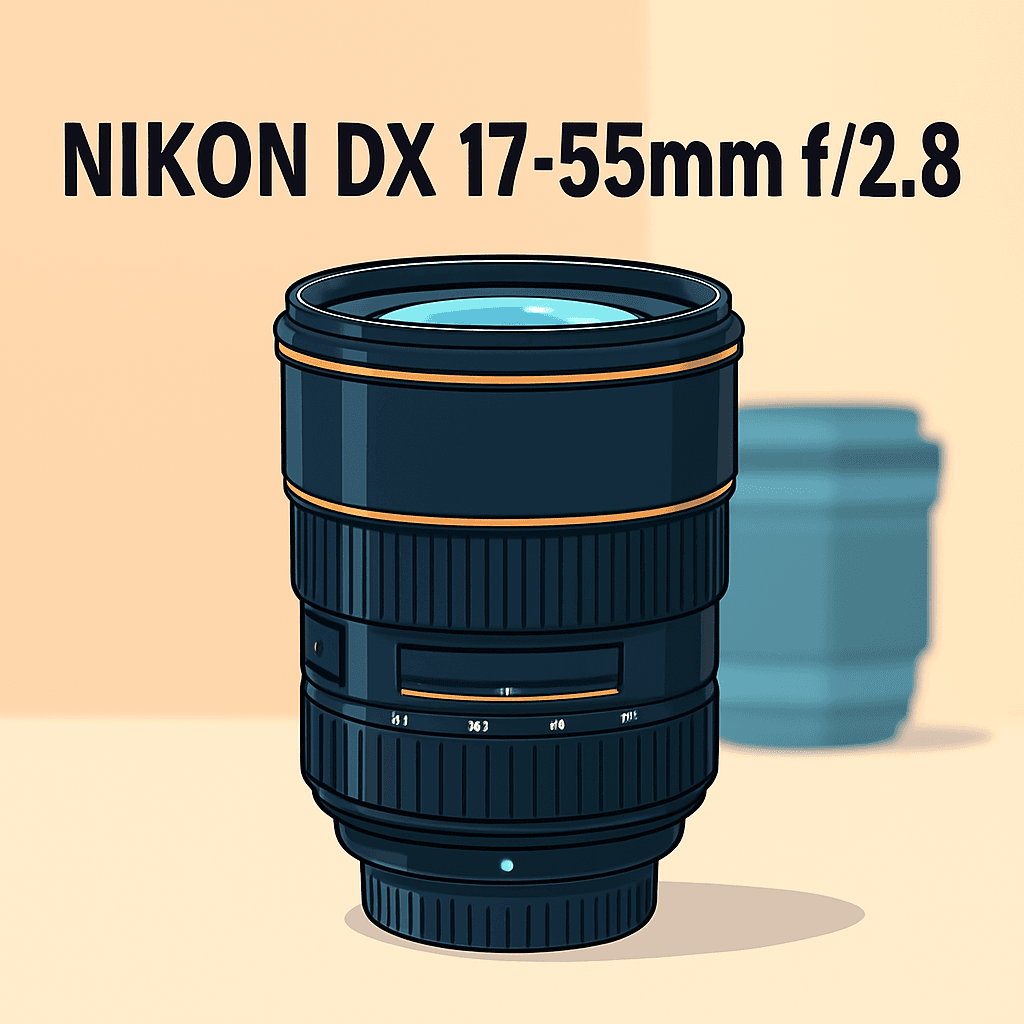
This review looks at the Nikon AF-S DX NIKKOR 17-55mm f/2.8G, and it’s a pro‑oriented standard zoom for APS‑C Nikons.
I took it into the field to see how its constant f/2.8, weight and the lack of in‑lens stabilization actually play out in real shoots.
If you shoot weddings, events, travel or environmental portraits on a DX body, this one’s aimed at you.
Make sure to read the entire review as I’m unpacking hands‑on findings and practical takeaways—keep reading.

Nikon AF-S DX NIKKOR 17-55mm f/2.8G
Professional-grade DX zoom with a constant f/2.8 aperture, silent autofocus and superb sharpness across the frame. Built for low-light shooting, portraits to landscapes, with solid construction and fast handling.
Check PriceThe Numbers You Need
| Spec | Value |
|---|---|
| Lens Type | Zoom |
| Focal Length | 17-55mm |
| Maximum Aperture | f/2.8 |
| Lens Mount | Nikon F-mount |
| Image Stabilization | No |
| Lens Elements | 11 |
| Lens Groups | 7 |
| Special Elements | ED glass |
| Minimum Focus Distance | 0.35 m |
| Filter Size | 77 mm |
| Lens Construction | Internal Focusing (IF) |
| Lens Format | APS-C (DX) |
| Equivalent Focal Length | 25.5-82.5mm (35mm equiv.) |
| Aperture Blades | 7 |
| Weight | 755 g |
How It’s Built
In my testing the Nikon AF-S DX NIKKOR 17-55mm f/2.8G feels built like a step up from the cheap kit zooms. It has a solid, pro-ish heft that gives confidence in the hand. That heft can feel front-heavy on smaller bodies and will tire you out on long walks without a good strap or bag.
The zoom and focus rings are pleasingly smooth and well damped in real use. Internal focusing means the lens doesn’t change length when you focus, so a polarizer or filter stays put and behaves predictably. The hood locks on snugly and cut flare in my backlit shots, which I appreciated during event work.
One thing I really liked was the tight assembly and strong mount — it felt like it would hold up to everyday use. One thing that could be better is the size and weight; bigger filters cost more and thick filters can cause vignetting, so plan your kit accordingly.
For beginners this means simple choices: bring some support for long days and don’t worry about changing filters while focusing. Also note the out-of-focus highlights turn a bit polygonal when you stop down, so shoot wide-open for smoother bokeh when you want creamy backgrounds.
In Your Hands
On a DX body the 17–55mm zoom sits squarely in the sweet spot for everyday work, moving smoothly from sweeping environmental frames to short-tele portraits without feeling like a compromise. Its field of view makes lens changes less frequent, which is a big practical win when you’re shooting events or reportage all day.
The lens’s constant wide aperture gives real low‑light headroom compared with variable kit zooms, letting you hold lower ISO or faster shutter speeds in dim interiors. Without in‑lens stabilization you do need to lean on technique—bracing, a monopod, or nudging ISO up—but the extra aperture often offsets that tradeoff in real shooting.
For video the experience is mixed: internal focusing keeps the lens length stable and focus pulls are generally smooth, but focus breathing and motor noise are noticeable on some bodies. Handheld footage benefits from support, since the lack of optical stabilization makes longer takes less forgiving.
Backlit performance is reassuring; the hood helps and contrast holds up well in most scenes, though very strong point sources can coax minor ghosting. Color neutrality and solid microcontrast give images pleasing dimensionality wide open, with increased refinement as you stop down.
Close‑focus capability is practical for tighter framing and environmental portraits, rendering good detail with a smooth falloff that flatters subjects. Bokeh is generally attractive, though stopped‑down highlights can take on a more geometric shape, so aperture choices matter for background rendering.
The Good and Bad
- Constant f/2.8 aperture across 17-55mm
- Internal focusing (stable length, filter friendliness)
- ED glass elements in optical formula
- Versatile DX standard zoom range (25.5-82.5mm equivalent)
- No image stabilization
- 755g weight, potentially front-heavy on smaller DX bodies
Ideal Buyer
If you shoot Nikon DX bodies and need a pro-grade, constant f/2.8 standard zoom, the Nikon AF-S DX NIKKOR 17-55mm f/2.8G is built for events, reportage, indoor work and environmental portraits. Its 17–55mm range (about 25.5–82.5mm full‑frame equivalent) lets you frame wide interiors and tighter three‑quarter portraits without changing lenses. Sharp centers, reliable AF‑S focusing and that steady f/2.8 make it a favorite for pros and serious enthusiasts who demand consistent results.
The internal‑focusing design keeps filters and hoods behaving predictably, and the 0.35m close‑focus gives surprisingly useful tight‑in shots. You should be comfortable managing low light without optical stabilization — by raising ISO, leaning on shutter speed, or using monopod support. If you can live with the 755g heft and the 77mm filter ecosystem, the lens rewards with handling, build feel and image quality that justifies the trade.
This lens is not for everyone — shooters who need in‑lens stabilization for handheld low‑light or run‑and‑gun video will want an OS/VR alternative. Travel photographers chasing the lightest possible kit or budget buyers who prefer lower cost should look at third‑party 17–50/16–50 options. And if your work relies on a true 16mm wide end for interiors and landscapes, consider the Tokina 16–50mm or a stabilized Sigma 17–50mm OS instead.
Better Alternatives?
We’ve gone deep into the Nikon AF-S DX NIKKOR 17-55mm f/2.8G — its handling, sharpness, and the trade-off of no stabilization. That lens is a solid, pro-feeling choice for Nikon DX shooters, but it isn’t the only way to get a fast standard zoom for everyday work.
If you want something lighter, cheaper, or with image stabilization for hand‑held low light or video, there are a few widely used alternatives that change the balance of what you get and what you give up. Below are three lenses I’ve used in real shoots and how they compare to the Nikon 17‑55 f/2.8 in real-world terms.
Alternative 1:

Sigma Canon 17-50mm f/2.8 EX DC OS HSM FLD
Optical-stabilized standard zoom offering constant f/2.8 brightness, speedy HSM autofocus and advanced FLD glass for edge-to-edge clarity. Ideal for handheld low-light work and versatile everyday shooting.
Check PriceI’ve used the Sigma 17‑50mm f/2.8 OS a lot on fast-paced shoots, and the big real-world win over the Nikon 17‑55 is the built‑in stabilization. That OS makes a noticeable difference when I’m hand‑holding in dim halls or shooting run‑and‑gun video — you can get slower shutter speeds without raising ISO as much. The lens is also lighter and smaller, so it’s easier to carry for a full day.
Where it falls short versus the Nikon is in overall refinement. The Sigma gives very good center sharpness stopped down, but corners and edge contrast aren’t quite as strong as the Nikon’s, and I’ve seen a little more vignetting and color fringing in high‑contrast scenes. Autofocus is fast and quiet, but on some bodies I had to nudge AF micro‑adjustment — it’s not as consistently spot‑on as Nikon’s AF‑S pairing.
Pick the Sigma if you shoot lots of handheld low‑light or video and want stabilization and a smaller, cheaper package. If you care most about corner-to-corner uniformity, the Nikon still leads, but the Sigma is a great compromise for walkaround, event work, or anyone on a tighter budget who wants f/2.8 plus OS.
Alternative 2:

Tamron Canon SP AF 17-50mm f/2.8 XR Di II LD
Lightweight pro-series zoom with a constant wide aperture for smooth background separation, fast autofocus and low-dispersion elements that minimize aberrations—perfect for travel, events and creative low-light imagery.
Check PriceThe Tamron 17‑50mm f/2.8 has been a go‑to when I needed a fast zoom but didn’t want to spend Nikon money. It’s lighter and much cheaper than the Nikon 17‑55, so it’s easy to sling on a small body for travel or long weddings. In practice I found the center sharpness pleasing and the out‑of‑focus look quite nice for portraits at 50mm.
Compared to the Nikon, the Tamron shows its limits at the edges and in build. It won’t match the 17‑55’s corner sharpness or the same solid, weather‑resistant feel — it’s more plastic and feels less rugged on a cold outdoor job. Autofocus works well for casual shooting, but in low light or fast action I saw more occasional hunting than with the Nikon.
This Tamron is for shooters who want a fast zoom on a budget and value light weight and portability over pro‑grade build and perfect corner performance. If you’re starting out, shooting events casually, or need a cheap backup, the Tamron is an easy, practical choice.
Alternative 3:

Tamron Nikon SP 17-50mm f/2.8 XR Di II LD
High-performance DX zoom boasting a constant bright aperture, robust pro-grade build and LD optics for crisp, color-accurate results. Great for portraits, landscapes and dependable performance in challenging light.
Check PriceThe Tamron SP 17‑50mm Nikon mount is the closest Tamron I’ve used that feels tuned for Nikon bodies. It’s lighter and less expensive than the Nikon 17‑55, and in real shooting it gives very usable detail and a pleasing look for portraits and street work. The Nikon still holds the edge in microcontrast and corner delivery, but the Tamron is a strong performer for everyday use.
Where it loses out is in consistency and the small things that matter on tough jobs: focus can be less steady in continuous AF, and build quality isn’t quite the same pro‑grade feel of the Nikon. Also, like the other third‑party choices here, there’s no image stabilization, so handheld low‑light work takes more care or higher ISO than with a stabilized lens.
If you’re a Nikon shooter who wants the look and aperture of a fast 17–50 but prefers something lighter and cheaper than the Nikon 17‑55, this Tamron is a good middle ground. It’s right for event shooters on a budget, hobbyists, or anyone who wants solid IQ without carrying the heavier, pricier native option.
What People Ask Most
Is the Nikon 17-55mm f/2.8 DX a good lens?
Yes — it’s widely regarded as one of the best DX standard zooms thanks to its constant f/2.8, solid build and very good image quality.
Is the Nikon 17-55mm f/2.8 DX weather-sealed?
It has some weather resistance with a gasketed mount and splash protection, but it’s not fully waterproof so avoid heavy rain and immersion.
Will the Nikon 17-55mm f/2.8 DX work on full-frame (FX) cameras?
It will physically mount on FX bodies but causes heavy vignetting, so you should use it in DX crop mode or expect severe edge darkening and cropping.
How sharp is the Nikon 17-55mm f/2.8 DX lens?
It’s very sharp in the center straight from wide open, with corners improving noticeably when stopped down.
What is the 35mm equivalent of the Nikon 17-55mm f/2.8 DX?
On Nikon APS-C (1.5×) sensors the equivalent focal length is about 25.5–82.5mm.
How much does a used Nikon 17-55mm f/2.8 DX cost?
Used prices vary by condition and market but typically range around $400–$800.
Conclusion
The Nikon AF-S DX NIKKOR 17-55mm f/2.8G is a purpose-built, no‑compromise fast standard zoom that still earns its keep for working DX photographers. Its constant-aperture character, quiet AF-S drive and internal focusing combine with optics that deliver confident sharpness and punchy contrast where it matters most. In short, it feels like a tool designed for real assignments, not casual weekend snapshots.
No lens is perfect, and this one leans into professional trade-offs. The absence of in-lens stabilization and its weight make it less ideal for handheld low-light run-and-gun or travelers who prize light packs. You’ll also notice its rendering choices when stopping down and the need to manage support or higher ISO in very dim situations.
If you shoot events, portraits and editorial work on Nikon DX bodies and value consistent AF, build and image quality, this lens is an easy recommendation. If lighter carry, built-in stabilization or an extra-wide short end matter more, look to alternatives such as the Sigma 17‑50 OS, Tamron 17‑50, or Tokina 16‑50. For photographers prioritizing reliability and IQ on DX, this lens is still worth the investment.
Nikon AF-S DX NIKKOR 17-55mm f/2.8G
Professional-grade DX zoom with a constant f/2.8 aperture, silent autofocus and superb sharpness across the frame. Built for low-light shooting, portraits to landscapes, with solid construction and fast handling.
Check Price

0 Comments