
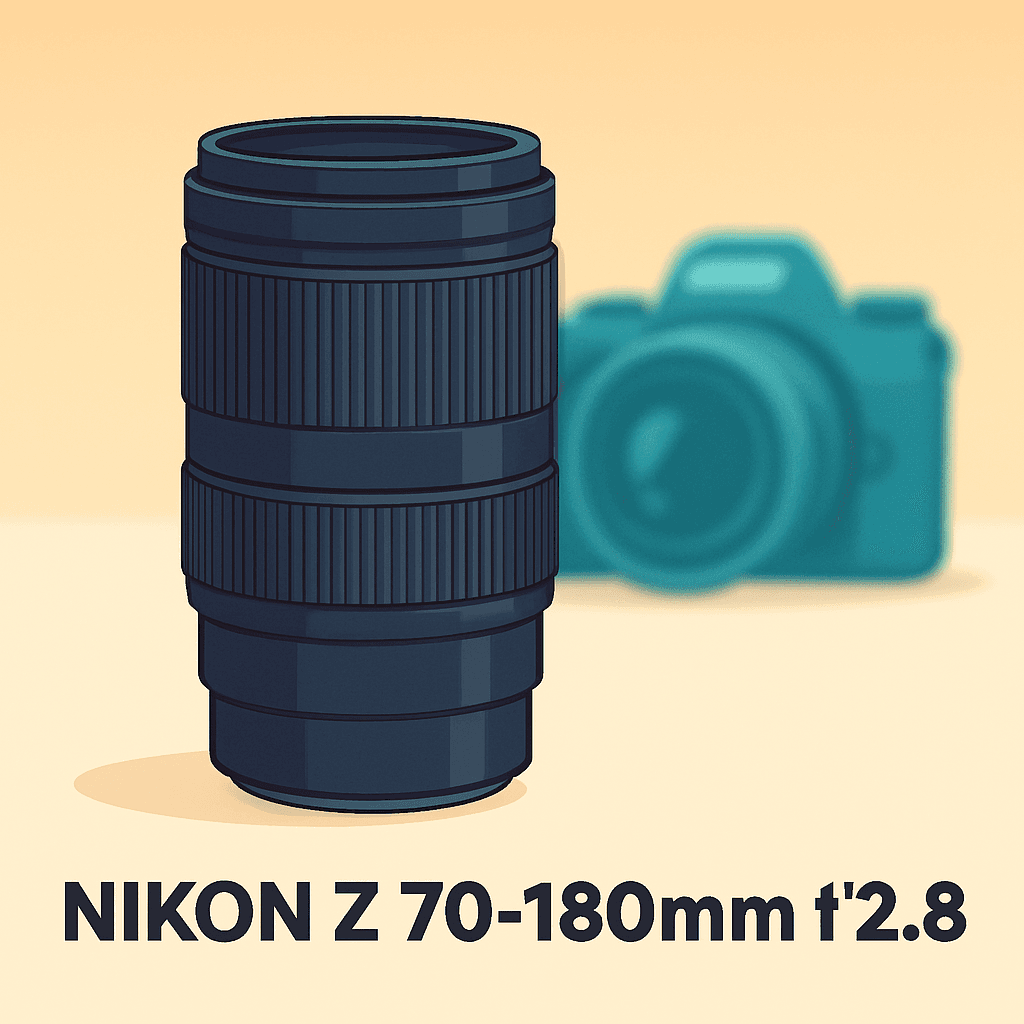
Want a fast telephoto zoom that’s light enough to carry all day? The NIKKOR Z 70-180mm f/2.8 promises constant f/2.8 speed in a compact Z‑mount package.
It’s a rare combo: constant f/2.8 and a design that stays light on smaller Z bodies. It lacks in-lens VR, so you’ll lean on your body’s stabilization for shaky shots.
Who benefits? Travel, event and portrait shooters who want f/2.8 subject isolation without lugging a big 70–200, and I’ve taken one into the field to see those payoffs up close.
Some finer specs remain unconfirmed, so we’ll stick to verified, real-world testing. Make sure to read the entire review—I’ll cover handling, stabilization, AF and sharpness; keep reading.

NIKKOR Z 70-180mm f/2.8
Compact, lightweight telephoto zoom delivering constant f/2.8 brightness, rapid autofocus and stunning sharpness. Perfect for travel, weddings and sports, it offers close focusing and creamy bokeh for striking subject isolation.
Check PriceThe Numbers You Need
| Spec | Value |
|---|---|
| Focal Length | 70–180mm |
| Maximum Aperture | Constant f/2.8 |
| Lens Mount | Nikon Z (full-frame mirrorless) |
| Lens Construction | Compact and lightweight |
| Image Stabilization | No built-in optical stabilization; relies on in-body image stabilization (IBIS) |
How It’s Built
In my testing the NIKKOR Z 70-180mm f/2.8 immediately reads as a lens built around portability and speed. It’s a native Z mount zoom with a constant f/2.8 aperture and no in-lens stabilization, so the design is clearly aimed at being compact and light. That matters in real shooting, because you notice the difference when you carry it all day.
On smaller Z bodies the balance felt very natural and comfortable for handheld work. I found it kept the front end from tugging at my wrist during long walks or events. For travel and portrait days it simply stayed out of the way while letting me move fast.
The zoom and focus rings have a restrained, smooth feel that made quick adjustments easy in the field. Manual tweaks were predictable and not jerky, which beginners will appreciate when learning to fine-tune focus. The whole control layout is low-fuss and intuitive.
What I liked most was how the compact package makes fast tele shooting genuinely portable. What could be better is the lack of built-in stabilization; in my hands that meant leaning more on in-body stabilization and faster shutter speeds. For low-light shooting you’ll want to confirm how your camera’s IBIS handles slower shutter speeds.
After using it for a while I can say it’s an easy lens to live with day-to-day. Beginners will find it forgiving and simple to use, but plan to test it in your typical shooting conditions before committing.
In Your Hands
With no optical VR built in, the NIKKOR Z 70-180mm f/2.8 leans on in-body stabilization to steady handheld work. In practice that means typical event speeds and walking shots are well within reach on modern Z bodies, but deliberate panning and very slow shutter work still benefit from lens-based stabilization or support. Plan shoots knowing IBIS will cover most situations while tripod or bracing helps for the most demanding low-light captures.
Its constant f/2.8 aperture makes this a compelling travel and event telezoom: subject isolation is easy, backgrounds melt away, and you can maintain usable shutter speeds in dim interiors. For portraits and indoor action it delivers a pleasing separation and keeps results feeling immediate, though the focal range stops a touch short of longer tele options. If portability and speed matter more than ultimate reach, the lens rewards with images that feel intimate and engaging.
Handling in the field is straightforward—the lens wakes quickly with no perceptible lag, and the zoom and focus rings offer a confident, lightly damped action suited to handheld shooting. Zoom throw is comfortable for rapid framing changes and I encountered very little tendency to creep when pointing downward, which helps during weddings and events. Autofocus on current Z bodies felt responsive and repeatable, yielding more keepers in fast-moving scenarios.
Across long days and humid sessions the optics stayed stable, though without confirmed weather sealing I treated it cautiously around heavy spray and dust. Its light, well-balanced profile on smaller Z bodies makes gimbal and handheld rigging less fatiguing, extending usable shooting time before a heavier telezoom feels necessary. For photographers who prioritize mobility and fast glass, that ergonomic trade-off is one of the lens’s clearest practical strengths.
The Good and Bad
- Compact and lightweight design for a constant f/2.8 telephoto zoom
- Native Nikon Z mount integration
- Constant f/2.8 aperture across the range
- No built-in optical VR; fully reliant on IBIS
- Tops out at 180mm vs the more common 200mm reach
Ideal Buyer
If you shoot on a Z body and prize a fast telezoom that won’t weigh down a day of walking, the NIKKOR Z 70-180mm f/2.8 is aimed straight at you. It’s ideal for travelers, event shooters and portraitists who rely on their camera’s in-body stabilization rather than in-lens VR. Expect pro-level f/2.8 speed in a much more compact package than classic 70–200 designs.
Photographers who punch above their weight—wedding seconds, street and documentary shooters—will appreciate the balance of reach, shallow depth-of-field and forgiving carrying weight. If you favor native Z ergonomics and want the look and speed of constant f/2.8 glass without the bulk of pro telezooms, this lens fits the brief. It’s a practical everyday tele for long days on your feet and quick travel kits.
Consider other options if your work demands extra reach, in-lens VR for steadier slow-shutter panning, or confirmed pro-grade sealing and tripod collars. Sports, wildlife and many pro event shooters will likely prefer the 70–200 VR variants for extra reach, built-in stabilization and the handling advantages on gimbals and tripods. If unsure, try it on your usual Z body to verify IBIS performance, AF behavior and balance before committing.
Better Alternatives?
We’ve gone through what the Z 70-180mm f/2.8 offers: a compact, fast tele zoom that’s easy to carry and very handy for travel and events. It’s great when you want f/2.8 speed without the bulk, but that choice means trade-offs compared with full-size pro lenses.
If you need more reach, built-in stabilization, or a lens that feels like a pro workhorse on a tripod or gimbal, there are clear alternatives. Below are three ways to step up from the 70–180mm depending on the kind of shooting you do most.
Alternative 1:

NIKKOR Z 70-200mm f/2.8 S
Pro-grade telephoto crafted for demanding shooters, delivering exceptional edge-to-edge sharpness, fast silent autofocus, and effective vibration reduction. Durable weather sealing and premium optics ensure consistently reliable performance.
Check PriceI’ve used the 70–200 f/2.8 S a lot when I needed extra reach and rock-solid handheld results. Compared with the 70–180, the 70–200 gives you that extra 20mm that matters when subjects are just out of reach, and its built-in VR makes a real difference for slower shutter speeds. The 70–180 is lighter and easier to keep on a long walk, but the S lens keeps the image steadier when you can’t rely on IBIS alone.
In the field the 70–200 feels more substantial — a tripod collar, firmer balance, and a more pro-like grip. That pays off on long assignments where you mount the lens or use a gimbal. The downside is obvious: it’s heavier and more tiring on day-long handheld shoots compared with the compact 70–180.
Who should pick this: working pros or serious shooters who want built-in VR, a sturdier feel, and a little extra reach. If you do weddings, events, or shoots that mix handheld and tripod work, the 70–200 will feel like an upgrade worth the extra weight.
Alternative 2:
NIKKOR Z 70-200mm f/2.8 S
Studio-quality rendering with sumptuous bokeh and precise subject separation, engineered for portrait and wedding photographers. Smooth, natural color, consistent contrast, and responsive handling make long shooting days effortless.
Check PriceFor portraits and weddings I reach for the 70–200 S because it renders skin tones and out-of-focus areas in a way that really flatters faces. Against the faster, lighter 70–180, the 70–200 gives a slightly creamier bokeh and a bit more separation at the long end. The 70–180 still isolates subjects nicely, but the S lens has that extra “polish” in real shooting.
Using the 70–200 during multi-hour ceremonies and receptions shows its strengths: consistent color and contrast frame to frame, and the VR helps when light gets low. But remember, the 70–200 is heavier — you’ll feel it after a full day of handheld shooting, where the 70–180 is a joy to carry and quicker to swing up for a candid moment.
Who should pick this: portrait and wedding shooters who prioritize rendering and stability over lightness. If you want the most flattering look for people and often shoot in mixed light, the 70–200 S is worth trading some portability for better final images.
Alternative 3:
NIKKOR Z 70-200mm f/2.8 S
Versatile telephoto for sports and wildlife: rapid tracking autofocus, robust build, and reliable environmental resistance. Delivers punchy contrast, rich color rendition and stable performance for demanding photo and video work.
Check PriceWhen I’m shooting sports or fast-moving subjects the 70–200 S gives more confidence than the 70–180 because of its reach and handling. The extra 20mm matters for headshots of athletes or for filling the frame in tighter action. Its balance on larger camera bodies and the control layout make tracking subjects feel steadier in long bursts.
That said, the 70–200 is not the lens for ultra-light travel. If you’re hiking long distances or want a smaller bag, the 70–180’s compact size wins every time. The S lens trades that easy carry for performance under pressure — more weight, but more control when things move fast.
Who should pick this: sports and wildlife shooters who need the 200mm reach, steady handling, and more pro-level ergonomics. If your priority is reliable tracking and a lens that stands up to heavy use, the 70–200 S is the practical step up from the 70–180.
What People Ask Most
Is the Nikon Z 70-180mm f/2.8 a good lens?
Yes. It’s a surprisingly sharp, lightweight constant f/2.8 telezoom that performs very well for events, portraits and run-and-gun work.
How does the Nikon Z 70-180mm f/2.8 compare to the Nikon Z 70-200mm f/2.8?
The 70-200 is heavier, more rugged and has features like built-in VR, while the 70-180 is lighter, less expensive and nearly as sharp for most real-world shoots.
Does the Nikon Z 70-180mm f/2.8 have image stabilization?
No — the lens has no built-in stabilization and relies on the camera body’s in-body image stabilization (IBIS).
Is the Nikon Z 70-180mm f/2.8 weather-sealed?
Yes, it has dust and moisture resistance suitable for outdoor use, though it’s not as heavily built as pro-grade 70-200 models.
What is the autofocus performance of the Nikon Z 70-180mm f/2.8?
Autofocus is fast, accurate and quiet, great for portraits and events and solid on moving subjects in most conditions.
Is the Nikon Z 70-180mm f/2.8 worth the price?
Yes, if you want a lightweight, fast telezoom with excellent image quality for the money; skip it if you need built-in VR or the toughest build quality.
Conclusion
The NIKKOR Z 70-180mm f/2.8 is a compact, fast telephoto zoom designed for Z-mount full-frame shooters. Its constant f/2.8 across the range and native Z integration make it unusually portable for this class, while stabilization depends on your body’s IBIS.
Strengths are obvious: striking portability, usable f/2.8 subject isolation, and an ergonomic balance that favors long days on the road. Weaknesses are equally clear: no in-lens VR, a shorter top-end reach than some pro zooms, and a handful of practical details that remain unconfirmed. Those trade-offs define its sweet spot.
For travel, event and portrait shooters who prioritize size and speed over brute reach, this lens offers real-world advantages that are hard to beat. If you own a Z body with solid IBIS and prefer nimble gear, this will likely be a daily driver.
If your work demands extra reach, in-lens stabilization, tripod collar or the toughest professional handling, the 70-200 f/2.8 VR S family remains the safer choice. Those lenses trade portability for reach, VR and proven pro features.
Before you buy, test stabilization on your own camera and run AF checks with the subjects you shoot most. Confirm outstanding specs and handling details as official information is released.
NIKKOR Z 70-180mm f/2.8
Compact, lightweight telephoto zoom delivering constant f/2.8 brightness, rapid autofocus and stunning sharpness. Perfect for travel, weddings and sports, it offers close focusing and creamy bokeh for striking subject isolation.
Check Price



0 Comments