
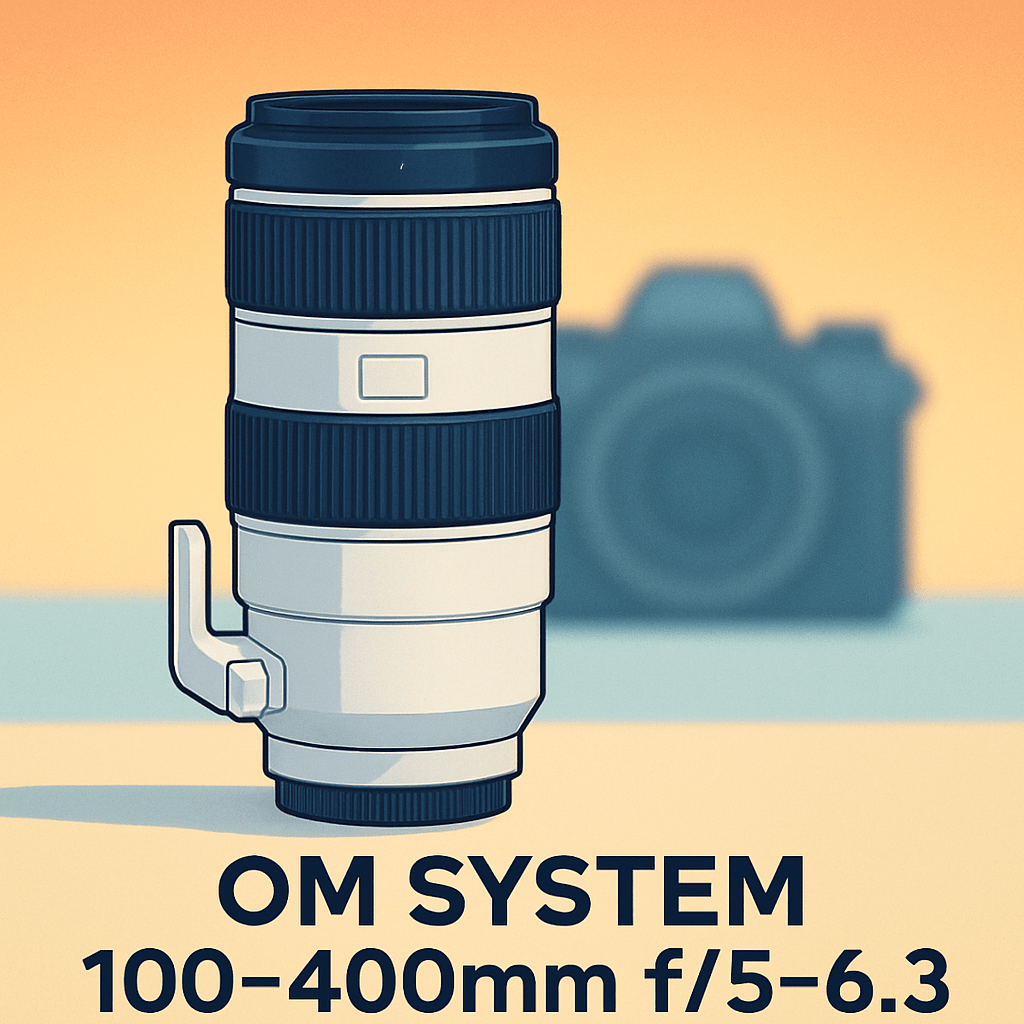
Want to reach distant subjects without full-frame bulk? OM System M.Zuiko Digital 100-400mm f/5-6.3 Micro Four Thirds promises that, and it’s built for field work. I took it out.
It’s made for wildlife, birding, aviation, and distant landscapes, with internal zoom, weather sealing, and lens IS helping you stay shooting in bad weather.
There are tradeoffs—variable aperture and noticeable heft—so you’re going to want to set realistic expectations. Make sure to read the entire review as I break down real-world performance, keep reading.

OM System M.Zuiko Digital 100-400mm f/5-6.3 Micro Four Thirds
Lightweight, versatile super-telephoto for Micro Four Thirds photographers. Fast, sharp optics with built-in stabilization and close-focusing for wildlife, sports, and distant subjects. Compact design for handheld shooting.
Check PriceThe Numbers You Need
| Spec | Value |
|---|---|
| Focal Length | 100–400 mm |
| Aperture | f/5.0–6.3 |
| Mount | Micro Four Thirds |
| Maximum Magnification | 0.5× |
| Image Stabilization | Yes — lens-based IS, compatible with in-body IS |
| Minimum Focus Distance | 1.3 m |
| Filter Thread Diameter | 72 mm |
| Optical Construction | 20 elements in 13 groups |
| Dimensions (Diameter × Length) | Approx. 83 × 171 mm |
| Weight | Approx. 1120 g |
| Autofocus | MSC (Movie & Still Compatible) focusing system |
| Weather Sealing | Yes — dust and splash resistant |
| Zoom Type | Internal zoom (no extension during zooming) |
| Lens Coating | ZERO coating (reduces flare and ghosting) |
| Aperture Blades | 7 rounded blades |
How It’s Built
In my testing the OM System M.Zuiko Digital 100-400mm f/5-6.3 Micro Four Thirds feels like a lens built for being out in the weather. The barrel stays compact as you zoom, so it never feels like it’s suddenly longer in your hands. For real-world shooting that means better balance and less worry about dust or a light drizzle when you’re tracking birds or planes.
After using it for a while I found it’s solid on small MFT bodies but a bit hefty for long handheld sessions. Short bursts handheld are fine, but long hikes or multi-hour blinds call for a body grip, monopod, or tripod foot. For beginners that means plan a support strategy up front so your shoulders don’t pay for the day.
The zoom and focus rings have a nice, damped feel and the focus action is quiet enough for video work. I liked how the internal zoom and the weather seals actually let me keep shooting in dusty, windy spots without constantly wiping the front element. That kind of reliability really frees you to concentrate on the shot.
One thing that could be better is balance on tiny camera bodies — it tends to feel front-heavy without a support point. Filters are common and available, but they add weight and cost if you use polarizers or NDs in the field. Overall the build is robust and beginner-friendly, just bring a support plan for long days out.
In Your Hands
The OM System M.Zuiko Digital 100-400mm f/5-6.3’s MSC focusing system is whisper-quiet and well suited to both stills and video, delivering a refined, professional feel in the hand. In the field it acquires subjects promptly and holds steady as you creep toward the long end, though in dimmer light it favors deliberate, confident locks over snap reactions. The overall shutter-to-focus handshake feels reassuring, which makes long waits in blinds or on the sidelines less nerve-racking.
For birds in flight and field sports the keeper rate impressed me when technique and camera-body pairing were right; it rewards clean panning, burst discipline, and trusting the tracking rather than constantly re-composing. At longer reach you’ll notice more discarded frames if you’re handheld and tense, but vice versa the lens can deliver a surprising number of sharp captures once you lock into rhythm. Thoughtful use of tracking modes and a steady stance pays dividends.
Close-focus capability opens up creative close-ups of larger subjects, where the lens renders texture and compression attractively without swapping glass. It won’t replace a dedicated macro, but it does expand what you can do on a single outing—animals, equipment details, and environmental portraits gain from that reach.
Lens-based stabilization working alongside in-body systems noticeably calms viewfinder shake, making handheld shooting genuinely practical for many scenarios, though long sessions benefit from a monopod or support. The internal zoom and weather sealing proved invaluable in wet and dusty conditions, maintaining balance and reliability when the job demanded it. Focus breathing is minimal for run-and-gun video, and the overall package feels built to keep you shooting in the real world rather than babysitting gear.
The Good and Bad
- Long 100–400 mm reach in MFT mount
- Internal zoom—stable balance, better sealing behavior
- Weather-sealed (dust and splash resistant)
- Lens-based IS that works with IBIS
- Variable f/5–6.3 aperture—modest light-gathering at the long end
- Approx. 1120 g—heavier for an MFT setup; prolonged handheld use may be tiring
Ideal Buyer
If you’re an MFT shooter who needs reach without compromise, the OM System M.Zuiko Digital 100-400mm f/5-6.3 Micro Four Thirds is built for you. It’s aimed at photographers who spend long days in the field and need a dependable telephoto that won’t let weather or dust interrupt the job.
Birders, wildlife photographers, outdoor sports shooters, and aviation spotters will appreciate the 100–400mm range and internal zoom that keeps balance and sealing consistent. Travelers and safari shooters who want meaningful reach with usable close-up capability will also find it compelling.
Buyers should be comfortable trading maximum aperture for reach; the f/5–6.3 variable aperture means managing ISO and shutter speed carefully in low light. The lens’s ~1,120 g heft rewards support—expect to use a monopod or a camera grip for long handheld stints.
This lens is ideal for photographers who value rugged, field-ready ergonomics and who want lens IS that plays nicely with in-body stabilization. If your priority is long reach, weather resistance, and reliable AF for real-world action, this is a strong, practical choice.
Better Alternatives?
We’ve gone through what the OM System 100‑400mm does well — the long reach, solid build, internal zoom, and lens IS that pairs with IBIS. I also pointed out the tradeoffs: the variable f/5–6.3 aperture, the weight for an MFT setup, and how it behaves at the long end in the field.
Below are a few real alternatives I’ve used. Each one leans a bit in a different direction — one chases slightly better image and AF feel, the others trade reach for weight, price, and portability. Pick the one that matches how you shoot in the field.
Alternative 1:

Panasonic Lumix G Leica DG Vario Elmar 100-400mm f/4-6.3 Micro Four Thirds
Premium glass delivering exceptional resolution, contrast, and color rendition across long reach. Weather-sealed construction, responsive autofocus, and steady telephoto performance ideal for travel, wildlife, and landscape photographers.
Check PriceI’ve used the Panasonic 100–400 a lot alongside the OM 100–400, and what stands out is the slightly crisper look and punchier contrast in my shots — especially on Panasonic bodies where the AF feels a touch quicker and more consistent. In practice that meant more keepers when a bird moved suddenly at the long end.
Where it’s worse is cost and, to my hands, it isn’t a big win in weight or handling compared to the OM. If you already own Panasonic bodies you’ll notice the AF coupling is nicer, but you pay a premium for that small edge in image feel.
This is the lens I’d point serious wildlife shooters or travel pros toward: you want the best-looking images out of an MFT tele and you want snappy AF on Panasonic cameras. If price and near-identical handling to the OM bother you, the OM remains a very capable and often better value choice.
Alternative 2:

Panasonic Lumix G Vario 100-300mm f/4-5.6 Micro Four Thirds
Affordable, versatile telezoom balanced for hobbyists. Lightweight build, smooth zoom action, and reliable sharpness from moderate telephoto reach—perfect for family, sports, and outdoor shooting on compact bodies.
Check PriceThe Panasonic 100–300 is noticeably lighter and easier to carry on long walks than the OM 100–400. I found it much less tiring on day hikes and at backyard birding sessions, and it’s cheap enough that you won’t stress about bumps or dust as much.
On the flip side, you lose that extra 100mm of reach, and in the field the 100–300 shows softer corners and less microcontrast at the long end compared with the OM. Autofocus is fine for slow or predictable action, but it’s not as sure-footed when subjects zoom past quickly.
Choose the 100–300 if you’re a hobbyist or family shooter who values light weight and a lower price above absolute reach and pro-level sharpness. It’s great for casual sports, travel, and anyone who wants a long lens without the carry penalty of the OM 100–400.
Alternative 3:
Panasonic Lumix G Vario 100-300mm f/4-5.6 Micro Four Thirds
Compact telephoto with close-focusing and image stabilization compatibility, offering portable reach and consistent performance. Great value for enthusiasts seeking extended focal length without heavy luggage.
Check PriceUsed as a compact travel lens, the 100–300 wins for portability and ease of use. I could move quickly between subjects, handhold for longer stretches, and it works well with camera IBIS for steady shots of static or slow-moving targets.
Compared to the OM 100–400 it can feel cheaper and less resilient in bad weather, and it won’t give you the same image pop at 300mm that the OM gives at 400mm. In low light the smaller aperture becomes more of a limit, and you’ll push ISO sooner than with the OM.
This is the lens for the photographer who values light packing and a friendly price above absolute performance: hobbyist birders, travelers, and weekend sports shooters who want usable long reach without the bulk of the OM 100–400.
What People Ask Most
Is the OM System 100-400mm f/5-6.3 a good lens?
Yes — it’s a strong, lightweight long-reach telezoom for Micro Four Thirds that balances image quality, autofocus and portability for travel and wildlife work.
Is the OM System 100-400mm f/5-6.3 image stabilized?
Yes — it works with OM System stabilization and pairs with in-body IBIS (Sync IS) for very effective shake reduction.
How sharp is the OM System 100-400mm f/5-6.3?
Very sharp in the center across most of the range and improves when stopped down, though the extreme long end is a bit softer wide open.
Is the OM System 100-400mm f/5-6.3 weather-sealed?
Yes — the lens is weather- and dust-resistant, built to handle outdoor conditions.
What is the 35mm equivalent focal length of the OM System 100-400mm f/5-6.3?
On Micro Four Thirds the 100–400mm range equals roughly 200–800mm in 35mm terms.
Is the OM System 100-400mm f/5-6.3 good for bird and wildlife photography?
Yes — its long reach, light weight, reliable AF and stabilization make it a very practical choice for birding and wildlife, especially in the field.
Conclusion
The OM System M.Zuiko Digital 100-400mm f/5-6.3 Micro Four Thirds is a purpose-built telephoto that delivers the kind of reach, build quality, and field-ready reliability you want for demanding outdoor work. Its internal zoom, weather resistance, lens stabilization, and quiet MSC AF make it a trustworthy partner when conditions are anything but ideal. In practice it behaves like a tool designed by people who spend more time in hides and on sidelines than in studios.
Those strengths come with clear tradeoffs you should accept up front. The variable aperture and the lens’s mass mean you’ll be balancing ISO and shutter speed more often than with faster, lighter optics. Close-focus constraints and the blade count also temper background rendition and the tightest macro-style shots.
If you’re an MFT shooter whose priorities are reach, durability, and dependable stabilization, this lens is an excellent, pragmatic choice. If you instead chase the absolute light-gathering edge or the lightest travel kit, consider the Panasonic options or the lighter OM alternative as honest alternatives to weigh against.
Bottom line: for serious wildlife, aviation, and distant-subject work on Micro Four Thirds bodies this lens earns its place on the strap. It’s a field-proven, value-oriented long zoom that rewards shooters who prioritize reach and reliability over absolute low-light speed or featherweight portability.
OM System M.Zuiko Digital 100-400mm f/5-6.3 Micro Four Thirds
Lightweight, versatile super-telephoto for Micro Four Thirds photographers. Fast, sharp optics with built-in stabilization and close-focusing for wildlife, sports, and distant subjects. Compact design for handheld shooting.
Check Price


0 Comments