
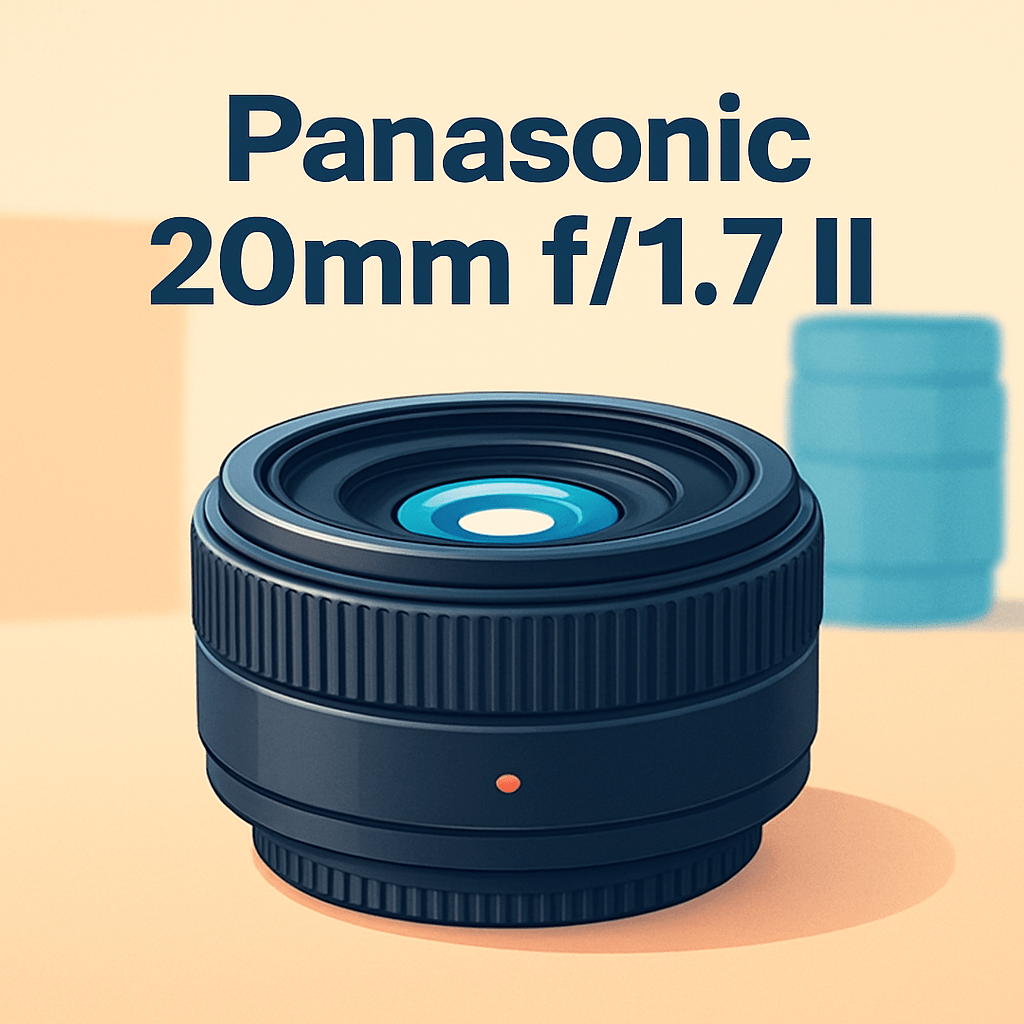
Want a bright, pocketable lens you’ll actually carry everywhere? I spent field time with this one to see if it earns that role.
The Panasonic Lumix G 20mm f/1.7 II Micro Four Thirds is a pancake-style normal prime giving roughly a 40mm-equivalent view.
You get wide-open light gathering and a tiny footprint, ideal for street, travel, and everyday carry. The trade-off: no optical stabilization, so you’ll depend on body IBIS or faster shutter speeds.
I’ll show how it handled real shoots and who benefits most. Make sure to read the entire review — keep reading.

Panasonic Lumix G 20mm f/1.7 II Micro Four Thirds
Ultra-compact pancake prime delivering bright f/1.7 performance, crisp optics and natural field of view. Ideal for street, travel and everyday portraits with fast autofocus and pleasing background separation.
Check PriceThe Numbers You Need
| Spec | Value |
|---|---|
| Focal Length | 20 mm |
| Maximum Aperture | f/1.7 |
| Lens Type | Pancake wide-angle prime |
| Mount | Micro Four Thirds |
| Equivalent Focal Length (35mm format) | 40 mm |
| Minimum Focus Distance | Approximately 0.2 m |
| Optical Construction | 7 elements in 5 groups |
| Diaphragm Blades | 7 rounded |
| Filter Diameter | 46 mm |
| Length | About 25 mm |
| Weight | Approximately 125 g |
| Angle of View | Around 57° |
| Autofocus | Yes — fast, quiet AF motor |
| Image Stabilization | No (rely on camera body stabilization) |
| Compatible Sensors | Designed for Micro Four Thirds sensor size |
How It’s Built
In my testing the Panasonic Lumix G 20mm f/1.7 II Micro Four Thirds really lives up to the pancake idea, sitting almost flush on the camera and vanishing in a bag. That compactness makes it a joy for street and travel work where you want to be quick and unobtrusive. The pocketability is honestly my favorite thing about it.
On small mirrorless bodies it balances beautifully and feels like an extension of my hand, which makes long walks with a camera much less tiring. On larger bodies the flat, short barrel gives you less to hold onto, so I often cupped the lens or reached for a tiny thumb grip for extra control. I also liked that the filter thread is small and inexpensive, so ND and polarizers are easy to stash in a kit.
The mount felt solid during everyday use and the lens stayed snug while I swapped bodies at events. There’s no stabilization built into the lens itself, so in practice you’ll want a camera with body stabilization or to use faster shutter speeds in low light. I appreciated the smooth, quiet focus for grab shots and video, but the lack of built-in stabilization is the one thing I’d change.
In Your Hands
The Panasonic Lumix G 20mm f/1.7 II delivers a classic “normal” perspective that feels neither wide nor tele, making it an unobtrusive everyday lens for street, travel, and candid portrait work. Framing is intuitive and forgiving, so you can capture environmental context without the distortion of wider optics or the compression of longer lenses. That middle-ground field of view makes it easy to switch between scenes without changing lenses.
With a bright maximum aperture, the lens excels in available light, letting you work with lower ISO and faster shutter speeds than slower kit options. The shallow depth of field at wide apertures helps isolate subjects in busy scenes, producing a pleasing separation that’s useful for portraits and detail shots. It’s not a heavy-duty portrait lens, but it gives satisfying subject emphasis for handheld shooting.
Close-focusing ability expands the lens’s utility beyond walkaround snapshots, enabling tight detail and small-subject work when you need it. Shooting nearer to your subject yields a more intimate perspective and stronger foreground-background separation, which is handy for street details, food, and lifestyle imagery. The rendering stays consistent, so those close shots integrate well with wider environmental frames.
Day-to-day the pancake profile is the star—light, pocketable, and fast to bring up for spontaneous moments, especially on smaller Micro Four Thirds bodies. There’s no optical stabilization in the barrel, so the comfort level for low-light handheld work depends on your camera’s in-body stabilization or on keeping shutter speeds up. Autofocus is quiet and quick in normal conditions, which makes grab-and-go shooting feel seamless for both stills and casual video.
The Good and Bad
- Extremely compact pancake design (about 25 mm length; ~125 g)
- Bright f/1.7 maximum aperture
- Versatile ~40 mm equivalent field of view
- Fast and quiet autofocus motor
- No optical image stabilization (depends on body IBIS)
- Fixed focal length (limited framing flexibility)
Ideal Buyer
If you shoot Micro Four Thirds and value pocketability above all else, this is the lens to toss in a coat or grab bag. The Panasonic Lumix G 20mm f/1.7 II is essentially a 40mm-equivalent normal prime that disappears on small bodies. At about 125 grams and a true pancake profile, it lets you travel light and shoot without announcing yourself, remaining discreet.
Bring this when you want a bright, everyday optic that handles street, travel and casual portrait work with equal calm. That f/1.7 aperture helps in dim interiors and gives just enough subject separation for environmental portraits. Quiet autofocus and a close 0.2 m focus distance make it ideal for candid grabs on the street or at cafés and simple run-and-gun video.
This isn’t for photographers who demand in-lens stabilization; plan to use a body with IBIS or set faster shutter speeds. It’s a smart choice as a one-lens travel camera or as a companion to wider or longer primes in a minimalist kit. Choose it if you prefer freedom from bulk and want a reliable, nearly invisible prime that gets you shooting more and saves real physical strain over long days.
Better Alternatives?
We’ve covered what the Panasonic 20mm f/1.7 II does best: a true pocketable, bright everyday prime with a natural view that is easy to carry and quick to use. If you like that balance of size, feel, and a 40mm-equivalent look, it’s hard to beat — but there are solid alternatives that change the field of view, rendering, and handling in ways you might prefer for certain shoots.
Below I walk through three lenses I’ve used in real shoots and explain how each one behaves differently on the street, at a small event, or traveling. I’ll point out what each lens does better and worse than the 20mm, and who I’d recommend each one to.
Alternative 1:

Olympus M.Zuiko Digital 17mm f/1.8 Micro Four Thirds
Bright wide-angle prime with smooth bokeh and exceptional edge-to-edge sharpness. Compact and lightweight for landscapes, environmental portraits, and street photography; fast aperture excels in low-light handheld shooting.
Check PriceThe Olympus 17mm f/1.8 gives you a noticeably wider view than the 20mm — in practice that means you can include more of the scene without taking a step back, which I love for street and travel shots where space is tight. In real use the 17mm feels a touch sharper across the frame, especially toward the edges, so when I stop down for landscapes or group shots the corners look cleaner than the 20mm.
What it’s not as good at compared with the 20mm is pocketability and the slightly longer reach the 20mm gives. The 17mm is still compact, but it isn’t as flat as the 20mm pancake, so it’s less likely to disappear in a jacket pocket. Also, because it’s wider, you don’t get quite the same subject separation — portraits with blurred backgrounds won’t pop as much as with the 20mm at the same aperture.
Pick the Olympus 17mm if you are a street or travel shooter who wants a wider, more open view and cares about even sharpness corner-to-corner. If you want a lens that stays in your pocket all the time, the 20mm still wins, but if you want cleaner edges and a bit more scene context the 17mm is a great choice.
Alternative 2:

Panasonic Lumix G Leica DG Summilux 15mm f/1.7 Micro Four Thirds
Premium Leica-engineered wide prime offering exceptional clarity, contrast, and creamy bokeh at a fast aperture. Robust build and precise rendering make it perfect for architecture, street, and atmospheric low-light scenes.
Check PriceThe Leica-engineered 15mm is a step toward wider storytelling and a different feel in images: you get punchy contrast, crisp detail, and a rendering that often feels more “filmic” than the 20mm. In practice I reach for the 15mm when I want dramatic wide scenes, moody interiors, or architecture shots where clarity and micro-contrast matter — it gives a different character to light and shadow than the flatter 20mm.
Compared to the 20mm, the 15mm is less discreet and a bit bulkier, so it won’t tuck away as easily. The wider angle also reduces background separation — faces won’t isolate like they do with the 20mm — and it’s pricier. But the extra rendering quality and stronger build make it feel like a step up if you care about image character and are willing to carry a slightly larger lens.
This lens is for the shooter who wants a premium look and often works with wide compositions or video. If you shoot architecture, interiors, or atmospheric street scenes and want that Leica-style pop, the 15mm is worth the trade. If your top priority is the smallest, lightest walkaround setup, the 20mm still has the edge.
Alternative 3:
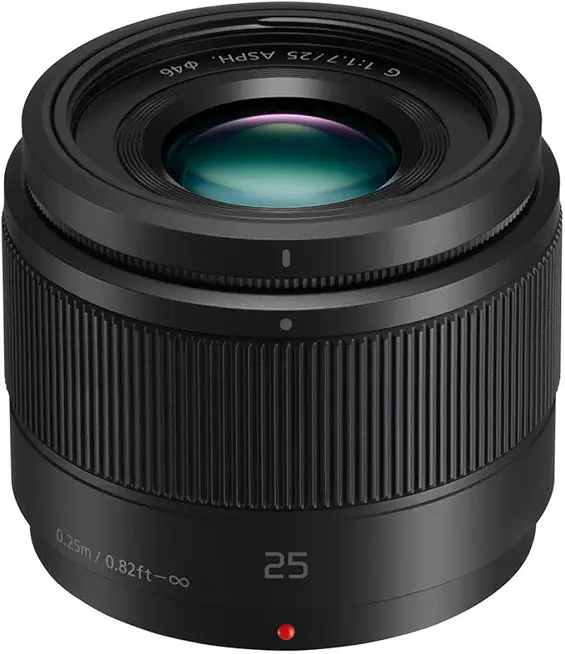
Panasonic Lumix G 25mm f/1.7 Micro Four Thirds
Everyday standard prime with a natural perspective, bright f/1.7 aperture and compact design. Delivers sharp images, smooth background separation and reliable autofocus for portraits, events, and daily shooting.
Check PriceThe 25mm gives a tighter, more portrait-friendly view — think of it as the classic “nifty fifty” on Micro Four Thirds. In real shoots the 25mm separates subjects from the background more easily than the 20mm, and skin tones and facial detail tend to look more three-dimensional. For head-and-shoulder portraits, small events, and lifestyle shots where you want background blur, I often prefer the 25mm.
On the downside, the 25mm won’t be as discreet for street work and you lose some of the contextual scene that the 20mm gives. The 20mm is better when you want a single small lens to cover everything from candid shots to close environmental frames. The 25mm trades that versatility for stronger subject isolation and a more intimate perspective.
Choose the 25mm if your shooting leans toward portraits, event work, or you want a more classic normal lens feel with nicer bokeh. If you want the smallest, most flexible everyday carry with a slightly wider view, stick with the 20mm — but if you crave tighter framing and creamier backgrounds the 25mm is a very practical switch.
What People Ask Most
Is the Panasonic 20mm f/1.7 II compatible with Micro Four Thirds cameras?
Yes — it’s designed for Micro Four Thirds and works on all MFT bodies, giving about a 40mm full-frame equivalent field of view.
How sharp is the Panasonic 20mm f/1.7 II across the frame?
Very sharp in the center at f/1.7, while corners are a bit softer wide open and improve noticeably when stopped down.
How does the Panasonic 20mm f/1.7 II compare to the original 20mm f/1.7 or other pancake primes?
It’s a clear refinement over the original with improved coatings and slightly better edge performance, and it’s generally one of the sharper, faster-aperture pancake options.
Is the Panasonic 20mm f/1.7 II good for low-light photography and video?
Yes — the f/1.7 aperture helps in low light and gives pleasing background separation, making it a strong choice for run-and-gun video when paired with a stabilized body.
Does the Panasonic 20mm f/1.7 II have image stabilization or fast autofocus?
There’s no in-lens stabilization — it relies on your camera’s IBIS if available; autofocus is generally quick and quiet on modern MFT bodies but not the absolute fastest lens out there.
Is the Panasonic 20mm f/1.7 II worth buying for street and travel photography?
Yes — its compact size, light weight, and solid image quality make it an excellent everyday street and travel lens.
Conclusion
The Panasonic Lumix G 20mm f/1.7 II Micro Four Thirds is one of those lenses you hardly notice until it saves the shot. Its pancake profile and bright f/1.7 aperture make it an ideal everyday partner for discreet street work, travel, and quick candid portraits. The autofocus is fast and quiet, so you can shoot stills and run‑and‑gun video with minimal hunting.
There are tradeoffs — most notably the lack of built‑in optical stabilization and the natural limits of a single focal length. On bodies without IBIS you’ll need to respect shutter speeds, and photographers who want long reach or ultra‑creamy backgrounds may prefer alternatives. Those caveats don’t negate its usefulness, but they do define when it shines.
If you prize portability and simplicity, this lens delivers more usefulness than its tiny footprint implies compared with wider or longer compact primes. Choose wider options when you want more environmental context, or the slightly longer normal when you crave extra separation. For a lightweight, go‑anywhere normal prime the Panasonic Lumix G 20mm f/1.7 II is a clear, practical winner that simplifies your kit.
Panasonic Lumix G 20mm f/1.7 II Micro Four Thirds
Ultra-compact pancake prime delivering bright f/1.7 performance, crisp optics and natural field of view. Ideal for street, travel and everyday portraits with fast autofocus and pleasing background separation.
Check Price



0 Comments