
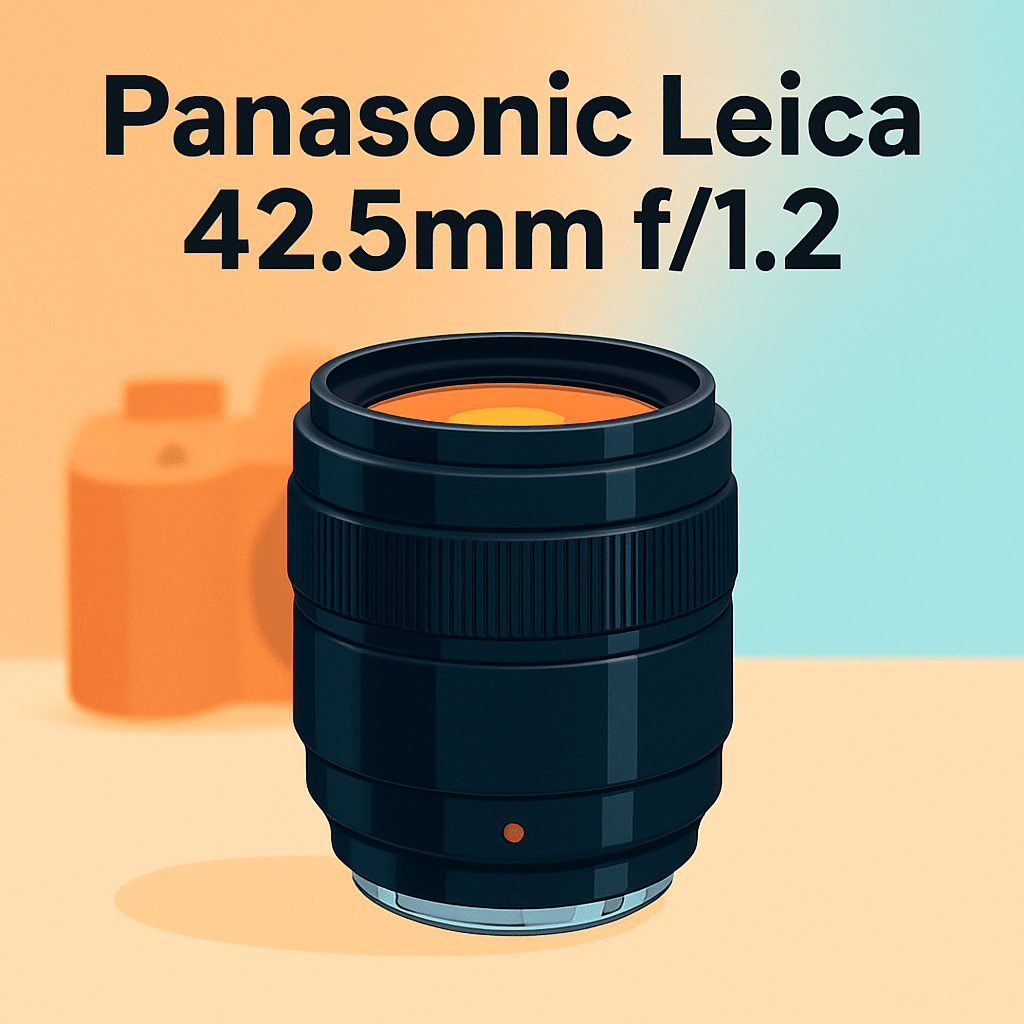
Want portraits that jump off the frame with creamy background blur and confidence in low light?
After shooting the Micro Four Thirds 42.5mm F1.2 Leica DG Nocticron on real jobs, I came away with plenty to examine about its promise of subject isolation, fast quiet AF, and built‑in O.I.S.
If you shoot headshots, events, or available‑light portraits, this lens is aimed at you and your need for shallow depth of field, reliable autofocus, and handheld flexibility.
This review will walk through handling, real‑world rendering at f/1.2, autofocus behavior, stabilization perks, and practical limits so you can decide if it’s your next portrait tool — make sure to read the entire review as I break it down, and keep reading.

Micro Four Thirds 42.5mm F1.2 Leica DG Nocticron
Ultra-fast portrait optic delivering creamy background separation and exceptional low-light performance. Precise center sharpness, beautiful bokeh rendition, and solid metal construction for demanding portrait and night shooting with reliable autofocus.
Check PriceThe Numbers You Need
| Spec | Value |
|---|---|
| Focal length | 42.5mm |
| Equivalent focal length (35mm format) | Approx. 85mm |
| Maximum aperture | f/1.2 |
| Lens mount | Micro Four Thirds |
| Optical image stabilization | POWER O.I.S. |
| Lens construction | 14 elements in 11 groups |
| Minimum focusing distance | 50 cm |
| Filter thread diameter | 67 mm |
| Angle of view | 29° |
| Aperture blades | 9, rounded |
| Autofocus | Yes, fast and quiet operation |
| Manual focus | Yes |
| Lens coating | LEICA DG coating for glare and ghosting reduction |
| Lens size (diameter × length) | Approx. 75 mm × 84 mm |
| Weight | Approx. 425 g |
How It’s Built
In my testing the Micro Four Thirds 42.5mm F1.2 Leica DG Nocticron has a compact yet substantial feel. It isn’t tiny but not bulky either. That balance gives confidence when I put it on my camera.
On small Micro Four Thirds bodies it felt a little front‑heavy during long sessions, but on larger bodies it settled in nicely. The focus ring is smooth and precise, which made manual focus pulls easy to hit the eyes. Beginners will appreciate the reassuring tactile feedback.
Build quality feels solid and well put together without feeling overbuilt. The aperture gives very smooth, rounded highlights thanks to its rounded blades, so out‑of‑focus areas look pleasing and natural. I really liked that silky rendering for portraits.
The lens’ coatings do a good job keeping flare and ghosting in check in backlit shooting, though I did see a hint of flare with very strong side light. That was the one area I wished was a bit better during dramatic sunset shoots.
For full‑day shoots it’s carryable but you notice it after hours; a good strap and mindful handling help a lot. In short, it’s a friendly lens to use: solid feel, great manual control, and predictable handling for beginners.
In Your Hands
Wide-open the Nocticron yields razor-center acuity with softer edges; stopping down tightens those edges and brings up micro-contrast. Transitions between subject and background are creamy, delivering the separation portrait shooters expect without harsh outlines.
Colors come through punchy without looking overcooked, and skin tones stay natural; the lens’s coatings keep highlights under control in backlit scenes with only modest flare and little ghosting. Micro-contrast improves as you stop down, so images gain bite while preserving smooth out-of-focus rendering.
Minimum-focus behavior is conservative, so tight headshots often require stepping back or reframing—this isn’t meant for macro detail work but it excels at head-and-shoulders portraits, indoor available-light events, and golden-hour outdoor sessions. Built-in stabilization paired with the wide aperture makes handheld low-light shooting surprisingly practical, improving keeper rates in challenging light.
Balance on smaller bodies leans slightly forward, yet the lens remains comfortable during extended shoots and integrates smoothly with typical Micro Four Thirds rigs. The focus ring offers precise, well-damped manual control for deliberate pulls, while autofocus is quietly quick and reliable for eye-level work, leaving you more time to craft the image than chase focus.
The Good and Bad
- f/1.2 maximum aperture for shallow depth of field and low‑light flexibility
- Approx. 85mm equivalent field of view ideal for portraits
- POWER O.I.S. for added handheld stability
- Fast and quiet autofocus behavior
- Minimum focusing distance of 50 cm limits close‑up versatility
- Size/weight may feel substantial on small MFT bodies
Ideal Buyer
The Micro Four Thirds 42.5mm F1.2 Leica DG Nocticron is built for portrait photographers who want an 85mm‑equivalent look with true f/1.2 speed. It’s ideal for headshots, magazine-style portraits and cinematic short-tele framing where subject isolation matters. If silky background separation and low‑light flexibility are priorities, this lens answers the call.
Event and available‑light shooters will appreciate the combination of fast, quiet autofocus and built‑in POWER O.I.S. for steadier handheld stills and smoother run‑and‑gun video. The nine rounded blades help deliver creamy bokeh that keeps attention on the eyes. When you need reliable isolation without lugging full-frame glass, this lens performs.
That said, it isn’t for everyone. If you need close‑up magnification or a compact, ultra‑light walkaround optic, the 50cm minimum focus and 0.1x reproduction limit its versatility. Photographers who prioritize weather sealing or the tightest pro ergonomics may prefer the Olympus 45mm f/1.2 or a lighter 42.5mm f/1.7 alternative.
Owners of Micro Four Thirds bodies who value rendering, stabilized low‑light performance and a tactile portrait focal length will find this a compelling choice. It suits seasoned pros and serious enthusiasts who favor image character and dependable AF over absolute compactness. In short, buy it for portraits and low‑light work; skip it for macro or strictly travel‑light kits.
Better Alternatives?
We’ve already dug into what the Panasonic Leica 42.5mm f/1.2 does best: that ultra‑wide f/1.2 look, smooth rendering, and in‑lens stabilization that helps when you handhold at low light. That lens is a great tool if you want creamy background separation and steady shots without leaning on your body’s IBIS.
If you’re weighing other options — maybe you want tougher weather sealing, a lighter walk‑around lens, or something cheaper — there are clear tradeoffs. Below I run through three practical alternatives I’ve used in the field, how they beat the Nocticron in real shooting, where they fall short, and who they suit best.
Alternative 1:

Micro Four Thirds 45mm F1.2 M.Zuiko Digital ED PRO
Pro-grade short-telephoto lens built for professionals: impressive contrast, sumptuous out-of-focus highlights, weather-resistant design, tactile controls, and fast, accurate focusing that excels on portraits, events, and studio work.
Check PriceThe Olympus 45mm f/1.2 PRO is the most obvious alternative if you like the Nocticron’s f/1.2 look but want a tougher build. In real shoots it handles grit, rain, and long outdoor sessions with no worries — the sealing and overall “pro” feel stand out. The rendering is similarly lush, but I find the Olympus a touch punchier in contrast and mid‑tones, which can make skin and eyes pop more straight out of camera.
Where it loses to the Panasonic Leica is a small, practical one: the PRO relies more on in‑body stabilization and feels a bit different on Panasonic bodies than the Nocticron does. On some Panasonic cameras you’ll miss the lens O.I.S. advantage of the Nocticron for very slow handheld work. Also, the Olympus feels slightly heavier and firmer in its bokeh texture — some people like that punch, others prefer the silkier Nocticron look.
Who should pick it? If you work outside, shoot events in mixed weather, or want the most rugged, professional feel for back‑to‑back portrait work, the 45mm PRO is a strong choice. It’s for photographers who trade a little lens‑level stabilization and silkiness for rock‑solid build, punchier rendering, and confidence in rough conditions.
Alternative 2:

Micro Four Thirds 42.5mm F1.7 Panasonic Lumix G
Compact, lightweight portrait prime offering bright aperture for low-light shooting and creamy subject separation. Quick autofocus, snappy rendering, and portable feel make it ideal for travel and everyday portraits.
Check PriceThe Panasonic 42.5mm f/1.7 is the compact, everyday counterpoint to the Nocticron. I’ve carried it on walks and travel days because it barely adds weight but still gives pleasant subject separation and quick autofocus. In real life it’s fast to grab, steady to shoot, and makes solid portraits without drawing attention to itself.
Compared to the Nocticron it gives up some low‑light headroom and the extreme creamy bokeh you get at f/1.2. At f/1.7 the background separation is still nice, but not as dramatic, and highlights are a touch harder edged. On the plus side it keeps the lens O.I.S. and delivers very reliable AF and sharpness when stopped down — so for run‑and‑gun shoots you still get excellent results.
This one is for buyers who value size, weight, and price. If you travel a lot, shoot street or casual portraits, or want a dependable lens you won’t mind carrying all day, the 42.5/1.7 is the sensible, practical pick. It’s also a good first portrait prime for people who want the look of a short tele without the bulk or cost of the Nocticron.
Alternative 3:
Micro Four Thirds 42.5mm F1.7 Panasonic Lumix G
Affordable, pocketable portrait lens delivering pleasing bokeh, crisp mid-frame detail, and smooth focusing for hybrid photo/video workflows. Excellent for enthusiasts seeking quality optics without bulk.
Check PriceLooking at the same 42.5/1.7 from the angle of hybrid shooters: I’ve used this lens for quick video interviews and casual portrait video, and its AF is smooth and unobtrusive. For hybrid work where you need usable bokeh, steady handheld shots, and minimal gear, it performs really well. The smaller size makes it easier to balance on gimbals and smaller bodies.
Again versus the Nocticron, the trade is obvious — you lose the dreamy f/1.2 separation and some subject isolation, but you gain portability, lower cost, and a lens that’s less demanding of perfect focus when shooting fast. For video, the slightly tighter depth of field at f/1.7 is often easier to keep in focus, which many shooters actually prefer.
Pick this version if you’re an enthusiast or hybrid shooter who wants a reliable portrait look without the weight or price of the Nocticron. It’s ideal for vloggers, travel shooters, and small‑crew video work where convenience and smooth AF matter more than squeezing every last stop of shallow depth of field.
What People Ask Most
Is the Panasonic Leica 42.5mm f/1.2 worth buying?
Yes — for Micro Four Thirds portrait shooters who want ultra-fast aperture and premium image quality it’s a standout, though it’s a high-end, pricier option.
Is the Panasonic Leica 42.5mm f/1.2 weather-sealed?
Yes, it has dust and splash resistance for shooting in light bad weather, but it’s not rated for full immersion.
Does the Panasonic Leica 42.5mm f/1.2 have image stabilization?
No, the lens itself does not have optical stabilization, so use a camera with IBIS or faster shutter speeds for low-light handheld shots.
How sharp is the Panasonic Leica 42.5mm f/1.2?
Very sharp — excellent center sharpness wide open and exceptional resolution by f/2–f/4, ideal for portrait detail.
How is the autofocus performance of the Panasonic Leica 42.5mm f/1.2?
Autofocus is fast, accurate and quiet on modern Panasonic bodies, making it reliable for stills and solid for video AF.
How is the bokeh of the Panasonic Leica 42.5mm f/1.2?
Fantastic — very smooth, creamy out-of-focus areas and strong subject separation thanks to the wide f/1.2 aperture and diaphragm design.
Conclusion
The Micro Four Thirds 42.5mm F1.2 Leica DG Nocticron is a purpose-built portrait prime that largely delivers on its promise. Its very bright aperture combined with in-lens stabilization lets you work handheld in challenging light while isolating subjects with cinematic separation. Autofocus feels fast and discreet, and the coatings help keep contrast and flare under control in backlit situations.
Wide‑open rendering is the lens’s signature — creamy bokeh, gentle transitions and dependable center sharpness make heads and faces sing in editorial and event work. Stabilization and quiet AF translate to noticeably higher keeper rates during long sessions and when recording run-and-gun video. On many of my shoots it raised the bar for what MFT can do for portraits.
That said, it isn’t a Swiss Army knife. Close‑up versatility is limited and the lens has a substantial presence on smaller bodies during all-day use. Buyers who prioritize compactness, extreme close focusing, or weather‑sealed pro ruggedness will find better fits elsewhere.
Overall, if your priority is shallow depth of field, low‑light handheld reliability and fast, unobtrusive AF for portrait or event work, the Nocticron is a compelling choice. If size, price or macro reach matter more, consider the alternatives; for pure portrait craft on Micro Four Thirds, I’d pick this lens every time.
Micro Four Thirds 42.5mm F1.2 Leica DG Nocticron
Ultra-fast portrait optic delivering creamy background separation and exceptional low-light performance. Precise center sharpness, beautiful bokeh rendition, and solid metal construction for demanding portrait and night shooting with reliable autofocus.
Check Price


0 Comments