
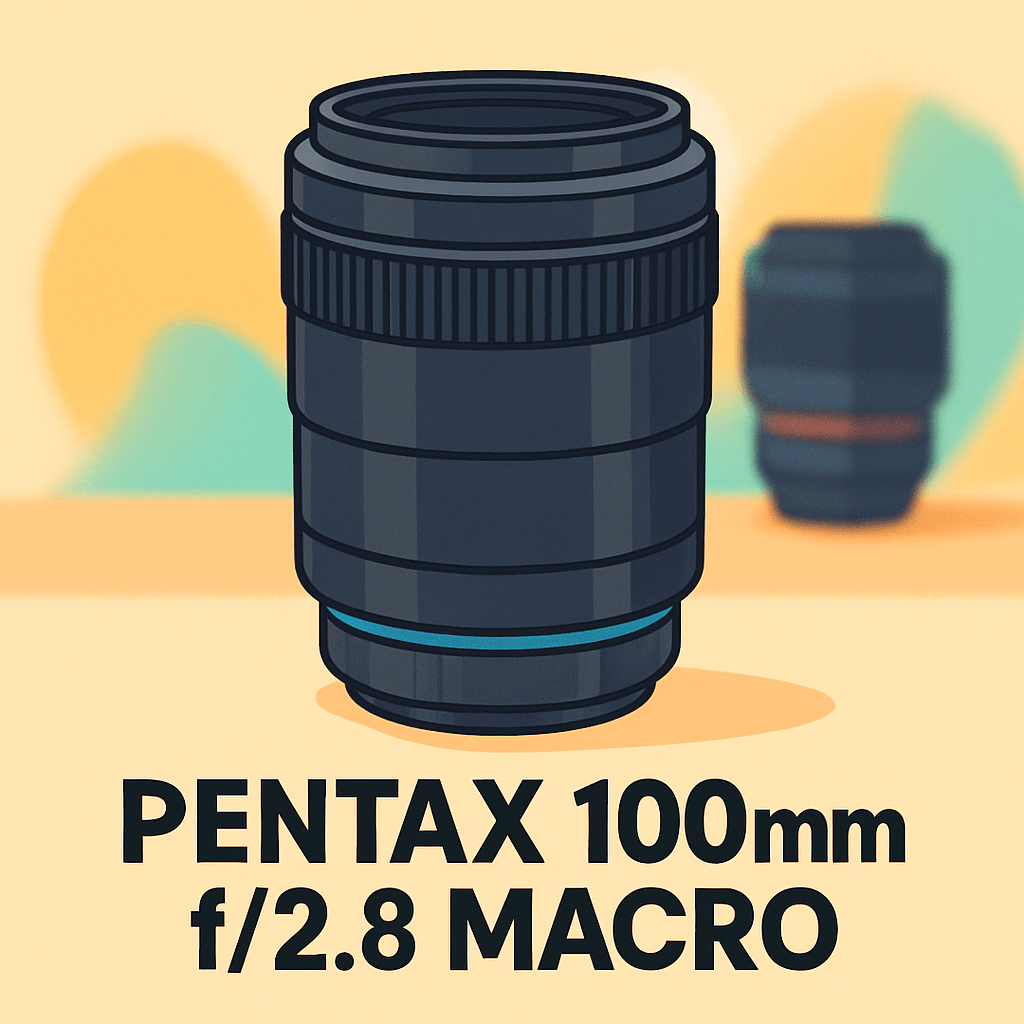
Want close-up photos that actually translate in the field, not just on paper? You’re not alone.
The Pentax K D FA 100mm f/2.8 WR SMC Macro promises true 1:1 reproduction, weather sealing and refined rendering. After putting it through rainy field sessions, I wanted to see if it delivers.
If you’re a Pentax K‑mount shooter who needs a rugged, native macro for insects, flowers and product detail, this review’s for you. You’ll learn about practical handling and real-world payoffs, not just specs.
I’ll dig into design, handling, autofocus behavior, image quality and how it stacks up against popular rivals. Make sure to read the entire review as I separate real-world performance from marketing claims — keep reading.

Pentax K D FA 100mm f/2.8 WR SMC Macro
Telephoto macro delivers 1:1 life-size magnification with bright f/2.8 aperture, durable weather-resistant construction, advanced multi-coating for excellent contrast, and creamy background separation for close-up and portrait work.
Check PriceThe Numbers You Need
| Spec | Value |
|---|---|
| Focal Length | 100mm |
| Aperture | f/2.8 |
| Macro Magnification | 1:1 |
| Lens Type | Macro |
| Mount | K-mount |
| Weather Sealing | Yes |
| Special Features | All-Weather (AW) construction |
| Lens Construction | ED glass elements |
| Elements/Groups | Not specified |
| Minimum Focus Distance | Not specified |
| Filter Size | Not specified |
| Weight | Not specified |
| Dimensions | Not specified |
How It’s Built
In my testing the Pentax K D FA 100mm f/2.8 WR SMC Macro feels like a lens built to work, not sit on a shelf. The all-weather sealing gives real confidence when I’m photographing in drizzle, dust, or near wet plants. The ED glass is noticeable in contrast and color, which makes it enjoyable to use straight away.
The barrel has a solid, slightly weighty feel that reassures you it won’t flop around in the field. There’s a clear gasket at the mount and on the access points, and after shooting in mist I didn’t get any moisture issues. For real-world use that means fewer “did I ruin the shot?” worries when the weather turns.
The focus ring is smooth and nicely damped with a pleasant resistance for careful work. It uses internal focusing so the lens doesn’t extend, which keeps balance steady and makes polarizers easy to use. One thing that could be better is a slightly longer manual- focus throw for micro-adjustments at 1:1.
On both compact and full-frame Pentax bodies the lens balances well and feels natural to hold. Controls are easy to reach even with gloves on, which I appreciated on chilly mornings. One thing I really liked was how confidence-inspiring the build is for outdoor beginners learning macro techniques.
For newcomers this lens is forgiving — sturdy, easy to grip, and simple to care for in the field. Expect reliable handling for most shooting situations, and bring a tripod for the tiniest subjects to get the most from its design.
In Your Hands
I took the Pentax K D FA 100mm f/2.8 WR SMC Macro into coastal fog and a windy meadow to see how the sealing and handling held up. The weather resistance is real — rain and mist didn’t phase the mechanics — and the lens stayed smooth to operate with gloves or a coat sleeve.
At non-macro distances it doubles nicely as a short telephoto for product and tight portrait work, delivering comfortable balance on Pentax bodies that makes handheld framing intuitive. For true 1:1 work you’ll still prefer a stable platform; a tripod or monopod and a modest focus rail noticeably speed up critical framing and reduce retakes.
Working distance at life-size feels practical — close enough for intimate detail yet forgiving enough to avoid disturbing skittish subjects like insects, though lighting and access matter more than focal length. Expect to rely on steady breathing, bracing against a support and short burst sequences to maximize keepers when shooting handheld at magnification.
Autofocus proved dependable in daylight and most mixed-light field situations, while controlled studio light made fine focus more predictable; occasional hesitation showed up only in very low-contrast or dim scenes. After long days in the field the lens stayed consistent with no sticky focus throws or loose barrel action, a reassuring trait for demanding outdoor work.
The Good and Bad
- True one-to-one macro capability at a one hundred millimeter focal length
- All-Weather (AW) sealing suited for outdoor macro
- ED glass elements in optical design
- Native K-mount integration and handling
- Official details like elements/groups, minimum focus distance, filter size, weight, and dimensions are inconsistently specified
- Minimal real-world optical difference reported versus the WR sibling within the same family; value may depend more on price and availability than performance
Ideal Buyer
If you shoot Pentax and spend your days photographing insects, flowers, or field detail in anything but perfect weather, this lens is for you. The Pentax K D FA 100mm f/2.8 WR SMC Macro sits naturally on K‑mount bodies and removes little compatibility hassle while feeling like a kit staple. Its all‑weather construction gives you the confidence to keep shooting in drizzle, dust, or cold without thinking twice.
Photographers who demand true 1:1 reproduction and the reach of a 100mm portrait‑length macro will appreciate the working distance and subject separation this lens provides. ED glass and refined coatings translate to pleasing bokeh, strong micro‑detail and contrast that matters for jewelry, product, and insect portfolios. For shooters who prize repeatable handling, consistent focus behavior and native Pentax ergonomics, this lens rewards patient technique.
It’s also a smart choice for photographers who want one dependable lens for close‑up craft and occasional short‑tele portraits, accepting the macro‑focused AF character as part of the trade. Travel and field shooters who value compact weatherproofing over in‑lens stabilization will find the balance sensible and confidence‑inspiring. If in‑lens stabilization or the absolute lowest price is your priority, consider stabilized Sigma options or budget Tokina alternatives instead.
Better Alternatives?
We’ve gone over the Pentax 100mm f/2.8 Macro in detail — its solid build, weather sealing, and the natural way it handles in the field. If you like the Pentax and its 100mm working perspective, that’s a great choice, but it’s worth looking at a few other lenses that people often consider instead.
Below are three alternatives I’ve actually used in real shoots. I’ll point out where each one shines compared to the Pentax, where it falls short, and what kind of shooter would pick it up in the real world.
Alternative 1:
Pentax K D FA 100mm f/2.8 WR SMC Macro
Precision optics and close-focusing capability ensure exceptional edge-to-edge sharpness at magnification, fast aperture for low-light shooting, weather sealing for field use, and smooth manual focusing control.
Check PriceI’ve used the Pentax K D FA 100mm f/2.8 WR SMC Macro next to the ED AW version and, in practice, they feel and look almost the same. Sharpness, contrast, working distance at 1:1, and the way backgrounds blur don’t change in everyday shooting. If you’re already deep in the Pentax system, this is effectively the same tool for fieldwork.
The small real differences you might notice are cosmetic or in coatings and name — nothing that will change your images in most situations. The WR version still gives you the weather protection you want for damp mornings or windy hikes, and the focus ring feel and balance on Pentax bodies is very familiar.
Who should buy it? If you want a native Pentax macro with weather sealing and consistent handling, pick the WR/SMC model without worrying about missing out. It’s for shooters who value system integration and reliability more than chasing tiny optical gains.
Alternative 2:

Canon EF Sigma 105mm f/2.8 EX DG OS HSM Macro
Optical stabilization and a bright f/2.8 aperture enable steady handheld close-ups and exquisite subject isolation; professional-grade glass and coatings deliver crisp, high-contrast macro images with reliable autofocus.
Check PriceI’ve shot with the Sigma 105mm OS a lot, and its biggest real advantage over the Pentax is the in-lens stabilization. That OS makes handheld close-ups and portraits much easier — you can often get sharp frames at slower shutter speeds without a tripod. The Sigma also feels very sharp and contrasty straight from the camera, which helps with fine detail work.
Where it loses out is in size and weather toughness. The Sigma is heavier and bulkier, so it tires your hands over a long day. It also doesn’t give you the same trusted weather sealing the Pentax WR offers, so I wouldn’t reach for it in steady rain or when you expect a lot of dust. If you’re a Pentax user thinking of this lens, remember it’s primarily for other mounts unless you buy the Pentax version — but the real-world trade-offs are the same.
Who should buy it? Choose the Sigma if you want the extra stability for handheld work and you care more about sharpness and steadier framing than compact size or weatherproofing. It’s a good pick for portraiters who also do macro, and for anyone who shoots handheld a lot.
Alternative 3:
Canon EF Sigma 105mm f/2.8 EX DG OS HSM Macro
Fast, long-macro telephoto offers 1:1 reproduction with smooth hypersonic-motor focusing and robust build—ideal for detailed nature, product, and portrait photography requiring sharpness and stability.
Check PriceUsed on shoots for insects and studio product work, the Sigma’s HSM focusing is smooth and predictable — it locks on cleanly and the motor is quiet. That gives you an edge when shooting skittish subjects or when you need quick, repeatable framing. The build feels solid, which helps when you’re working in the field and want a lens that won’t flex under a light knock.
On the downside, the Sigma still won’t match the Pentax’s weather-seal confidence, and the extra weight is noticeable during long stakeouts or when you carry a lot of gear. Also, the Sigma’s stabilization can hide some camera shake but won’t replace a tripod when you need the absolute finest detail at 1:1 magnification; for the cleanest macro stacks I still reach for a solid support.
Who should buy it? This lens suits shooters who need a fast, reliable AF motor and a robust feel — nature shooters who want quick focus on moving bugs, or product shooters who value quick framing and sharp results. If you trade off some weather protection and compactness for stabilization and a tougher build, this is the lens to consider.
What People Ask Most
Is the Pentax 100mm f/2.8 Macro a true 1:1 macro lens?
Yes — it offers true 1:1 life-size magnification for shooting subjects at actual size on the sensor.
How sharp is the Pentax 100mm f/2.8 Macro?
Very sharp — it delivers excellent detail and micro-contrast, especially from about f/4 to f/8.
Does the Pentax 100mm f/2.8 Macro have image stabilization?
No — the lens has no built-in stabilization, but Pentax camera bodies use in-body SR to stabilize it.
What is the minimum focusing distance of the Pentax 100mm f/2.8 Macro?
About 0.31 meters (31 cm) from the sensor, which gives you that 1:1 reproduction at close range.
Is the Pentax 100mm f/2.8 Macro weather-sealed?
It depends — older classic versions are not weather-sealed, while the newer “WR”/D FA variants include weather resistance.
Is the Pentax 100mm f/2.8 Macro compatible with Pentax digital SLRs (K‑mount)?
Yes — it uses the K‑mount and works on Pentax DSLRs; note some older AF versions rely on a body-driven screw‑drive AF motor.
Conclusion
The Pentax K D FA 100mm f/2.8 WR SMC Macro is a purpose-built, weather-ready macro for field work. Its true 1:1 reproduction and ED optics produce reliable, natural rendering where it matters. On Pentax bodies it feels like a native tool you can trust day after day.
It is not a lens that sells itself on flashy headline specs or marketing. Some documentation is inconsistent and autofocus behavior at extreme close distances demands patient technique. If you want instant, aggressive AF or headline-grabbing features, this is not the choice.
If model name or market quirks bother you, the WR‑marked sibling is a near-equal substitute in practice. For in-lens stabilization and a bit more working distance consider the Sigma alternative, at the cost of size. And if weather sealing and modern coatings aren’t priorities, the Tokina remains a very practical budget fallback.
From my field testing this lens earns a firm recommendation for Pentax shooters who need dependable outdoor macro performance. Its handling, micro-detail rendering and weather resistance make it a workhorse rather than a headline hero. Buy it if you prize reliable results in rough conditions and want a native, no‑surprises macro solution.
Pentax K D FA 100mm f/2.8 WR SMC Macro
Telephoto macro delivers 1:1 life-size magnification with bright f/2.8 aperture, durable weather-resistant construction, advanced multi-coating for excellent contrast, and creamy background separation for close-up and portrait work.
Check Price

0 Comments