
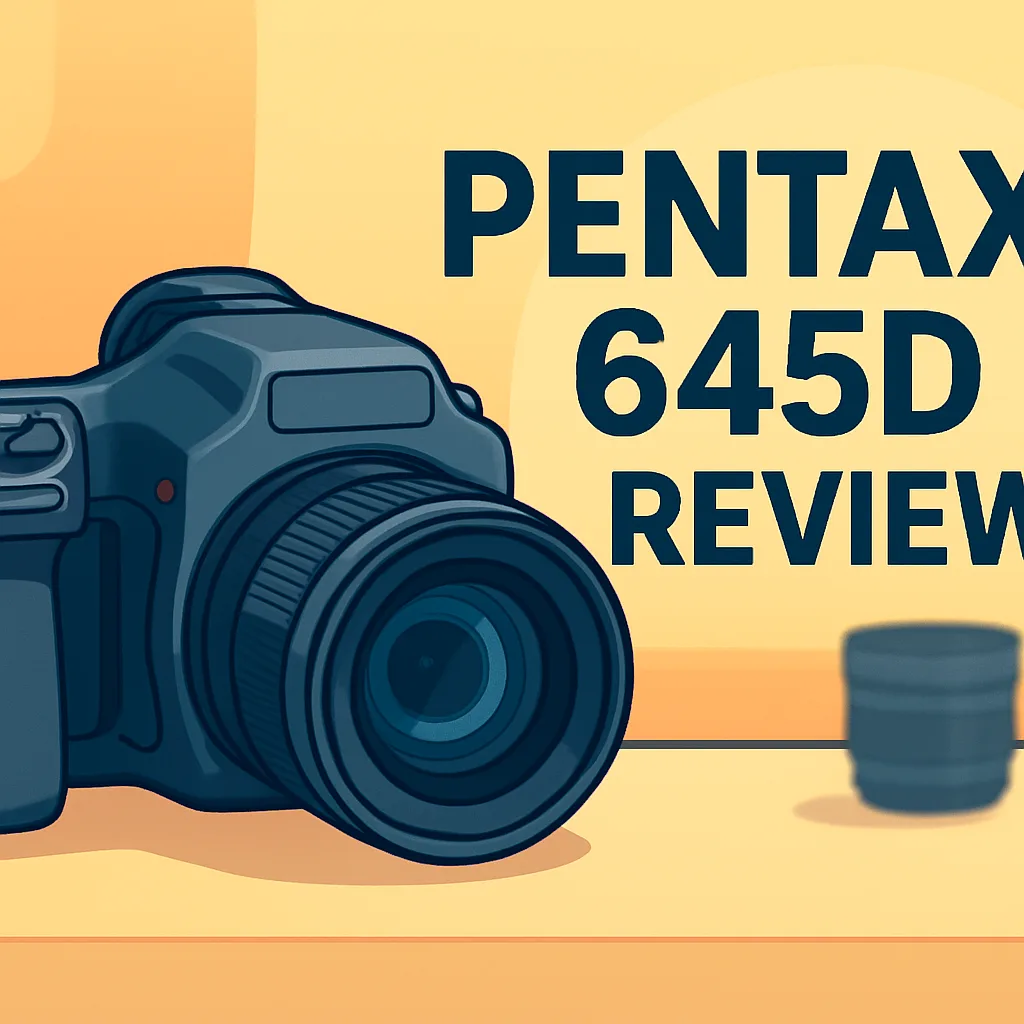
Want to know if the Pentax 645D Camera can seriously improve your image quality?
As a working photographer who’s field-tested it, I’ll walk you through handling, image quality, and workflow implications you’ll actually feel on shoots.
It’s aimed at photographers who favor deliberate, high-detail work — landscapes, studio portraits, and commercial shoots. Expect lush medium-format detail, rugged weather sealing, dual‑card reliability, and long battery life. Make sure to read the entire review as I break down real‑world shooting, strengths versus tradeoffs, and alternatives — keep reading.

Pentax 645D Camera
Medium-format DSLR delivering exceptionally rich tonal depth and fine detail. Rugged metal body, tailored for studio and landscape photographers seeking classic color rendition, precise control, and reliable performance in demanding shoots.
Check PriceThe Numbers You Need
| Spec | Value |
|---|---|
| Sensor | 40 MP |
| Format | Medium Format |
| Resolution | 7264 × 5440 pixels |
| File Format | RAW, JPEG |
| Lens Mount | Pentax 645AF2 |
| Weather Sealing | Yes |
| ISO Range | 100–1600 |
| Shutter Speed | 1/4000s to 30s |
| Continuous Shooting | 1.1 fps |
| Viewfinder | 98% coverage |
| LCD Screen | 3 inch, 921,000 dots |
| Memory Cards | Dual SD/SDHC slots |
| Weight | Approx. 1480 g |
| Dimensions | 156 × 117 × 119 mm |
| Battery Life | Approx. 800 shots |
How It’s Built
In my testing the Pentax 645D Camera feels like a serious tool — solid and a bit hefty, which is exactly what you want when you’re using big medium‑format lenses on a tripod. That weight makes handheld long walks tiring, but it also gives the camera a stable, balanced feel with native glass when you do set it up for a shoot.
The weather sealing really inspired confidence during outdoor shoots. After using it in drizzle and dusty locations I never worried about pulling it out in bad conditions, which is great for location work and for beginners who want a camera they can take outside without constant fretting.
The viewfinder shows almost exactly what you’ll get in the frame, so composing is straightforward and reliable for portraits and landscapes. The rear screen is a good size and clear enough to check exposure and focus, though it’s not as big or detailed as what newer cameras offer — I often zoomed in to confirm fine focus.
Controls are friendly and ergonomic; the grip feels secure and core settings are easy to change once you learn the layout. I loved the dual memory slots for instant backup, but I wish the body were lighter and the screen a touch larger for faster review on location.
In Your Hands
In real-world shooting the Pentax 645D feels like a tool built for deliberate photographers rather than frantic gunners. Its sensitivity range rewards working with controlled light — studio sessions, golden‑hour landscapes, and situations where you can set exposure thoughtfully — while pushing into low‑light handheld work requires discipline and careful technique.
The shutter and exposure system give you enough flexibility for fast glass, flash setups, or long exposures without fuss. I tend to rely on the multi‑segment metering for even scenes, switch to center‑weighted for classic portrait balances, and use spot metering when the background betrays exposure; the camera’s metering is predictable and easy to readjust on the fly.
Shooting cadence is intentionally unhurried, so timing and anticipation matter more than burst rates; this slows you down in a useful way for portrait and landscape work but isn’t suited to rapid action. The optical finder is clear and confidence‑inspiring for composition, while the rear screen and menus respond reliably enough for quick checks and careful review between frames.
Dual card slots are a practical boon — I use them for immediate backup on important jobs or as overflow on long days — though write pauses can punctuate a fast sequence. Weather sealing proved its worth on wet, windy shoots and in dusty fields, allowing me to keep shooting when lesser bodies would have closed up shop.
The Good and Bad
- 40 MP medium format resolution (7264 × 5440) for high detail capture
- Weather-sealed body for field reliability
- Dual SD/SDHC card slots for backup/overflow workflows
- Battery life approx. 800 shots for longer sessions
- Continuous shooting 1.1 fps limits capture rate for fast sequences
- ISO range capped at 100–1600
Ideal Buyer
The Pentax 645D is for photographers who prize resolution and a deliberate shooting rhythm. If you build prints, deliver studio retouching, or craft landscape panoramas, its 40MP medium format detail rewards careful composition and high-quality lenses.
Field shooters who need rugged reliability will appreciate the weather sealing, long battery life, and dual-card redundancy. Its heft and tripod-friendly balance make it ideal for location work where stability matters more than sprinting after fleeting moments.
Portrait and product photographers who favor tonal character and fine gradations will enjoy CCD rendering and control over RAW files. Expect to work methodically with ISO 100–1600 and a 1.1 fps cadence, planning captures rather than relying on bursts.
This isn’t the camera for wedding photographers chasing continuous action or for shooters who routinely push very high ISO in low light. If you want modern low‑light responsiveness or faster frame rates, consider newer medium‑format or mirrorless alternatives instead.
The ideal buyer is comfortable with a measured workflow: careful framing, tethered shooting in studio, or deliberate landscape stitching from a tripod. If you already own 645 glass the camera is a practical, inexpensive way to access medium‑format files with proven lens options and classic Pentax ergonomics.
Better Alternatives?
We’ve gone through the Pentax 645D in detail — how it handles, its 40MP look, and the slow, deliberate shooting style that comes with that CCD sensor and 1.1 fps cadence. If you love the 645D’s color and rugged build but are curious about other medium‑format paths, there are a few cameras that change the game in real shoots.
Below are three alternatives I’ve used in the field. I’ll point out what each one does better and where it falls short compared with the Pentax 645D Camera, and the kind of buyer who will get the most from each option.
Alternative 1:

Pentax 645Z Camera
High-resolution medium-format body combining impressive dynamic range with excellent low-light capability. Weather-sealed construction and intuitive controls make it a go-to for commercial, portrait, and landscape professionals demanding superior image quality.
Check PriceI’ve shot with the 645Z on landscape and studio days, and the most obvious win over the Pentax 645D Camera is low‑light and dynamic range. The files pull back shadows and hold highlights much better, so you get cleaner images when the light is tough. That makes a real difference when you’re working on location at dawn or in a dim studio corner.
The 645Z also feels quicker in live view and autofocus than the 645D — not blazing like modern mirrorless, but enough to make handheld work and faster setups less painful. Where it loses is weight and size; it’s a big camera on long shoots and the files push your workflow harder if you’re used to the 645D’s slower pace. Also, if you liked the 645D’s particular CCD color character, the 645Z’s cleaner CMOS look will feel different — more flexible, but less of that old‑school warmth.
Buyers who will prefer the 645Z are shooters who want the same rugged Pentax body and lens compatibility but need better real‑world low‑light performance and more latitude in post. If you’re moving toward commercial, portrait, or landscape work that demands cleaner high‑ISO files and more recoverable detail, the 645Z is a straight upgrade. If you value the exact 645D look or need the lightest setup, you might stick with the 645D Camera.
Alternative 2:
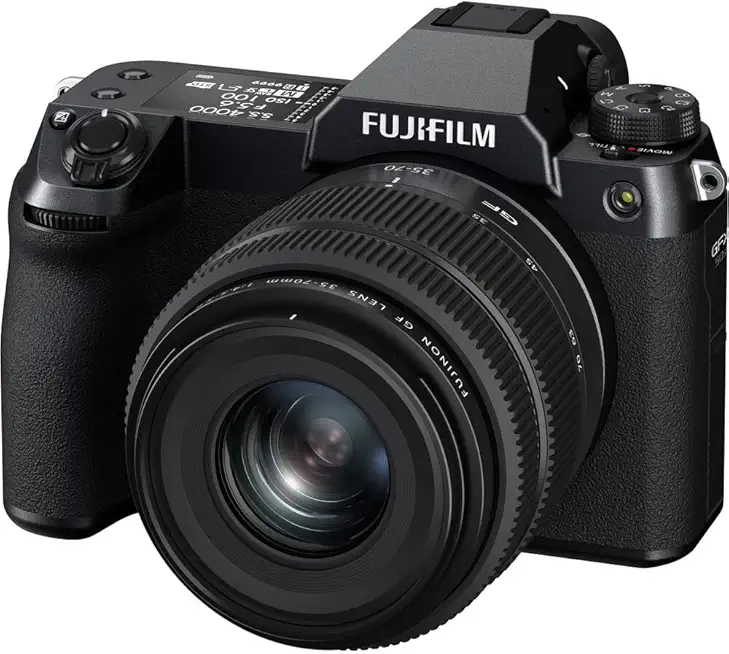
Fujifilm GFX50S II Camera
Compact medium-format mirrorless offering stunning resolution and natural color science. In-body stabilization and refined ergonomics enable handheld shooting with exceptional clarity—perfect for demanding travel, portrait, and studio work.
Check PriceSwitching to the GFX50S II felt like moving into a different workflow. The big wins versus the Pentax 645D Camera are IBIS (in‑body stabilization), a useful EVF, and modern autofocus. I found I could handhold more often, and the EVF gives a real preview of exposure and color that saves time in mixed light. For travel and location portrait work this was a huge practical benefit.
On the flip side, the GFX system’s lenses can be expensive and some are quite large. The Fujifilm color and film simulations are lovely out of camera, but if you’re chasing the 645D’s original CCD tonality you’ll need to work on profiles and processing to match it. Battery life on long outdoor days doesn’t feel as generous as the Pentax 645D Camera, so plan for spares if you’re away from power.
The kind of buyer who’ll pick the GFX50S II is someone who wants medium‑format image quality but with mirrorless convenience — handheld shooting, IBIS, and a confident EVF. It’s great for portrait photographers who move between studio and location, and for travel shooters who need high detail without a full tripod setup all the time. If you prize raw, CCD‑style color or want the simplest, most rugged body, the 645D Camera still has merit.
Alternative 3:
Fujifilm GFX50S II Camera
Balanced performance with rich tonality, smooth gradation, and highly detailed files for large prints. Fast autofocus, intuitive menus, and compact chassis let professionals create confidently in varied shooting environments.
Check PriceUsing the GFX50S II for print work showed me just how usable its files are for big, detailed prints — the tonality and smooth gradation make skin and landscape transitions look natural. Compared to the Pentax 645D Camera, the GFX files feel more modern and forgiving when you push exposure and color, which is nice when a client wants tweaks after the shoot.
However, the GFX still has tradeoffs versus the 645D Camera. It won’t give you that same button‑and‑dial feel some Pentax shooters love, and adapting a lot of older 645 glass is a different experience — balance and handling change. Also, if your work is heavily paced around long days with no chance to recharge, the Pentax battery life and simple dual‑card setup can be more reassuring in the field.
If you’re a photographer who needs a flexible camera for large prints, rich color, and quicker in‑camera previews, the GFX50S II will appeal. It’s a solid choice for studio portraitists and travel pros who want medium‑format image quality without always depending on a tripod. But if you’re after the exact shooting feel, battery confidence, or look of the Pentax 645D Camera, weigh those priorities before switching.
What People Ask Most
Is the Pentax 645D worth buying?
Yes—if you want medium-format image quality, rich color and high resolution at a lower used price and can live with slower performance and limited high-ISO capability.
How does the Pentax 645D compare to other medium format cameras?
It’s sturdily built and delivers excellent color and detail but is older and slower than modern CMOS medium-format systems, so newer models beat it in speed and high-ISO performance.
How good is the image quality of the Pentax 645D?
Outstanding for landscapes and portraits: the 40MP CCD produces superb detail, tonal gradation and color rendition, especially at base ISO.
Is the Pentax 645D good for landscape photography?
Yes—its resolution, dynamic range and color file quality make it ideal for landscapes, though you’ll often want a tripod because it’s heavy and not fast to handle handheld.
What lenses are compatible with the Pentax 645D?
It uses the Pentax 645 mount, so it works best with Pentax 645/645AF lenses and many legacy 645 lenses; adapters can let you use some other medium-format glass.
How heavy is the Pentax 645D and is it portable?
The body is fairly heavy and feels best on a tripod or with a solid strap, so it’s portable for field work but not a travel-friendly grab-and-go camera.
Conclusion
The Pentax 645D Camera remains a purposeful tool for photographers who prioritize pure image detail and field reliability. Its medium‑format 40 MP sensor, weather‑sealed construction, dual‑card redundancy and marathon battery life give working shooters confident, predictable results. It simply gets through long days without fuss.
Don’t buy it for speed or low‑light gymnastics; the camera enforces a deliberate pace with its slow continuous rate and conservative ISO ceiling. That tradeoff is obvious in event or action situations where burst rate and high‑ISO latitude are mission‑critical. Anticipation and composition matter more than reflexes.
For studio, landscape and methodical portrait work the 645D’s image character and robust build deliver excellent value, especially on a budget for medium format. If you shoot with patience, plan your cadence, and favor rendering over realtime responsiveness, it’s hard to beat for its price and durability. In short, it rewards patience with images that still hold up today.
If you need cleaner high‑ISO performance or a faster, more modern workflow, consider stepping up to alternatives such as the 645Z, Fujifilm GFX 50S II, or Hasselblad X1D II 50C. For photographers who want a tough, high‑resolution camera that rewards discipline, the Pentax 645D Camera still earns a strong recommendation.
Pentax 645D Camera
Medium-format DSLR delivering exceptionally rich tonal depth and fine detail. Rugged metal body, tailored for studio and landscape photographers seeking classic color rendition, precise control, and reliable performance in demanding shoots.
Check Price

0 Comments