
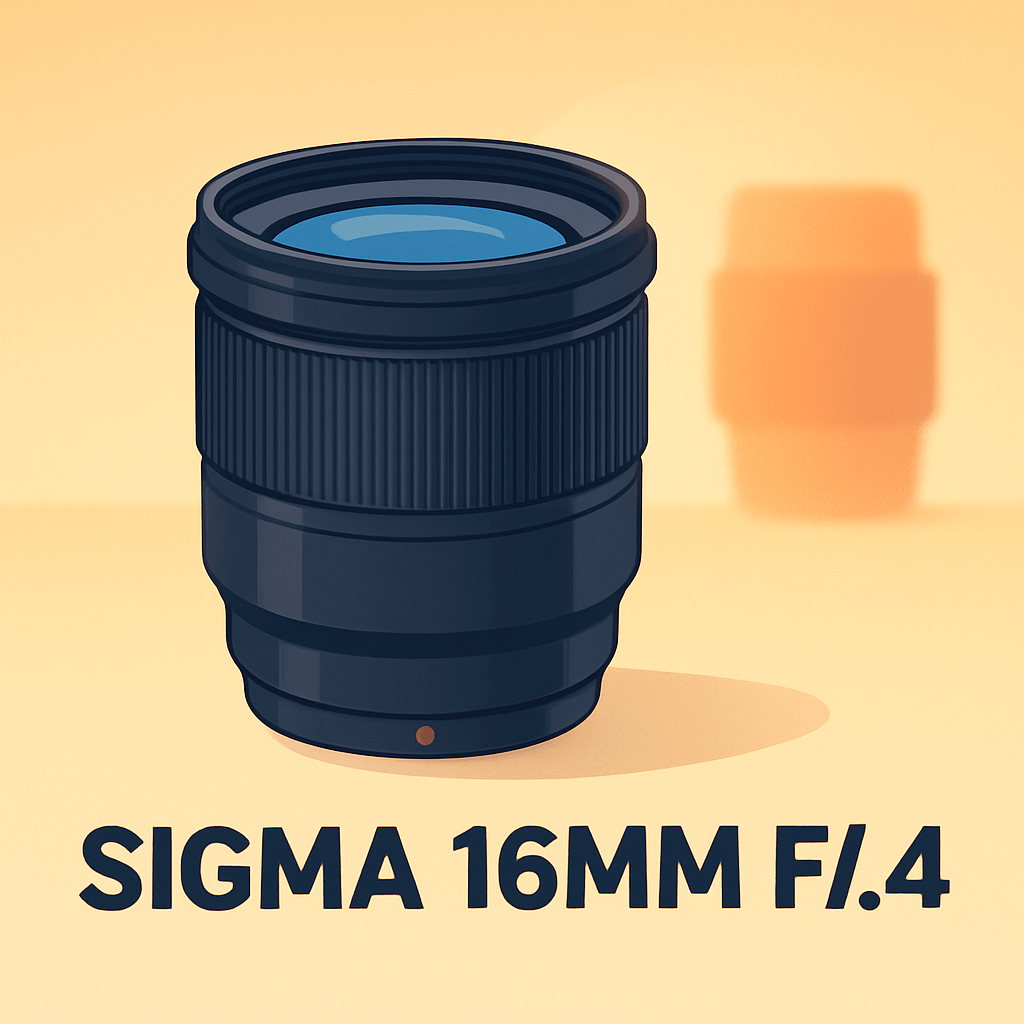
Want to shoot wide-angle, low-light scenes without lugging heavy glass or losing subject isolation?
If you own a Sony APS-C body and need a compact, fast lens for night streets, interiors, video, or astro, this one’s aimed at you.
The Sigma 16mm f/1.4 Contemporary Sony E offers a bright f/1.4 and quiet, fast AF that promise real-world payoff, though there’s no in-lens stabilization or weather sealing. After a few field shoots with it, the practical strengths and compromises became clear — make sure to read the entire review as I’ll break down image quality, autofocus, handling, and how it stacks up against rivals — keep reading.

Sigma 16mm f/1.4 Contemporary Sony E
Bright ultra-wide prime delivers exceptional edge-to-edge sharpness, creamy bokeh and fast low-light performance. Ideal for landscapes, astrophotography and vlogging thanks to responsive autofocus and compact, travel-friendly design.
Check PriceThe Numbers You Need
| Spec | Value |
|---|---|
| Focal Length | 16mm |
| Maximum Aperture | f/1.4 |
| Minimum Aperture | f/16 |
| Lens Mount | Sony E-mount and Micro Four Thirds (depending on version) |
| Format Compatibility | APS-C sensor |
| Lens Type | Wide-angle prime |
| Diaphragm Blades | 9 rounded blades |
| Minimum Focus Distance | 25 cm |
| Maximum Magnification | 0.20x |
| Filter Size | 67 mm |
| Image Stabilization | No (depends on camera body) |
| Autofocus | Yes, silent and fast stepping motor |
| Angle of View | Approx. 83.2° (APS-C) |
| Dimensions | Approx. 73 mm diameter × 93 mm length |
| Weight | Approx. 405 g |
How It’s Built
In my testing the Sigma 16mm f/1.4 Contemporary Sony E feels right at home on small Sony APS-C bodies. It balances toward the camera so the combo stays comfortable for long walks, street runs, or interior shoots. That makes it easy for beginners to carry all day without getting tired.
The focus ring is smooth and predictable when I switch to manual, and it works well for quick AF overrides. It doesn’t have a huge throw, but I found it precise enough for gentle focus pulls in video and for fine tweaks when framing close subjects. That real-world feel matters when you’re trying to nail a shot fast.
I also liked the practical front thread — you can slap on common ND or polarizing filters without hunting for adapters. For new shooters that means controlling reflections or doing long exposures is simple and affordable. It’s a small convenience that actually makes a lot of everyday shooting easier.
Build-wise it handled regular field use without creaks or wobble; I carried it in and out of backpacks and it stayed solid. One thing that could be better is weather protection — I treated it cautiously in drizzle and wouldn’t rely on it in rough conditions. Overall it’s a compact, trustworthy lens if you mind basic care in the field.
In Your Hands
On Sony APS‑C bodies the Sigma 16mm f/1.4 Contemporary delivers a wide, immersive perspective that plays well for landscapes, interiors, street work and vlogging. Framing feels punchy without being exaggerated, making it easy to include context and environment around a subject.
The very bright f/1.4 optic changes what you can shoot after dark — allowing faster shutter speeds and a noticeably shallower depth of field than most kit wide‑angles. In dim interiors and night scenes it lets subjects pop from backgrounds while maintaining a natural environmental look.
Close‑focus behavior surprised me in the field: it allows environmental close‑ups and detail work without switching to a macro. The working distance feels useful for foreground interest in landscape and tight interior compositions.
Autofocus runs on a quiet stepping motor that plays nicely with Sony’s detection systems, making face and eye tracking dependable for run‑and‑gun video. Transitions for rack focus are generally clean and hunting is modest in mixed lighting. Because there’s no in‑lens stabilization you’ll want to lean on body IBIS or a rig for steadier handheld video and long exposures.
In real‑world shooting you’ll notice wide‑aperture quirks: corner shading at the widest setting that improves as you stop down, and optical artifacts such as color fringing and flare that are largely manageable with in‑camera or post corrections. Stars and bright point lights can reveal coma and ghosting at the widest stops, so careful framing and stopping down help for astro and backlit scenes. Also remember the lens lacks weather sealing, so basic rain and dust precautions are sensible when working outdoors.
The Good and Bad
- Bright f/1.4 maximum aperture
- Silent and fast stepping motor autofocus
- Minimum focus distance 25 cm with 0.20x magnification
- Approx. 83.2° angle of view on APS-C
- No optical image stabilization
- No weather sealing
Ideal Buyer
The Sigma 16mm f/1.4 Contemporary for Sony E is a sweet‑spot lens for Sony APS‑C shooters who want a fast, wide prime that changes what you can capture after dark. Its f/1.4 aperture and near‑24mm equivalent field of view make it ideal for low‑light street scenes, night skies, interiors and run‑and‑gun video where a quiet AF matters. Photographers who shoot environmental portraits, vlogs and landscapes will appreciate the combination of reach and shallow depth.
Portrait and documentary shooters who like context‑rich closeups will also find the 25 cm minimum focus and 0.20x magnification very useful. That capability lets you work tight into subjects without losing environmental cues, making it great for cafés, travel features and product‑in‑context work. The silent stepping motor keeps focus transitions unobtrusive for on‑camera audio.
This is a strong choice for creators who can rely on in‑body stabilization, tripods or gimbals, since the lens itself lacks OIS. Its compact footprint and common 67 mm filter thread make it practical for setups and stacking NDs or polarizers. If you favor a lightweight, fast wide for photo/video days, it’s hard to beat the versatility.
Not ideal buyers include shooters who need weather sealing for harsh‑condition use and those using bodies without IBIS who depend on in‑lens stabilization. Full‑frame workflows won’t get native coverage from this APS‑C design. In those cases consider weather‑resistant or stabilized alternatives.
Better Alternatives?
We’ve gone through what the Sigma 16mm f/1.4 gives you: a fast aperture, quiet AF and a very useful wide field on APS-C bodies. That lens is a great all-rounder for low light, interiors, video and night sky work, but it’s not perfect for every shooter or every situation.
If you need weather sealing, a much wider view, or a lower price, there are clear alternatives worth considering. Below I’ll walk through three lenses I’ve used in the field and tell you how each one stacks up against the Sigma and what kind of shooter would pick them.
Alternative 1:

Fujinon XF 16mm f/1.4 R WR X
Weather-sealed wide-angle prime combines stunning resolution and beautiful color rendition with a tactile aperture ring. Built for harsh conditions, it excels at street, landscape and low-light creative work.
Check PriceThe Fujinon XF 16mm f/1.4 R WR is the one I reach for when the weather looks iffy or I’m heading into rough terrain. Compared to the Sigma 16mm f/1.4 for Sony E, the Fuji wins on build and sealing — you can shoot in drizzle and dust with more confidence. In real use that means fewer worries about the elements and more reliable handling when you’re working in the field all day.
Optically the Fuji looks very pleasant straight out of camera; colors and micro-contrast have a different character than the Sigma. On Fuji bodies the AF feels very integrated and snappy, and the aperture ring gives you a tactile control I liked for quick exposure changes in street work. Where it’s not as strong versus the Sigma is price and weight — the Fuji tends to cost more and feels a bit heavier in the hand, and I didn’t notice the Sigma giving any less usable low-light reach when both were wide open.
Who should pick the Fuji? If you shoot on an X-mount system or you need weather sealing and a sturdy, pro feel, choose this. If you value the absolute lowest price, or you want the maximum shallow depth of field on a Sony APS-C body with a native mount, the Sigma still makes a lot of sense.
Alternative 2:

Samyang 12mm f/2.0 AF Canon RF-S
Ultra-wide autofocus lens offers expansive field of view and minimal distortion, perfect for immersive landscapes and night skies. Lightweight, affordable and fast for handheld shooting and travel photography.
Check PriceThe Samyang 12mm f/2.0 AF for Canon RF-S gives you a much wider view than the Sigma 16mm — that extra angle is noticeable in interiors, architecture and dramatic landscapes. I used it in tight hotel rooms and on wide mountain ridges and the difference in framing is huge: you get more environment in a single shot. Compared to the Sigma, the obvious trade is aperture — f/2.0 is a stop slower than f/1.4, so you lose some shallow depth and top-end low-light flexibility.
Autofocus on the Samyang RF-S is usable for stills and travel video, but in my experience it wasn’t as consistently quick or as quietly stepped as the Sigma on Sony bodies. Where the Samyang shines is weight and price — it’s lighter and more budget friendly, so you can carry it all day or use it as a second ultra-wide without breaking the bank. For night sky work it still performs well thanks to the very wide view, though you may need to bump ISO or exposure time compared to the Sigma.
Pick this Samyang if you shoot Canon RF-S and want an ultra-wide that won’t cost a lot and is great for interiors, architecture and expansive landscapes. If you need the absolute best low-light reach or shallower background separation, the Sigma’s f/1.4 will serve you better.
Alternative 3:

Samyang 12mm f/2.0 Sony E
Compact ultra-wide prime delivers crisp corner-to-corner clarity and reliable AF performance. Great for astrophotography, interiors and cinematic wide shots, with a price-friendly, portable build.
Check PriceThe Samyang 12mm f/2.0 for Sony E brings the same ultra-wide reach to Sony shooters. Compared with the Sigma 16mm f/1.4 on Sony APS-C, the Samyang gives you a noticeably wider scene which is perfect for cramped interiors or for shooting very dramatic foreground-to-background landscapes. It’s smaller and lighter in my bag, so it’s nice for travel and long hikes.
Where it loses out to the Sigma is raw light-gathering and background control — f/2.0 won’t give you the same shallow separation or the same low-light margin that f/1.4 does. Autofocus on the Samyang E mount felt reliable for my landscape and astro work, but for fast-moving run-and-gun scenarios the Sigma’s AF felt a touch more confident. Also, the Sigma’s closer minimum focus distance gave me more flexibility for near subjects, which matters when you want tight foregrounds with wide backgrounds.
Choose the Samyang 12mm Sony E if you want the widest possible framing on a Sony APS-C body and value a compact, affordable lens for travel, interiors and night sky shots. If you need more light, a shallower look, or faster AF for mixed run-and-gun shooting, stick with the Sigma 16mm f/1.4.
What People Ask Most
Is the Sigma 16mm f/1.4 good for astrophotography?
Yes — the f/1.4 aperture and wide field are excellent for Milky Way work on APS‑C bodies, though stopping to f/2–2.8 can improve corner stars.
How sharp is the Sigma 16mm f/1.4 wide open at f/1.4?
Very sharp in the center and usable across the frame, with some corner softness that tightens up noticeably by f/2–f/2.8.
Is the Sigma 16mm f/1.4 a full‑frame lens or for APS‑C cameras only?
The 16mm f/1.4 DC DN model is designed for APS‑C mirrorless cameras; it’s not a full‑frame lens.
Does the Sigma 16mm f/1.4 have image stabilization?
No — it has no optical stabilization, so use a tripod or rely on in‑body stabilization if your camera has it.
Is the Sigma 16mm f/1.4 weather‑sealed?
It does not have full, official weather sealing, so avoid heavy rain and moisture when shooting without extra protection.
How is the autofocus performance of the Sigma 16mm f/1.4?
Autofocus is generally fast and quiet on modern mirrorless bodies and works well for stills and video, though results depend on your camera’s AF system.
Conclusion
The Sigma 16mm f/1.4 Contemporary Sony E is one of those lenses that changes what an APS‑C shooter can do after dusk. Its very fast aperture and quiet autofocus make it a go‑to for low‑light work, interiors, environmental portraits and run‑and‑gun video, and it also opens up astrophotography possibilities. Handheld it balances nicely on Sony APS‑C bodies and rewards creative framing with pleasing rendering and accessible handling.
But it isn’t without trade‑offs—most notably the lack of in‑lens stabilization and formal weather resistance. That doesn’t ruin the lens, but it does mean you must rely on your camera’s stabilization, tripods or gimbals, and be mindful in rough conditions. If your workflow demands built‑in stabilization or rugged sealing, look elsewhere or pair this lens with a body that covers those gaps.
For photographers and creators who value speed of aperture, clean AF behavior and compact handling on Sony APS‑C bodies, this Sigma is an easy recommendation. It delivers real‑world punch, usable close‑focus versatility and creative latitude for its price and size, and that flexibility is especially valuable for mixed photo/video work. If those priorities match your shooting, buy it; if not, consider a weather‑sealed, extra‑wide or more budget‑minded alternative.
Sigma 16mm f/1.4 Contemporary Sony E
Bright ultra-wide prime delivers exceptional edge-to-edge sharpness, creamy bokeh and fast low-light performance. Ideal for landscapes, astrophotography and vlogging thanks to responsive autofocus and compact, travel-friendly design.
Check Price



0 Comments