
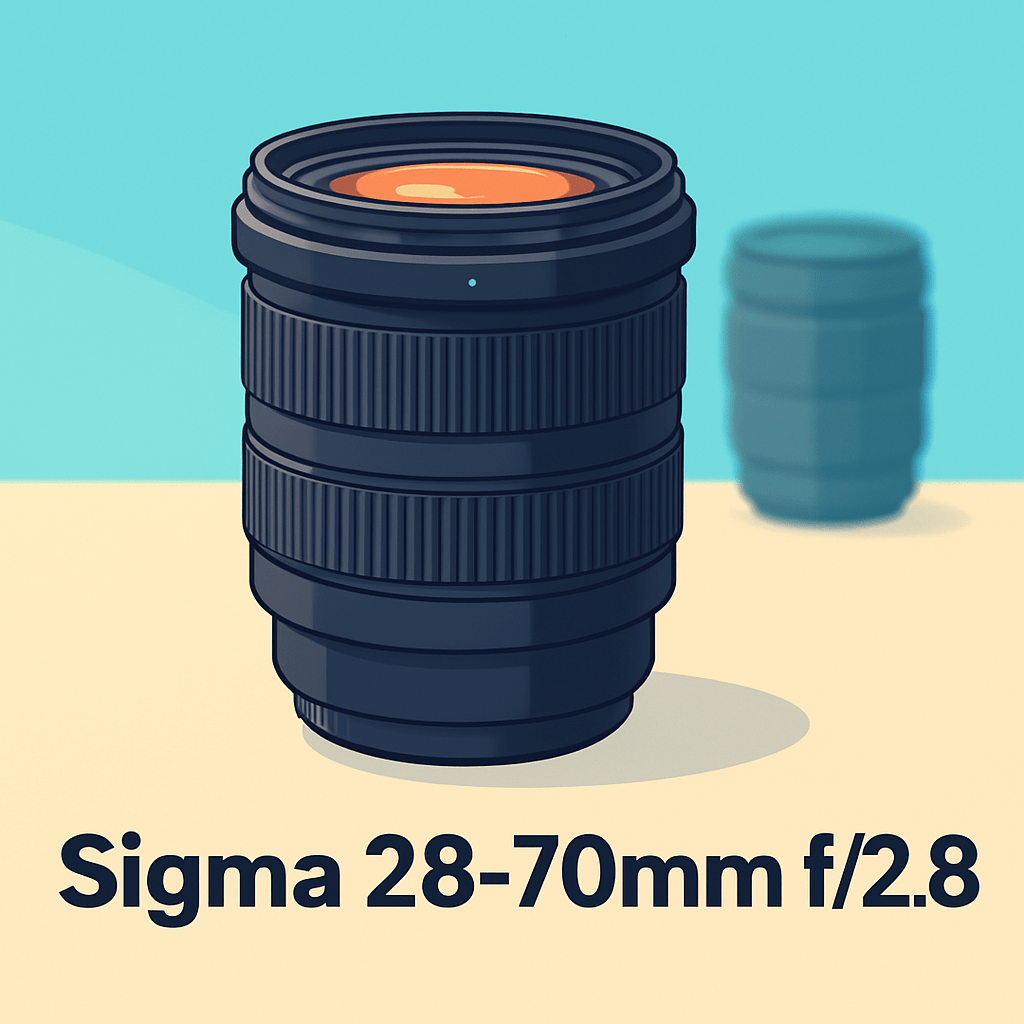
Want a fast standard zoom for your Sony that won’t weigh you down?
The Sigma 28-70mm F2.8 DG DN Sony E-mount promises f/2.8 performance in a notably compact package for full-frame mirrorless shooters.
If you’re an E-mount shooter who wants shallow depth and low-light reach without the bulk of pro 24–70s, this lens aims to be that compromise, and a few days of field testing showed where it pays off.
This review covers handling, autofocus behavior, real-world sharpness, and how it compares to popular alternatives, with practical takeaways for travel, events, and portraits—make sure to read the entire review as I break down where it shines and where it doesn’t, so keep reading.

Sigma 28-70mm F2.8 DG DN Sony E-mount
Bright constant f/2.8 zoom delivers crisp images across the 28–70mm range, ideal for low-light weddings and portraiture. Compact, lightweight design with smooth autofocus and edge-to-edge sharpness.
Check PriceThe Numbers You Need
| Spec | Value |
|---|---|
| Mount | Sony E-mount; L-mount |
| Focal length | 28–70mm |
| Aperture | f/2.8 (constant) |
| Format | Full-frame mirrorless |
| Special elements | 3 FLD, 2 SLD |
| Minimum focus distance | 19 cm (at 28mm), 38 cm (at 70mm) |
| Maximum magnification | 1:3.3 (28mm), 1:4.6 (70mm) |
| Filter size | 67mm |
| Diaphragm blades | 9 (rounded) |
| Weather sealing | Yes |
| Dimensions (approx.) | 72.2 × 101.5 mm (E-mount); 72.2 × 103.5 mm (L-mount) |
| Weight (approx.) | 470 g (E-mount); 490 g (L-mount) |
| Autofocus | Yes |
| Image stabilization | No |
| Lens hood | Included (petal-type) |
How It’s Built
In my testing the Sigma 28-70mm F2.8 DG DN felt refreshingly compact and solid in the hand. It balances nicely on smaller Sony bodies so the whole kit sits comfortably against your palm. After using it for a while I noticed it never wore me out during long walks or event days.
The barrel has a reassuring build—sturdy where it counts and not overly heavy. The lens doesn’t change length when you zoom or focus, so it stays predictable in tight spaces. The zoom and focus rings have smooth, damped movement that’s easy to learn for beginners.
Practical touches like the included petal hood and the common filter thread make life easier on shoots. Weather sealing gives you confidence in light rain or dusty conditions, which is great when you’re shooting outdoors. One thing I really liked was how balanced and unobtrusive it felt on a mirrorless body.
One thing that could be better is the lack of in-lens stabilization, so you’ll lean on your camera’s IBIS or faster shutter speeds in low light. It also trades the widest wide angle for its compact size, which some shooters will notice. For beginners this lens is simple to handle and dependable in the real world.
In Your Hands
On the street, at events, and in casual portrait work the 28–70mm sweep feels like a genuinely versatile everyday lens. The bright, constant aperture gives you confidence in dim venues and lets you separate subjects from busy backgrounds with pleasing ease. That slightly tighter wide end is a deliberate trade-off that favors portability without crippling framing options.
Close-up capability is a standout for a standard zoom — you can get in close enough for food, product or environmental detail and still retain a comfortable working distance. Background blur tightens attractively at close range, so small subjects pop without looking artificial. In practice it’s an excellent single-lens solution for assignments that demand both context and intimacy.
Weather sealing and a well-designed hood combine to keep contrast and color reliable in mixed light and light rain; flare is handled commendably when shooting into the sun. There’s no optical stabilization in the barrel, so you lean on in-camera stabilization or slightly faster shutter speeds for shaky conditions, but the lens balances nicely on compact Sony bodies for long hours. The tactile controls and smooth zoom action make it easy to operate quickly on event days.
For video the AF runs quietly and smoothly, with only modest focus breathing and natural transitions that stay out of the viewer’s way. The constant aperture means exposure is stable while zooming, and focus behavior is predictably consistent across the range, so stopping down merely tightens depth and definition without surprises. Together these traits make it a reliable, workaday optic for hybrid shooters who move from stills to video without swapping glass.
The Good and Bad
- Constant f/2.8 aperture
- Compact and lightweight (approx. 470g; 72.2 x 101.5mm E-mount)
- Close focusing: 19 cm at 28mm with useful 1:3.3 magnification
- Weather sealing
- Starts at 28mm rather than 24mm
- No optical image stabilization
Ideal Buyer
If you shoot Sony full-frame mirrorless and want f/2.8 without the heft of a pro 24–70, the Sigma 28-70mm F2.8 DG DN Sony E-mount is built for you. It’s aimed at photographers who prize compactness, speed and everyday carry over absolute wide-angle coverage.
Think travel documentarians, street shooters, event photographers and freelancers who carry kit all day. The 28–70 range covers portraits to short tele for small weddings, corporate gigs and editorial walkaround work. Its close-focus capability is a genuine perk for food, product detail and environmental close-ups.
Hybrid shooters who switch between stills and run-and-gun video will appreciate the lens’ balanced handling on smaller Sony bodies. It tames fatigue on gimbals and rigs compared with larger f/2.8 zooms. Just remember there’s no optical stabilization, so pair it with a body that has IBIS or use faster shutter speeds for steadier footage.
It’s not ideal for photographers who need a true 24mm wide end or the ultimate edge-to-edge sharpness of a Sony GM or Sigma 24–70 Art. Nor will it satisfy those who require in-lens stabilization or absolute corner consistency for very large prints. If portability, a constant f/2.8 and weather-sealed practicality top your priorities, this lens is a smart, real-world choice.
Better Alternatives?
We’ve looked closely at the Sigma 28–70mm F2.8 DG DN for Sony — the compact, handy f/2.8 zoom that trades a bit of wide-angle reach for a lighter kit. It’s a great pick if you want fast glass that won’t weigh you down, but it isn’t the only way to get a versatile standard zoom look.
If you want different trade-offs — a bit more reach, a wider angle, or top-tier image quality and build — there are several lenses that cover those needs. Below are three practical alternatives and how they compare to the Sigma in real shooting situations.
Alternative 1:

Tamron 28-75mm F2.8 Di III RXD Sony E-mount
Versatile standard zoom offers constant f/2.8 brightness, producing pleasing bokeh and reliable low-light performance. Agile, budget-friendly build with a responsive stepping motor makes it perfect for travel and events.
Check PriceI’ve shot with the Tamron 28–75mm a lot, and in the field it feels very similar to the Sigma in size and use, but with a little extra reach at the long end. That extra 5mm at 75mm helps for tighter portraits and event shots without moving back, and the bokeh at f/2.8 looks smooth and pleasing. Compared to the Sigma, the Tamron gives you more framing flexibility at the tele end but starts in the same 28mm area, so you don’t get the wider 24mm view.
Where the Tamron wins is price and everyday handling — it’s often cheaper and feels light on smaller Sony bodies. Its AF (the RXD motor) is quiet and fast for regular stills and casual video, though I’ve seen it hunt a touch more in really low light compared to the Sigma and native Sony lenses. Optically, the Tamron is sharp in the center at f/2.8 but its extreme corners can be softer wide open; stop down a bit and it cleans up nicely.
Buyers who should pick the Tamron are folks who want a reliable, budget-friendly walkaround zoom with a little extra tele reach — wedding shooters on a tight budget, travel photographers who don’t want to carry the heaviest glass, or anyone who wants a good all-purpose lens without spending on flagship glass. If you need the absolute best corner-to-corner sharpness or want true 24mm coverage, look elsewhere.
Alternative 2:

Sony FE 24-70mm F2.8 G Master E-mount
Professional-grade mid-range zoom combines stunning resolution, beautiful bokeh and robust weather sealing for demanding shoots. Fast f/2.8 aperture, precision autofocus and pro-level build quality inspire confidence on every assignment.
Check PriceThe Sony 24–70mm GM is a different animal than the Sigma 28–70. In real shooting, the GM delivers noticeably better edge-to-edge sharpness and higher contrast, especially stopped down, and that shows in landscapes, studio work, and high-detail commercial shots. The 24mm wide end is a real advantage for interiors and environmental portraits — you get more room to work without stepping back.
Where it’s worse than the Sigma is size, weight, and price. The GM is heavier and bulkier on small mirrorless bodies, and you’ll feel that during long shoots or travel. It’s also much more expensive. Autofocus on the GM is rock-solid and a touch faster and more reliable for continuous tracking than the Sigma, so if you shoot fast-moving subjects or depend on flawless AF for client work, the GM gives you extra confidence.
This lens is for pro shooters and serious enthusiasts who need the best image quality and build and who don’t mind the extra weight and cost. If you’re doing paid work, studio assignments, or need the 24mm edge for interiors and landscapes, the GM is worth the trade. If portability and price matter more, the Sigma remains the smarter everyday choice.
Alternative 3:
Sony FE 24-70mm F2.8 G Master E-mount
Engineered for professionals seeking cinematic sharpness and buttery bokeh, this lens delivers consistent exposure and whisper-quiet AF. Balanced handling, responsive focus control and superior corner-to-corner performance across full-frame sensors, confidently.
Check PriceUsing the Sony 24–70GM for video and portraits makes the strengths clear: the autofocus is very smooth and quiet, and the rendering is creamy for skin tones. Compared to the Sigma 28–70, the GM gives a more cinematic look straight out of camera and better control over wide scenes thanks to that 24mm start. For run-and-gun video or client portraits where focus noise and look matter, the GM is noticeably nicer to use.
On the downside, the GM doesn’t match the Sigma’s portability — it’s heavier and draws more attention when you’re carrying it all day. You also pay a big premium for that extra performance. In practice, if you’re traveling light or shooting long hours handheld, the Sigma’s smaller size and close-focus ability can be more practical, even if its corners aren’t as perfect.
Pick the GM if you’re a videographer or pro shooter who wants the quietest, smoothest AF and the best overall image quality for client work. If you value compactness, lower cost, and a lens that’s easier on your back for long days, the Sigma 28–70 still makes more sense.
What People Ask Most
Is the Sigma 28-70mm f/2.8 worth buying?
Yes — it’s an excellent value if you want a constant f/2.8 zoom that’s lightweight and sharp, though it trades off pro-level build and features for the lower price.
Is the Sigma 28-70mm f/2.8 sharp at f/2.8?
Yes — the center is very sharp at f/2.8, with some mild edge and corner softness that improves when stopped down.
How does the Sigma 28-70mm f/2.8 compare to the Sony 24-70mm f/2.8?
The Sigma is smaller, lighter, and cheaper with comparable center sharpness, while the Sony 24-70 GM offers tougher build, better weather sealing, and slightly superior AF and corner performance.
Is the Sigma 28-70mm f/2.8 weather-sealed?
No — it is not fully weather-sealed, so use caution in heavy rain or dusty conditions.
Is the Sigma 28-70mm f/2.8 compatible with full-frame Sony cameras?
Yes — it’s designed for Sony E-mount full-frame (FE) bodies and also works on APS-C Sony cameras with a crop factor.
Is the autofocus on the Sigma 28-70mm f/2.8 reliable for video and stills?
Yes — autofocus is generally fast and reliable for both stills and video, though it can hunt more in low light compared with Sony’s higher-end lenses.
Conclusion
The Sigma 28-70mm F2.8 DG DN Sony E-mount is a refreshingly compact take on a classic pro zoom formula, and in everyday shooting it feels deliberately honest about its mission. It delivers the bright constant aperture, close-focusing flexibility, and weather resistance that make it a hard-working companion for travel, street, and event work. In short, it punches above its size and rarely feels like a compromise in the moment.
That said, there are trade-offs you’ll notice if you chase absolute corner-to-corner perfection or the widest framing. The lens gives up some coverage and absolute edge performance compared with larger, top-tier 24–70 options, and it relies on body stabilization in scenarios where in-lens stabilization would help. Those concessions are intentional, not accidental.
For photographers who prioritize a lighter kit, fast aperture and practical handling over podium-level image perfection, this Sigma represents very strong value. If your workflow demands the widest field of view or the ultimate optical uniformity, look to the higher-end 24–70 choices or value-oriented alternatives that shift the balance differently.
Ultimately, choose this lens if portability and an f/2.8 toolset matter more than having every last millimeter of wide-angle or pro-grade edge sharpness. It’s a smart, versatile option for shooters who travel light but still want serious low-light and creative control.
Sigma 28-70mm F2.8 DG DN Sony E-mount
Bright constant f/2.8 zoom delivers crisp images across the 28–70mm range, ideal for low-light weddings and portraiture. Compact, lightweight design with smooth autofocus and edge-to-edge sharpness.
Check Price

0 Comments