
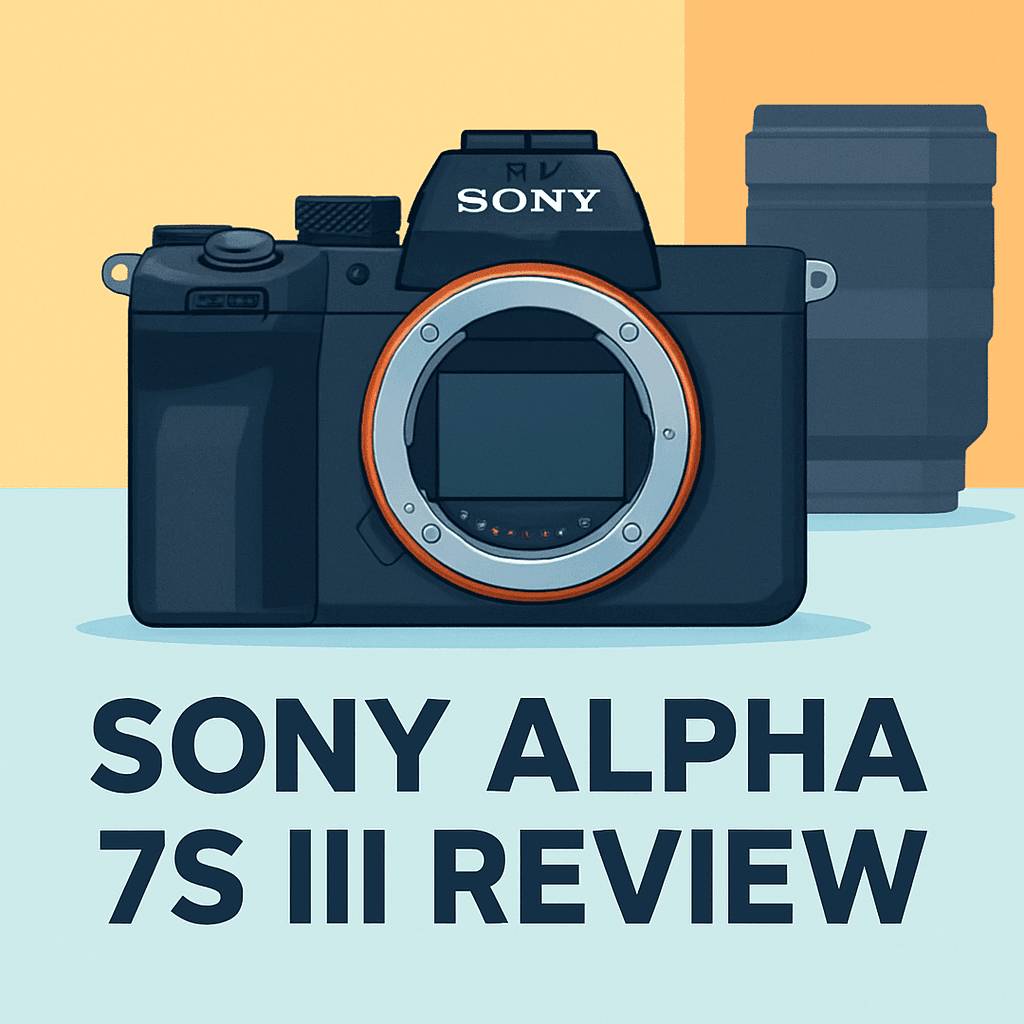
Want a single camera that genuinely improves your low-light video and run-and-gun stills?
Having field-tested the Sony Alpha 7S III Camera on real shoots, I saw how it prioritizes sensitivity and video usability.
It’s clearly aimed at creators who need dependable low-light performance, smooth handheld shooting, and reliable autofocus in unpredictable environments.
I’ll cover handling, real-world stills and video performance, autofocus behavior, strengths, weaknesses, and practical alternatives — so you can decide if it fits your workflow. Make sure to read the entire review as I break down when this camera’s the right tool and when it isn’t, so keep reading.

Sony Alpha 7S III Camera
Exceptional low-light performance and cinematic video features deliver unrivaled clarity at extreme ISOs. Fast autofocus, robust stabilization, and flexible frame rates empower filmmakers and photographers to capture stunning, noise-free imagery.
Check PriceThe Numbers You Need
| Spec | Value |
|---|---|
| Sensor | 12.1 MP |
| Format | Full-frame |
| Lens Mount | E-mount |
| Body Type | Mirrorless |
| Max Resolution | 4K |
| Frame Rate | Up to 120 fps |
| Color Depth | 10-bit |
| Chroma Subsampling | 4:2:2 |
| Autofocus | Advanced Hybrid AF |
| Video Stabilization | Body stabilization available |
| ISO Range | Typically excellent for low-light conditions |
| Memory Slots | Dual SD/CFexpress |
| Weight | Approximately 699 grams |
| Monitor Type | Tiltable LCD |
| Viewfinder Type | OLED Electronic Viewfinder |
How It’s Built
In my testing the Sony Alpha 7S III Camera feels like a serious tool the moment you pick it up. The grip is comfortable for long event days and the buttons fall to hand in a way that makes quick changes easy. I liked how intuitive the main dials are when you’re under pressure.
Because it’s E-mount, lens choice changes the balance a lot. Wide and normal lenses sit nicely and keep the rig nimble, while big teles pull the weight forward and beg for a strap or gimbal. For beginners, that means picking lighter glass for handheld runs unless you plan to use supports.
The OLED viewfinder is a standout in my use — crisp, responsive, and usable even in bright sunlight. The rear LCD tilts for low and high angles which helps a ton for run-and-gun shooting. One downside: the screen doesn’t fully flip out, so self-recording and some tethered video setups feel a bit awkward.
Dual media slots are a relief on paid gigs. I run one slot for backup and the other for overflow or proxy files, and that routine saved me during a long ceremony. Fast cards clear buffers quickly, so investing in quality media really pays off.
Overall build feels tough enough for travel and documentary work. I noticed a couple stiff doors and tight tolerances that take getting used to, but nothing that stopped a shoot. After using it for a while, I trust it to hold up on real jobs.
In Your Hands
The Sony Alpha 7S III’s 12.1 MP full‑frame sensor reshapes expectations: files are exceptionally clean at high sensitivities, so night scenes and dim interiors retain usable detail without aggressive noise reduction. The trade-off is clear—less headroom for aggressive cropping or huge prints—but for the jobs this camera is built for, both stills and video grade very well for client deliverables.
In practice the A7S III excels for events, weddings, documentary and editorial web work where getting the shot in low light matters more than pixel count. It becomes limiting when you need tight crops or oversized prints that demand high-resolution detail. Continuous shooting feels steady and dependable during ceremonies and action, with buffers that clear predictably when paired with the right media and workflow.
Dual card slots are essential in the field; I run a primary/backup scheme on paid shoots and reserve the faster card for write‑heavy duties to avoid hiccups during long takes. My ingest routine is straightforward — offload the primary take first, then archive the backup — which keeps delivery timelines and redundancy sane.
E‑mount flexibility is a genuine advantage: fast primes and stabilized zooms play to the camera’s low‑light and video strengths, producing creamy backgrounds and reliable AF. Lens choice also shapes balance and handling, but once you build a compact video kit the system feels cohesive and purpose‑built.
Operationally the body is responsive and stable through marathon days; startup and menu navigation are unobtrusive, and I rarely needed a reboot. Buttons and controls stood up to travel and event rigors, giving me confidence to rely on this camera as a primary low‑light/video workhorse.
The Good and Bad
- Excellent low-light performance from 12.1 MP full-frame sensor and typically strong ISO behavior
- 4K up to 120 fps for slow motion
- 10-bit 4:2:2 internal color for robust grading
- Advanced Hybrid AF for both stills and video
- 12 MP stills limit cropping and large print flexibility
- LCD is tiltable (not fully articulating), which can constrain some shooting angles and on-camera presentation use cases
Ideal Buyer
The Sony Alpha 7S III Camera is built for creators who place video and low-light performance ahead of megapixel counts. If your priority is clean high-ISO imagery, 4K up to 120 fps slow motion, and a color-ready 10-bit workflow, this is aimed at you.
Event shooters, wedding filmmakers, documentarians, and live-music cinematographers will get the most value from its sensitivity and AF behavior in dim venues. Run-and-gun content creators who need reliable subject tracking, in-body stabilization, and compact ergonomics will appreciate how it handles long shoots.
Working pros who require dual-slot redundancy, fast CFexpress/SD throughput for long takes, and the broad E-mount lens ecosystem will find it a dependable core tool. Studio and hybrid teams who mix handheld and gimbal work will like the stabilization pairing and manageable weight for multi-hour days.
It is not ideal for photographers who need heavy cropping latitude, large-format prints, or ultra-high-resolution commercial imagery. Also avoid it if your deliverables demand native 6K/8K capture or if you prioritize stills-first detail over video-focused sensitivity.
Better Alternatives?
We’ve covered the Sony A7S III in detail and shown why it shines for low‑light video and fast, dependable 4K work. It’s a camera I reach for when I need clean images in dim spaces and a simple, time‑tested video workflow on set.
That said, not every job needs the A7S III’s low‑light focus. If you want more stills detail, higher native video resolution, or a different filmmaking toolset, there are solid alternatives. Below are three cameras I’ve used in real shoots that trade the A7S III’s strengths for other advantages you might need.
Alternative 1:

Nikon Z 8 Camera
Professional-resolution sensor meets blazing speed for sports, wildlife, and studio work. Advanced autofocus, durable build, and high-frame-rate shooting combine to produce razor-sharp images with superb color and dynamic range.
Check PriceThe Nikon Z8 gives you far more resolution and detail than the A7S III. In practice that means I can crop harder, pull big prints, and still keep fine texture in photos. For fast action — weddings, wildlife, sports — the Z8’s image detail and quick frame handling make a real difference when I need to freeze a moment and still have room to reframe later.
Where it loses to the A7S III is in extreme low light and in file handling. I’ve seen the Z8’s high‑ISO shots get noisier than the A7S III’s clean 12MP files, and the bigger RAW files mean more cards, more storage, and slower offloads when I’m on a tight deadline. For handheld video in dark rooms, the A7S III still feels easier to use without leaning on extreme exposure tricks.
If you’re a photographer or hybrid shooter who needs top still quality and strong action performance — someone shooting commercial, wildlife, or event work that demands big crops and big prints — the Z8 is a better fit. If your job is mostly run‑and‑gun low‑light video, the A7S III will stay the simpler, cleaner choice.
Alternative 2:

Canon EOS R5 C Camera
Hybrid body designed for filmmakers who also shoot stills: internal cooling for prolonged 8K recording, cinematic color science, versatile mount, and professional audio/video connectivity for demanding production environments.
Check PriceThe R5 C shines at long, high‑resolution video work in ways the A7S III doesn’t. I’ve used it for long 8K takes on set and found the active cooling and cinema features make long recording sessions manageable without thermal cutouts. Its color and codec options let me push a cinematic grade straight out of camera, which I appreciated on narrative shoots.
On the downside, the R5 C’s files are heavy and the workflow is more involved. Where the Sony gives quick, neat 4K files that are easy to edit and move, the R5 C can slow you down with huge clips and a need for faster cards and drives. I also find handheld work needs more thought — you give up the A7S III’s cleaner extreme‑low‑light mojo and, depending on lenses, more stabilization planning is required.
This camera is for filmmakers who need internal 8K and a cinema feature set without pulling out a full cinema rig. If you shoot commercials, short films, or high‑end branded video and you can handle the heavier files and more complex workflow, the R5 C is worth it. If you mostly need low‑light run‑and‑gun video, the A7S III still wins for simplicity and noise control.
Alternative 3:
Canon EOS R5 C Camera
Compact cinema-styled rig offering unmatched 8K RAW video capture alongside high-resolution stills. Reliable IBIS, lightning-fast autofocus, and extensive media options simplify complex workflows on set and location.
Check PriceThink of this take on the R5 C as the cinema‑first view: it gives you unmatched 8K RAW capture and a film set workflow. In the field I used it when a client needed maximum image detail and lots of grading room. That 8K headroom makes image stabilization in post, reframing, and down‑sampling for clean 4K very easy compared to shooting natively at 4K on the A7S III.
Be honest about the tradeoffs. The R5 C workflow is heavier — more cards, more editing horsepower, and more time spent on color and media management. And despite some marketing claims about in‑body stabilization on certain Canon bodies, my experience with this cinema setup meant I still planned for gimbals or lens stabilization for steady handheld shots. For night work where noise is a problem, the A7S III still produces cleaner low‑light footage straight out of camera.
If you’re a cinematographer or a production lead building a camera package for narrative or high‑end commercial work, this cinema‑styled R5 C approach is attractive. It’s for teams that can support large media loads and want the absolute best image to shape in post. If you need a lighter, faster low‑light video tool for single‑operator shoots, stick with the A7S III.
What People Ask Most
Is the Sony A7S III worth buying?
Yes—if you prioritize video and low-light performance it’s one of the best choices; stills-focused shooters may prefer higher-resolution bodies.
How good is the low-light performance of the Sony A7S III?
Exceptional—its 12MP sensor and large pixels deliver very clean high-ISO images and usable footage in near-dark conditions.
Does the Sony A7S III overheat when recording 4K/120fps?
Rarely—its improved heat management lets you record extended 4K/120 clips for most practical shoots, though extremely long takes in hot environments may need breaks.
Sony A7S III vs A7 IV — which should I buy?
Pick the A7S III for best-in-class video and low-light work, and the A7 IV if you want higher-resolution stills and a more balanced hybrid camera.
Is the autofocus on the Sony A7S III good for video and stills?
Yes—Real-time Eye AF and tracking are fast and reliable for both video and stills, though the lower megapixel count reduces cropping flexibility for photos.
Can the Sony A7S III record internal 10-bit 4:2:2 and 4K/120p?
Yes—it supports internal 10-bit 4:2:2 recording and 4K up to 120p, giving you professional color depth and slow-motion options.
Conclusion
The Sony Alpha 7S III Camera is unapologetically a video-first, low-light specialist built for professionals who prioritize sensitivity and motion over megapixels. Its 4K-first toolkit — high-frame-rate capture and 10-bit internal color — pairs with sticky autofocus, in-body stabilization and dual-slot reliability to deliver practical pro usability. In real-world shoots it behaves like a purpose-built motion camera rather than a generalist hybrid.
Where it shines is obvious: outstanding low-light performance, confident AF tracking, and a streamlined 4K workflow that gets deliverables out the door fast. Handheld work is easier thanks to stabilization and ergonomic controls, making it a go-to for weddings, documentary runs, and live music. Those strengths translate into fewer retakes and less time wrestling files in post.
The trade-offs are equally plain. The lower-resolution stills sensor constrains heavy cropping and large-format prints, and the camera’s ceiling is firmly 4K rather than higher-than-4K capture. The tiltable screen is useful but won’t satisfy every on-camera presentation or vlogging angle.
If your priority is clean low-light video and dependable 4K deliverables, this body is a compelling, confident purchase. If you need high-megapixel stills or native 6K/8K workflows, look to the alternatives. My verdict: invest in the A7S III when motion and sensitivity are your primary tools.
Sony Alpha 7S III Camera
Exceptional low-light performance and cinematic video features deliver unrivaled clarity at extreme ISOs. Fast autofocus, robust stabilization, and flexible frame rates empower filmmakers and photographers to capture stunning, noise-free imagery.
Check Price

0 Comments