
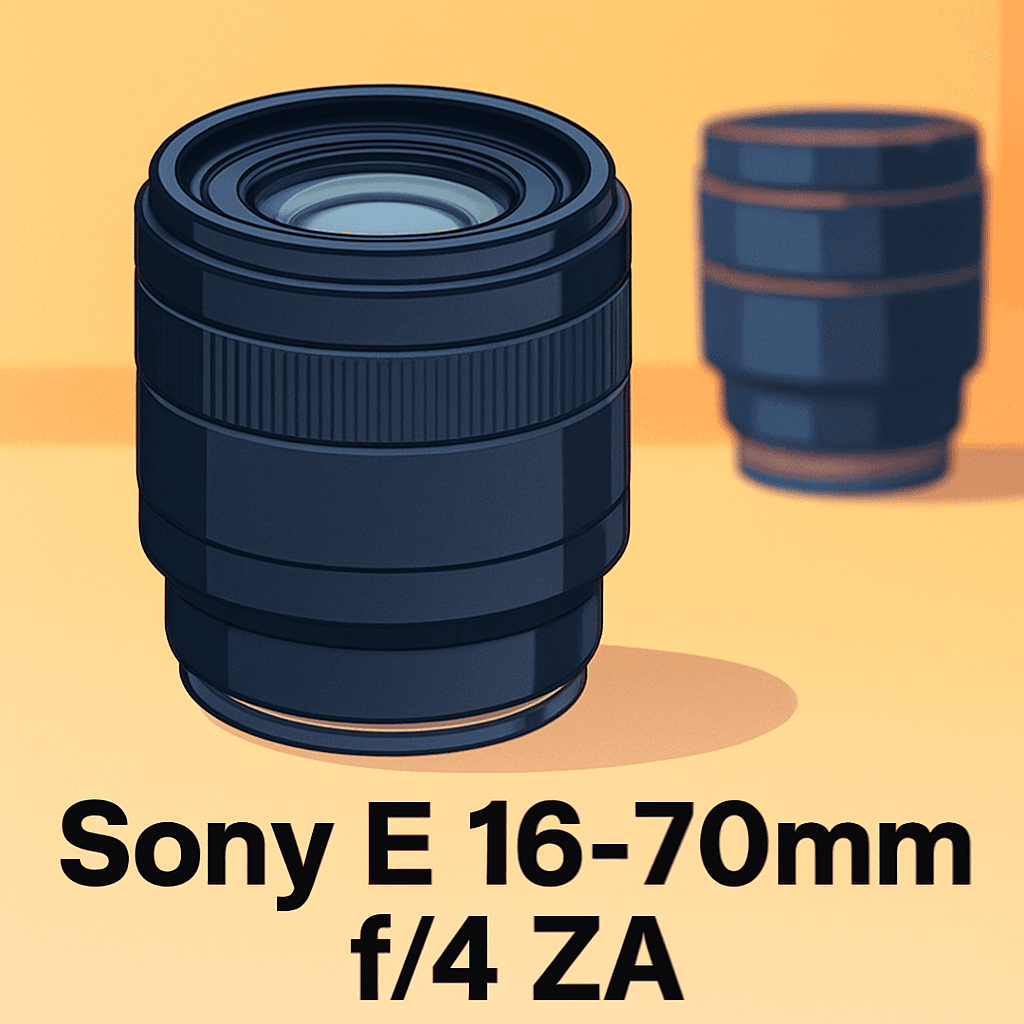
Want a single go-to lens that improves your Sony APS-C shots without making you lug a bag full of glass?
The Sony E 16-70mm f/4 ZA is pitched as that everyday lens — a compact, stabilized standard zoom with a constant f/4 and Zeiss T* coatings, covering wide to short-tele angles for travel, street, and run-and-gun video.
Having field-tested it on shoots from city streets to hikes, I’ll show who benefits most — shooters who want portability, OSS, and consistent exposure — and where it trades off speed or ultimate sharpness, so keep reading.

Sony E 16-70mm f/4 ZA
Versatile compact travel zoom with a constant f/4 aperture and premium T* coating for exceptional sharpness and contrast. Smooth, responsive autofocus and stabilization make it ideal for landscapes and video.
Check PriceThe Numbers You Need
| Spec | Value |
|---|---|
| Mount | Sony E-mount |
| Focal length | 16-70mm |
| Maximum aperture | Constant f/4 |
| Lens type | Standard zoom |
| Aperture diaphragm blades | 7, rounded |
| Optical image stabilization | Yes (OSS) |
| Filter diameter | 49mm |
| Minimum focusing distance | 0.35 m |
| Maximum magnification ratio | 0.24× |
| Elements / groups | 12 elements / 10 groups |
| Angle of view | Approx. 83° to 23° (APS-C format) |
| Coating | Zeiss T* anti-reflective coating |
| Dimensions (diameter × length) | Approx. 63.5 × 74 mm |
| Weight | Approx. 308 g |
| Compatible sensor size | APS-C |
How It’s Built
In my testing the Sony E 16-70mm f/4 ZA feels like a carefully made everyday lens. It blends a solid, slightly metal feel with light, well-finished plastic so it never feels cheap. On my smaller Sony bodies it balances nicely and never drags the rig forward, which makes handheld shooting a lot less tiring.
The zoom and focus rings are pleasantly damped and predictable, with just enough resistance to avoid accidental moves. I found the rings smooth and quiet, so dialing focal length or nailing focus during video felt natural. Controls are plain and logical, so beginners can pick it up and start shooting without a learning curve.
What I really liked was how compact and easy it is to carry all day — it simply disappears in a camera bag and is ready when you are. One thing that could be better is protection from the elements; I didn’t notice obvious weather sealing, so I’d be cautious in heavy rain or dusty situations.
The small, common filter thread is a win for travel — filters are cheap, light, and easy to stash. Just know that the small size means you won’t be using giant, specialized filter holders, so plan your accessories around that for stress-free trips.
In Your Hands
On an APS-C body the Sony E 16-70mm f/4 ZA covers roomy wide to short-tele framing, making it a go-to single-lens solution for most days. The constant maximum aperture keeps exposure predictable while zooming, which keeps workflows smooth when light or composition changes.
Optical SteadyShot is the unsung hero on handheld shoots, letting you pull usable shutter speeds and steady pans when recording. It’s not a cure-all, but with good technique it reduces blur at the long end and calms small wobbles.
It also works well for close-ups; near-focusing makes detail and casual product shots practical without changing lenses. Working distance is comfortable for tabletop and street candid work, and magnification renders pleasing detail without crowding subjects.
Autofocus feels confident and fast for everyday shooting, locking cleanly for stills and keeping pace during run-and-gun video; AF noise is modest and generally unobtrusive. I noted only mild focus breathing, and exposure stayed steady through zooms, so zoom pulls remain tidy.
Ergonomically it balances nicely on compact Sony bodies and feels light enough for all-day carry, with rings tuned for predictable control. For travelers and street shooters who want stabilization and versatility, it consistently delivers usable results without fuss.
The Good and Bad
- Constant f/4 across 16-70 mm
- Optical SteadyShot (OSS) built-in
- Compact and light (approx. 63.5 x 74 mm; 308 g)
- Zeiss T* anti-reflective coating and Vario-Tessar optical design
- f/4 maximum aperture is not as bright as f/2.8 alternatives
- APS-C-only coverage
Ideal Buyer
The Sony E 16-70mm f/4 ZA is ideal for Sony APS‑C shooters who want a single, go‑anywhere lens that doesn’t skimp on optics or convenience. It’s for photographers who value Zeiss‑branded coatings, compact dimensions and built‑in OSS so you can shoot handheld all day without lugging a bag of glass. Think travel, street, and everyday reportage where mobility counts more than squeezing out the last stop of aperture.
Bring this as your everyday carry for quick portraits, landscapes from city rooftops, and handheld video where consistent exposure through the zoom matters. The 16–70mm range and respectable 0.24x close‑focus make it useful for casual detail work and run‑and‑gun assignments. OSS helps salvage slower shutter speeds on bodies without IBIS, so low‑light handheld shots and steady video are more achievable.
Don’t pick it if you prioritize f/2.8 speed, extreme corner sharpness, or longer reach—there are faster and longer alternatives if those are your main needs. But if you want a light, well‑rounded standard zoom that balances image quality, stabilization, and portability, the 16–70mm f/4 ZA is a smart, versatile choice for everyday shooting.
Better Alternatives?
We’ve looked closely at the Sony E 16-70mm f/4 ZA and what it brings to the table: compact size, Zeiss coatings, and built-in OSS that make it a very handy everyday zoom on APS-C bodies. It’s a great balance of reach, stabilization, and portability, but it’s not the only way to go.
If you want more speed, more reach, or a different balance of size versus image quality, there are a few lenses I turn to in real shoots. Below are the practical alternatives I’ve used, what they do better or worse than the 16-70, and who I’d recommend them to.
Alternative 1:

Sony E 16-55mm f/2.8 G
Professional-grade standard zoom offering a constant f/2.8 aperture and high-resolution optics for stunning detail and creamy bokeh. Robust, weather-sealed construction and quick autofocus suit demanding photo and video work.
Check PriceI’ve used the Sony 16-55mm f/2.8 G on landscape and event days when I needed the cleanest files and more subject separation. Compared to the 16-70 f/4, it’s noticeably sharper wide open and holds that edge into the corners. The constant f/2.8 gives you a big jump in low-light ability and smoother background blur for portraits.
Where it loses to the 16-70 is in practical shooting comfort. It’s larger and heavier, and Sony didn’t put OSS in this model — so on bodies without in-body stabilization you’ll miss the steady handheld shots the 16-70 makes easy. For run-and-gun travel work the 16-70 feels more forgiving; the 16-55 demands a tripod or a steady hand if you slow down the shutter.
Pick the 16-55mm f/2.8 if you’re someone who prioritizes image quality and low-light performance — wedding shooters, portrait photographers, and landscape shooters who want the best detail. If you value compactness and built-in stabilization more, stick with the 16-70.
Alternative 2:

Tamron Sony E 17-70mm f/2.8 Di III-A VC RXD
Bright constant f/2.8 aperture, effective Vibration Compensation, and quiet high-speed focusing create an all-purpose zoom perfect for travel and run-and-gun shooting, with impressive corner-to-corner sharpness and a compact, lightweight design.
Check PriceThe Tamron 17-70mm f/2.8 is the closest real-world alternative to the 16-70 if you want more speed and a bit more reach. I use it when I need f/2.8 for low light and subject isolation but still want a single lens for most of the day. Its VC stabilization is effective handheld and keeps shots usable even at slower shutter speeds.
Compared to the Sony 16-70, the Tamron gives you a brighter aperture and more useful telephoto end, but it’s a touch bigger and a little heavier. Optically it’s very good for the price, though I’ve noticed the Sony Zeiss glass can render slightly crisper micro-contrast in certain scenes. Autofocus on the Tamron is quiet and fast in my experience, which is great for video and events.
Buy the Tamron if you need one fast, stabilized lens for travel, events, or run-and-gun work and want better low-light performance than the 16-70. It’s a strong choice for creators who want speed and reach without carrying multiple lenses.
Alternative 3:
Tamron Sony E 17-70mm f/2.8 Di III-A VC RXD
Exceptional-value zoom that pairs a fast f/2.8 aperture with built-in stabilization and near-macro close focusing. Delivers reliable, silent autofocus, vivid color rendition, and flexible framing for creators and enthusiasts.
Check PriceOn shoots where I needed flexibility and value, the Tamron 17-70mm stood out. Its near-macro close focus and f/2.8 speed let me get creative with close subjects and low-light scenes in ways the 16-70 couldn’t without boosting ISO. The built-in VC means you don’t lose the stabilization advantage the Zeiss lens offers.
That said, the Tamron is not a perfect match for the Zeiss look of the 16-70. It’s a bit softer at the extreme corners in some situations, and it can show slightly different flare behavior when shooting into bright light. But for everyday shooting the differences are small, and the Tamron’s color and contrast are pleasing straight out of the camera.
If you’re budget-conscious or want one lens to cover almost everything — close-ups, street, portraits, and low-light snaps — the Tamron is a very sensible pick. It’s for creators and enthusiasts who want a fast, stabilized zoom without paying for the highest-end Sony glass.
What People Ask Most
Is the Sony E 16-70mm f/4 ZA a good lens for Sony APS-C cameras?
Yes — it’s a high-quality Zeiss-standard zoom for APS-C with a versatile 24–105mm equivalent range and very good image quality for travel, portraits and everyday use.
Is the Sony E 16-70mm f/4 ZA image stabilized (OSS)?
Yes — it includes built-in Optical SteadyShot (OSS) to help with handheld low-light shots and smoother video.
How sharp is the Sony E 16-70mm f/4 ZA across the zoom range?
Center sharpness is excellent across the range, with slight corner softening at the extreme wide and tele ends, but overall it’s significantly sharper than most kit zooms.
Is the Sony E 16-70mm f/4 ZA worth the price compared to kit lenses?
If you care about stronger optics, constant f/4 aperture and better build, it’s worth the premium; casual users who prioritize budget or reach may prefer kit options.
How does the Sony E 16-70mm f/4 ZA compare to the Sony 16-50mm and 18-105mm lenses?
It outperforms the 16-50mm in image quality and build and is generally sharper than the 18-105mm, though the 18-105 offers longer reach and often better value for diverse zoom needs.
Is the Sony E 16-70mm f/4 ZA weather-sealed/more durable?
It has a solid metal construction and better weather resistance than basic kit lenses, but it isn’t fully rated as pro-level weatherproof so avoid heavy exposure without extra protection.
Conclusion
As a compact, stabilized standard zoom the Sony E 16-70mm f/4 ZA delivers the sort of all-day versatility I reach for on trips and street shoots. The constant aperture and Zeiss T* treatment keep exposures and rendering predictable across the range. In short, it’s an enjoyably tidy package that favors portability and practical image quality.
It isn’t a specialist — the modest maximum aperture and APS-C focus mean it won’t replace faster, larger optics for low-light or pixel-peeping landscape work. You trade ultimate corner-to-corner resolution and shallow-depth control for a smaller, steadier kit. If you need reach, speed, or the last inch of sharpness, there are alternatives that better serve those priorities.
For most Sony APS-C shooters who value stabilization, consistent exposure while zooming, and compactness, this lens represents a sensible everyday compromise. I’d recommend it as a primary walkaround or travel lens, but not as the only tool for demanding low-light or critical-resolution assignments. Buy it for convenience and steady results; opt elsewhere when maximum speed or extreme sharpness matters.
Sony E 16-70mm f/4 ZA
Versatile compact travel zoom with a constant f/4 aperture and premium T* coating for exceptional sharpness and contrast. Smooth, responsive autofocus and stabilization make it ideal for landscapes and video.
Check Price

0 Comments