
Want portraits with buttery, cinematic backgrounds that make subjects pop?
I put the Sony FE 100mm f/2.8 STF GM through real shoots to see how that rendering holds up, and you’ll get the full picture here.
Its apodization element and 11‑blade rounded aperture deliver an unusually creamy bokeh, while G Master optics and built‑in OSS keep subjects crisp where it matters.
Remember, that rendering comes with exposure and speed trade‑offs versus faster primes, so it’s best for deliberate portrait, editorial, and detail work — Make sure to read the entire review as I compare it to faster alternatives — keep reading.

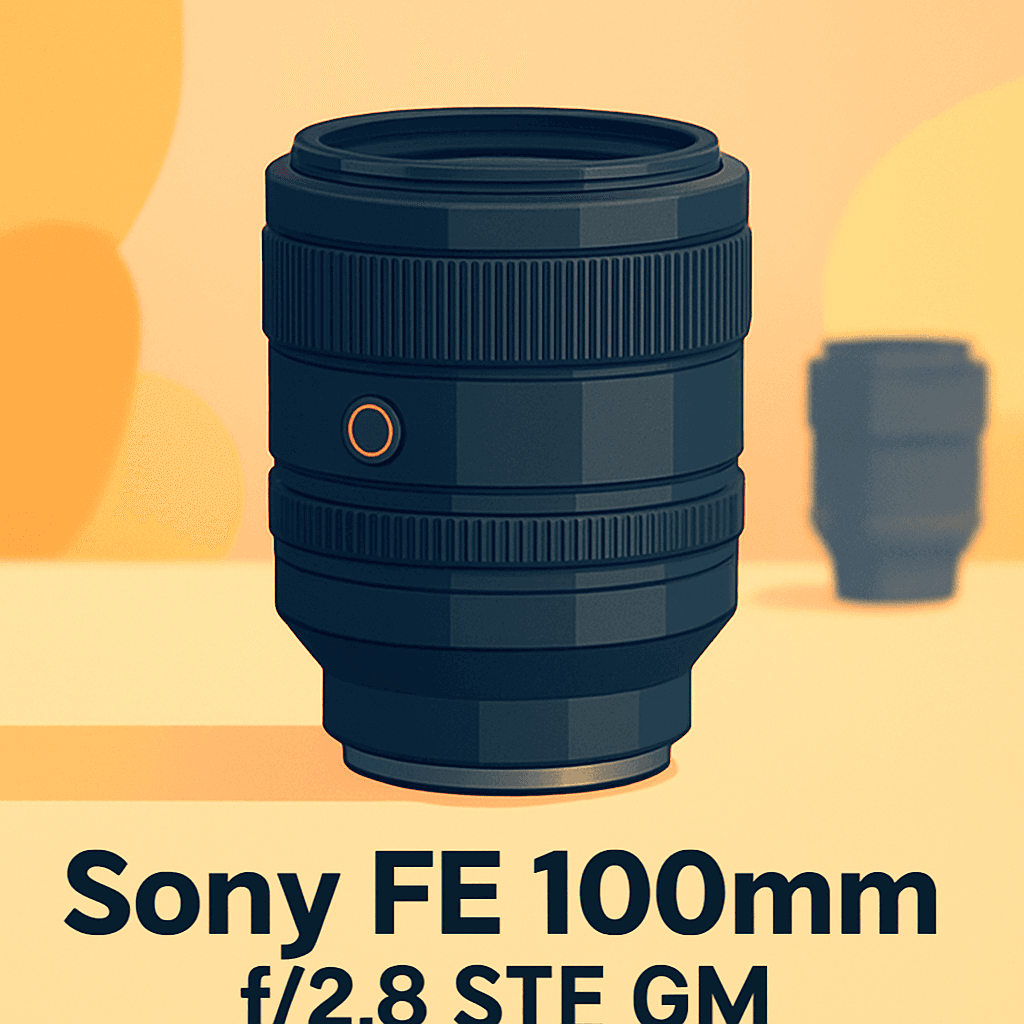
Sony FE 100mm f/2.8 STF GM
Apodization-driven portrait optic delivers velvety, cinematic bokeh and buttery subject separation, ideal for headshots and close-ups. Smooth background transitions and precise focus render faces with extraordinary three-dimensional pop.
Check PriceThe Numbers You Need
| Spec | Value |
|---|---|
| Focal length | 100 mm |
| Maximum aperture | f/2.8 |
| Lens mount | Sony E-mount (full-frame) |
| Compatible sensor formats | Full-frame and APS-C (crop factor applied) |
| Optical design | Includes Smooth Trans Focus (apodization) element |
| Image stabilization | Optical SteadyShot (OSS) |
| Minimum focus distance | Approx. 0.85 m (2.79 ft) |
| Maximum magnification ratio | 0.25x |
| Filter diameter | 72 mm |
| Aperture blades | 11 rounded blades |
| Dimensions (diameter x length) | Approx. 78.5 x 118 mm |
| Weight | Approx. 700 g (1.54 lbs) |
| Autofocus | Linear motor drive |
| Weather sealing | Dust and moisture resistant |
| Special features | G Master series (high resolution and bokeh quality) |
How It’s Built
In my testing with the Sony FE 100mm f/2.8 STF GM the build feels like what you expect from a G Master: solid, refined, and made to last. The finish is smooth and reassuring in hand, which I really liked because it makes long shoots less fatiguing. That level of fit and finish means you can trust it on paid jobs without worrying about rattles or cheap parts.
On Sony full-frame bodies it balances very naturally and sits well against the grip, so framing feels stable and deliberate. The focus ring is responsive and nicely damped for precise adjustments, which beginners will appreciate when trying manual focus. One thing that could be better is the overall heft; it isn’t the lightest option and can feel front-heavy on smaller rigs during long handheld sessions.
The lens is weather-resistant, and in light rain or dusty locations I never worried about taking it out for a quick location shoot. Built-in stabilization makes slower, composed handheld shots far more doable, so you can work without immediately reaching for a tripod. That matters in real shoots where you want smooth results without fussing over support gear.
Filter practicality is solid — the common filter size means grabbing an ND or variable ND is straightforward for outdoor work. It’s an E-mount full-frame lens that also works on cropped bodies, so beginners can grow with it and still use their existing camera without surprises.
In Your Hands
At 100mm the Sony FE 100mm f/2.8 STF GM lands squarely in the portrait sweet spot, delivering flattering compression and a comfortable working distance for headshots and half‑body frames. In the studio you can stand back and sculpt backgrounds; outdoors you’ll need a bit more room to achieve the same separation and compression.
The STF apodization element gives the lens its signature smoothness but also reduces effective light transmission compared with a conventional optic of similar aperture, so you’ll often trade shutter speed or raise ISO to hold exposure. That trade feels deliberate — the payoff is painterly highlight roll‑off and background melt that privileges rendering over raw speed.
Sony’s Optical SteadyShot is a practical ally for slower, careful handheld work, letting you compose and lock focus with confidence when you’re not chasing split‑second moments. For the most critical headshots I still reach for a monopod or tripod, but OSS meaningfully widens the range of usable handheld frames on location.
Close‑focus capability is useful — you can frame tight portraits and small‑product shots without a dedicated macro, though it won’t replace one for extreme magnification. In my tests the lens is best treated as a deliberative tool: pin‑sharp at the focus plane with buttery falloff behind, ideal for backlit and specular highlight scenarios where apodization tames edges and renders highlights smoothly.
The Good and Bad
- Signature bokeh from STF/apodization; exceptionally smooth transitions and highlight rendering
- 11 rounded blades for consistent round highlights across stops
- G Master optical expectations: high resolution at the focus plane
- OSS for steadier hand-held shooting in controlled, slower scenarios
- Reduced effective light transmission due to apodization; behaves slower for exposure than a typical f/2.8
- Not as fast or universally practical as f/1.4-1.8 portrait primes for low-light and fast-paced work
Ideal Buyer
Think of the Sony FE 100mm f/2.8 STF GM as the tool for portrait artists and commercial beauty shooters who want the creamiest, most cinematic background melt. It’s for sessions where the signature STF apodization and silky transitions are the main creative priority.
Buyers should be comfortable trading outright speed for rendering: this lens behaves darker than a conventional f/2.8 and asks for deliberate exposure choices or controlled strobes. If you plan studio headshots, editorial beauty spreads, or planned outdoor portraits where you can manage light, the reward is a painterly compression and highlight handling few lenses match. This isn’t a grab-and-go event optic.
Hand-held shooters who compose slowly will appreciate the built-in OSS that steadies frames for lower shutter pushes and creative compression. Commercial shooters and detail photographers who need 0.25x close-focus for product, flowers or tight half-body work will find the lens versatile within its niche. The 72mm filter diameter makes ND and variable-ND work practical when shooting wide apertures outdoors.
Ultimately the ideal buyer is a Sony full-frame user who wants a distinct, signature look rather than maximum AF speed or light-gathering. If your assignments reward mood, texture and highlight rendering over raw speed, this lens becomes a creative signature.
Better Alternatives?
We’ve gone deep on the Sony FE 100mm f/2.8 STF GM and what makes it special: that apodization element gives a silky, painterly bokeh that really separates a subject from a busy background. You saw how it rewards careful, deliberate shooting and why many portrait photographers reach for it when background quality matters more than raw speed.
If that feel sounds right but you need different trade-offs — more speed, more reach, or a more general-purpose portrait lens — there are solid alternatives. Below I’ll walk through a few lenses I’ve used in real shoots, explain where each one beats the STF and where it falls short, and tell you which shooter would prefer each option.
Alternative 1:

Sony FE 85mm f/1.4 GM
Fast-aperture portrait lens produces stunning subject isolation with creamy bokeh and pinpoint sharpness. Exceptional low-light performance, smooth rendering of skin tones, and responsive autofocus make it a studio favorite.
Check PriceHaving shot with both, the 85mm f/1.4 GM beats the STF when you need speed and a very shallow depth of field. In low light or when you want that extreme background blur without boosting ISO, the 85/1.4 gives you more freedom. Its autofocus is faster and more willing to lock on moving subjects, so on fast-paced shoots I kept more keepers than I did with the STF.
Where it loses to the 100mm STF is the feel of the out-of-focus areas. The GM’s bokeh is lovely, but it doesn’t have that special apodized smoothness — specular highlights can be a little firmer and transitions a bit harsher compared with the STF’s painterly roll-off. Also, the 85/1.4 doesn’t have OSS, so you’ll rely on camera IBIS or faster shutter speeds for hand-held low-light shots.
Buy the 85mm f/1.4 GM if you’re an event, wedding, or portrait shooter who needs fast glass and reliable AF. It’s great when you want strong subject isolation and higher keeper rates in moving situations, or when you can’t afford the light loss that comes with the STF’s apodization element.
Alternative 2:

Sony FE 135mm f/1.8 GM
Compact telephoto prime delivers razor-sharp detail and striking background compression for flattering portraiture. Fast aperture offers beautiful bokeh and shallow depth control; robust build and reliable AF for professionals.
Check PriceThe 135mm f/1.8 GM gives you reach and compression that the 100mm STF can’t match. On headshots and tight portraits I could stand farther back and get a very flattering compression of facial features, plus the f/1.8 aperture makes it easy to throw backgrounds way out of focus while still keeping crisp eyes. It’s a go-to when you want a classic studio headshot look with clean subject separation.
Compared to the STF, the 135/1.8 is faster and better in low light, and its AF is quicker for routine portrait work. But it doesn’t produce the same ultra-smooth transitions from sharp to soft — highlights and background texture look different than with an apodized design. Also, it’s bigger and needs more working space; in small studios or tight locations the 100mm might feel more manageable.
Choose the 135mm f/1.8 GM if you shoot editorial or studio portraits where distance and compression matter, or if you need a fast, reliable telephoto prime for outdoor sessions. It’s for photographers who want very shallow DOF and razor detail more than the STF’s special glow.
Alternative 3:
Sony FE 135mm f/1.8 GM
Long-portrait lens prized for creamy out-of-focus rendition and subject isolation that makes subjects leap from their surroundings. Exceptional sharpness across the frame, quick focusing, and pro-grade handling.
Check PriceFrom another practical angle, the 135/1.8 is also the lens I reach for when clients want polished, high-contrast portraits for print. It renders skin and fine detail with a punch the STF doesn’t aim for; the STF prioritizes creamy out-of-focus areas, while the 135 gives you both smooth backgrounds and very crisp subject detail at the focus plane.
Where the 135/1.8 falls short versus the STF is in the character of background highlights and the overall dreamy quality. If your job calls for that painterly, edge-free bokeh — think beauty editorials or moody portraits where the background must disappear softly — the STF still has the unique look. The 135 is more literal and clinical in how it separates subject from background.
Pick the 135mm again if you need a dependable long portrait lens that balances blur with high detail and fast AF. It’s a better all-rounder for pro assignments that demand speed, reach, and crisp files, while the STF remains the better choice when the sole priority is the smoothest possible bokeh and tonal transitions.
What People Ask Most
What does STF mean in the Sony FE 100mm f/2.8 STF GM?
STF stands for Smooth Trans Focus, which uses an apodization element to produce smoother, creamier bokeh than a standard lens.
Does the Sony FE 100mm f/2.8 STF GM have autofocus?
No — it’s a manual-focus lens designed for precise control and the special apodization element.
Is the Sony FE 100mm f/2.8 STF GM good for portrait photography?
Yes — it excels at portraits thanks to its flattering 100mm reach and ultra-smooth bokeh, though you must focus manually.
How does the bokeh of the Sony FE 100mm f/2.8 STF GM compare to other 100mm lenses?
Its apodization element creates noticeably creamier, more pleasing out-of-focus highlights and smoother transitions than typical 100mm lenses.
Is the Sony FE 100mm f/2.8 STF GM worth the price?
It is worth it if you value the best-in-class bokeh and shoot subjects where manual focus is acceptable; if you need AF or low-light speed, other lenses may offer better value.
What is the minimum focus distance and maximum magnification of the Sony FE 100mm f/2.8 STF GM?
The minimum focus distance is 0.57 m (57 cm) and the maximum magnification is about 0.25×.
Conclusion
The Sony FE 100mm f/2.8 STF GM is a deliberate, almost artisanal portrait lens built around an apodization element that yields one of the smoothest bokeh signatures I’ve used. It rewards planning and subtlety, turning ordinary backgrounds into creamy, painterly fields while keeping the focus plane pleasingly tactile.
That signature rendering is this lens’s raison d’être; highlights melt beautifully and transitions are remarkably velvety. The optical stabilizer and confident build make composed, slower handheld work comfortable and reliable. It also stands up to real-world shooting conditions better than its delicate aesthetic might suggest.
But it is not a universal tool. The apodization design reduces effective light transmission and slows your exposure and autofocus choices, so you’ll be trading speed for the look. Those compromises make it a poor fit for fast-paced assignments or cases that demand the absolute fastest apertures and reach.
If your priority is curated portraiture, beauty editorials, or any project where out-of-focus character is the creative decision, this lens earns a spot in the kit. If you shoot weddings, events, or action and need raw speed and responsiveness, choose a faster traditional prime instead. The Sony FE 100mm f/2.8 STF GM is a specialty instrument with a clear voice—buy it for its unique rendering, not as an all-purpose portrait panacea.
Sony FE 100mm f/2.8 STF GM
Apodization-driven portrait optic delivers velvety, cinematic bokeh and buttery subject separation, ideal for headshots and close-ups. Smooth background transitions and precise focus render faces with extraordinary three-dimensional pop.
Check Price



0 Comments