
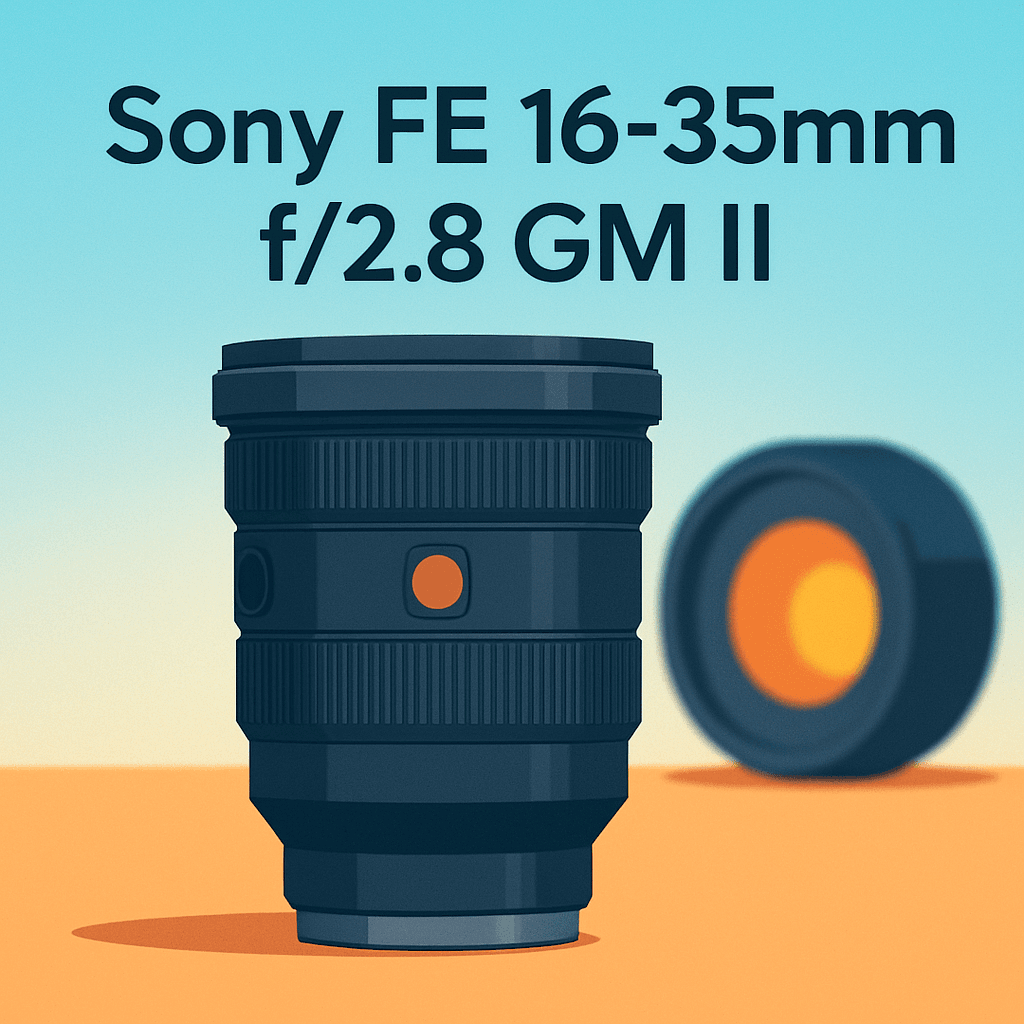
Want to take your wide-angle work to the next level with a faster, more versatile zoom?
The Sony FE 16-35mm f/2.8 GM II promises a bright, full-frame wide range and constant f/2.8 for low light and subject separation that landscape, architecture, events, and hybrid shooters will love.
It feels built for pros — premium optics, linear-motor AF, and weather sealing — though it relies on camera IBIS rather than in-lens stabilization and uses 82mm filters, which are practical trade-offs I explored in the field.
I’ll walk through design, handling, AF, real-world usability, image quality, and alternatives so you can decide if it fits your kit — make sure to read the entire review as you’ll want the full picture.

Sony FE 16-35mm f/2.8 GM II
Flagship wide-angle zoom delivers stunning edge-to-edge sharpness, fast f/2.8 brightness, and refined bokeh. Built for professionals seeking top-tier resolution, contrast, and reliable autofocus in demanding landscapes and events.
Check PriceThe Numbers You Need
| Spec | Value |
|---|---|
| Focal Length | 16–35mm |
| Maximum Aperture | f/2.8 (constant) |
| Mount | Sony E-mount (Full-frame) |
| Lens Type | Wide-angle zoom |
| Lens Construction | Approx. 17 elements in 14 groups |
| Diaphragm Blades | 11 (rounded) |
| Minimum Aperture | f/22 |
| Minimum Focus Distance | Approximately 0.24m |
| Filter Size | 82mm |
| Dimensions | Approx. 88mm diameter × 121.6mm length |
| Weight | Approx. 680g |
| Image Stabilization | No in-lens stabilization (relies on camera body) |
| Autofocus | Fast, precise AF with linear motor |
| Focus Type | Internal focusing (no lens length change during focus) |
| Weather Sealing | Dust and moisture resistant |
How It’s Built
In my testing the Sony FE 16-35mm f/2.8 GM II feels like a premium tool. It has a solid metal-and-composite build that sits balanced on Sony full-frame bodies and resists wobble. That balance makes long handheld sessions and quick framing far less tiring than you’d expect.
The zoom and focus rings turn smoothly with a nice, firm action and no slack. Manual focus is quick to grab and quiet enough that it doesn’t bother on-camera audio. I really liked that focus is internal — the lens doesn’t change length when you rack focus.
Internal focusing also helps keep the weather sealing tight, and it keeps the front of the lens stable for gimbal balance and matte boxes. In real use that means fewer surprises when you swing from tripod to handheld or into a gimbal. One thing that could be better is the lack of in-lens stabilization, so you’ll rely on your camera’s IBIS or a support rig in low light.
The housing feels stout for outdoor work, so I wasn’t worried shooting in drizzle or dusty conditions. The front accepts large screw-in filters easily and the rounded aperture blades give smooth out-of-focus areas at the longer end. After using it for a while I found the solid build and handling outweighed the extra bulk for the kinds of shoots I do, especially landscapes and events.
In Your Hands
Autofocus on the Sony FE 16-35mm f/2.8 GM II feels both immediate and assured — the linear motor delivers quick, precise locks for stills and a smooth, quiet sweep for video. Tracking moving subjects proved reliable in everyday shooting, and while extreme low-light or harsh backlight can challenge any system, this lens rarely surprised me with noticeable hunting.
Because there’s no in-lens stabilization, handheld work leans on in-body stabilization or gimbals, but that workflow is straightforward and effective; run-and-gun shooters will appreciate the lens’s predictable behavior on stabilized bodies. The internal focusing design keeps the length constant, which makes balancing on gimbals easier and keeps screw-in filters and matte boxes behaving predictably.
The zoom range is highly practical: the ultra-wide end opens landscapes and tight interiors with dramatic perspective, the mid-range is a workhorse for documentary and group work, and the longer end tightens storytelling details during events. Close-focusing is surprisingly useful, letting you capture intimate environmental details without losing a sense of place.
In the field the lens feels substantial but well-balanced on full-frame Sony bodies, with well-damped zoom and focus rings that inspire confidence during long sessions. AF is effectively silent for most on-camera mic situations, and the weather-resistant construction lets you keep shooting even when conditions aren’t perfect.
The Good and Bad
- Constant f/2.8 aperture across 16–35mm
- Fast, precise autofocus with linear motor
- Internal focusing (no external length change)
- Dust and moisture resistant construction
- No in-lens optical stabilization (relies on camera IBIS)
- Physical size and weight: approx. 88 × 121.6mm, ~680g
Ideal Buyer
The Sony FE 16-35mm f/2.8 GM II is aimed at Sony full-frame E‑mount shooters who need a fast, versatile wide-angle zoom. It’s for photographers who demand top-tier optics, consistent f/2.8 performance, and native AF integration. It pairs especially well with Sony bodies that prioritize IBIS and fast AF.
Landscape, architecture, and interior shooters will love the 16mm reach and the ability to use 82mm screw‑in filters without awkward adapters. Weather sealing and premium build mean it stands up to field work. It’s built to be used in real conditions, not just studio shoots.
Event and documentary photographers will appreciate the low‑light headroom and the zoom’s flexible framing for crowd scenes and environmental portraits. The constant aperture gives predictable exposure and subject separation across the range. It handles mixed lighting and quick framing decisions with confidence.
Hybrid creators and videographers who gimbal or shoulder‑mount will value the internal focusing and stable balance that keeps the lens length steady. Be prepared to lean on in‑body stabilization or supports, since there’s no optical OSS.
This is a lens for people who don’t mind carrying roughly 680g for better performance and handling. If you want native AF, weather resistance, and filter convenience in a premium wide zoom, this is a top choice.
Better Alternatives?
We’ve gone through what the Sony FE 16-35mm f/2.8 GM II does best: a fast, sharp, and well-built wide-angle zoom that’s great for landscapes, architecture, interiors, events, and hybrid photo/video work. It’s a strong all-around choice if you want a native Sony lens with an 82mm filter thread and internal focusing that plays nicely on gimbals.
That said, not everyone needs the same mix of features. Some shooters want a wider field of view, others want something much lighter to carry all day, and some are trying to keep budget in check. Below are three lenses I’ve used in the field that trade a few things away from the Sony 16–35 GM II for clear real-world benefits.
Alternative 1:

Sigma Leica L 14-24mm f/2.8 DG DN Art
Professional ultra-wide zoom engineered for impeccable corner-to-corner clarity, minimized distortion, and creamy night-sky performance. Robust build and precise autofocus make it perfect for landscape, architecture, and astrophotography.
Check PriceThe Sigma 14-24mm f/2.8 gives you noticeably more sky and room in a single frame compared to the Sony 16–35—14mm is a huge difference when you’re shooting tight interiors, big landscapes, or the Milky Way. In my night-sky work the Sigma pulled in more stars and showed excellent corner control; for architecture it keeps lines tight and details strong out to the edges.
On the downside, the front element is big and bulging, so using screw-in filters is awkward without a special adapter or rear filters. It’s also a bit bulkier on a small body and doesn’t feel as slickly integrated as Sony’s native GM lenses for fast action or handheld video work. Autofocus is reliable, but I’ve seen the Sony feel a touch more consistent when tracking moving subjects.
If you’re a landscape, astro, or architecture shooter who wants the widest possible views and top-notch edge-to-edge sharpness, the Sigma is the better pick. If you rely on easy screw-on filters, carry weight is a big concern, or you want the absolute most seamless AF on Sony bodies, the Sony 16–35 GM II still wins.
Alternative 2:

Tamron Sony E 17-28mm f/2.8 Di III RXD
Compact, lightweight wide-angle zoom with constant f/2.8 speed for low-light shooting and smooth background separation. Fast, quiet autofocus and travel-ready footprint suit street, interior, and adventure photographers.
Check PriceThe Tamron 17-28mm is a real joy to carry. In the field it’s noticeably smaller and lighter than the Sony 16–35, so on long walks, hikes, or all-day shoots it keeps your kit from dragging you down. It still gives a bright f/2.8 aperture, which helps in low light and for subject separation, and the autofocus is quiet and quick for most everyday uses.
Where it falls short versus the Sony is reach and edge performance. You lose the extra 16mm (and 14mm on the Sigma), so it’s less dramatic for wide landscapes or cramped interiors. The corners aren’t quite as strong at the widest focal length, and the build and weather sealing feel a step below the GM series. In practice, that means you’ll stop down more for edge-to-edge sharpness and be a little more careful in bad weather.
Buy the Tamron if you travel a lot, shoot street or run-and-gun photo work, or just want a very small, bright wide zoom that won’t break your back. It’s the choice for photographers who value compactness and price over the last drop of corner performance and the extra ultra-wide reach.
Alternative 3:
Tamron Sony E 17-28mm f/2.8 Di III RXD
Everyday travel zoom offering punchy wide perspectives, consistent aperture for creative control, and responsive focusing. Affordable, portable option that balances image quality with excellent handling for on-the-go creators.
Check PriceViewed as an everyday travel zoom, the Tamron gives you a very usable wide field with a friendly size and price. In real shoots it delivers strong center sharpness and colors that need only light tweaking, and its small size makes it easier to pair with gimbals or smaller camera bodies without messing up balance.
Compared to the Sony 16–35 GM II, the Tamron’s weaknesses are clear when you want that extra reach, more robust weather sealing, or the best corner sharpness at wide apertures. It won’t replace the Sony for photographers who need the maximum edge-to-edge detail for commercial landscape or architectural work, but it will handle travel, street, and everyday documentary tasks very well.
If you’re on a tighter budget, want less weight, or want a lens you can carry everywhere without thinking twice, the Tamron is a smart buy. It’s aimed at hobbyists, travel shooters, and creators who want great results with minimal bulk rather than the pro-level handling and full-frame corner performance of the Sony GM.
What People Ask Most
Is the Sony FE 16-35mm f/2.8 GM II worth buying?
Yes—if you need top-tier wide-angle sharpness and f/2.8 low-light performance for professional landscape, wedding, or event work, it’s worth the price; casual shooters may prefer the lighter, cheaper f/4 or older models.
How sharp is the Sony FE 16-35mm f/2.8 GM II across the frame?
Very sharp in the center and much improved at the edges and corners compared with the older version, with only minor fall-off wide open that tightens up by f/4–f/5.6.
How does the FE 16-35mm f/2.8 GM II compare to the original FE 16-35mm f/2.8 GM and the FE 16-35mm f/4?
Compared to the original, the II is sharper, lighter, and focuses faster; versus the f/4 it delivers better low-light ability, shallower depth of field, and higher resolution but is heavier and more expensive.
Is the Sony FE 16-35mm f/2.8 GM II weather-sealed and dust/moisture resistant?
Yes, it features dust and moisture resistance and a fluorine-coated front element, but you should still avoid prolonged exposure in extreme weather.
Does the FE 16-35mm f/2.8 GM II have built-in image stabilization?
No, it has no optical stabilization; it relies on in-body image stabilization (IBIS) in compatible Sony cameras.
What is the autofocus performance of the Sony FE 16-35mm f/2.8 GM II for video and stills?
Autofocus is fast, quiet, and accurate with smooth tracking for both stills and video, and minimal focus breathing makes it well suited to run-and-gun and gimbal work.
Conclusion
The Sony FE 16-35mm f/2.8 GM II is a workhorse wide-angle for Sony full-frame shooters who need a fast, flexible zoom. Its constant f/2.8 aperture and broad focal range make it genuinely useful across landscapes, interiors, events and hybrid video work.
What sells it is straightforward: a bright constant aperture, very quick linear-motor autofocus, internal focusing that keeps balance and sealing, and thoughtful weather resistance with a filter-friendly front. The rendering is punchy with pleasing out-of-focus behavior when called upon, and the handling feels refined for demanding field use. The primary compromise is the lack of in-lens stabilization, so you must lean on camera IBIS or support for steadier handheld work.
If you want a do-it-all ultrawide that pairs native AF confidence with professional ergonomics, this lens is an easy recommendation; it earns its price for pros and serious enthusiasts. If you prize outright ultrawide reach, a lighter kit, or the best value for center sharpness, the 12–24, 17–28 or 14–24 alternatives deserve consideration instead. For most Sony shooters who accept the modest size and reliance on body stabilization, this 16–35mm is an exciting, dependable tool that will elevate wide-angle work without fuss.
Sony FE 16-35mm f/2.8 GM II
Flagship wide-angle zoom delivers stunning edge-to-edge sharpness, fast f/2.8 brightness, and refined bokeh. Built for professionals seeking top-tier resolution, contrast, and reliable autofocus in demanding landscapes and events.
Check Price



0 Comments