
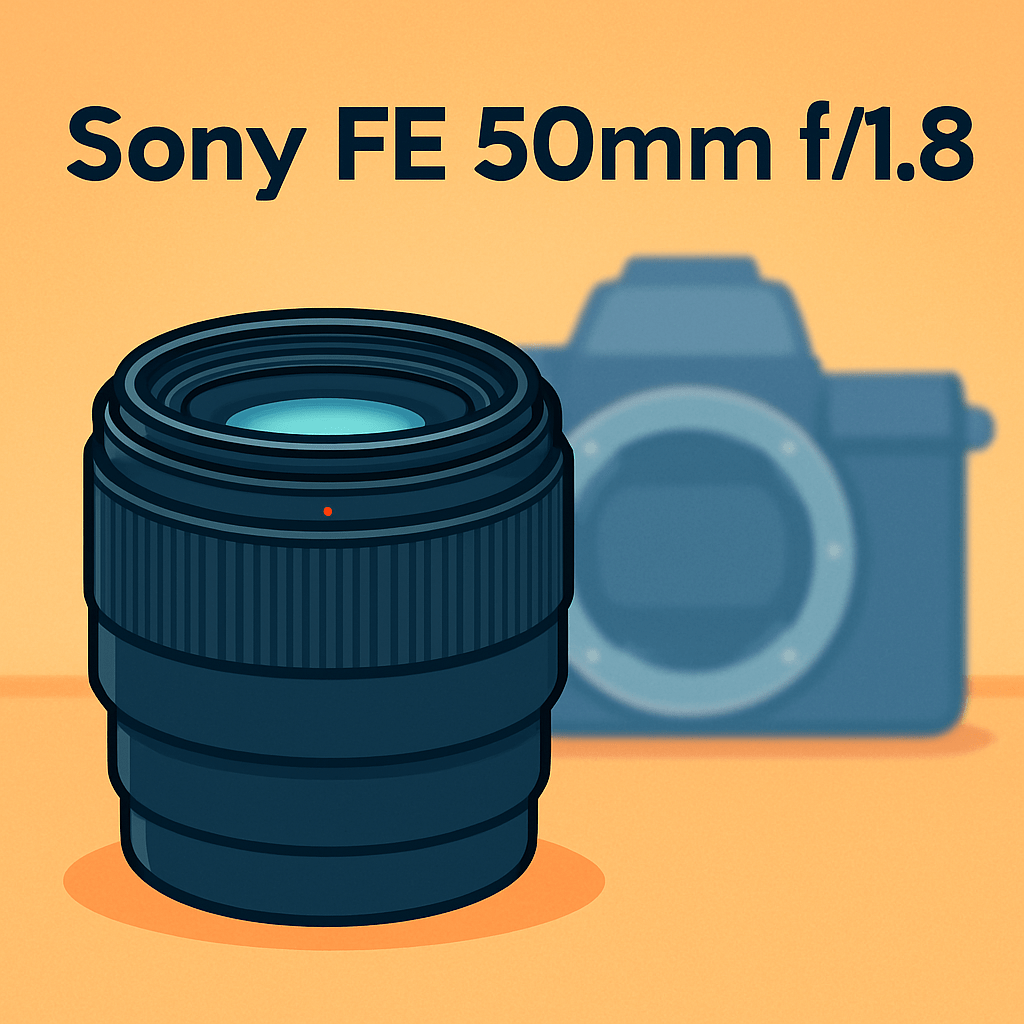
Want better images without lugging heavy lenses everywhere? Curious if a small, affordable 50mm can change your shooting day?
The Sony FE 50mm f/1.8 is a compact, lightweight prime that’s easy to carry on full-frame and APS-C bodies. It’s ideal for portraits, street work, travel, and everyday carry.
It gives useful low-light reach, subject separation, and quiet autofocus for discreet shooting. Having shot with it in the field, those strengths feel practical, not theoretical.
There are tradeoffs: no built-in stabilization and modest close-focus, plus a plastic feel compared with pricier alternatives. Those compromises are worth knowing before you buy.
I’ll walk through who benefits most and where this lens shines or falls short in real shooting. Make sure to read the entire review as you decide—keep reading.

Sony FE 50mm f/1.8
Compact, lightweight prime delivers sharp images, smooth bokeh and reliable low-light performance; ideal for portraits, street and travel photography, with fast autofocus and crisp contrast.
Check PriceThe Numbers You Need
| Spec | Value |
|---|---|
| Focal Length | 50mm |
| Maximum Aperture | f/1.8 |
| Lens Mount | Sony E-mount (full-frame) |
| Format Compatibility | Full-frame and APS-C sensors |
| Minimum Focus Distance | Approximately 0.45 m (1.48 ft) |
| Diaphragm Blades | 7, rounded |
| Filter Thread Size | 49 mm |
| Image Stabilization | None (no optical stabilization) |
| Autofocus | Yes, with linear motor for fast, quiet AF |
| Maximum Magnification | 0.16x |
| Dimensions (Diameter x Length) | Approx. 68.6 mm x 59.5 mm |
| Weight | Approx. 186 grams |
| Minimum Aperture | f/22 |
| Lens Hood | Included, plastic petal-shaped |
| Aperture Type | Circular aperture for smooth bokeh |
How It’s Built
In my testing the Sony FE 50mm f/1.8 is tiny and feather‑light on an E‑mount body, and it behaves the same on APS‑C cameras. It sits perfectly on smaller Sony bodies and stays out of the way all day. That makes it a joy to carry for street, travel, and everyday shooting.
The body is mostly plastic, but the mount feels snug and precise when I click it on. The focus ring is small with short, smooth travel — great for quick autofocus tweaks, not for long manual pulls in video. For stills the handling is predictable and friendly.
You get a plastic petal hood and a common 49mm filter thread, which I loved for sharing filters and cutting flare outdoors. The hood snaps on solidly and offers decent protection from knocks. There’s no optical stabilization, so low‑light handheld work relies on your camera’s IBIS or steady hands.
What I liked most was the balance and lightness — I often forgot it was mounted during long walks. What could be better is the plastic finish, which doesn’t feel as premium as pricier lenses and can show scuffs if you toss it in a bag. For beginners this means a very portable, user‑friendly lens that’s easy to live with, as long as you treat it with a little care.
In Your Hands
I found the Sony FE 50mm f/1.8 surprisingly capable in low light, giving usable shots wide open and clean subject separation. The circular aperture produces a soft, unobtrusive background blur that flatters portraits. Wide‑aperture shots retain workable shadow and highlight detail in everyday scenes.
In practice it excels for portraits and street work — on full‑frame it’s a classic 50mm and on crop bodies it feels noticeably tighter for headshots. Its compact size and quiet AF make it ideal for travel and family documentary use when discretion matters.
Close‑ups are practical for medium framing but not true macro, so expect good head‑and‑shoulders shots rather than fine detail. Without optical stabilization you’ll lean on in‑body IBIS or steady technique for low‑light handhelds, and videographers should be mindful of that. The linear motor AF is quiet for on‑camera audio and locks reliably in most light.
A common small filter size makes using NDs and polarizers easy, and the included hood noticeably reduces flare in backlit situations. Color and contrast feel natural and consistent across lighting, and the lens’ balance and compactness kept it in my bag for long days.
The Good and Bad
- Very lightweight (approx. 186 g) and compact (approx. 68.6 x 59.5 mm)
- Quiet, fast-feeling AF via linear motor
- Circular aperture and 7 rounded blades for smoother bokeh
- Compatible with full-frame and APS-C Sony bodies
- No optical stabilization
- Plastic construction versus more premium alternatives
Ideal Buyer
If you prize portability above all else, the Sony FE 50mm f/1.8 is built for you. It’s a featherweight prime that stays on your camera all day without fatigue. The quiet linear motor makes it a natural for candid work and travel.
Street and travel shooters will love how discreet it reads on a small Sony body. The f/1.8 aperture gives usable low‑light reach and subject separation without drawing attention. Toss it in a day bag and forget you’re carrying prime glass.
Portrait photographers who don’t need f/1.4 drama will find the circular aperture and seven rounded blades pleasantly forgiving. On APS‑C bodies it becomes a near‑75mm portrait tool that’s excellent for headshots and environmental portraits. Families and documentary shooters also benefit from the fast, quiet AF when kids and subjects don’t hold still.
Skip this lens if optical stabilization or a closer working distance are musts, or if you demand the ultimate in build and bokeh from an f/1.4 or Zeiss option. If you want a simple, affordable 50mm that prioritizes size, sound, and everyday usability, the FE 50mm f/1.8 is an obvious, sensible choice.
Better Alternatives?
We’ve already gone over the Sony FE 50mm f/1.8: a tiny, light, and affordable normal prime that’s great for street work, travel, and everyday portraits. It gives you nice subject separation at f/1.8 and quiet autofocusing, but it trades off some build quality, the fastest aperture, and close-up reach compared with higher-end lenses.
If you find yourself wanting more — like creamier bokeh, stronger low-light ability, or a more solid feel in hand — there are a few common upgrades to consider. Below I’ll walk through three practical alternatives, how they shoot differently from the Sony 50/1.8, and which kind of buyer each one suits best.
Read on and you’ll get a clear sense of why you might swap the compact 50/1.8 for something larger, sharper, or more characterful depending on your shooting style.
Alternative 1:

50mm f/1.4 DG DN Sony E
Fast standard prime offering creamy background separation, exceptional detail and solid build; optimized for mirrorless bodies, excellent for portraits, events and creative low-light shooting.
Check PriceThe Sigma 50mm f/1.4 DG DN gives you a noticeably shallower depth of field compared to the Sony 50/1.8. In real shoots I got much creamier backgrounds and stronger subject separation at f/1.4, which makes it easier to isolate faces and produce that “portrait” look without heavy cropping.
Where it’s worse is size and weight. The Sigma is bulkier and heavier, so it’s not as nice for all-day street work or travel where the Sony 50/1.8 shines. It’s also more expensive, so you pay for the faster aperture and more refined rendering.
If you’re a portrait shooter, event photographer, or someone who often works in very low light and values shallow depth of field, you’ll prefer the Sigma. But if you want a tiny, grab-and-go lens for casual shooting, the Sony 50/1.8 stays the better carry choice.
Alternative 2:

Sony FE 55mm f/1.8 Sonnar T ZA
Premium optic provides razor-sharp resolution, beautiful microcontrast and precise rendering; T* coating reduces flare while delivering neutral color and exceptional performance for portraits and fine detail work.
Check PriceThe Sony FE 55mm f/1.8 Sonnar T ZA gives a very different look from the 50/1.8: cleaner contrast, crisper microdetail, and a more “polished” color tone right out of camera. On portraits and product shots I saw better edge-to-edge sharpness and fewer flare issues thanks to the Zeiss T* coating.
Its downsides versus the Sony 50/1.8 are cost and a slightly different field of view — 55mm sits a touch tighter for portraits — and it isn’t quite as small or light. Also, it doesn’t give you the faster f/1.4-style blur, but it wins on clarity and color consistency.
This is the lens for shooters who want a premium, clinical look: studio photographers, product shooters, or anyone who values tack-sharp images and neutral color more than the ultimate portability of the 50/1.8.
Alternative 3:
Sony FE 55mm f/1.8 Sonnar T ZA
Compact, high-performance normal lens combines silent focusing, premium coatings and consistent edge-to-edge sharpness; perfect for travel, documentary and studio use when unmatched clarity matters.
Check PriceUsed on a few trips and in the studio, the 55/1.8 stands out for steady, predictable results. The focus is quiet and smooth, and the glass handles backlit scenes better than the cheaper 50/1.8 — less ghosting and stronger contrast, which saves time in post when you want clean shots straight from camera.
On the downside, it’s not a dramatic jump in aperture or bokeh over the Sony 50/1.8, so if your main thing is ultra-strong background blur or the lightest possible kit, this one won’t change the game. You also trade a little portability and add cost for those gains in build and coatings.
Choose this 55mm if you want a compact lens that punches above its size in image quality — good for travel photographers who still demand clarity, documentary shooters who need quiet AF, and studio users who want reliable edge-to-edge sharpness without going to a much larger lens.
What People Ask Most
Is the Sony FE 50mm f/1.8 a good lens?
Yes — it’s an excellent budget-friendly standard prime with good image quality, light weight, and solid performance for everyday use.
How sharp is the Sony FE 50mm f/1.8?
Very sharp in the center even wide open, and noticeably sharper across the frame when stopped down to about f/2.8–f/5.6.
Is the Sony FE 50mm f/1.8 worth buying?
For most hobbyists and budget-minded shooters, yes — it delivers great value and image quality for the price.
Does the Sony FE 50mm f/1.8 have image stabilization (OSS)?
No, this lens does not have OSS, so rely on body stabilization or faster shutter speeds in low light.
Is the Sony FE 50mm f/1.8 compatible with APS-C Sony cameras?
Yes, it mounts and works fine on APS-C Sony bodies, giving an equivalent focal length of about 75mm.
Is the Sony FE 50mm f/1.8 good for portraits?
Yes — it’s great for headshots and environmental portraits with pleasing bokeh, though an 85mm can be more flattering for tight headshots.
Conclusion
The Sony FE 50mm f/1.8 is a quietly confident everyday lens: tiny, lightweight and tuned for unobtrusive use. Its fast, silent linear-motor autofocus and circular aperture deliver pleasing subject separation and smooth backgrounds without fuss. Mounted on either full-frame or APS-C Sony bodies it simply gets out of the way so you can shoot.
It’s not without compromises, and those are explicit. There’s no in-lens stabilization, the close-focus abilities are limited, and the build reads value-minded rather than premium. For photographers chasing the absolute shallowest depth-of-field, the f/1.8 character is excellent for most work but won’t match f/1.4 classics.
If you prize portability, stealthy AF and straightforward image character, buy this lens without hesitation. If you want creamier bokeh, faster apertures or a more substantial build, consider the upgrade paths from third-party and Zeiss options. If stabilization, macro reach, or the ultimate in rendering are must-haves, this one is easy to skip in favor of heavier, pricier alternatives.
Overall the Sony FE 50mm f/1.8 delivers remarkable everyday value without pretense. It’s a go-to choice when portability, quiet AF and reliable rendering matter more than status or extreme shallow depth. Buy it for daily use; consider upgrades only if you need something very specific.
Sony FE 50mm f/1.8
Compact, lightweight prime delivers sharp images, smooth bokeh and reliable low-light performance; ideal for portraits, street and travel photography, with fast autofocus and crisp contrast.
Check Price


0 Comments