
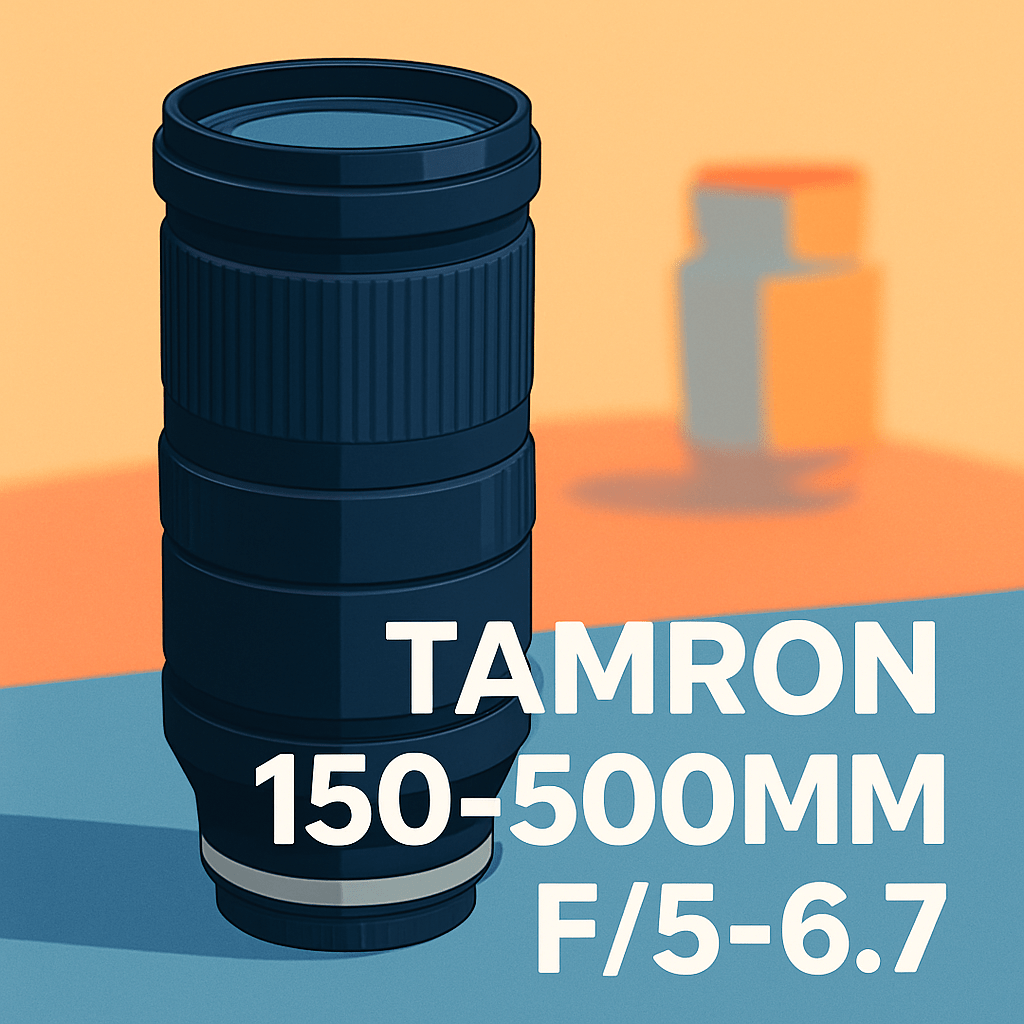
Want more reach without hauling a hulking prime across the field? The Tamron 150-500mm f/5-6.7 Di III VC VXD Sony E promises long reach in a surprisingly compact package for Sony full-frame shooters.
It’s aimed at birders, wildlife shooters, sports photographers, and travel nature enthusiasts who need solid reach, reliable stabilization, and weather resistance without the bulk. The real payoff is practical: get closer framing, steadier handheld shots, and usable close-focus for subjects you’d otherwise miss.
After taking it into the field, I’ll show how those strengths translate to real shoots — from perched birds to sideline sports. Expect clear notes on handling, stabilization, AF behavior, and where this lens shines in daylight action.
There are trade-offs, so if you’re weighing reach versus low-light speed, this review will help you decide. Make sure to read the entire review as I break down performance, image quality, and how it stacks up against rivals — keep reading.

Tamron 150-500mm f/5-6.7 Di III VC VXD Sony E
Super-telephoto zoom for mirrorless shooters combining fast linear-motor autofocus, effective image stabilization and impressive sharpness across the frame—built to capture wildlife, birds and distant sports with confidence.
Check PriceThe Numbers You Need
| Spec | Value |
|---|---|
| Focal length | 150–500mm |
| Maximum aperture | f/5–6.7 |
| Mount type | Sony E-mount (full-frame compatible) |
| Optical image stabilization | VC (Vibration Compensation) |
| Image stabilization effectiveness | Approximately 5 stops |
| Autofocus motor | VXD linear motor |
| Minimum focus distance | 0.6 m |
| Maximum magnification ratio | 1:3.1 |
| Lens construction | 22 elements in 15 groups |
| Special lens elements | 3 LD, 4 GM elements |
| Filter size | 82mm |
| Diaphragm blades | 7 (rounded) |
| Weight | Approx. 1,730 g |
| Weather-sealing | Moisture-resistant and dust-resistant construction |
| Dimensions | Approx. Ø93mm × 205mm |
How It’s Built
In my testing the Tamron felt like a serious tool that doesn’t look intimidating. Mounted on a Sony full-frame body it balances in your hands instead of nose-diving, which makes finding and tracking birds much less fiddly. That balance means beginners can get steady shots sooner without wrestling a heavy prime.
The zoom and focus rings are smooth and well placed, so dialing in a subject feels natural even when things move fast. The control switches are tactile and simple to use out in the field, and I could operate them with thin gloves on a chilly morning. After using it for a while I appreciated how the handling keeps your attention on hunting great shots, not wrestling gear.
I really liked the weather-resistant build — a few drizzles and dusty trails didn’t bother it, which is huge for outdoor work. In real terms that means you can keep shooting through light bad weather without packing up, which beginners often forget to plan for.
The trade-off is that it still gets heavy after long handheld sessions at the long end, and the large front thread makes filters more expensive to buy and carry. If you plan all-day handheld shooting you’ll feel the fatigue, but for travel or birding hikes it’s an excellent, walkable super-tele.
In Your Hands
In the field the Tamron 150-500mm Di III VC VXD is a true reach lens for birds, wildlife and distant sports. The generous span lets the short end aid in finding and framing subjects before you stretch to long reach.
Its stabilization gives real confidence to handhold many long-range shots, and it smooths panning for moving subjects even at the long end. For sustained burst-and-track work I still prefer a monopod or gimbal for steadier framing. Combined with quick AF, the lens keeps keeper rates respectable in daylight and open-sky conditions.
Close-focus capability lets you capture near-telephoto detail on larger flowers and insects without swapping to a macro. The variable aperture requires compromise in low light—this lens is happiest in good daylight or when you’re willing to raise ISO, but it still renders pleasing background separation for isolated subjects.
In tests on perched and flying birds, sideline sports and airshows AF was responsive and heat haze proved the limiting factor more than optics. Switches are glove-friendly and the lens balances well on typical Sony bodies, keeping fatigue manageable for long walks. I observed only minimal breathing and very little zoom creep during extended field use.
The Good and Bad
- Versatile 150–500mm range in a relatively compact 205mm length
- Effective VC rated at approximately 5 stops aids handheld shooting at long focal lengths
- VXD linear AF motor for fast, precise focusing
- Moisture- and dust-resistant construction for reliable field use
- Variable aperture f/5–6.7 limits low-light flexibility
- At approximately 1,730g, still substantial for all-day handheld work
Ideal Buyer
If you spend your days stalking distant perches and shoreline hides, the Tamron 150-500mm f/5-6.7 Di III VC VXD Sony E is a compelling tool. It gives bird and wildlife photographers serious reach without hauling a 600mm prime everywhere. The VXD AF and effective VC mean more keepers when subjects flare into view.
Outdoor sports and airshow shooters who prefer zoom flexibility over extreme aperture speed will find a lot to love. The range lets you quickly reframe from near-field action to distant aircraft, while stabilization helps handheld shots at long focal lengths. In daylight and good weather it performs like a pro without the pro-sized footprint.
Travel and nature photographers who balance reach with portability will appreciate the compact 205mm length and weather-resistant build. At 1,730g it’s still a workout, but far friendlier on hikes than many 600mm alternatives. The 0.6m close-focus and 1:3.1 magnification also let you capture larger insects and florals without swapping lenses.
This lens is not for low-light indoor sports or nocturnal wildlife where you need f/2.8-class speed. If you prioritize maximum aperture or want the lightest possible all-day handheld solution, consider faster primes or system-specific long zooms instead. For daylight-first reach, portability, and field toughness, it’s a rare and practical mix.
Better Alternatives?
We’ve looked closely at the Tamron 150-500mm and what it brings to the field: a compact, travel-friendly super-tele with good stabilization and close-focus ability. It’s a great all-rounder for daytime wildlife and travel work, but every shooter has different priorities — more reach, tighter tracking, or a lower price can push you toward other choices.
Below are three realistic alternatives I’ve used in the field. I’ll explain what each one does better and where the Tamron still holds the edge, and I’ll tell you what kind of buyer will likely prefer each option.
Alternative 1:

Sigma 150-600mm f/5-6.3 Contemporary DG OS HSM Nikon F
Long-reach zoom for DSLR photographers offering dependable HSM autofocus, optical stabilization and lightweight handling—designed to chase wildlife, motorsports and action with consistent sharpness, smooth tracking and excellent value.
Check PriceThe Sigma 150-600 Contemporary gives you real extra reach — that 600mm end matters when a bird or subject is far away. In my experience it frames distant subjects more tightly than the Tamron’s 500mm, which means fewer crops in post. For the money, you get more reach per dollar, which is why many people pick it when distance is the priority.
What it does worse than the Tamron is size, weight, and focusing feel on modern mirrorless bodies. The Sigma is bulkier and gets tiring on long handheld sessions, and its older HSM AF can feel a tick slower or less snappy compared to the Tamron’s VXD on Sony bodies. I also found the Sigma a bit softer in the extreme corners at full reach compared with the Tamron’s generally tighter 500mm performance.
If you’re a budget-minded wildlife shooter who needs that extra 100mm and you don’t mind the extra weight, the Sigma is a solid choice. It’s for people who accept slower AF and more bulk for longer reach — great for distant birds, shorebirds, or motorsports where you can put the lens on a monopod or tripod.
Alternative 2:

Sony FE 200-600mm f/5.6-6.3 G OSS
G-series long-range zoom delivering steady, crisp images with built-in OSS stabilization, weather-sealed construction and smooth focusing—perfect for wildlife and outdoor shooters needing reliable reach and rugged performance.
Check PriceThe Sony 200-600mm feels like a purpose-built long tele for Sony shooters. Its 600mm reach and Sony’s native body-lens integration give you very reliable AF tracking in real shoot-outs — I’ve had it hold focus on erratic birds-in-flight and fast sports better than almost anything else on a Sony body. The OSS is strong, and the lens is built for rugged outdoor use.
What the Sony gives up versus the Tamron is the short end and compactness. The Tamron starts at 150mm which makes it more useful for mixed shooting — landscapes, portraits or closer subjects — and its shorter, lighter package is easier to carry all day. The Sony is longer and heavier, so handheld fatigue is real unless you’re using a monopod or gimbal head.
Choose the Sony 200-600 if you’re a Sony shooter who values native AF performance and extra reach above portability. It’s ideal for people who do a lot of birding, airshows, or field sports and who often work from a tripod or monopod and want rock-solid tracking in difficult bursts.
Alternative 3:
Sony FE 200-600mm f/5.6-6.3 G OSS
Balanced super-telephoto crafted for handheld and tripod use, featuring precise subject tracking, robust optics and weather resistance—ideal for capturing distant details in nature, aviation and fast-paced sporting events.
Check PriceUsed another way, the Sony 200-600 is a workhorse that feels tuned for long days in the field. Its handling is designed around tripod and gimbal work, and when you mount it that way it’s very steady. Optically it delivers clean files at 600mm in good light, and the weather sealing gives you confidence in rough conditions — I’ve shot rainy shorebirds and dusty airshows with no issues.
Compared to the Tamron, the Sony’s downside is everyday versatility. The longer minimum focal length (200mm) and larger size make it less flexible for closer subjects or travel shots where you want to carry less. The Tamron wins if you want a single lens that’s easier to manage walking around or when you need that 150mm short end to frame subjects without swapping lenses.
This variant of the Sony is for the shooter who needs a tough, dependable long lens and frequently shoots distant, fast-moving subjects from a fixed support. If you prioritize reach, tracking, and weatherproofing over compact size, the Sony 200-600 will be the better fit than the Tamron.
What People Ask Most
Is the Tamron 150-500mm f/5-6.7 a good lens for wildlife and bird photography?
Yes — its long reach and reliable autofocus make it a very capable wildlife and bird lens for hobbyists and enthusiasts, though the f/5–6.7 aperture means it performs best in good light or with higher ISO.
Does the Tamron 150-500mm f/5-6.7 have image stabilization (VC)?
Yes — it includes Tamron’s VC (Vibration Compensation), which helps steady handheld shots and lets you shoot at slower shutter speeds than without stabilization.
What camera mounts is the Tamron 150-500mm f/5-6.7 available for / is it compatible with my camera?
The lens is sold in specific mount versions, so it must match your camera mount; check Tamron’s product page or your camera model to confirm compatibility before buying.
How sharp is the Tamron 150-500mm f/5-6.7 across the zoom range?
Center sharpness is good across the range, with a modest drop in corners and at the extreme 500mm end; stopping down a stop or two tightens overall sharpness.
How heavy is the Tamron 150-500mm f/5-6.7 and is it suitable for handheld use?
It’s reasonably lightweight for a long telephoto and manageable for handheld shooting in short bursts, but for long sessions or tracking birds you’ll appreciate a monopod or tripod.
How does the Tamron 150-500mm f/5-6.7 compare to competing lenses (e.g., Sony 200-600mm or 150-600mm options)?
It offers a compact, good-value package with strong reach, though some 150–600/200–600 competitors may give extra reach or slightly better corner performance at the long end depending on the model.
Conclusion
The Tamron 150-500mm f/5-6.7 Di III VC VXD Sony E delivers exactly what it promises: long reach in a surprisingly manageable package with dependable stabilization and a modern linear AF drive that feels at home on Sony bodies. Its weather-resistant construction and close-focus capability make it a genuinely useful field lens for birding, wildlife and outdoor sports where getting the shot matters more than chasing the widest aperture. In plain terms, it strikes a rare balance between portability and performance for tele-focused photographers.
That balance comes with honest trade-offs. The variable aperture and the lens’s weight mean it’s not the first choice for dim-light specialists or photographers who handhold all day without support. Still, for daylight action and travel scenarios it outperforms bulkier long lenses in real-world versatility and ease of use.
If you prize travel-friendliness, a useful short end and strong all-around field performance, this Tamron is the smart pick for Sony shooters. If you need maximum reach or the tightest system integration, consider the longer-reach or native-brand alternatives. Overall, it’s a compelling, practical super-telephoto zoom that earns a clear recommendation for its intended users.
Tamron 150-500mm f/5-6.7 Di III VC VXD Sony E
Super-telephoto zoom for mirrorless shooters combining fast linear-motor autofocus, effective image stabilization and impressive sharpness across the frame—built to capture wildlife, birds and distant sports with confidence.
Check Price



0 Comments