
You’ve stared at endless gear lists wishing someone would cut through the noise and tell you exactly what works in the real world. If you’ve Googled what camera does steve mccurry use, you’re in the right place. This article will show how his kit delivers sharper shots, more faithful color, faster workflow, and real-world durability.
McCurry’s recent primary body is the Leica SL3, paired with wide-to-tele L‑mount lenses and praised for image quality, compactness, and robust build. You’ll also hear why he transitioned from Nikon film SLRs and early digital bodies, plus a surprising adaptation that keeps him shooting in harsh conditions.
This guide’s for seasoned travelers, documentary shooters, and serious enthusiasts who want fewer surprises in the field, whether you’re shooting alone or on assignment. No deep theory here—just practical insights on lenses, ergonomics, handling tweaks, and workflow that save time and sharpen results. keep reading because the fix is simpler than you think.
Steve McCurry’s Current Camera and Lens System
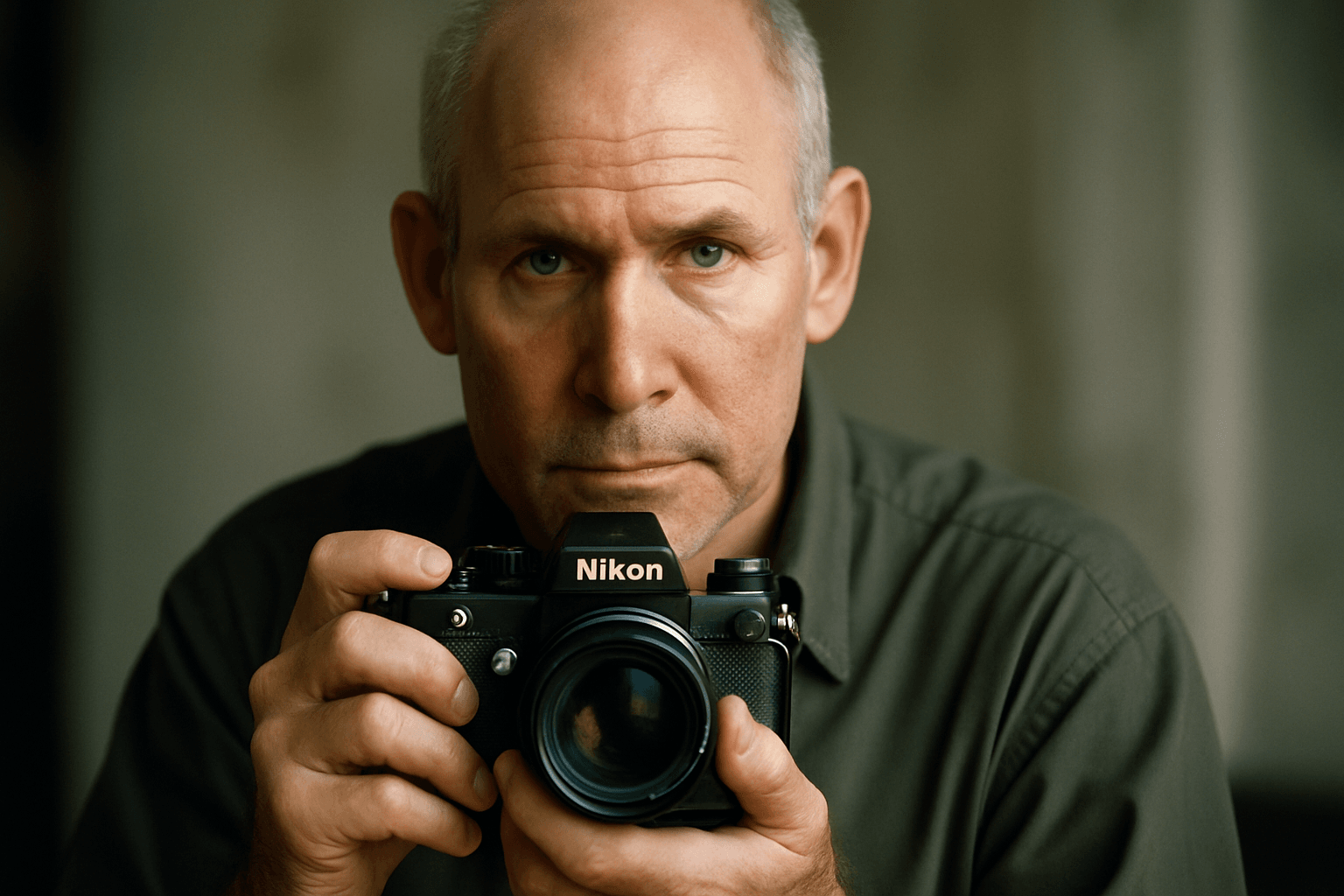
If you’re wondering what camera does Steve McCurry use right now, it’s the Leica SL3 as his primary body. He pairs SL-series bodies with L-mount zooms that cover almost everything he needs. That compact, weather-sealed combo travels easily and feels bombproof in hand.
His go-to lenses are the Leica 24–90mm f/2.8–4, 15–35mm f/3.5–4.5, and 90–280mm f/2.8–4. Together they deliver wide landscapes, intimate portraits, and distant details without switching systems. That flexibility matters when moments unfold fast.
He consistently praises the SL3’s image quality, color depth, and robust build. You can see how this kit performs in the field in the SL3 in Myanmar. It’s a clean, modern setup that suits his pace and subjects.
Historical Gear: Film SLRs and Early Digital Bodies
Back in the film era, Steve leaned on the Nikon F3 and FM2 for their reliability. Those cameras were mechanical workhorses that kept shooting through dust, heat, and humidity. They matched his travel-heavy assignments and demanding timelines.
As digital matured, he used the Nikon D810, praising its strong low-light performance. That sensor let him hold shadows and preserve color when the sun disappeared. It bridged the gap between reportage needs and evolving editorial aesthetics.
People often ask what camera does Steve McCurry use across his career. The answer changes with the times, but the throughline is reliability. He chooses tools that won’t fail when a single frame matters.
Why McCurry Switched from Nikon to Leica
His move mirrors the industry’s broader shift from DSLR to mirrorless. Mirrorless bodies brought better live view, stabilization, and reduced size without sacrificing image quality. For a traveler, lighter gear adds stamina to long days.
He also favors Leica optics and color rendering for their clarity and tonal nuance. He’s even said the SL2 was the finest camera he’d worked with, reflected in his SL2 praise. The SL3 continues that trajectory with refined ergonomics and dynamic range.
So, what camera does Steve McCurry use today when deadlines loom? The Leica SL3, because it gives him trusted color, tactile controls, and durability. It’s a practical and aesthetic decision rolled into one.
Lens Preferences and Focal-Length Coverage
He keeps a tight zoom trio: 15–35mm for immersive scenes, 24–90mm for portraits and everyday work, and 90–280mm for reach. That spread covers 15–280mm without gaps. It’s a minimalist kit with maximal range.
For travel and documentary, the 24–90mm rides on the camera most. It handles street portraits at 50–90mm and quick environmental frames at 24–35mm. Fewer lens swaps mean fewer missed moments.
The 90–280mm steps in when distance or discretion matters. I’ve used similar ranges for candid portraits from across a plaza. That compression can be flattering while keeping the background tidy.
Ergonomics and Custom Physical Adaptations
Steve uses a custom hand grip attached to the tripod socket. He adopted it because of limited mobility in his right arm. The grip adds leverage and a secure hold without adding much weight.
In the field, that adaptation stabilizes panning and lowers fatigue during long shoots. It also makes one-handed adjustments more practical. Small tweaks like this can transform a long day’s comfort.
I’ve watched photographers struggle with wrist strain on heavy bodies. A simple grip can restore control and confidence. It’s a reminder that ergonomics are personal and essential.
Image Quality, Color Rendering and Sensor Considerations
Steve consistently praises the SL2 and SL3 for image quality and color. Leica’s lenses deliver crisp micro-contrast, while the sensors render skin tones gently. That’s critical for portraits across diverse lighting conditions.
He valued the Nikon D810 for low-light strength early in digital adoption. That camera balanced clean shadows with file flexibility. Today’s SL3 extends that capability while streamlining the shooting experience.
When beginners ask what camera does Steve McCurry use for his color palette, I stress optics first. Great sensors shine when paired with great glass. His kit is built around that principle.
Field, Travel and Durability Considerations
His five-continent assignments have included monsoons, deserts, and conflict zones. Gear must be compact, weather-sealed, and mechanically reliable. Fancy features mean nothing if the camera quits mid-story.
The SL-series strikes a balance between ruggedness and packability. Add stabilized lenses, and he can work hand-held in tough conditions. That keeps the kit fast for changing light and fast-moving subjects.
Travel photography rewards simplicity. A dependable body and two or three lenses beat a heavy, complex bag. Steve’s choices reflect decades of learned efficiency.
Relationship with Manufacturers and Public Interviews
Much of what we know comes from manufacturer features and interviews. Leica’s stories and Nikon chats provide direct quotes and context around his choices. They’re valuable breadcrumbs for gear historians.
His earlier comments during a Nikon interview outlined why the D810 worked for him at that time. Later, Leica features detailed his embrace of the SL bodies. Taken together, they map a natural evolution.
There’s no credible evidence he currently relies on medium-format, Micro Four Thirds, or third-party lenses. His workflow appears centered on Leica SL glass. Consistency helps with color and post-processing predictability.
Post-processing Workflow and Editorial Philosophy
His editing has evolved from strict photojournalism toward a more interpretive approach. Digital tools help refine atmosphere and guide the eye. The intent is to communicate a felt truth, not merely record facts.
He manages files from both Leica and legacy Nikon bodies in one archive. Matching color across eras requires careful profiling and restraint. Consistency ensures the work reads as a cohesive voice.
When mentoring beginners, I remind them that editing is part of authorship. Steve’s workflow shows taste and judgment honed over decades. Tools serve the story, not the other way around.
Real-World Case Studies and Notable Assignments
His Leica SL3 series in Myanmar demonstrates the system’s strengths. From soft dawn light to shadowed interiors, the files hold detail gracefully. The color feels rich yet believable, which suits his subjects.
Across long-term projects, he chooses predictable, durable gear. Familiar controls reduce cognitive load, leaving more bandwidth for people and timing. That’s where meaningful frames emerge.
His books and exhibitions provide a decades-long backdrop to these choices. A consistent toolkit helps sustain a recognizable visual language. The equipment evolves, but the intent remains steady.
Durability and Weather-Sealing in Practice
Weather sealing isn’t marketing fluff when you’re wading through monsoon lanes. Seals, gaskets, and tight tolerances keep cameras alive in real storms. That reliability lets you focus on composition.
He trusted the Nikon F3/FM2 under harsh conditions for years. Today, the Leica SL bodies continue that tradition with modern materials. It’s an unbroken line of durability-first decisions.
Lens construction matters too. Zooms with internal sealing and solid barrels shrug off dust and humidity. That robustness pays for itself on day one in the field.
Evolution from Photojournalism to Artistic Statement
Over time, he has leaned more into interpretive editing and deliberate framing. The goal is to transmit feeling as much as information. That shift favors cameras with dependable color and flexible files.
As his voice matured, equipment followed. The SL system’s clarity and ergonomics encourage careful, intentional shooting. It accommodates both quick reportage and reflective portraiture.
In workshops, I tell students that gear should enable your trajectory. Steve’s path shows how tools can evolve with vision. Choose cameras that support who you’re becoming, not just what you’ve done.
What People Ask Most
Which camera does Steve McCurry use for travel photography?
I report that his most recent primary travel body is the Leica SL3, praised for its image quality, compactness, and robust build.
Has Steve McCurry always used Nikon cameras?
I note he didn’t always use Nikon—he began on film-era Nikons like the F3 and FM2 before moving into digital and later adopting Leica SL bodies.
What lenses does McCurry pair with his Leica SL3?
I list his common L‑mount lenses as the Leica 24–90mm f/2.8–4, 15–35mm f/3.5–4.5, and 90–280mm f/2.8–4, which provide wide-to-tele coverage for travel, portrait and documentary work.
Did McCurry switch from Nikon to Leica, and why?
I explain that he switched as part of the industry move to mirrorless and because he prefers Leica optics and color rendering, and he has said the SL2 was the finest camera he’d worked with.
Are there any physical adaptations on McCurry’s cameras?
I point out he uses a custom hand grip attached to the tripod socket because of limited mobility in his right arm, which improves stability and ease of handling in the field.
Does McCurry still shoot film, or has he gone fully digital?
I say he started on film and relied on sturdy film SLRs, and today he primarily shoots digital with Leica and Nikon bodies while his film work remains an important part of his archive.
How does McCurry’s gear impact his signature color palette?
I describe how Leica’s optics and color rendering, along with his interpretive digital editing, combine to shape the rich, recognizable color palette in his images.
Final Thoughts on Steve McCurry’s Camera Choices
If you started this piece wondering what camera does steve mccurry use, the answer lays out more than brand names—it’s about a compact, color-forward, and durable toolkit matched to a roaming, interpretive eye. We untangled his current system from its film roots and showed how those choices serve his priorities for reliability and expressive color in challenging conditions.
That clarity gives you a practical benefit: a way to choose bodies, lenses, and handling solutions that genuinely support long days on the road rather than just chasing labels. One realistic caution is that gear can only enable a voice; budget, access, and physical limits mean you should prioritize fixes that solve your own shooting problems.
Travel and documentary shooters, portrait photographers, and those building an editorial practice will gain most from adopting these principles instead of copying equipment wholesale. You came in with a single question and leave with a framework to test in the field—so pack thoughtfully, stay curious, and start applying what you’ve learned.




0 Comments