
Craving more detail? If you’ve ever typed what camera has the most megapixels into a search, this practical guide cuts through marketing hype and shows which bodies actually deliver extra detail right now. You’ll get straight buying advice, shooting tips for studio and landscape work, plus workflow fixes for pros and serious hobbyists handling giant files, and one surprising megapixel myth to avoid.
We compare today’s leading cameras across sensor formats, explain pixel-shift versus native counts, and make it clear when extra megapixels improve prints or rescue heavy cropping with sample images today. We’ll also cover real-world trade-offs that affect low-light performance, lens demands, storage costs and editing speed so you can match a camera to your workflow and budget with confidence. Curious which model tops the megapixel charts, which options are mostly marketing, what pros do, and the one mistake that wastes time and money before you buy? keep reading
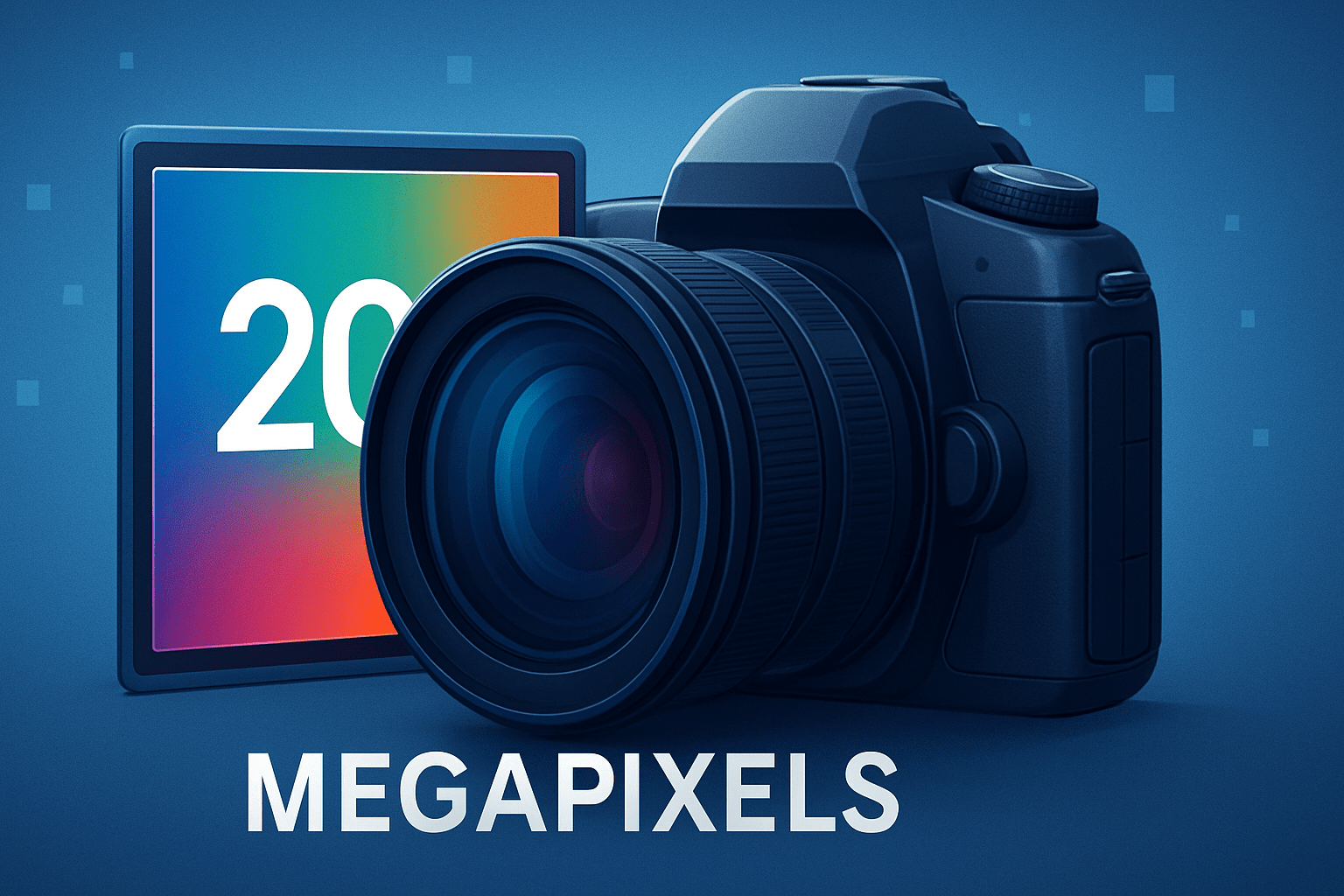
What Is a Megapixel?
A megapixel is simply one million pixels. You can calculate megapixels as: MP = (width_px × height_px) ÷ 1,000,000.
So a 24MP image is roughly 6000×4000 pixels, a 12MP image is about 4000×3000, and a 100MP medium-format file can be roughly 11648×8736 pixels. Those pixel dimensions translate directly into how much detail the file can hold and how large you can print before detail looks soft.
How Megapixels Affect Image Quality (and what they don’t)
More megapixels usually mean more resolvable detail, better cropping freedom, and larger possible print sizes. If you often crop tight or print billboard-sized, extra pixels are a clear advantage.
However, megapixels are not the whole story. Dynamic range, color depth, and low-light performance depend on sensor size, pixel pitch, and processing — not just pixel count.
Important interacting factors are pixel pitch (the physical size of each photosite), sensor technology (BSI or stacked designs), the resolving power of your lens, anti-aliasing filters, and the demosaicing algorithm. All of these determine whether extra pixels actually give sharper, cleaner images in real shooting conditions.
Megapixels vs Sensor Size — the crucial trade-offs
For a given sensor format, pushing megapixels higher shrinks each pixel’s physical area. Smaller pixels gather less light and can raise noise at higher ISOs.
Larger sensor formats (medium format > full-frame > APS-C > Micro 4/3) let manufacturers put more pixels on a bigger surface so each pixel can stay reasonably large. That’s why medium-format cameras can have 100–150MP without absurdly tiny pixels.
Practical consequences include increased noise at high ISO for very dense sensors, stricter diffraction limits (you can’t stop down as much before sharpness falls), and a stronger need for high-quality lenses that resolve to the sensor’s capability.
Who Actually Needs Ultra-High Megapixels? (use-case guide)
Ultra-high megapixels are best for photographers who need huge prints, extreme cropping, or maximum detail for retouching: fine-art landscape printing, museum and archival reproduction, product/studio work, and commercial advertising. For those uses, 50–150MP or pixel-shift outputs make sense.
If you mainly share to social media, shoot small prints, or do fast-paced events and travel work, 20–30MP is often plenty. Smaller files speed up autofocus, burst rates, and editing.
For stock photography, real estate exteriors, or heavy retouching, aim for 30–60MP. For gallery prints and top-tier commercial work, 80–150MP or medium-format systems are worth considering. Match your MP needs to final output and workflow capacity.
What Camera Has the Most Megapixels Right Now? (quick category overview)
If you’re asking what camera has the most megapixels, the simple answer depends on whether you count native sensors or effective multi-shot results. Native single-shot megapixel leaders are typically medium-format backs, while multi-shot systems can produce much higher effective counts.
For an updated list of high-res options across formats, see this overview of the highest resolution cameras. Below is a quick snapshot by category; verify exact specs at purchase because manufacturers update lines frequently.
| Category | Camera model | Megapixels (native/effective) | Sensor format / size | Pixel-shift / multi-shot? | Release year | Retail price (approx.) |
|---|---|---|---|---|---|---|
| Medium format | Phase One IQ4 150MP | ~150MP (native) | Medium format (approx. 53×40 mm) | No | — | Very high (tens of thousands USD) |
| Medium format (multi-shot) | Hasselblad H6D-400c MS | 400MP (effective, multi-shot) | Medium format (approx. 53×40 mm) | Yes (multi-shot) | — | Very high (studio-priced) |
| Medium format | Fujifilm GFX100 / GFX100S | 102MP (native) | Medium format (43.8×32.9 mm) | Varies by model | — | High (several thousand USD) |
| Full-frame | Sony a7R V | 61MP (native) | Full-frame (35.9×24 mm) | Some support multi-shot modes | — | Mid–high (thousands USD) |
| Full-frame | Canon EOS R5 | 45MP (native) | Full-frame | No | — | Mid–high (thousands USD) |
| Smartphone | Samsung Galaxy S23 Ultra (example) | 200MP (native sensor, uses binning) | Large phone sensor (~1/1.3″) | No (uses binning) | — | Consumer price (hundreds to low thousands) |
The absolute native megapixel leaders are in medium format backs, while effective multi-shot systems can produce much larger composite files. Always check whether a megapixel figure is “native” or “effective” — multi-shot results must be labeled as effective and are only useful for static subjects.
Top Highest-Megapixel Cameras — short picks + mini-reviews
Phase One IQ4 150MP — 150MP native. This is a studio-class medium-format back built for the absolute highest native resolution in a single exposure. Best for archival, fine art and commercial reproduction where native single-shot detail is essential.
Pros: outstanding native detail and color depth; designed for studio workflows. Cons: extremely expensive, requires top-tier lenses and a slow studio workflow.
Hasselblad H6D-400c MS — 400MP effective (multi-shot). This camera uses multi-shot pixel shift to create extremely large files for museum and archival work. Best for still-life, product, and art reproduction where subjects are completely static.
Pros: unmatched multi-shot detail and color fidelity; ideal for the highest-grade prints. Cons: works only for static scenes, files are massive and require powerful editing hardware.
Fujifilm GFX100 / GFX100S — 102MP native medium format. This pair brings very high native resolution in a more manageable, mirrorless body than traditional backs. Best for landscape and studio photographers who want medium-format quality without the back-only workflow.
Pros: excellent balance of file quality and handling; many high-quality lenses available. Cons: large files and the need for careful technique to realize full resolution.
Sony a7R V — 61MP full-frame. Sony’s high-resolution full-frame option packs huge detail into a familiar interchangeable-lens body and strong autofocus features. Best for high-res editorial, landscape, and commercial work where mobility and AF matter.
Pros: very high resolution in a full-frame system; strong AF and features for working pros. Cons: large files and needing very good lenses to push resolution.
Canon EOS R5 — 45MP full-frame. A versatile high-resolution body that balances still-image detail with advanced video and AF features for hybrid shooters. Best for commercial shooters who need stills and video in one system.
Pros: excellent autofocus, video capability, and image quality. Cons: lower native MP than medium format or 61MP rivals; thermal limits on long video capture.
Samsung Galaxy S23 Ultra (smartphone) — 200MP sensor. For casual users who care about pixels on a phone, modern 200MP sensors offer huge pixel counts that are mostly used with binning and computational sharpening. Best for mobile content creators who want maximum crop flexibility from a phone.
Pros: massive pixel count in a handheld device; great computational tools. Cons: small sensor physics still limit true per-pixel image quality compared to dedicated cameras.
For curated lists and real-world impressions of high-resolution mirrorless bodies, this short guide to high-resolution mirrorless is a useful companion read. Always test RAW files and prints from any high-MP body before you commit to a purchase.
Pixel Shift & Multi-Shot: get crazy resolution without native MP increases
Pixel shift and multi-shot modes move the sensor by fractions of a pixel across multiple exposures and combine the frames into one ultra-detailed image. The result is an “effective” megapixel count far higher than a single native exposure.
Advantages include improved color fidelity and more detail. Disadvantages are strict conditions: the subject must be static, a tripod is required, files are enormous, and combining frames needs reliable software and workflow.
Examples of pixel-shift solutions range from camera bodies with high-res modes to dedicated medium-format multi-shot backs like the Hasselblad H6D-400c MS. Typical workflow requires a tripod, remote release, and manufacturer or third-party software to merge frames into a high-res TIFF or DNG.
Pros and Cons of High Megapixel Cameras — practical breakdown
Pros: higher resolution gives more cropping headroom, smoother retouching, and the ability to make very large prints without losing detail. Photographers who sell large prints or do detailed product work will see a clear benefit.
Cons: big RAW files mean more storage, slower editing, and a need for faster cards and computers. High-MP cameras also reveal lens shortcomings and are less forgiving in low light unless you choose a larger sensor.
There are technical trade-offs: more pixels can mean smaller pixel pitch (more noise) for the same sensor size, and diffraction becomes limiting at smaller apertures. Plan your glass, tripod, and storage before buying into the high-MP world.
How Many Megapixels Do You REALLY Need? (practical test & print guidance)
Use this simple formula for print size: print inches = pixel dimension ÷ DPI. For best lab-quality prints use 300 DPI, for gallery-sized prints 200 DPI is often acceptable, and for very large prints viewed from distance 150 DPI works fine.
Practical examples (approximate pixel dimensions are used):
12MP (4000×3000): at 300 DPI → ~13.3″ × 10″; at 200 DPI → 20″ × 15″; at 150 DPI → 26.7″ × 20″.
24MP (6000×4000): at 300 DPI → 20″ × 13.3″; at 200 DPI → 30″ × 20″; at 150 DPI → 40″ × 26.7″.
36MP (7360×4912): at 300 DPI → ~24.5″ × 16.4″; at 200 DPI → 36.8″ × 24.6″; at 150 DPI → ~49.1″ × 32.8″.
45MP (8192×5464): at 300 DPI → ~27.3″ × 18.2″; at 200 DPI → ~41.0″ × 27.3″; at 150 DPI → ~54.6″ × 36.4″.
61MP (9504×6336): at 300 DPI → ~31.7″ × 21.1″; at 200 DPI → 47.5″ × 31.7″; at 150 DPI → ~63.4″ × 42.2″.
100MP (11648×8736): at 300 DPI → ~38.8″ × 29.1″; at 200 DPI → ~58.2″ × 43.7″; at 150 DPI → ~77.7″ × 58.2″.
Bottom line: if your final output is screen or 8×10 prints, 20–24MP is enough. For large fine-art prints or heavy cropping, target 50–100MP or use multi-shot techniques.
Shooting & Technical Tips for High-MP Cameras (must-read practical advice)
Gear checklist: use a sharp, well-corrected lens, a sturdy tripod and head, remote release or camera timer, a solid tripod plate, and reliable tethering for studio work. High-MP bodies exaggerate any movement or optical weakness.
Camera settings and technique: shoot at base ISO whenever possible, find your lens’s sharpest aperture (often f/5.6–f/8 on many lenses), use mirror lock-up or electronic front curtain options where available, and apply careful focus technique or focus stacking for deep DOF.
For handheld with high-MP bodies use faster shutter speeds or IBIS + high shutter speed heuristics — still, expect a higher keeper loss rate than lower-MP cameras. For static subjects, use pixel shift for the best detail if the camera supports it.
Testing: shoot resolution charts, inspect 100% crops from center and corners, and test across apertures to find the sweet spot of your lens+body combination. That test data is the quickest way to understand what your setup can truly resolve.
Workflow, Storage & Editing: handling giant RAW files
RAW file sizes vary a lot with sensor size and compression. Rough example ranges: 24MP RAW files often sit around 25–40MB, 45MP around 50–90MB, 61MP around 90–140MB, and 100MP around 150–300MB. Pixel-shift or multi-shot outputs can be several times larger and may reach gigabytes per file.
Use fast cards (UHS-II, V90 SD or CFexpress where supported) and a fast card reader. For active editing, work from an internal SSD or a fast external NVMe and keep a larger HDD/RAID for archive storage.
Computer recommendations: for 45MP+ workflows plan for 32GB RAM minimum and 64GB+ for very large medium-format or multi-shot files, plus a multi-core CPU and a capable GPU to accelerate previews and export tasks. Follow a 3-2-1 backup rule: three copies, two different media types, one off-site.
For software, Lightroom Classic, Capture One, and Camera Raw handle most high-MP workflows; specialized multi-shot combination tools (manufacturer software or Photoshop) are required for pixel-shift files. Downscale a master for web delivery and sharpen after resizing for the best-looking online images.
For more help picking workflow-friendly bodies and rigs, consult hands-on buying guides and reviews of the best high-end cameras to match features to your workflow needs.
How to Choose the Right High-Megapixel Camera — buying checklist
First, define your primary use: studio prints, landscapes, travel, or hybrid photo/video. Your intended output decides whether you need medium format, high full-frame MP, or a standard MP body.
Next, match sensor format to use, check the lens ecosystem for high-res glass, consider pixel-shift if you mainly shoot static subjects, and weigh MP against autofocus, burst rate, IBIS and video needs. Finally, test a rental or borrow sample RAWs and make print tests before committing.
Don’t forget workflow costs: budget for fast cards, large storage, and a stronger computer when you move above ~45MP. Renting for a project is a practical way to trial high-MP workflows without the upfront investment.
Quick Comparison Table & Visuals to Include (format instructions)
Use a comparison table that lists model, MP, sensor format, pixel pitch (if known), multi-shot capability, approximate RAW size, and best use-case. Readers need side‑by‑side numbers to make quick decisions.
| Use-case | Recommended MP range | Note |
|---|---|---|
| Web / social | 12–24MP | Faster workflow, smaller files |
| Small prints / books | 24–36MP | Good balance of detail and file size |
| Large gallery prints | 45–100MP | Choose medium format for the best native large-print IQ |
| Archival / reproduction | 100MP+ or multi-shot | Prioritize native detail or multi-shot workflows |
Include visuals in your article: a 100% crop gallery comparing sensors, a print-size chart showing MP → max print at 300/200/150 DPI, a pixel-pitch diagram, and a pixel-shift before/after example. Real images are the clearest proof of what extra megapixels deliver.
Quick Practical Tips Box (sidebar content)
If you mainly post to the web, 24–30MP is usually enough. This keeps files manageable while giving good crop room.
For large gallery prints or heavy cropping, aim for 50–100MP or medium format bodies. Always pair high-MP bodies with high-quality glass and a sturdy tripod.
Use pixel shift for static subjects to increase detail, but plan for large files and slow workflow. And always plan storage and backups before you shoot.
What to Check & Cite Before Publishing (sources & verification)
Before you publish or buy, verify native vs effective megapixel counts, pixel-shift output numbers, RAW file sizes, pixel pitch (µm), release dates and current retail prices. These specs change with new model announcements.
Good sources for verification include manufacturer spec pages, detailed lab reviews, and hands-on sample RAW downloads from respected review sites. Mark multi-shot numbers clearly as “effective” and note the shooting constraints for those modes.
Short “What’s Next” (technology outlook — short section)
Trends to watch: sensor makers are pushing more pixels into larger sensors, computational multi-shot is improving, and phones continue to use very large pixel counts with aggressive binning and processing. Stacked and backside-illuminated (BSI) sensor tech keeps improving per-pixel performance even as counts rise.
Because camera lines evolve quickly, keep an eye on new announcements and verify specs at the time you buy. If you want to know exactly what camera has the most megapixels today, check the latest manufacturer pages and hands-on reviews before deciding.
What People Ask Most
What camera has the most megapixels?
Specialty and medium-format cameras tend to offer the highest megapixel counts for extremely detailed work rather than everyday use.
Do I always need the camera that has the most megapixels?
No, most people get better results from a balanced camera, since megapixels alone don’t guarantee easier or better photos.
Will more megapixels make my photos look better on social media?
Not usually, because social sites compress images and the extra detail from high megapixels often won’t be visible online.
Are cameras with many megapixels harder to use or store?
Yes, they produce larger files that take more storage and can slow down editing and camera performance, which matters for beginners.
Can cropping or printing benefit from a camera with the most megapixels?
Yes, higher megapixels let you crop more aggressively and print larger while keeping more detail, which helps for big prints or tight crops.
Does a higher megapixel count mean better low-light photos?
No, low-light quality depends more on sensor size and lens quality than on megapixel count.
Should a beginner choose the camera that has the most megapixels for learning photography?
Not necessarily; beginners often learn more from a simple, easy-to-use camera that focuses on fundamentals than from chasing megapixel numbers.
Final Thoughts on Choosing a High‑Megapixel Camera
If you’ve been tracking headline megapixel numbers — whether it’s 61, 100 or an eye‑catching 270 — this guide cuts through the noise and shows what those figures actually buy you. Higher megapixels give you finer detail, stronger cropping power and the freedom to make much larger, sharper prints without losing image integrity.
Remember one realistic caution: more pixels mean bigger RAW files, heavier editing demands and a stronger need for top‑quality glass and steady technique, so your workflow has to be ready. The people who’ll benefit most are landscape and fine‑art shooters, studio and product photographers, and anyone doing archival or commercial reproduction work. If you wondered which camera has the most megapixels, we answered it with up‑to‑date model picks, pixel‑shift options and practical print and workflow guidance you can use.
Think of megapixels as a tool, not the whole toolbox — paired with the right lenses and habits they’ll unlock prints and crops you only imagined. Keep testing, keep shooting, and you’ll find the balance that fits your work and vision.


0 Comments