
What is zoom lens and how can it change your photos in a flash?
This article answers “what is zoom lens” in plain, simple words for photographers at any level. You will get a clear definition fast.
We will cover how zoom lenses work, the difference between optical and digital zoom, and common examples like 18–55mm, 24–70mm, and 70–200mm. You will also see two side-by-side photos showing the same subject at wide and tele to make the idea visual.
Read on for easy explanations of zoom ranges, the main advantages, and a simple checklist to pick the right zoom for travel, events, or wildlife. The guide keeps things short and practical so you can choose with confidence.
What is a zoom lens?
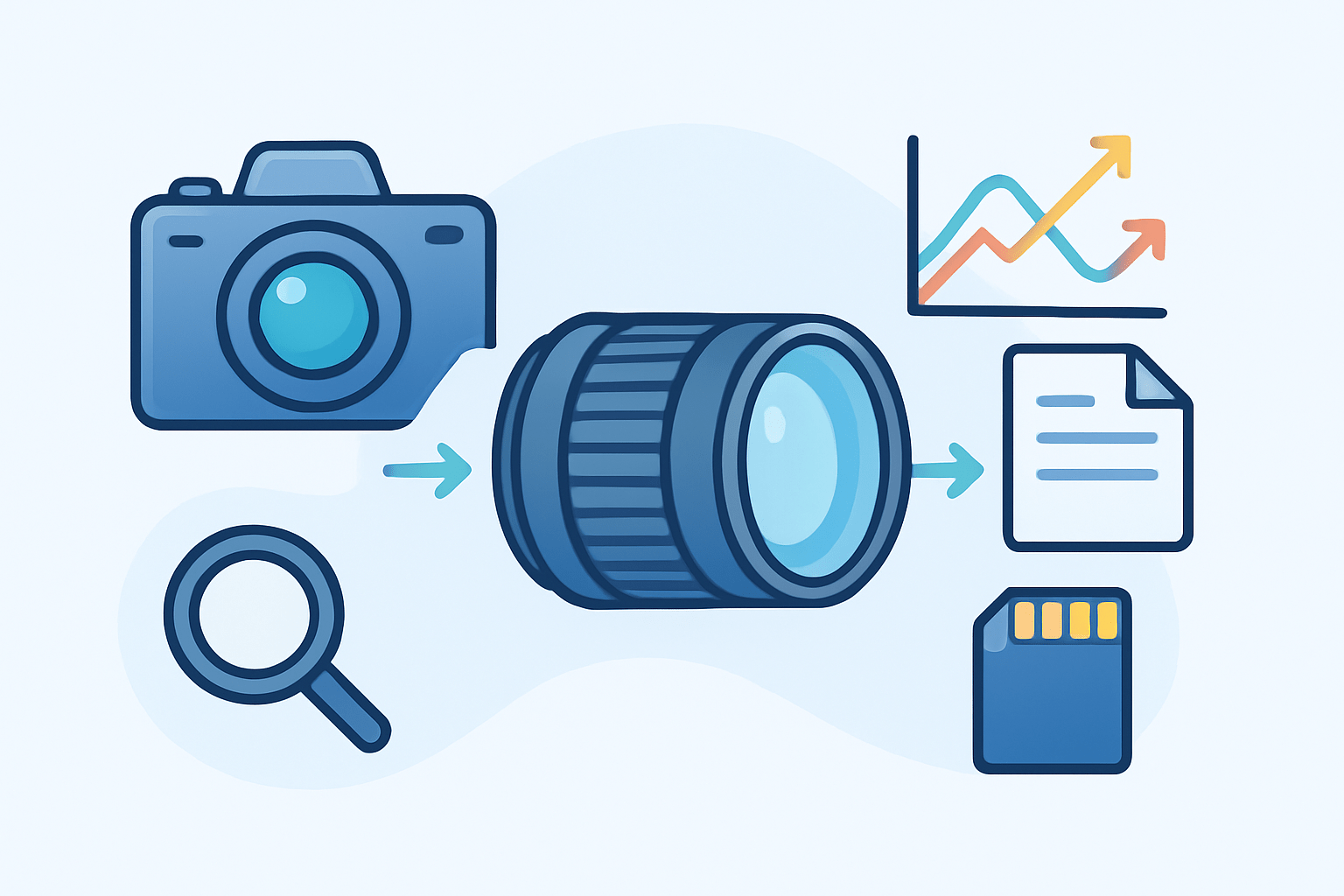
A zoom lens is a lens with a variable focal length, which means you can change your angle of view and magnification without swapping lenses. If you came here asking what is a zoom lens or what is zoom lens in plain terms, it is the tool that lets you go from a wide view to a tight close-up with a simple twist. A prime lens is the opposite, because it has only one focal length.
Optical zoom is the real thing, because the lens optics physically change magnification. Digital zoom is not true zoom; it simply crops or enlarges pixels and can reduce quality. When you zoom optically, the image is re-formed by glass, so detail holds up better.
As you increase focal length, your field of view narrows and the subject appears larger. As you decrease focal length, your field of view widens and the subject appears smaller. It is the same scene, but the slice of the scene you capture changes.
You will often see numbers like 24–70mm, 70–200mm, or 18–55mm printed on a lens. Those numbers show the shortest and longest focal lengths that lens can reach. A 24–70mm lens covers wide to short telephoto, while a 70–200mm lens covers medium to long telephoto, and an 18–55mm is a common starter range for everyday use.
Think of it like binoculars with a zoom wheel versus a single fixed-magnification eyepiece. Twist the ring and you “step closer” without moving your feet. Keep this idea in your pocket: zoom equals flexibility; primes equal specialization.
Picture a street scene taken at 24mm where the environment tells part of the story, and the same scene at 200mm where a face fills the frame. Both are valid, and the zoom lets you pick the one that fits your moment. That is the heart of what is zoom lens good for, and why so many photographers start with one.
How zoom lenses work
Inside a zoom, groups of glass elements move along precise tracks to change focal length. Some lenses extend as you zoom (external zoom), while others shift elements inside without changing length (internal zoom). Internal designs can balance better and keep dust out, but they may cost more.
Most still-photo zooms are varifocal, which means focus can shift slightly as you change focal length. Parfocal lenses hold focus through the zoom, which is ideal for video and broadcast work. Parfocal designs are rarer and often larger and pricier, but worth it if you zoom while recording.
The aperture can be constant or variable across the range. A constant-aperture zoom, like a 24–70mm f/2.8, keeps the same maximum f-number at all focal lengths. A variable-aperture zoom, like an 18–55mm f/3.5–5.6, gets “slower” as you zoom in, so you may need to raise ISO or slow shutter speed to keep exposure.
Modern zooms use aspherical elements to control distortion and improve edge sharpness. ED, UD, or low-dispersion glass helps tame color fringing at high-contrast edges. Advanced coatings cut flare and increase contrast, and optical image stabilization helps steady the frame at slow shutter speeds.
Try a simple test with your own lens. Put your camera on a tripod, frame a person the same size in the frame at 35mm, then step back and zoom to 70mm to keep that same size. The background will look closer and blurrier at 70mm, showing classic telephoto compression and shallower depth of field even with the same subject size.
On the outside, the zoom ring is your main control, and some lenses also include a lock to prevent zoom creep when the barrel slips down as you walk. Internal zooming helps avoid creep and keeps balance steady for gimbals. Remember, zooming does not change your sensor size, so crop-sensor equivalence still applies regardless of lens design.
If you want a deeper dive into the mechanics and naming, the Canon zoom basics article is a solid primer. It shows how focal length relates to angle of view and why some ranges are favorites for different genres. That context helps you predict what your images will look like before you twist the ring.
Zoom ranges explained
The numbers on a zoom tell you its focal length range, and you may also hear people say a lens is “3x” or “10x.” That “x” figure is just the long end divided by the short end, but the absolute focal lengths matter more than the factor. A 24–70mm (about 3x) can be more useful than a 28–300mm (about 10x) depending on what you shoot.
Wide-angle zooms, such as 10–24mm or 16–35mm, are the tools for expansive landscapes and architecture. They take in more of the scene and exaggerate distance, which can make foregrounds feel strong and dramatic. Keep your horizon straight and watch edges for distortion, and try stepping closer to foreground subjects to add depth.
Standard zooms, such as 24–70mm or 24–105mm, cover the everyday range where people and places live. They can go wide enough for a small room and tight enough for a quick portrait. This is why event shooters often keep a 24–70mm ready, because it adapts quickly as moments unfold.
Telephoto zooms, such as 70–200mm or 100–400mm, bring distant action close. They are favorites for sports, wildlife, and tight portraits with creamy backgrounds. At the long end, image stabilization and good technique matter, because small shakes get magnified.
Superzoom or all-in-one lenses, like 18–200mm or 18–300mm, trade some optical purity for sheer convenience. They are excellent for travel when you can carry only one lens. Expect some distortion and softness at the extremes, but remember that the best lens is the one you actually take with you.
There are also specialty zooms. Some zooms focus close enough to be macro-capable for flowers and small objects. Certain power-zoom or servo zoom lenses are made for video, allowing smooth, motorized focal changes that match the pace of your scene.
If your camera uses a crop sensor, multiply the focal lengths by the crop factor to estimate your full-frame field of view. A 1.5× factor turns a 16–55mm into roughly a 24–82.5mm view, and a 1.6× factor turns a 10–22mm into roughly a 16–35mm view. The lens does not change; only the portion of the image the sensor records is different.
Think about common scenarios and how ranges line up. For travel and street, a 24–105mm covers sweeping plazas and tight details in one tool. For weddings, a 24–70mm captures the dance floor while a 70–200mm isolates the vows from the back of the aisle; for wildlife, a 100–400mm gives reach without losing framing options.
Do not get fooled by marketing that shouts a big zoom factor. A 10x lens that starts at 50mm may be less useful than a 3x lens that starts at 16mm for indoor work. The best zoom is the range that actually matches your subjects and the spaces you work in; the rest is just numbers on a box.
For a broader overview of ranges and their uses, this zoom lenses guide breaks down common choices with examples. Use it as a companion as you test lenses in real scenes. The goal is to connect focal lengths to the way you see.
Advantages of zoom lenses
The main advantage is versatility. You can reframe fast without moving, which is priceless when moments are brief. You also swap lenses less, which keeps dust off your sensor and buys you time when things are moving.
At a wedding, you might start wide for the entrance, then zoom to 70mm for a candid without missing a beat. On a trip, a standard zoom covers markets, museums, and mountain vistas with a single lens. That freedom helps you keep your focus on the story, not the gear.
For sports and wildlife, a telephoto zoom lets you track action as it moves toward or away from you. For run-and-gun video, smooth zooms can shift attention between subjects while keeping the clip continuous. These are the moments when a zoom’s flexibility turns into keeper shots.
Creatively, zooms let you change perspective and mood. Go wide to push foregrounds forward and make spaces feel larger, or go long to compress distance and simplify shapes. You can even try the classic dolly-zoom effect by moving forward while zooming back, though remember that camera movement and focal length changes produce different feelings.
There are trade-offs. Fast, constant-aperture zooms are big, and the best ones cost more than many primes. Some zooms show more distortion or softness at extremes, but many modern designs are excellent and easy to correct in post.
How to choose a zoom lens
Start with your subjects and settings. If you shoot portraits and events, you may want a standard zoom with a bright aperture. If you shoot wildlife or airshows, a telephoto zoom with strong stabilization is the better fit.
Pick focal length endpoints that cover your needs. In a small apartment or tight alleys, 24mm may not be wide enough, so look at 16–35mm. If your subjects are far, a 100–400mm or 150–600mm gives reach without giving up framing options.
Decide how much light you need. A constant f/2.8 gives you more shutter speed and subject isolation, but adds weight and cost. A variable-aperture lens is smaller and cheaper, but expect the maximum aperture to dim as you zoom in.
Consider stabilization if you shoot handheld in low light or at long focal lengths. Stabilization can buy you several stops, but it will not freeze a fast-moving subject by itself. On a tripod, either turn it off or follow the maker’s guidance so the system does not fight itself.
Autofocus speed and reliability matter for action. Try tracking a moving subject in the store or rental house to see how the lens behaves. Check how well it holds focus in dim light if you shoot concerts or indoor sports.
Build quality affects daily use and long-term durability. Metal barrels, weather sealing, and protected switches help if you work in rain or dust. Balance the weight with your camera so the combo feels natural in your hands.
Optical quality changes across the zoom range. Test the lens at the wide, mid, and long ends at your common apertures, and look for sharpness, chromatic aberration, and distortion. Many zooms peak around f/5.6–8, so try stopping down slightly for best results.
If you shoot video and zoom during takes, ask if the lens is parfocal or near-parfocal. Test for focus breathing and how smooth the zoom ring feels across the range. Power-zoom options can help with slow, repeatable focal moves.
Think about budget and brand ecosystem. Third-party lenses from Sigma, Tamron, and Tokina often deliver strong value, and native-brand lenses integrate tightly with in-camera features. Make sure service and parts are available in your region for the lens you choose.
When you can, run a simple checklist before buying. Check for zoom creep by pointing the lens up and down and watching if the barrel slides. Make a few quick shots at each end of the range, test autofocus on a moving subject, and examine sample images for vignetting or fringing.
Beginner or travel shooters often do well with a compact 18–55mm kit lens or a 24–105mm f/4 for more reach. Event professionals usually pair a 24–70mm f/2.8 with a 70–200mm f/2.8 to cover everything from wide scenes to portraits. Wildlife fans gravitate to a 100–400mm or a 150–600mm, and some add a 1.4× extender when light allows.
If you want one lens to handle a vacation, an 18–200mm or 18–300mm can make packing easy. Accept that corners may be softer and distortion higher at the extremes. The trade is convenience versus absolute optical performance, and many travelers are happy with the swap.
Care will keep your zoom reliable. Use a lens hood to block flare and protect the front element, and keep the contacts clean for consistent AF and stabilization. Avoid forcing the zoom ring at the stops, and consider a periodic clean, lube, and adjust if you shoot in tough conditions.
If you are still working through what is zoom lens best for your style, this primer on zoom lens basics adds helpful context. Compare its guidance with your own test shots at different focal lengths. Your eyes and your subjects will tell you which range is the right fit.
In the end, choosing a zoom is about matching focal lengths and features to the pictures you want to make. Remember the simple rule that guided this article: zoom means flexibility; primes mean specialization. Once you understand what is a zoom lens and have tested how it feels in your hands, the right choice becomes clear.
What People Ask Most
What is a zoom lens?
If you’re asking “what is zoom lens”, it’s a camera lens that lets you change how close or far subjects look without moving the camera.
How does a zoom lens help me take better photos?
A zoom lens gives you flexibility to quickly reframe a shot and capture subjects at different distances without changing lenses.
When should I use a zoom lens instead of a fixed lens?
Use a zoom lens when you want convenience and versatility for events, travel, or changing scenes where you can’t move closer or swap lenses.
Can I use a zoom lens for portraits and landscapes?
Yes, a zoom lens works well for both since you can adjust the framing to suit tight portraits or wide landscapes.
Is a zoom lens hard for beginners to use?
No, zoom lenses are beginner-friendly and help you learn composition by making it easy to try different angles and distances.
Do I need to worry about image quality with a zoom lens?
Most modern zoom lenses deliver good image quality for everyday use, but steady hands and proper focus will give the best results.
What common mistakes should beginners avoid with a zoom lens?
Avoid excessive zooming while shooting, forgeting to refocus after zooming, and relying on digital zoom instead of optical zoom.
Final Thoughts on Zoom Lenses
Whether you’re picking a 24–70, 70–200, or a long 18–270 travel zoom, the biggest payoff is the same: one lens that lets you reframe quickly and shoot more without swapping glass. This guide showed how that flexibility comes from moving optical elements, what focal ranges do to perspective, and why some zooms hold a steady aperture while others don’t. We also included side‑by‑side photos so you can see compression and depth‑of‑field differences in real shots.
That blend of creative reach and everyday convenience makes zooms especially useful for travel, weddings, and run‑and‑gun video, where readiness often beats switching lenses. Be realistic: bright pro zooms can be heavy and pricey, and budget all‑in‑ones accept optical compromises, so you’ll trade a bit of peak image quality for adaptability.
If your opening question was whether a single lens can do it all, the piece answered it by laying out ranges, mechanics, pros and cons, and buying tips so you can match a lens to your needs. Your next shoots will show what focal ranges suit your eye and workflow, and that small evolution will make shooting feel more fun and confident.


0 Comments