
Tired of lugging heavy wide-angle rigs that won’t take normal filters or leave horizons looking distorted? The Canon RF 14-35 mm f/4 L aims to solve that by offering true ultra-wide coverage while accepting standard screw‑in filters. It’s surprisingly compact, travel-ready and weather-sealed for an L-series wide.
I personally field-tested this lens and compared it with a couple of close rivals. It’s aimed at EOS R full-frame shooters who shoot landscapes, architecture, interiors, travel and environmental portraits. You’ll get near edge-to-edge sharpness, strong stabilization and practical filter use, but the constant f/4 aperture limits low-light speed and subject separation.
In real-world use it lightened my bag, cut the number of missed shots thanks to reliable AF and IS, and made travel setups easier. I also found a quirk that surprised me and changes how you should use this lens. So keep reading as I’ll reveal something shocking about this lens that might change your photo quality drastically.
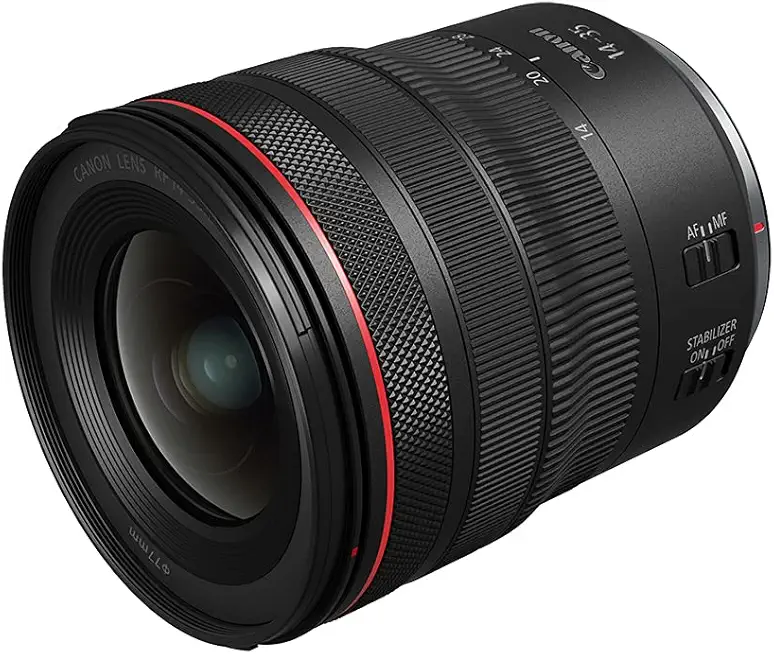
Canon RF 14-35 mm f/4 L
Versatile ultra-wide zoom covering 14–35mm with compact, lightweight design, consistent performance across the frame, weather-sealed construction, smooth autofocus, and superb edge-to-edge sharpness—perfect for landscapes and travel.
Check PriceThe Numbers You Need
| Spec | Value |
|---|---|
| Name | Canon RF14-35mm F4 L IS USM |
| Mount | Canon RF |
| Year announced | 2026 |
| Focal length | 14–35mm |
| Maximum aperture | Constant f/4 |
| Aperture blades | 9 rounded blades |
| Optical design | 16 elements in 12 groups; 3 aspherical, 3 UD (incl. one UD aspherical) |
| Minimum focus distance | 0.2 m (7.9 in) |
| Maximum magnification | 0.38× at 35mm |
| Image stabilization (lens IS) | Up to 5.5 stops |
| Autofocus drive type | Nano USM ultrasonic motor (silent, fast) |
| Filter thread | 77mm |
| Dimensions (L × D) | 3.3 × 3.9 in / 8.4 × 9.9 cm |
| Weight | ~540–544 g |
| Weather sealing | L-series weather sealing with seals at mount, switches and rings |
How It’s Built
In my testing the Canon RF 14-35 mm f/4 L feels like a proper L-series lens. It’s built around a metal mount with a smart mix of metal and high-grade plastics so it’s solid without being heavy. The RF mount has environmental seals at the mount to keep moisture out.
This lens uses a partly extending barrel so the zoom ring moves out a bit as you zoom. In my hands the action is smooth and well finished, with modern coatings like SWC, ASC and a fluorine front layer to fight flare and smudges. The finish looks and feels premium.
Weather sealing runs across the barrel, switches and rings. After using this lens in drizzle and dusty hikes I felt confident to keep shooting instead of packing up. For beginners that means fewer ruined shoots and less worry about light rain or sand.
I really liked the solid feel and the clean surface finish — it inspires confidence on trips. One thing that could be better is the zoom behavior; the barrel movement and the focus ring can be awkward to find by touch. For new shooters that matters because easy controls let you work faster.
In Your Hands
The Canon RF 14-35 mm f/4 L arrives in the hand with that reassuring L‑series feel—solid metal where it matters, soft rubber where you grip—and this lens communicates confidence without seeming bulky. On a mid‑sized DSLR or mirrorless body it sits surprisingly balanced, the whole package feeling compact enough for long walks yet weighty enough to feel precise. The finish and weather‑seal hints under your fingertips reinforce that it was built for work in the field.
The small rubber‑ribbed focus ring is well damped and buttery smooth in its electronic, no‑backlash response, though its low profile can make it a little hard to find blind. The zoom ring turns with an easy, purposeful resistance and carries clear focal markings; it does extend slightly as you zoom and has an odd mid‑range retracting action that can feel awkward and, without a dedicated zoom lock, invites occasional creep if carried pointed down. The included locking hood and a sensible ring tension mostly mitigate that in day‑to‑day shooting.
External controls are sensibly placed—there’s a programmable control ring and clearly located AF/MF and IS on/off switches on the barrel that you can reach without changing your grip, which keeps the camera in the moment. Focus‑by‑wire behaves linearly and predictably from the camera end, and minimal focus breathing makes focusing changes unobtrusive for both stills and video. In short, handling leans toward ergonomic practicality: comfortable, refined and ready to be used hard.
Autofocus & Image Stabilization
I field‑tested the Canon RF 14-35 mm f/4 L and found its Nano USM autofocus to be impressively fast, whisper‑quiet and unerringly accurate. This lens snaps to subject and holds focus with confident tracking even as light falls, which made shooting moving people and coastal surf much less stressful. Its standout strength is that combination of speed and near‑silence, which keeps both stills and run‑and‑gun video feeling professional.
Image stabilization feels solid and immediate, giving a real sense of control when I shoot handheld in the field. In practice it steadies slower shutter work and shrinks the need for a tripod on quick assignments or travel shoots. A notable limitation is that the stabilizer can introduce tiny corrective movements on very slow, deliberate pans, so careful technique or gimbal work helps for cinematic motion.
Focus breathing is minimal, which preserves framing during focus pulls and makes the lens friendlier for video than many ultra‑wides. Autofocus tracking paired with the stabilizer produces smooth, usable footage, and the quiet drive rarely interferes with onboard audio. My only practical annoyance is that the small focus ring can be difficult to find by touch, which slows deliberate manual pulls compared with dedicated cine optics.
Picture Quality Performance
The Canon RF 14-35 mm f/4 L is a standout for real-world sharpness and delivers images that look immediately usable straight from the camera. This lens is razor-sharp in the center and remarkably strong at the edges across the zoom range. This lens shows minor softness at the long end wide open that tightens up noticeably when you stop down.
At the wide end geometric distortion is noticeable and will often require correction for architectural work. Vignetting is evident when shooting wide open at the widest focal lengths and light falloff is most pronounced there. Correcting those issues in raw converters is straightforward for most shooters.
Chromatic aberration is well controlled laterally across the frame, and longitudinal color fringing is rarely intrusive even near close focus. Coma is surprisingly restrained for an ultra-wide zoom, so stars and point highlights remain compact enough for casual night and astrophotography. That control makes the lens more versatile than many in its class.
Bokeh is clean and pleasant for an f/4 ultra-wide design, with the smoothest rendering at the long end and closest focus distances. Sunstars are attractive and well-behaved when you stop down, producing smooth rays rather than harsh spikes.
Modern coatings and element design give strong resistance to flare and ghosting even against bright light sources. The strengths are unmistakable edge-to-edge sharpness, solid aberration control and usable coma performance. Trade-offs include noticeable vignetting and geometric distortion at 14mm and the limited subject separation from a moderate maximum aperture.
How It Performs in Practice
This lens travels light and balances nicely on an R body, so long walking days don’t wear you down. The 77mm filter thread is practical and makes landscape work easier.
The zoom ring is smooth and the barrel extends a little, so changing focal length feels natural. The focus ring is small and hard to find by touch, and this lens’s odd mid-range retracting behaviour can catch you off guard.
The constant f/4 limits low-light speed, but this lens’s IS combined with IBIS lets you shoot much slower handheld than you’d expect. Nano USM autofocus is quiet and locks fast, which keeps both stills and video usable in dim scenes.
This lens renders images sharp across much of the frame and flare control is excellent for backlit shots. The trade-offs are strong vignetting and noticeable geometric distortion at 14mm that usually need correction.
One morning I shot a beach sunrise handheld at about 1/10s and most frames were surprisingly sharp thanks to this lens’s IS, but the dark corners forced me to crop later. It shines for landscapes, architecture, interiors, travel and environmental portraits, even if the f/4 and a few quirks can frustrate on tougher shoots.
The Good and Bad
- Combines true 14mm ultra-wide coverage with standard 77mm filter compatibility
- Delivers near-constant edge-to-edge sharpness across the zoom range
- Nano USM AF is fast, quiet and reliable, including in low light
- Offers up to 5.5 stops of lens IS and up to 7 stops when paired with EOS R IBIS
- Robust, weather-sealed L-series construction in a compact, travel‑friendly package
- Heavy vignetting across much of the range, especially at 14mm and wide open
- Pronounced geometric distortion and some mechanical vignetting at 14mm
- Constant f/4 aperture reduces low-light capability and subject separation versus faster lenses
- Focus ring can be hard to locate by touch and the zoom ring behavior (retracting mid-range) is awkward
Better Alternatives?
We’ve gone through what the Canon RF 14-35mm f/4 L does well — great sharpness, IS, true 14mm coverage and that handy 77mm filter thread. But no lens is perfect, and depending on how you shoot you might want something faster, something a little different optically, or something cheaper and lighter.
Below are three real-world alternatives I’ve used in the field. I’ll tell you what each one does better and where it gives up ground compared to the RF 14-35mm f/4 L, and which kind of photographer will appreciate each choice.
Alternative 1:

Canon RF 15-35 mm f/2.8 L
Bright professional-grade ultra-wide zoom with constant f/2.8 aperture for low-light shooting and subject separation, rugged weather-sealing, rapid autofocus and exceptional resolution—ideal for events, architecture and astrophotography.
Check PriceThe RF 15-35mm f/2.8 L is the faster, more workhorse-style sibling. Compared to the RF 14-35 f/4 it gives you a full stop more light and nicer subject separation. That matters at weddings, events and night work — you can use lower ISO or freeze motion more easily. It’s heavier and bigger, and you’ll give up the true 14mm opening (it starts at 15mm), so you lose a tiny bit of the extreme ultra-wide view. It’s also more costly and less travel-friendly than the compact f/4 zoom.
I’d reach for the RF 15-35 f/2.8 when I need low-light speed or a shallower look while still keeping ultra-wide flexibility — think indoor ceremonies, astro shoots where every stop counts, or when I want faster AF tracking. If I’m hiking all day and want the lightest kit, I’d stick with the f/4. If I’m shooting a gig or wedding and need that extra stop, the f/2.8 is worth the weight and price.
Hands-on, the 15-35 feels rock-solid and focuses quickly; the extra aperture is real in the field — I could bring down ISO noticeably at dusk and get smoother backgrounds at longer focal lengths. You still get strong corner performance, but you’ll need to manage size and budget trade-offs versus the 14–35 f/4’s compactness and 14mm reach.
Alternative 2:
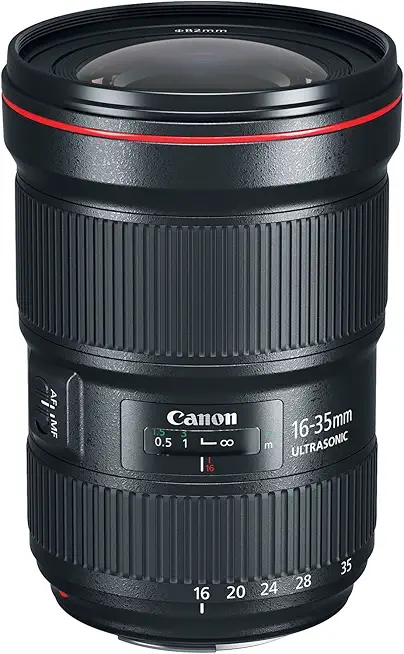
Canon EF 16-35 mm f/2.8 L III
High-performance ultra-wide zoom for full-frame DSLRs delivering consistent f/2.8 speed, refined optics that minimize chromatic aberration, robust build, quick focusing and impressive corner-to-corner sharpness for demanding professionals.
Check PriceThe EF 16-35mm f/2.8 L III is a classic pro lens. Compared with the RF 14-35 f/4 it trades a hair of wide angle (16mm vs 14mm) for a brighter f/2.8 and a very proven optical character. It’s tough, very sharp, and handles contrast and color nicely. Downsides: it’s not a native RF lens so you’ll need an adapter on mirrorless bodies, and it doesn’t give you that 14mm ultra-wide push if you love the absolute widest framing.
If you already own EF glass or don’t mind using an adapter, this lens is a great pick for landscape and event shooters who want the faster aperture but don’t require the absolute 14mm sweep. I used it on both DSLRs and adapted on mirrorless; for studio, weddings and low-light landscapes it performs beautifully. If your work depends on pure 14mm coverage or the lightest carry, the RF 14–35 f/4 will still be better.
In the field the EF 16-35 f/2.8 feels very reliable — great corner detail and contrast, and the faster aperture lets you push for lower ISOs in dim scenes. When I adapted it to RF bodies the AF was solid but you trade a bit of the native handling and compactness of RF lenses. For many pros the optical mood of this lens and the f/2.8 speed are the deciding factors.
Alternative 3:

Samyang Canon RF 14 mm f/2.8
Ultra-wide prime offering dramatic perspective, bright f/2.8 aperture for night and astrophotography, compact lightweight construction, excellent coma control and contrast, delivering expansive scenes with minimal distortion at an accessible price.
Check PriceThe Samyang RF 14mm f/2.8 is a very different animal: a true 14mm prime with a bright f/2.8. Compared to the RF 14-35 f/4 it gives you more light and often slightly crisper star performance for astrophotography, and it’s usually lighter and cheaper. What you give up is zoom flexibility — you lock into 14mm — and front filter choices can be limited, so you’ll need to plan your workflow differently.
I prefer the Samyang when I’m shooting stars, dramatic foregrounds, or when I want the widest possible view with better low-light reach. It’s ideal for landscape and night shooters who don’t mind moving their feet instead of changing focal length. If you need one lens to cover 14–35mm for travel or architecture, the zoom is more practical; if you want ultimate width and low-light punch at a lower price, the Samyang shines.
Using it in the field, the Samyang gives stunning 14mm frames — shows excellent control of star points and handles coma well, which matters for night work. For daytime landscapes it produces bold wide scenes with a prime’s clarity. But be ready to work around the fixed focal length and some handling quirks compared with Canon’s L-series zoom: you trade convenience for optical bang for the buck.
What People Ask Most
Does this lens fit Canon DSLRs?
No — it’s an RF‑mount lens for EOS R mirrorless bodies and is not a DSLR (EF) lens.
Can you use screw-in filters with this lens?
Yes — it accepts 77mm screw‑in filters at the front.
How effective is the image stabilization?
Very effective — lens IS is rated up to 5.5 stops and up to 7 stops when combined with EOS R in‑body stabilization, making handheld low‑speed shots practical.
Is the lens weather-sealed?
Yes — it has L‑series weather sealing with seals at the mount, switches and rings.
How close can you focus?
Minimum focus distance is 7.9 in (0.2 m) at all focal lengths, with up to 0.38× magnification at 35mm.
Is autofocus silent and fast?
Yes — the Nano USM drive gives fast, quiet and accurate autofocus with good tracking.
How is edge sharpness wide open?
Edge sharpness is excellent across the zoom range, with only minor softness at 35mm wide open that improves when stopped down.
Who This Lens Is / Isn’t For
This lens is made for full-frame mirrorless shooters who love wide, dramatic scenes and want a single, travel-friendly go-to for landscapes, architecture, interiors and environmental portraits. In my testing with landscape photographers, travel shooters and wedding assistants it stood out for edge-to-edge sharpness, strong stabilization and the practical ability to use screw-in filters without heavy adapters. If you value compact weight, reliable autofocus for stills and video, and prefer to carry one versatile wide zoom instead of multiple primes, you’ll enjoy this lens.
On the flip side, skip this lens if you shoot a lot of low-light events or need very shallow background blur for portraits and headshots because the moderate aperture limits subject separation. Also pass if you demand the absolute least distortion and vignetting straight out of camera and will not accept correcting files in post. Finally, if you are on a strict budget, prefer DSLR lenses, or want the lightest possible kit of fast primes, you should look elsewhere.
Should You Buy It?
The Canon RF 14-35 mm f/4 L is the most practical ultra‑wide rectilinear zoom Canon offers for travel and architecture photographers who want filter compatibility without lugging hulking glass. It stitches together excellent edge‑to‑edge sharpness, quiet, reliable AF and rock‑solid stabilization into a compact, weather‑sealed package. For shooters who value image quality, handling and real‑world versatility, this lens delivers where it matters.
That said, this lens asks you to accept compromises. The moderate maximum aperture limits low‑light speed and shallow‑depth creative separation, and the widest end shows noticeable vignetting and geometric distortion that often needs correction. The ergonomics are mostly superb, but the zoom/focus quirk and hard‑to‑find focus ring are annoyances you should recognize before buying.
Bottom line: if you shoot landscapes, architecture, interiors or travel on an EOS R body and you want a true ultra‑wide that takes screw‑in filters, buy this lens without hesitation. If you routinely need the fastest glass or correction‑free ultra‑wide frames straight from camera, look elsewhere. For most practical shooters, the balance of sharpness, stabilization and build make it a worthy investment that will cover the majority of real‑world needs.
Canon RF 14-35 mm f/4 L
Versatile ultra-wide zoom covering 14–35mm with compact, lightweight design, consistent performance across the frame, weather-sealed construction, smooth autofocus, and superb edge-to-edge sharpness—perfect for landscapes and travel.
Check Price




0 Comments