
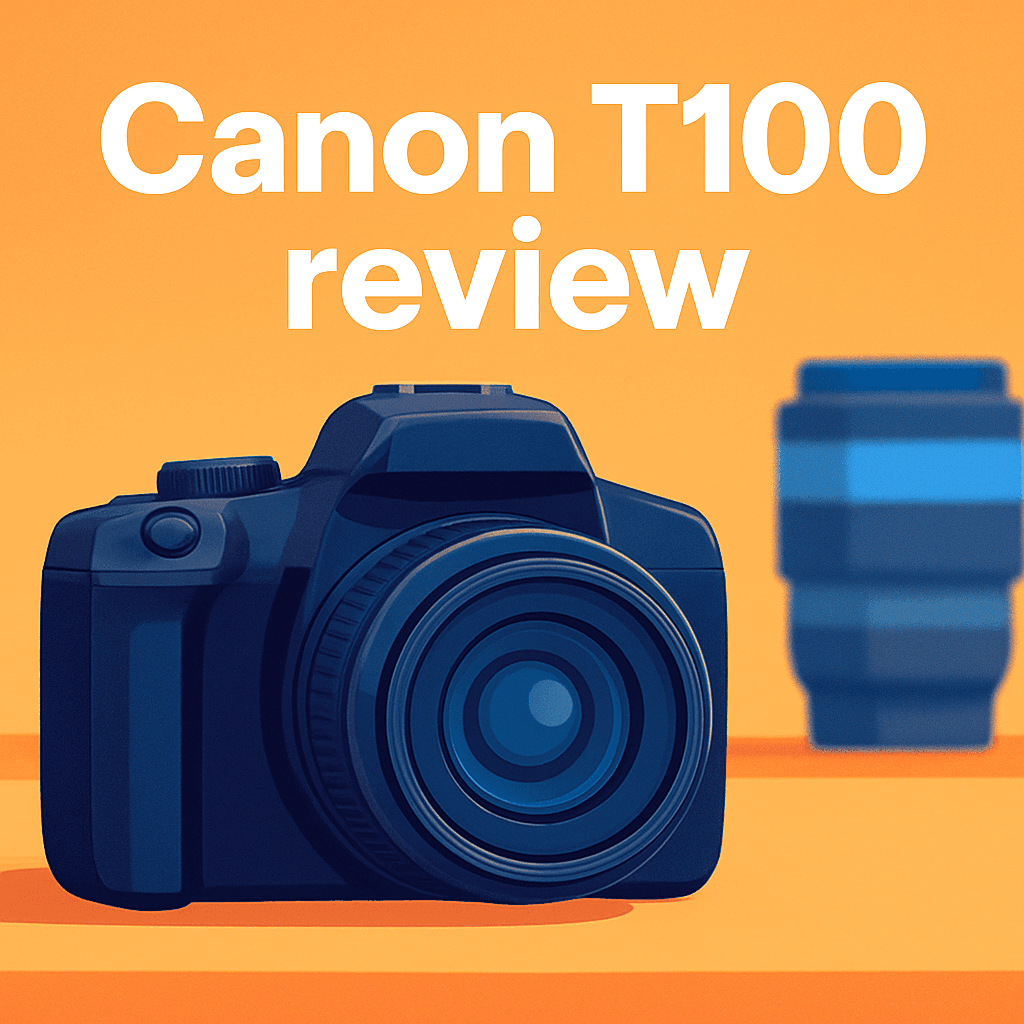
Want to improve your photos without getting lost in menus and jargon?
The Canon EOS 4000D Camera is a simplicity-first DSLR aimed at beginners who care about stills more than advanced video, and who want a practical tool for learning the basics.
It’s built for family moments, travel snapshots, casual portraits and learning manual exposure on a budget, offering lightweight handling and access to Canon’s lens ecosystem so you can grow.
Having spent time shooting with one in the field, I’ll show how those basics translate to real-world photos and where the limits start to matter — Make sure to read the entire review as you’ll want to see the real verdict, so keep reading.

Canon EOS 4000D Camera
Entry-level DSLR offering straightforward controls, impressive image quality, and reliable autofocus; perfect for beginners wanting to capture crisp photos, explore manual settings, and upgrade their creative photography skills.
Check PriceThe Numbers You Need
| Spec | Value |
|---|---|
| Sensor | APS-C CMOS |
| Effective Megapixels | 18.0 MP |
| ISO Range | 100–6400 (expandable to 12800) |
| Autofocus System | 9-point AF with center cross-type sensor |
| Continuous Shooting Speed | Up to 3 fps |
| Video Recording | 1080p Full HD at 30 fps |
| Viewfinder | Optical pentamirror with approx. 95% coverage |
| LCD Screen | 2.7-inch fixed TFT LCD, approx. 230,000 dots |
| Lens Mount | Canon EF/EF-S compatible |
| Built-in Flash | Yes |
| Storage Media | SD/SDHC/SDXC card slot |
| Battery | LP-E10 rechargeable lithium-ion battery |
| Dimensions | Approx. 129.0 x 101.3 x 77.6 mm |
| Weight | Approx. 485 g (body only) |
| Connectivity | USB 2.0, HDMI mini out |
How It’s Built
In my testing the Canon EOS 4000D Camera feels very much like an entry-level DSLR made to be picked up and used right away. It’s light and compact with a kit zoom attached, so carrying it all day for family outings or travel didn’t wear me out. That makes it a friendly companion for beginners who want to learn without lugging heavy gear.
The optical viewfinder is bright and familiar, but it doesn’t show everything — what you see through the eyepiece is just shy of the final frame. In real terms that means you’ll want to leave a little extra room when composing, especially for tight shots. The small fixed LCD is fine for quick checks, but after using it for a while I missed a bigger, clearer screen for reviewing images and navigating menus.
I liked having the Canon EF/EF-S mount under the hood because it opens a clear path to better glass as your skills grow. One thing that could be better is the built-in flash; it’s handy for fill or emergencies, but it gives the classic on-camera look and doesn’t bounce well in most rooms.
File handling is simple and predictable — use the SD card or plug in with the wired ports for basic transfers. In short, the 4000D keeps things straightforward: easy to carry, easy to expand lenses, and easy enough for a beginner to get shooting right away.
In Your Hands
Out of the box the Canon EOS 4000D feels deliberately simple: menus are uncluttered and the camera wakes and frames in a way that keeps the learning curve gentle rather than speedy. Shot-to-shot responsiveness is perfectly adequate for everyday shooting, though it doesn’t have the instant snappiness of higher-tier models, so patience pays off when composing more deliberate images.
The continuous shooting capability is modest, which suits family moments, playful pets, and casual street bursts where you want a handful of frames rather than long action sequences. If you’re trying to capture a fast-moving sports play or frantic wildlife, you’ll quickly notice the camera’s limitations compared with faster systems.
Low-light handling reflects the camera’s beginner-focused nature: indoor gatherings and evening city scenes are achievable with careful exposure and a steady hand, but grain becomes more noticeable as light dwindles. Relying on natural light and protecting highlights will generally yield cleaner results, while a flash or support helps in very dim conditions.
The optical viewfinder gives a classic shooting feel with a touch less coverage than what ends up in the final image, so a quick frame check after the shot is a good habit for learners. Video is serviceable for short Full HD clips and travel vignettes, offering simple, usable footage rather than advanced filmmaking tools.
For day trips and holidays plan to carry a spare battery and a few SD cards to avoid interruptions, as this is a camera built for on-the-go shooters rather than marathon sessions without backup. File transfers are straightforward via card or cable, keeping the workflow simple for novice photographers.
The Good and Bad
- Lightweight body for everyday carry
- APS-C sensor suitable for casual prints and web
- EF/EF-S mount opens access to a broad lens ecosystem
- Simple Full HD video for basic clips
- Small fixed, low-resolution LCD limits reviewing and menu comfort
- Limited multi-point AF with only one cross-type point limits subject coverage and tracking
Ideal Buyer
If you’re stepping up from a smartphone and want a straightforward, budget-friendly path into interchangeable‑lens photography, the Canon EOS 4000D Camera is a sensible first DSLR. Its simplicity-first design keeps learning focused on exposure, composition and optics rather than menu gymnastics. It’s designed to get you shooting.
Families and casual shooters will appreciate how it handles everyday stills — travel snapshots, birthday portraits and backyard play. Lightweight handling and a built-in flash make quick fill light and all-day carry easy, even if the screen is small. It rewards patience more than speed.
Students and hobbyists who want to learn manual controls and trust an optical viewfinder to frame a scene will find it forgiving and instructive. Be realistic: the modest autofocus, 3 fps burst and basic video mean it’s not aimed at fast action or advanced vlogging.
Think of it as a photographic stepping-stone: use a kit zoom now, learn the craft, then expand into Canon’s EF/EF‑S lens ecosystem as your vision grows. If you need faster AF, higher resolution or a flip touchscreen for video, consider stepping up—but for many beginners, this camera teaches the essentials.
Better Alternatives?
We’ve already walked through the Canon T100 and what it offers for a beginner photographer. If you like the T100’s simplicity but want a little more from your camera—more detail, better color straight from the camera, or longer battery life—there are a few nearby choices worth looking at.
Below are three real-world alternatives I’ve used. I’ll point out what each one does better and where it falls short compared to the Canon EOS 4000D Camera, and who I think would prefer each body in everyday shooting.
Alternative 1:

Canon EOS 2000D Camera
User-friendly camera delivers high-resolution stills, improved low-light performance, and built-in Wi‑Fi for seamless sharing; a versatile companion for hobbyists seeking reliable results and easy creative control.
Check PriceIn real shooting, the Canon EOS 2000D gives you clearer images and more wiggle room for cropping than the Canon EOS 4000D Camera. That extra detail is noticeable when you crop a travel shot or print a family photo. The built-in Wi‑Fi also makes it faster to transfer pictures to your phone on the go, which I appreciated while traveling.
Where it’s weaker than the 4000D is in handling upgrades that matter day to day: it still keeps the same simple AF system and basic burst speed, so it won’t change how you shoot moving kids or pets. The screen and menus stay basic, so you don’t get a touchscreen or fancy live‑view focusing for video.
This one fits a photographer who wants better-looking JPEGs and more resolution but still likes a straightforward camera. If you want nicer files for prints or social sharing without learning a lot of new features, the 2000D is a comfortable step up from the 4000D.
Alternative 2:

Nikon D3500 Camera
Lightweight, compact design combines with a powerful image sensor to produce sharp, vibrant photos and long battery life—ideal for travelers and first-time photographers eager to learn and shoot confidently.
Check PriceUsing the Nikon D3500 in the field feels different from the Canon EOS 4000D Camera because of battery life and color. The D3500 keeps shooting for much longer between charges, so it’s great on long outings or trips where I didn’t want to carry a spare battery. Its color and JPEG handling often looked more pleasing straight from the camera, which meant less editing after a day out.
The D3500 does have limits compared to the 4000D: it doesn’t offer Wi‑Fi for easy phone transfers on many kits, and live‑view autofocus is slower if you’re used to quick on-screen focusing. The screen is basic and fixed, so vlogging or framing from odd angles isn’t ideal.
Pick the D3500 if you travel a lot or hate charging batteries frequently, and if you value great straight-out-of-camera color for family and travel shots. It’s for shooters who want a reliable stills camera you can carry all day rather than a feature-packed hybrid for video.
Alternative 3:
Nikon D3500 Camera
Beginner-focused SLR provides intuitive controls, fast autofocus, and crisp JPEGs straight from the camera; an affordable, dependable choice for documenting everyday moments while improving technical skills.
Check PriceAgain with the Nikon D3500, the day-to-day shooting feels solid and uncomplicated compared to the Canon EOS 4000D Camera. The controls are easy to learn and the camera starts up quickly, so you’re less likely to miss a moment. In regular outdoor or family settings, the D3500’s focus and JPEGs give you usable images with minimal fuss.
On the downside versus the 4000D, the D3500’s live-view and video autofocus don’t match newer Canon designs, so if you plan to use the screen a lot for precise focus or short clips, you’ll notice the lag. Also, if you already own Canon EF lenses, switching systems means a learning curve and new glass.
This version of the D3500 is best for beginners who want to learn photography with a dependable camera that makes good pictures right away. Choose it if you prioritize a comfortable grip, long battery life, and simple shooting over extra connectivity or advanced video features.
What People Ask Most
Is the Canon T100 a good camera for beginners?
Yes — it’s simple, affordable, and easy to use for basic photography, but its limited controls and older features can hold back learning advanced techniques.
Canon T100 review — is it worth buying?
It’s worth it if you want a very low-cost entry-level DSLR for simple stills, but not if you need modern features like Wi‑Fi, 4K, or faster autofocus.
How does the Canon T100 compare to the Nikon D3500?
The D3500 generally outperforms the T100 in image quality, battery life, and handling, while the T100 is cheaper and more basic.
What are the main pros and cons of the Canon T100?
Pros: very affordable, easy to use, decent images in good light; Cons: limited controls, no modern connectivity, weak video and older autofocus.
Does the Canon T100 have Wi‑Fi or Bluetooth connectivity?
No — it has no built‑in Wi‑Fi or Bluetooth, so you’ll need to transfer files via SD card or USB cable.
Is the Canon T100 good for vlogging and travel photography?
Not ideal for vlogging because it lacks a flip screen, mic input, and only records 720p; for travel it can work if you want a cheap DSLR and don’t mind the extra weight and dated features.
Conclusion
The Canon EOS 4000D Camera is a no‑frills entry‑level DSLR designed for people who want simplicity, an optical viewfinder and an affordable path into the Canon lens ecosystem. It favors still photography and basic clips over advanced video or fast‑action shooting.
Its strengths are straightforward handling that gets beginners shooting quickly, light carriage that invites you to carry it, and image quality that serves family albums and travel galleries reliably. The simple controls and clear learning curve are calming for new users. Video remains utilitarian, suitable for short social clips and holiday footage rather than creative cinematography.
Compromises are part of the package: a small fixed rear screen makes image review and menu navigation feel dated and sometimes fiddly. The autofocus layout covers less of the frame and continuous shooting is leisurely, so action, tracking and fast playground moments are where you’ll feel the limits. Low‑light capability and modern connectivity are also modest, which is fine for many newcomers but constraining for more ambitious shooters.
For a first DSLR on a tight budget the Canon EOS 4000D Camera delivers an honest, easy‑to‑learn experience that teaches the fundamentals without overreach. If you expect higher resolution, stronger autofocus, a friendlier screen or more capable video, stepping up to the T7, Nikon D3500 or Canon SL3 will noticeably change your daily shooting life.
Canon EOS 4000D Camera
Entry-level DSLR offering straightforward controls, impressive image quality, and reliable autofocus; perfect for beginners wanting to capture crisp photos, explore manual settings, and upgrade their creative photography skills.
Check Price

0 Comments