

Which compact camera will make your blog look pro without weighing down your pockets or your schedule? With increasingly capable point-and-shoots, choosing one comes down to smart trade-offs: image quality, autofocus reliability, video features, focal-length flexibility, low-light performance, and true portability.
This concise guide examines five point-and-shoots suited for bloggers, distilled from hands-on testing and clear pros-and-cons. We pushed them through real-world shoots—street, food flatlays, product shots and quick vlogs—to see how they perform when light and timing get tricky.
Expect plainspoken observations on how much compacts beat phones in image quality, how reliably they track moving subjects, and whether their video tools are genuinely useful. We’ll weigh the trade-offs between fixed primes that add character and zooms that provide framing flexibility.
Whether you chase creamy backgrounds and rich color, need rock-steady autofocus for street portraits, or want a tiny workhorse for travel and vlogging, different models answer different briefs. This guide helps you align those priorities with a compact that you’ll actually carry and use.
No fluff—just practical guidance to help you pick a point-and-shoot that elevates your visual storytelling and fits your routine. Keep reading to discover which compact balances image quality, AF, video chops, focal-length versatility and portability for bloggers like you.
1. Sony RX100 V Pocketable Zoom

Sony Cyber-shot DSC-RX100 V
Pocketable premium compact with lightning-fast autofocus, 1-inch sensor and high-speed continuous shooting—ideal for action, travel, and low-light snapshots.
Check PriceThe Sony RX100 V is a pocketable powerhouse: a 20.1MP 1‑inch sensor paired with a Zeiss 24–70mm f/1.8–2.8 lens gives you real photographic control in a camera that slips into a coat pocket. For bloggers who want an upgrade from smartphone snaps without hauling a mirrorless kit, this is a compelling middle ground.
Image quality is noticeably better than smartphones, especially for portraits and detail work, thanks to that larger 1‑inch sensor and sharp Zeiss glass. The 24–70mm range is versatile for everything from tight headshots to environmental portraits, so you can cover most blog scenarios without changing lenses.
Video-wise it punches above its size: 4K recording and S‑Log2 Gamma mean you can capture clean, color‑gradeable clips for vlogs and promos. The 0.39″ 2.36M‑dot OLED pop‑up EVF and 3″ 1.23M‑dot LCD make framing in bright sunlight and composing quick sequences far easier than relying on a rear screen alone.
Autofocus is where the RX100 V really shines for content creators. I found the subject and face tracking rapid and reliable, which takes the stress out of solo shoots and moving subjects. Users praise its pocketability, and in practice it’s easy to carry all day without fatigue.
Who should buy it? Enthusiast photographers and professional bloggers who want high image quality, solid zoom flexibility and excellent AF in a compact body. It’s ideal if you prioritize portability and reliable tracking over full‑frame low‑light performance.
Be aware of the trade‑offs: the 1‑inch sensor won’t match APS‑C bodies in extreme low light, and the lens aperture narrows as you zoom in, which reduces low‑light capability at the telephoto end. For most daylight and mixed‑light blogging work, though, it’s a superb fit.
- Superb image quality vs smartphones
- Excellent AF performance and tracking
- Versatile 24–70mm zoom range
- Useful pop‑up EVF for bright conditions
- 1‑inch sensor limits low‑light performance compared with APS‑C cameras
- Aperture narrows as zoom increases, reducing low‑light capability at telephoto end
2. Fujifilm X100F Aesthetic Street Camera

Fujifilm X100F
Rangefinder-style APS-C camera with a sharp fixed prime lens, tactile controls, and signature film simulations for street and portrait photography.
Check PriceThe Fujifilm X100F feels like a tool made for storytellers who care deeply about how their images look. It pairs a 24.3MP APS‑C X‑Trans CMOS III sensor with a fixed 23mm f/2 lens and Fujifilm’s film simulations to deliver rich color and character straight out of camera.
In practice that means outstanding image quality and color rendering that makes lifestyle and street images sing without heavy editing. The film simulations are more than a novelty — they give your feed a consistent aesthetic that many bloggers crave.
Autofocus is fast and reliable thanks to the hybrid AF system, so you can catch fleeting moments on the street without fumbling. The fixed 23mm focal length encourages deliberate composition, which is perfect for travel and candid portraiture when you want a cohesive look.
The body is compact and well‑built, with a 3″ 1.04M‑dot LCD that’s useful for quick framing and review, and HD video at 60fps if you occasionally shoot short clips. Battery life and overall design are solid, so it easily survives a day of walking and shooting.
The trade‑offs are clear: there’s no weather sealing, so harsh conditions limit use, and the fixed lens removes framing flexibility compared with zooms. If you prioritize image aesthetics, tactile control and consistent results over zoom versatility, the X100F is a very compelling, mostly delightful choice.
- Excellent image quality and film simulations
- Fast, accurate hybrid autofocus
- Compact, well‑built design
- Good battery life
- No weather sealing
- Fixed 23mm lens limits framing flexibility
3. Ricoh GR II Pocket Street Camera

kinokoo Case for Ricoh GR, GR II, GR III, GR IIIx, GR IV
Durable bespoke leather half-case offering snug protection, easy access to controls, and a stylish, grippy finish for compact cameras.
Check PriceThe Ricoh GR II Pocket Street Camera is one of my favorite grab‑and‑go bodies for street and travel work. It pairs a 16MP APS‑C sensor with a sharp 28mm f/2.8 lens that delivers wonderfully characterful images right out of the camera.
Operation is refreshingly simple — the 3″ LCD and textured grip make it easy to handle while remaining genuinely pocketable. Start‑up is fast, so you won’t miss those spontaneous moments that define good blog and street photography.
Image quality is where the GR II shines: both JPEGs and RAW files possess pleasing character and handle highlights and lens flare in a way I find very usable for lifestyle and documentary work. Even with a modest megapixel count, the files are clean in low light and retain good detail for web publishing.
The fixed 28mm is a true wide‑angle, ideal for immersive street scenes, environmental portraits and travel storytelling where context matters. Autofocus is quick in practice, helping you lock onto faces or key subjects and get the shot before it evaporates.
If you want a stealthy, high‑quality compact that encourages decisive shooting and minimal gear fuss, the GR II is an excellent choice. Be aware it lacks zoom flexibility and the pop‑up flash, while handy, is a delicate compromise if you rely on built‑in lighting.
- Detailed RAW and JPEG image quality
- Very compact and lightweight with good grip
- Fast autofocus and start‑up speed
- Classic wide‑angle 28mm lens
- No zoom — limited framing flexibility
- Pop‑up flash performance/fragility
4. Canon PowerShot G7 X Mark III

Canon PowerShot G7 X Mark III
Selfie-ready pocket camera with 1-inch sensor, fast lens, flip touchscreen and strong video features tailored for vlogging and live streaming.
Check PriceThe Canon PowerShot G7 X Mark III is a compact, pocketable camera that punches above its size thanks to a 20.1MP 1‑inch sensor paired with a fast f/1.8 lens. As a photographer, that combo means cleaner high‑ISO shots and pleasing background separation for lifestyle and travel blog images.
For creators the camera shines on the video side: it records 4K and supports livestreaming with a mic input, which makes it a practical choice for vloggers who want straightforward connectivity and decent audio options. The flip‑up touchscreen is intuitive and speeds up framing when you’re shooting selfies or talking to camera.
In everyday use the G7 X Mark III offers very good still image quality and strong low‑light performance for a compact, so it’s a reliable grab‑and‑go for on‑the‑move posts. Its ergonomic controls and touchscreen make quick adjustments painless, which matters when you’re juggling content creation and a tight schedule.
There are a couple of trade‑offs to be aware of. Some users report the autofocus can be less reliable with moving subjects in video mode, so if you do lots of handheld action vlogs you may need to test and adapt your workflow. Wi‑Fi connectivity has also been described as fiddly and inconsistent, which can slow down transfers and livestream setups.
Overall, if you’re a vlogging blogger or lifestyle creator who needs a genuinely portable camera with strong stills, low‑light chops and built‑in livestreaming features, the G7 X Mark III is a very appealing, mostly hassle‑free choice.
- 20.1MP 1‑inch sensor and f/1.8 lens
- Excellent low‑light and still image quality
- 4K video and livestreaming with mic input
- Flip‑up touchscreen and intuitive ergonomic controls
- Autofocus can struggle with moving subjects in video
- Wi‑Fi connectivity can be inconsistent
5. Leica Q Full-Frame Street Camera

Leica Q Typ 116
Full-frame street-photography tool with a superb bright prime lens, exceptional build quality, and effortless manual controls for stunning image rendition.
Check PriceThe Leica Q is a compact powerhouse for bloggers who treat image quality as the top priority. Its 24MP full‑frame sensor paired with a fast 28mm f/1.7 Summilux lens delivers files with beautiful color, sharpness and the kind of subject separation you rarely see from fixed‑lens compacts.
Autofocus is fast for its generation, and the high‑resolution EVF makes precise framing and street shooting much easier. RAW files are usable straight away, which speeds up a workflow when you need publishable images quickly for a post or gallery.
In practical shooting the wide 28mm field of view is ideal for lifestyle, street and environmental portraits. The f/1.7 aperture gives you reliable low‑light performance and control over depth of field, so you can produce that polished, editorial look without hauling a mirrorless kit.
Handling is elegant and the build quality feels reassuringly solid in hand, which matters if you shoot long days on the street or travel frequently. Battery life is reported as good, so you won’t be stopping every few hours to recharge during a full day of shooting.
This camera is mostly for professional bloggers and high‑end enthusiasts who want full‑frame quality in a self‑contained body. It isn’t the best choice if you need zoom flexibility or are shopping on a tight budget, but if sharp wide‑angle imagery and fast operation are your priorities, the Leica Q is hard to beat.
- Exceptional full‑frame image quality with beautiful color and detail
- Fast, reliable autofocus for quick street shots
- Superb build quality and detailed EVF for precise framing
- 24MP full‑frame sensor; fast 28mm f/1.7 Summilux lens
- Very expensive compared with other compacts
- Fixed 28mm lens limits compositional versatility
Autofocus Tips for Sharp Blog Photos
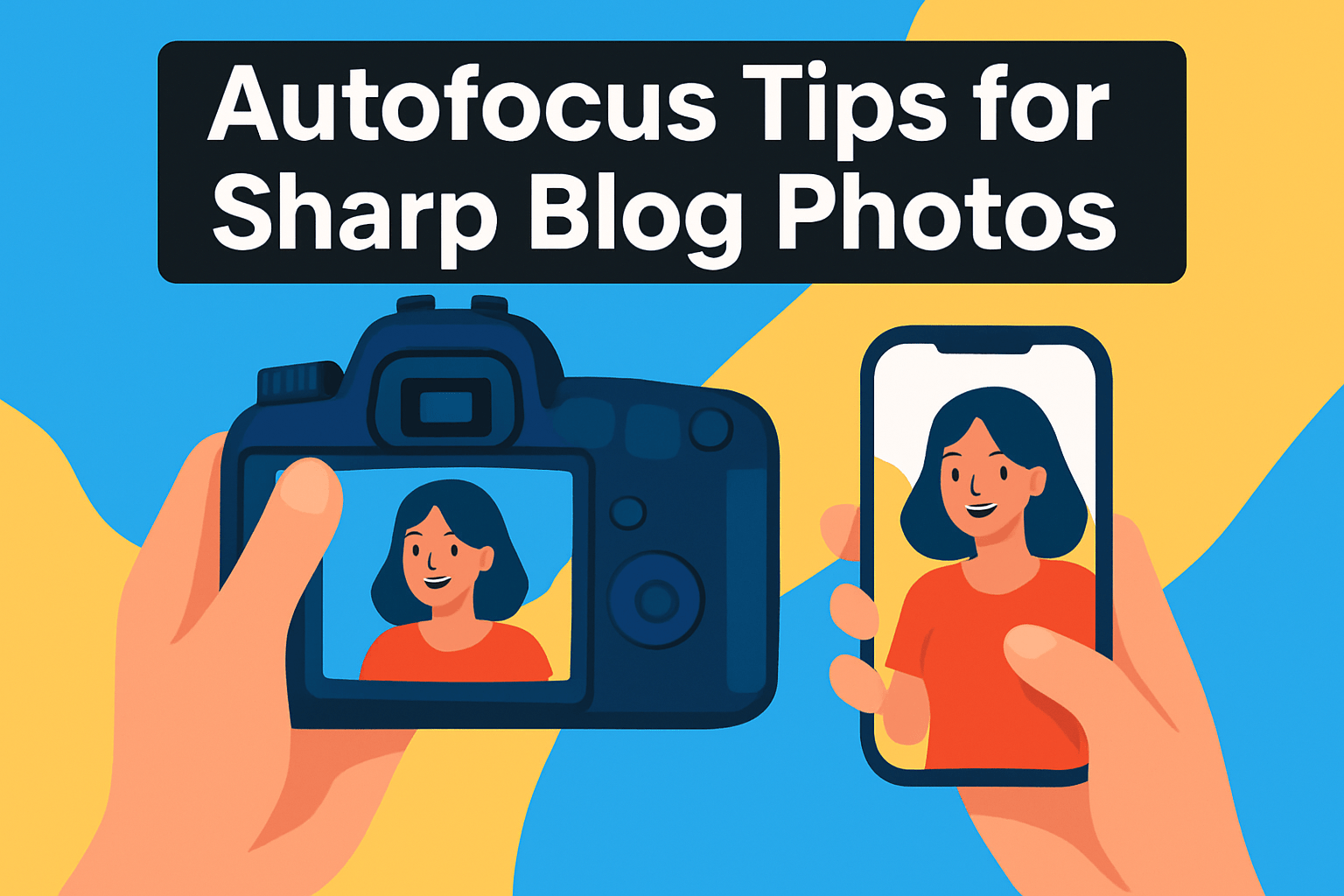
Sharp images start with confident focusing. Before you shoot, decide whether your subject is still or moving and pick the appropriate AF mode: single‑shot (One‑Shot/AF‑S) for food, products and posed portraits, and continuous (AF‑C/AI‑Servo) for kids, pets and street scenes where things move unpredictably.
For portraits and detail shots, choose a single AF point and place it over the subject’s critical feature — usually the eyes. If your camera has face or eye detection, use it for quick, reliable results; when it fails, fall back to the center point, lock focus, and recompose carefully.
Back‑button focus is a game changer. Separating focus from the shutter gives you the freedom to lock focus and recompose, or to keep continuous tracking active without accidental refocusing when you press the shutter.
Anticipation beats reaction. Most compacts have a bit of shutter lag, so pre‑focus on a spot where the action will happen, half‑press to lock, or use burst mode to increase your chances of catching the sharp frame. For self‑portraits, use a short timer or Bluetooth remote so the camera isn’t trying to refocus as you move into frame.
Don’t forget the basics: confirm the lens and camera are set to AF, and enable AF assist or increase scene contrast in low light. If autofocus hunts, switch to manual or use focus peaking where available — it’s quicker than fighting a confused AF system.
Finally, work with depth of field, not against it. A slightly smaller aperture gives you more forgiveness for tiny focus errors, while a wide aperture demands pin‑point accuracy. Spend time testing your camera in the real situations you shoot most; knowing its quirks will make sharp, consistent blog photos feel effortless.
Vlogging Tips for Point-and-Shoot Cameras
Point‑and‑shoots are perfect for vlogging because they’re small, quick to set up and often have features built for creators. Think of them as tools to capture a story, not gadgets to overcomplicate. Keep your workflow simple: steady framing, clear audio and consistent light will do more for your vlogs than fancy codecs.
Start with framing. Use a wide‑angle perspective (around 35mm full‑frame equivalent or wider) so your face and a bit of background fit naturally. If your camera has a flip or articulating screen, use it—it’s the fastest way to nail composition when you’re shooting yourself. Avoid zooming in for selfie shots; telephoto makes backgrounds look cramped and can pull people out of the frame.
Audio matters more than most creators admit. If your camera supports an external mic, use one—either a small shotgun or a lavalier depending on the situation. Built‑in mics can be fine for casual clips, but test them in the environment you’ll be filming. I always check levels and do a short recording to listen back before a take.
Stability and movement are next. For talking‑head pieces, a small tripod or the camera’s built‑in stand creates a clean, steady look. When you move, a compact gimbal or a two‑handed grip will keep footage watchable. Digital stabilizers help, but they can crop and soften the image, so compare results before relying on them.
Autofocus for video is usually good on modern compacts, but don’t assume it’s flawless. Enable face/eye detection and subject tracking if available, and run a few practice shots to see how the camera shifts focus when you show a product or move off axis. If tracking feels jittery, pre‑focus and use manual focus for critical frames.
Finally, mind the light and consistency. Face natural light where possible, avoid strong backlight and add a small LED panel indoors. Keep your framing, audio setup and lighting consistent across episodes — it makes your channel feel professional without a huge investment. The rest comes down to practice and storytelling.
What People Ask Most
What is the best point-and-shoot camera for bloggers?
There is no single best camera for all bloggers. Choose a model that matches your priorities such as image quality, autofocus reliability, video features, zoom range and portability.
What features should bloggers look for in a point-and-shoot camera?
Prioritize reliable autofocus, good image quality, and useful video or vlogging features like a flip screen and audio options. Also consider lens focal length, size and ease of use for your typical shooting scenarios.
Which point-and-shoot cameras are best for travel bloggers?
Travel-friendly compacts are lightweight, pocketable and offer versatile framing whether through a wide-angle lens or a modest zoom. Long battery life and straightforward handling also make a camera easier to use on the road.
Are point-and-shoot cameras good for blogging and social media content?
Yes, many point-and-shoot cameras provide a clear upgrade over phone images and can deliver polished photos and videos for blogs and social feeds. Their compact size and dedicated controls make them convenient for creators on the move.
What point-and-shoot camera produces the best image quality for blog photos?
Cameras with larger sensors and high-quality lenses tend to produce the best image quality, but several compact models offer excellent results for blog work. Pick a camera that balances sensor size, lens quality and portability to meet your needs.
Can point-and-shoot cameras shoot high-quality video for vlogging?
Many modern compacts include features useful for vlogging such as high-resolution video, articulating screens and improved audio options. Test a camera’s autofocus and stabilization for moving shots to ensure it fits your vlogging style.
Which compact camera has the best autofocus and portability for bloggers?
Look for cameras that emphasize fast, reliable autofocus while remaining small enough to carry daily. The best choice depends on how much weight you’re willing to trade for faster AF and additional features.
Conclusion for Blogger Point-and-Shoot Cameras
In short, these five point-and-shoots each strike a different balance between image quality, autofocus reliability and video/vlogging features versus focal-length flexibility and pocketable size.
Think about which trade-offs matter most to your shooting style—image aesthetics, zoom range, video tools, or sheer portability—and let those priorities guide your choice.
If you want to sharpen your skills and make better gear decisions, read more articles on the site for practical tips, comparisons and real-world advice tailored to bloggers and creators.
Have questions or need help narrowing your options? Leave a comment below and we usually reply within a few hours.


0 Comments