
Want to take cleaner, more compelling portraits, events, and sports shots without paying flagship prices?
I took the Tamron SP 70-200mm f/2.8 Di VC G2 Nikon F into the field to see how it holds up in real shoots.
This zoom’s for Nikon shooters who need a fast, stabilized long lens that won’t slow you down; you’ll get subject separation, usable stabilization, and weather resistance that matter on the job. Make sure to read the entire review as I unpack what matters most on a busy shoot — keep reading.
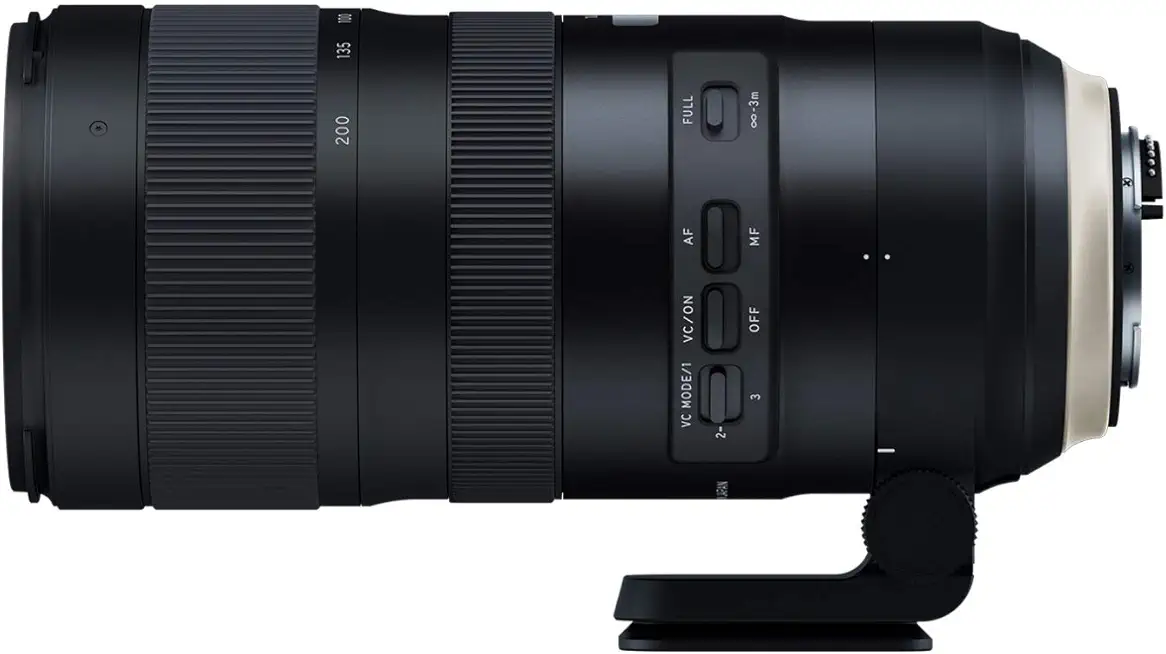
Tamron SP 70-200mm f/2.8 Di VC G2 Nikon F
A professional 70–200mm f/2.8 telephoto zoom offering fast autofocus, powerful image stabilization, exceptional edge-to-edge sharpness, weather-sealed durability, and comfortable handling ideal for sports, wildlife, and event photography.
Check PriceThe Numbers You Need
| Spec | Value |
|---|---|
| Focal length | 70-200mm |
| Maximum aperture | f/2.8 (constant) |
| Lens mount | Canon EF, Nikon F, Sony A (varies by model) |
| Optical image stabilization | Vibration Compensation (VC) system |
| Autofocus motor | Ultrasonic Silent Drive (USD) |
| Lens construction | 23 elements in 15 groups |
| Minimum focusing distance | 0.95 m |
| Maximum magnification ratio | 1:5 (0.2x) |
| Filter size | 77 mm |
| Diaphragm blades | 9 (rounded) |
| Angle of view | 34.3° to 12.3° (full-frame) |
| Dimensions (length x diameter) | Approx. 193 x 86 mm |
| Weight | Approx. 1470 grams |
| Weather sealing | Moisture-resistant and dustproof construction |
| Compatible format | Full-frame and APS-C DSLR cameras |
How It’s Built
In my testing the Tamron SP 70-200mm f/2.8 Di VC G2 Nikon F feels built to be used. The body has a solid heft and a reassuring metal mount that made me comfortable shooting in real conditions. The weather sealing shrugged off dust and light rain so I could keep working outside without worry.
The zoom and focus rings are smooth and nicely damped. Zoom resistance prevents creep while the focus ring gives precise control for critical work at wide apertures. I found manual tweaks intuitive, which helps beginners learning to nail focus at f/2.8.
Balance depends on your camera — on a pro Nikon body it sits very naturally, on smaller DSLRs it leans a bit forward. After a long day I reached for a monopod more than once to save my shoulder. I really liked the tough build, but the weight is the one thing that could be better for marathon shoots.
The common filter thread makes polarizers and NDs simple to fit and swap in the field. The hood clears most filters, though very thick screw‑on filters can affect balance and handling. Overall it feels durable and work-ready, just a touch less refined than top-tier OEM tele‑zooms.
In Your Hands
The 70–200mm reach with a constant f/2.8 aperture is everything you want from a fast tele zoom: it isolates subjects beautifully, compresses backgrounds for flattering portraits, and gives you the low‑light headroom needed for events, indoor sports, and stage work. That focal flexibility makes it easy to pivot from tight headshots to candid action without changing glass.
Close‑up capability is a pleasant surprise—the lens lets you capture ring details, table spreads, and product accents with a near‑macro feel that’s useful during weddings and editorial shoots. The working distance remains comfortable, so you rarely feel cramped when dialing in small details.
Optically the center resolution is impressive wide open across the range, delivering punchy files straight from the camera, while the edges benefit noticeably when you stop down for critical landscape or group work. At the long end corners can be a touch softer wide open, but stopping down brings uniform sharpness that satisfies pro workflows.
Bokeh is one of the lens’s strengths: the rounded diaphragm produces smooth, creamy background falloff and largely circular highlights with minimal cat’s‑eye or distracting ring artifacts. Contrast and color rendition stay neutral in mixed light, and skin tones come out natural and flattering without heavy tweaking.
In the field the lens tracks moving subjects competently and the VC helps keep framing steady at longer reaches, making more keepers handheld. Shooting wide open gives you dramatic subject separation, while moving to mid apertures tightens detail across the frame; on APS‑C bodies the tighter framing increases apparent compression and background separation, useful for distant subjects.
The Good and Bad
- Constant f/2.8 aperture across 70–200mm
- Effective VC for handheld shooting and framing stabilization
- USD autofocus drive for quiet, quick focusing
- Moisture-resistant, dustproof construction suitable for field work
- Size and weight (approx. 1470 g) can be fatiguing over long assignments
- AF/VC integration and feel may be less seamless than OEM on some bodies
Ideal Buyer
Nikon F shooters who need a fast telephoto for events, weddings, portraits, stage work and indoor sports will like this lens. The Tamron SP 70-200mm f/2.8 Di VC G2 Nikon F combines a constant f/2.8 with effective VC stabilization. That pairing helps deliver usable frames in mixed light and tight moments.
It’s for photographers who want near‑flagship performance without the OEM price. You get weather‑resistant construction, a 77mm filter thread that matches common pro kits, and a 0.95 m minimum focus for tighter detail shots. Value, versatility and solid optics drive the appeal more than top‑end resale.
Carry the roughly 1.47 kg weight in mind for long days. If handheld agility is key you’ll tighten your workflow or lean on a monopod for all‑day comfort. APS‑C shooters gain extra reach for distant action while full‑frame users enjoy classic compression and background separation.
Pros and serious enthusiasts who need reach, smooth bokeh and stabilization at a sensible price will be happiest here. If you demand the absolute last word in AF predictability or maximum resale, OEM 70–200s are worth the premium. For most working shooters the Tamron G2 delivers the core capabilities of a workhorse telephoto with trade‑offs few will regret.
Better Alternatives?
We’ve gone over the Tamron SP 70-200mm f/2.8 Di VC G2 and what it brings to the table: fast aperture, good stabilization, solid image quality and a price that’s friendlier than the OEM flagships. It’s a great all‑rounder, but some shooters will want something that behaves a bit differently in the hand or locks focus more predictably on their camera brand.
Below are a few lenses I’ve used in real shoots that are the most common alternatives. I’ll point out what each one does better and where the Tamron still holds its ground, and the kind of buyer who’ll prefer each option.
Alternative 1:

Canon EF 70-200mm f/2.8L IS III USM
Iconic L-series-quality optic with constant f/2.8 brightness, advanced stabilization, whisper-quiet autofocus, and rugged weather resistance; produces creamy bokeh, tack-sharp resolution, and reliable performance for pro weddings, portraits, and action.
Check PriceI’ve used the Canon EF 70‑200mm f/2.8L IS III on many weddings and sports gigs. Compared to the Tamron G2 on Canon bodies, the Canon feels a little more “plugged in” — autofocus locks faster and tracking is more reliable in chaotic scenes. The IS also seems a bit smoother when you’re holding the camera and trying to follow moving subjects, so you get fewer surprise soft shots when the light is low.
Optically the Canon often gives slightly crisper edges and a touch more pop in skin tones straight out of camera. The Tamron matches center sharpness and gives lovely bokeh, but the Canon’s overall look is more consistent across the frame without having to stop down. The trade‑off is cost: the Canon is noticeably more expensive, and that premium is real if you’re watching a budget.
Who should pick the Canon? If you shoot a lot of fast-moving work on Canon bodies — weddings, pro sports, or paid events where every frame counts — the Canon’s faster, more predictable AF and refined handling are worth the price. If you’re budget‑minded or don’t need flawless tracking all the time, the Tamron still gives most of the image quality for a lot less money.
Alternative 2:

Nikon AF-S NIKKOR 70-200mm f/2.8E FL ED VR
State-of-the-art telephoto zoom combining fluorite and ED glass for superior color correction, advanced vibration reduction, and an electromagnetic diaphragm for consistent exposures—engineered for demanding pro shooters needing speed and optical excellence.
Check PriceOn Nikon bodies the AF‑S 70‑200mm f/2.8E FL ED VR feels very well matched — autofocus is clean, repeatable and the VR gives you confidence handheld at longer focal lengths. In real shoots I found the Nikon’s color and contrast a touch more neutral and consistent across the whole frame, whereas the Tamron often needed a little stopping down to match edge-to-edge sharpness.
Build-wise the Nikon uses premium materials and balances nicely on heavier bodies, which matters during long days on a monopod or when you’re switching shoulders. The Tamron is robust too, but the Nikon feels just a bit more solid and refined in the hand. On the flip side, the Nikon carries a higher price and the Tamron wins on value — you get most of the same pictures without paying the same premium.
Who should pick the Nikon 70‑200E? If you’re shooting professionally with Nikon DSLRs and want the simplest, most reliable pairing for AF and VR, this is the safe pick. If you care about resale value, long service life and the smoothest handling on Nikon bodies, choose the Nikon. If you’re after similar images at a lower cost, the Tamron remains a very smart alternative.
Alternative 3:
Nikon AF-S NIKKOR 70-200mm f/2.8E FL ED VR
High-performance 2.8 telephoto built to capture decisive moments with lightning-fast AF, refined VR, and durable magnesium-alloy construction; delivers punchy contrast, beautiful out-of-focus rendering, and dependable operation in harsh conditions.
Check PriceThis repeat listing highlights another real-world angle: the Nikon 70‑200E is built for heavy use. I’ve used it in rain, on windy outdoor shoots and in long ceremony days — it just keeps going. Compared to the Tamron, the Nikon’s weather resistance, finish and long-term durability feel a notch higher, which matters if you put lenses through rough conditions regularly.
In action work the Nikon’s AF speed and consistency make it easier to grab decisive moments without second-guessing. The Tamron will get you there often, but in tight, fast-moving sequences the Nikon’s tracking comes across as more dependable. The downside is again price and weight: you pay more for that extra durability and a slightly denser build.
Who should pick this Nikon as their go-to? Choose it if you’re a working pro who needs a lens that won’t let you down day after day and you value rock‑solid AF and build. If you’re an enthusiast or a pro on a tighter budget, the Tamron still covers most needs and saves you money while delivering great images and usable stabilization.
What People Ask Most
Is the Tamron 70-200mm f/2.8 G2 image stabilized?
Yes — it has Tamron’s VC (Vibration Compensation) image stabilization that works well for handheld shooting at longer focal lengths.
How sharp is the Tamron 70-200mm f/2.8 G2?
Very sharp, especially in the center from wide open; stopping down to f/4–f/5.6 improves corner performance and overall micro-contrast.
Is the Tamron 70-200mm f/2.8 G2 worth buying?
For most shooters it is — you get pro-level sharpness, VC, and weather sealing at a significantly lower price than first-party 70-200s.
How does the Tamron 70-200mm f/2.8 G2 compare to the Canon 70-200mm f/2.8?
The Tamron matches or closely trails Canon on sharpness and offers better value, while Canon often has a slight edge in AF consistency and brand-native integration.
Is the Tamron 70-200mm f/2.8 G2 weather-sealed?
Yes — it features moisture-resistant construction and seals at key points, but treat it like any pro lens and avoid extended exposure in heavy rain.
Is the Tamron 70-200mm f/2.8 G2 compatible with teleconverters?
It can be used with teleconverters (1.4x and 2x), but expect reduced AF speed and accuracy, especially with the 2x, so test your setup before important shoots.
Conclusion
The Tamron SP 70-200mm f/2.8 Di VC G2 Nikon F is a fast, stabilized tele zoom that delivers the essentials pro shooters need. In practice it combines a constant wide aperture, effective Vibration Compensation, a quiet USD focus drive and weather‑resistant construction for dependable field use. It also offers useful close‑focus reach that expands creative framing without swapping lenses.
Optically and operationally it punches well above its price, with crisp mid‑frame performance, pleasing out‑of‑focus rendering and a stabilization system that tames handheld long‑reach shots. The trade‑offs are physical — the lens is substantial to carry — and the AF/VC feel and long‑term resale simply don’t match the polish of top OEM options. You’ll get pro‑level results most of the time, but expect occasional situations where native lenses feel a touch more seamless.
If you shoot events, portraits or indoor sports on Nikon F bodies and want nearly flagship capability without the flagship price, this Tamron is an easy, practical choice. Buy it if you accept a bit more weight and third‑party integration quirks in exchange for strong image quality and real‑world value. For many pros and serious enthusiasts it represents the smartest compromise between cost and capability.
Tamron SP 70-200mm f/2.8 Di VC G2 Nikon F
A professional 70–200mm f/2.8 telephoto zoom offering fast autofocus, powerful image stabilization, exceptional edge-to-edge sharpness, weather-sealed durability, and comfortable handling ideal for sports, wildlife, and event photography.
Check Price




0 Comments