
Ever missed the perfect wingbeat as a bird streaked across the sky? One shutter click and the moment is gone. Capturing birds in flight demands reflexes, technique, and the right camera.
This guide compares five top cameras built to help you nail those fleeting moments. Our focus is practical: which systems actually keep focus, deliver usable frames, and handle in the field. We’ll highlight the buying considerations that matter to birders and wildlife photographers.
Inside you’ll find camera breakdowns that look at real-world performance and user feedback. We also cover autofocus guidance, burst-mode tactics, and the settings that increase keeper rates. There’s a full section on lens pairing, hands-on tips for framing, and a handy FAQ.
Expect clear discussions of autofocus reliability, frame rate, sensor resolution, and noise handling. We’ll weigh portability and ergonomics against outright speed and megapixels so you can choose what fits your shooting style. Pros and trade-offs are called out plainly so you won’t be lured by specs alone.
Whether you’re chasing shorebirds at dawn or raptors at high noon, the right camera makes more keepers. Read on for practical advice and concise comparisons that help you pick with confidence. Bring your patience and your best lens; we’ll help with the rest.
1. Sony Alpha 1 Highlights
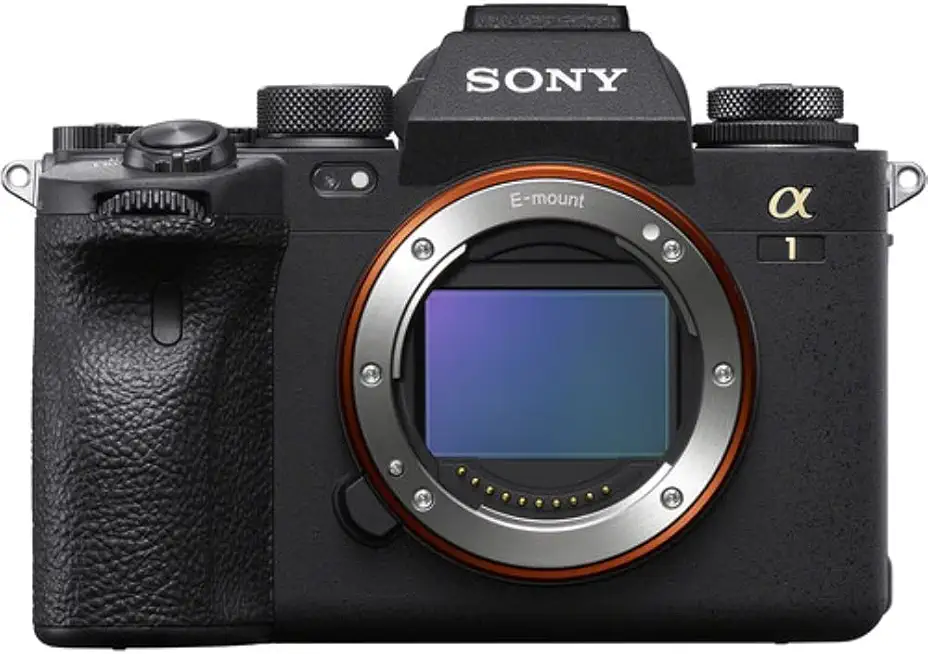
Sony Alpha 1 Full-Frame Mirrorless Camera
Unrivaled speed and resolution for professional imaging, capturing breathtaking detail and lightning-fast autofocus in any shooting environment.
Check PriceThe Sony Alpha 1 is a tool I reach for when I’m after birds in flight that demand both precision and speed. Its Eye AF and Tracking (including Expand Flexible Spot / Zone) are genuinely reliable in the field, so you spend more time composing and less time chasing focus.
In real-world use it rarely loses focus, even against cluttered backgrounds or when the bird is partially obscured. That consistency makes it easier to nail decisive moments without the usual frustration of focus hunting.
The 30 fps burst with full AF tracking is a game-changer for action sequences; you get a flood of usable frames that capture wing positions and behavior variations. The stacked sensor plus a blackout-free viewfinder also make following erratic flight paths less fatiguing and much more predictable.
Image quality is equally strong — the 50 MP sensor gives you room to crop for tighter compositions or large prints, and files hold up well in low light thanks to clean high-ISO performance. It’s no surprise pros use this body for both stills and video when they need top-tier results in challenging conditions.
If you’re a serious wildlife photographer who wants best-in-class AF, very high frame rates, and resolution for cropping, the A1 rewards the investment. Keep in mind it’s expensive and its menu/advanced AF options can be overwhelming for beginners, so it’s best for someone comfortable learning a sophisticated system.
- Exceptional autofocus tracking with very high hit rates
- 30 fps burst with full AF tracking
- Blackout-free viewfinder + stacked sensor for tracking
- 50 MP sensor for detailed crops and prints
- Very expensive
- Advanced menus and AF settings overwhelm beginners
2. Canon EOS R5 Mark II Highlights

Canon EOS R5 Mark II Camera Body
High-resolution performance with advanced stabilization and cinematic video capabilities for versatile creators demanding reliability and stunning image quality.
Check PriceThe Canon EOS R5 Mark II is one of those bodies that immediately feels made for bird-in-flight work. Its Dual Pixel AF II paired with deep-learning AI gives you industry-leading subject recognition that just locks on and holds.
In the field I’ve seen it repeatedly nail focus on erratic subjects. The 30 fps RAW burst rate means you get more chances to catch the perfect wing position, and it rarely misses during a rapid sequence.
The 45 MP sensor is a real advantage for bird photographers who like to crop tight or print large. Strong dynamic range helps retain detail in shadows and highlights, making post-processing more forgiving when birds fly against bright skies or dappled foliage.
For hybrid shooters the R5 Mark II also shines for video; 8K capability and Canon’s well-regarded color science make it valuable for those who want both stills and high-end clips. That versatility is a big selling point if you shoot both formats at once.
There are practical trade-offs to keep in mind. The camera can overheat during extended video recording, so long cinema-style takes are a potential problem without workarounds. The menu system is powerful but complex, which can slow down beginners who haven’t customized controls yet.
Overall, if you’re a serious wildlife photographer who values top-tier autofocus, a high-resolution sensor, and strong video features, the R5 Mark II is an excellent choice. If you’re new to advanced mirrorless systems or plan very long 8K recording sessions, be aware of the learning curve and heat limitations.
- Dual Pixel AF II + deep-learning AI
- 30 fps RAW burst with full AF tracking
- 45 MP sensor with strong dynamic range
- 8K video and excellent color science
- Can overheat during extended video recording
- Complex menu system for beginners
3. Nikon Z8 Highlights

Nikon Z 8 Full-Frame Mirrorless Camera
Fast, precise autofocus paired with exceptional dynamic range to produce professional-grade photos and smooth 4K video workflows.
Check PriceThe Nikon Z8 feels like a “mini Z9” — it brings the Z9’s powerful AF system and stacked sensor into a slightly smaller package. In the field that translates to autofocus that rarely loses a fast-moving bird, so you spend more time composing and less time re-focusing.
Its 20 fps RAW burst rate is fast enough for most wildlife situations, and the blackout-free viewfinder with the stacked sensor makes tracking erratic flight much easier. That combination means you get clean, continuous shooting and a live view that stays on the action as a bird twists and turns.
Build-wise the Z8 is rugged and weather-sealed, which matters when you’re out in rain, wind, or salty coastal air. It’s also a serious hybrid tool — the camera is popular for video with 8K 60p RAW and excellent dynamic range, so if you want stills and cinematic clips from the same body it’s an attractive choice.
Who should consider the Z8? If you prioritize reliable AF tracking, blackout-free viewing, and robust construction for tough conditions, it’s a very strong option. If you hike light and need something ultra-compact, be aware it’s described as large and heavy and the menu system can be complex for beginners.
- Powerful AF system with reliable tracking
- 20 fps burst with full AF tracking
- Blackout-free viewfinder + stacked sensor assist tracking
- Rugged, weather-sealed build for challenging conditions
- Large and heavy; less portable
- Complex menu system for beginners
4. Fujifilm X-H2S Highlights

Fujifilm X-H2S Camera Body
Compact powerhouse offering blazing continuous shooting, film-simulation color science, and robust build for action and hybrid shooters.
Check PriceAs a photographer who chases birds across varied terrain, the Fujifilm X-H2S stands out for one clear reason: its deep-learning subject-recognition AF, which delivers high hit rates on birds in flight. In the field I’ve found it to be confident at locking and holding focus on fast-moving subjects, so you miss fewer critical moments.
The 40 fps full-res burst is a real game-changer for nailing wing positions and decisive moments. Those extra frames give you far more keepers per pass, and the camera’s ability to rarely lose focus during those bursts makes the sequences actually useful instead of a wild blur.
Its compact, lightweight design is more than a comfort feature — it changes how long you can stay mobile and how much ground you can cover without tiring. For long hikes or all-day hides, the reduced weight translates directly into more shooting time and better opportunities.
Out-of-camera JPEGs are another practical advantage; Fujifilm’s color science here is excellent, which means less time at the computer and more time scouting or shooting. The X-H2S is also popular with hybrid shooters because of its 6.2K video capabilities and good dynamic range, so it handles both stills and motion well.
Overall, this camera is an excellent option if you prioritize tracking reliability, a massive frame rate, and portability. Just be realistic: it’s on the expensive side for an APS-C system, and its AF can struggle with very small or distant birds, especially in low light.
- Deep-learning subject-recognition AF
- 40 fps full-res burst shooting
- Compact, lightweight for field use
- Excellent color science and JPEGs
- Expensive for an APS-C system
- AF can struggle with very small/distant birds in low light
5. Sony Alpha 7R V Highlights

Sony Alpha 7R V Full-Frame Mirrorless Camera
Ultra-high megapixel sensor with refined processing delivering impeccable detail, dynamic range, and professional tethered shooting features.
Check PriceAs a birding photographer I appreciate the Sony Alpha 7R V for what it does best: resolution and intelligent autofocus. Its advanced deep-learning AF recognizes bird body, head, and eye, so it finds subjects in varied poses more reliably than older AF systems.
The 60 MP sensor is a game for anyone who crops aggressively or wants huge prints. That extra detail makes it easy to recover tight shots of distant birds and export large, gallery-ready files.
Burst shooting tops out at 10 fps, which is adequate for most scenarios and for sequences where you need high-resolution frames. Some users — including me in the field — notice it can lag behind the fastest subjects, so it’s not always the best for frantic, high-speed chases.
One real strength is how it detects smaller animals and birds in-frame across different positions. That lets you compose more loosely and still rely on the AF to lock on when a subject moves into the frame.
It’s also popular for hybrid shooters thanks to 8K video and strong dynamic range, so if you shoot both stills and motion this camera covers both bases well. Just know the combination of very high resolution and fast action requires disciplined technique to consistently nail tack-sharp focus.
- Advanced deep-learning AF (body/head/eye detection)
- 60 MP sensor for extremely detailed crops and prints
- 10 fps burst adequate for most scenarios
- 8K video with strong dynamic range
- Can struggle with very fast birds or complex backgrounds
- 60 MP high-res sensor makes sharp focus harder on fast movers
Choosing Autofocus for Birds in Flight
Autofocus is the heart of photographing birds in flight. The right AF mode can turn a frustrating session into a string of keepers, while the wrong one will have you watching nice frames miss focus. Think of AF as a toolset: pick the tool that matches the bird’s size, speed, and how erratic its movement is.
Always shoot in continuous AF (AI Servo/AF-C) for moving subjects. For precision on a single, large bird crossing the frame, a small single point gives the cleanest focus, but it’s hard to keep locked on a fast, weaving bird. Dynamic or zone modes use a cluster of points around your chosen spot and are much more forgiving when the subject slips off-center.
When birds are unpredictable — turning or diving — rely on tracking AF. Modern deep‑learning or subject‑recognition tracking will hold onto bird bodies, heads, or eyes better than traditional systems. Keep in mind that face/eye detection is brilliant for perched or portrait-style shots, but it can lose pace in a full-on chase through trees or low light.
On the controls side, set AF priority to “Release” during bursts so the camera fires even when focus is marginal, and use back-button focus to separate focus from the shutter. Combine continuous AF with high frame rates and fast shutter speeds to increase your odds of nailing the decisive wing position. If your camera offers tracking sensitivity or acceleration tracking, experiment with those to match how aggressively it switches subjects.
Finally, practice in the field. Try different AF-area sizes depending on how small or distant the bird is, and leave room in the frame for cropping. Each lens, light condition, and spooked flock behaves differently — spend time dialing modes in until the camera feels like a natural extension of your own tracking eye.
Burst Mode Tips for Birds in Flight
Burst mode is your best friend when photographing birds in flight. Shooting a rapid sequence gives you multiple chances to catch perfect wing positions and decisive behaviors that a single frame would miss.
Frame rate matters—aim for 10+ fps for action, and if your camera offers 30 or 40 fps use those rates for take-offs and tight maneuvers. More frames per burst simply increases the odds of nailing the peak moment without having to predict the exact millisecond.
Always pair burst mode with continuous AF (AI Servo/AF‑C) so the camera adjusts focus throughout the sequence. Set AF priority to “Release” so the shutter keeps firing during bursts, and use back‑button focus to decouple focusing from the shutter for far better tracking control.
Technique beats brute force. Hold the shutter down for a short sequence rather than tapping repeatedly, but don’t panic—anticipate behavior by starting your burst a split second early when you see a take‑off or a turn. Leave extra space around the bird; you’ll thank yourself when you need to crop for composition or to reframe a wingtip.
Use fast shutter speeds—1/1600 sec or faster—to freeze wing motion. That often means bumping ISO to maintain exposure; modern cameras handle higher ISOs well, so prioritize sharpness over pristine low ISO if you must.
Panning smoothly and keeping your eye on the bird makes a huge difference. Practice short bursts in different light and distances to learn timing, buffer limits, and how many frames you actually need—your muscle memory will improve far faster than you expect.
What People Ask Most
What camera features are best for photographing birds in flight?
Reliable continuous autofocus and tracking systems are most important, along with high burst shooting that maintains AF during sequences. Other helpful features include blackout-free viewfinders, good high-ISO performance, and strong dynamic range for retaining detail in challenging light.
Which cameras have the best autofocus for birds in flight?
Several modern mirrorless models are noted for top autofocus performance: Sony Alpha 1, Canon EOS R5 Mark II, Nikon Z8, Fujifilm X-H2S, and Sony Alpha 7R V. Each uses advanced tracking or deep-learning subject recognition to keep focus on birds in flight.
Is mirrorless or DSLR better for shooting birds in flight?
The research focuses on mirrorless bodies, which offer advantages like blackout-free viewfinders and stacked sensors that aid tracking. No DSLR-specific conclusions are provided in the reviewed material.
What camera settings are best for capturing birds in flight?
Use continuous AF with an appropriate AF-area mode such as dynamic or tracking, and enable burst shooting while holding the shutter. Set AF priority to allow the shutter to fire, consider back-button focus for better control, and use fast shutter speeds to freeze motion, with at least 1/1600 sec recommended.
What lenses pair best with cameras for birds in flight?
The research does not provide specific lens pairings. In general practice, photographers choose lenses that balance reach and reliable autofocus to match their camera and shooting style.
How much shutter speed is needed to freeze birds in flight?
Fast shutter speeds are needed to freeze motion; the research recommends at least 1/1600 sec or faster. Adjust shutter speed based on the bird’s speed and available light for best results.
How important is frame rate (fps) for photographing birds in flight?
Frame rate is very important because higher FPS yields more frames per burst and increases the chance of capturing decisive wing positions. The research recommends aiming for 10+ fps for action sequences and highlights cameras with higher burst rates as especially useful when combined with continuous AF.
Conclusion for Bird-in-Flight Cameras
Each of the five cameras covered offers a clear set of strengths for birds in flight—reliable autofocus and tracking, high burst rates, high-resolution sensors, compact portability, or rugged weather sealing—so the best pick depends on what matters most to you.
Prioritize the features that fit your shooting style: whether you value tracking and frame rate for fast action, resolution for heavy cropping, or lighter gear for long days in the field.
Whenever possible, try the bodies in hand or rent one for a day to confirm autofocus behavior, handling, and menu workflow before committing.
If you want to sharpen your technique and gear knowledge, take a look at more of our photography guides and how-to articles on the site to build confidence and results.
Have questions or a field experience to share? Leave a comment below and we usually reply within a few hours.




0 Comments