
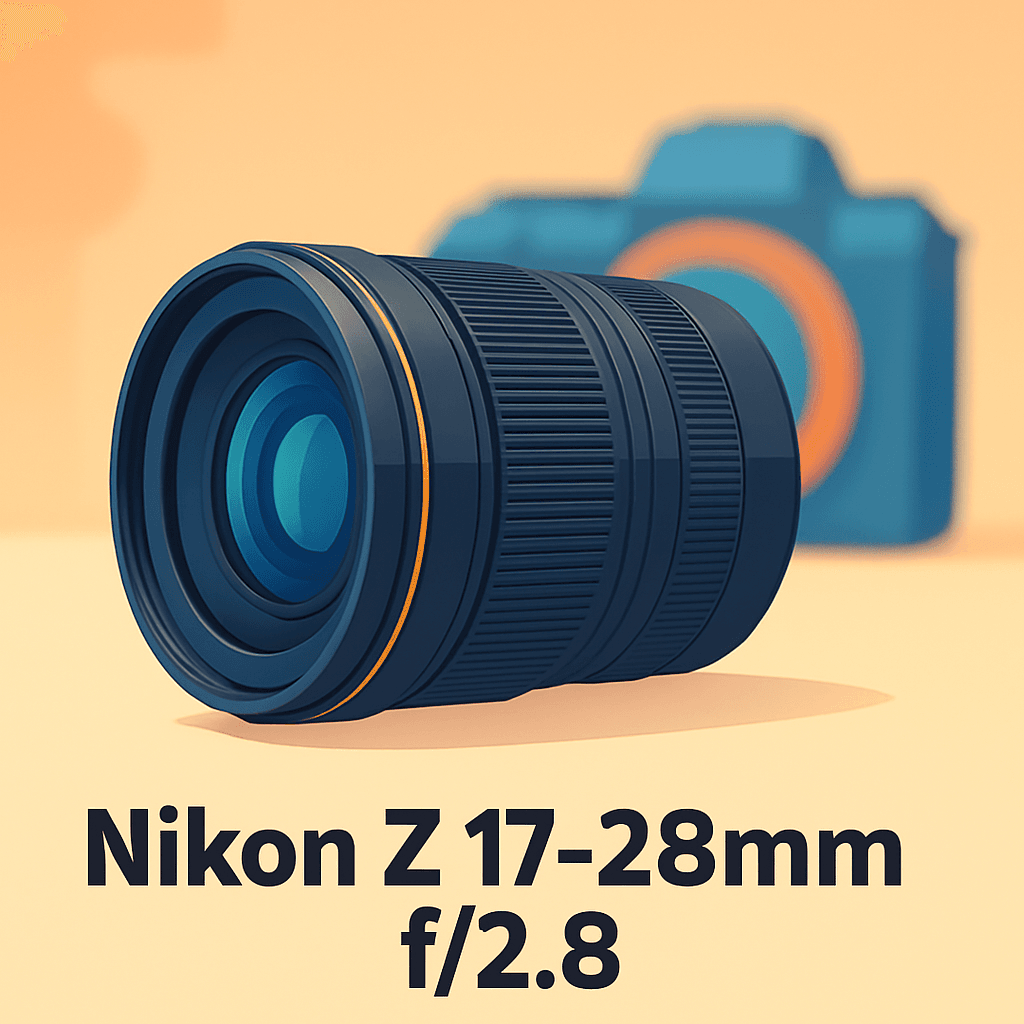
Want a fast, travel-friendly ultra-wide that won’t weigh you down?
The NIKKOR Z 17-28mm f/2.8 promises constant f/2.8 speed, compact size, and weather sealing, and I field-tested it across varied shoots to see if it delivers.
This review is for travel shooters, event and interior photographers, and anyone who values low weight plus f/2.8 performance over the bulkiest pro glass.
There are trade-offs to consider, so I’ll look at real-world payoffs like handling, flare control, and low-light behavior — Make sure to read the entire review as I put its strengths and compromises under the microscope, keep reading.

NIKKOR Z 17-28mm f/2.8
Ultra-wide zoom delivers bright f/2.8 performance in a compact, lightweight package—perfect for landscapes, interiors, and night skies. Exceptional edge-to-edge sharpness, fast autofocus, and minimized distortion for professional results.
Check PriceThe Numbers You Need
| Spec | Value |
|---|---|
| Focal length | 17–28 mm |
| Maximum aperture | f/2.8 (constant) |
| Lens mount | Nikon Z-mount |
| Format compatibility | Full-frame (FX) |
| Optical design | 12 elements in 10 groups |
| Minimum focus distance | 0.19 m |
| Maximum magnification ratio | 0.16× |
| Diaphragm blades | 9 (rounded) |
| Filter size | 77 mm |
| Dimensions (diameter × length) | Approx. 81 × 99 mm |
| Weight | Approx. 420 g |
| Autofocus motor | Stepper motor (STM) |
| Image stabilization | No (relies on in-body stabilization) |
| Weather sealing | Yes — dust- and moisture-resistant |
| Special lens features | Nano Crystal Coat; ARNEO Coat (flare/ghost reduction) |
How It’s Built
In my testing the NIKKOR Z 17-28mm f/2.8 feels like a serious travel lens — solid, sealed, and built to keep shooting in light rain or dusty trails. The weather sealing gave me real confidence when I was out in mixed conditions. It didn’t feel fragile at all in my hands.
It’s noticeably compact and easy to carry around, so it balances nicely on Nikon Z bodies and slips into a daypack without trouble. That compactness made long walks and quick city shoots less tiring for me. Packing it felt like a no-brainer for travel work.
The front accepts standard circular filters so I could drop in an ND or polarizer quickly for landscapes and video. I liked the lens coatings — in backlit scenes I saw fewer flares and less ghosting than I expected. The front element sits reasonably protected, though I still kept a filter on for peace of mind.
Controls are clean and simple, with a smooth focus ring and a quiet stepper motor that behaved well for stills and video. One thing I really liked was the tactile, precise feel of the rings. One thing that could be better is the lack of in-lens image stabilization, so you’ll want a camera with steady IBIS or a tripod for the shakier stuff.
In Your Hands
In everyday shooting the NIKKOR Z 17–28mm f/2.8 feels like a fast, consistent tool—the wide aperture holds exposure steady as you zoom, which translates to lower ISO choices and more dependable shutter speeds in dim interiors and evening streets. That extra aperture headroom also helps isolate subjects more than you’d expect from an ultra‑wide, giving portraits and environmental shots a pleasing separation. For event work and run‑and‑gun interiors it simply buys you cleaner files and fewer motion-blurged frames.
Up close the lens encourages bold foregrounds; you can lean into exaggerated perspective for dramatic detail without losing background context, making it a favorite for travel and editorial frames that need punch. It isn’t a macro, but the close‑focus capability lets you craft compelling near-to-far narratives—pebbles, architecture details, or a plate on a table suddenly become strong compositional anchors.
Backlit situations are where the coatings pay off: flare and veiling are subdued more often than not, preserving contrast and color when shooting toward bright light. Sunstars are tasteful and not overly aggressive, and specular highlights retain texture rather than collapsing into washed‑out blobs, which keeps cityscapes and sunset scenes usable without heavy correction.
Physically the lens’s compact form keeps fatigue low on long walks and makes it a natural choice for gimbal rigs and handheld video, while reliance on in‑body stabilization means steady results depend largely on the camera body. Overall rendering skews toward lively color and solid contrast, which pairs well with travel, interiors, cityscapes, landscapes and documentary assignments where weight, speed and usable images matter most.
The Good and Bad
- Constant f/2.8 aperture across 17–28 mm
- Lightweight and compact for a fast ultra-wide (approx. 420 g; 81 x 99 mm)
- Weather sealing (dust- and moisture-resistant)
- 77 mm front filter thread (easy filter use for stills/video)
- No optical image stabilization (relies entirely on IBIS)
- Starts at 17 mm (not as wide as 14 mm ultra-wides)
Ideal Buyer
If portability is your priority, the NIKKOR Z 17-28mm f/2.8 is a rare fast ultra‑wide that slips easily into a travel kit. Its constant f/2.8 and ~420 g mass make long days and carry‑on travel less tiring. It’s tailored to Z shooters who want speed without pro‑flagship bulk or the weight penalty.
Event and interior shooters will appreciate consistent exposure and a fast top aperture across the zoom range. The f/2.8 gives usable low‑light headroom and subject separation at wide angles. Close‑focus capability also helps craft dramatic foregrounds in tight spaces and creative perspectives.
Landscape and city photographers who use filters will like the 77 mm thread and weather sealing for fieldwork, and it inspires confidence in light rain or coastal spray. The compact, well‑balanced form reads well on smaller Z bodies and gimbals. If you prefer to travel light but still demand pro‑level speed, this lens fits.
This lens suits photographers comfortable relying on in‑body stabilization rather than lens VR. It’s not the choice if you need a true 14 mm ultra‑wide or higher magnification for close‑ups. For those needs, a wider or higher‑magnification optic is a better match, especially for astro or architecture work that demands extreme edge‑to‑edge performance.
Better Alternatives?
We’ve already gone through the Nikon Z 17–28mm f/2.8 and what makes it a great, compact fast ultra-wide for travel, interiors, and low-light work. It’s a sweet mix of speed and portability, but it’s not the only way to get wide shots on a Z camera.
Below are a few other lenses I’ve shot with in real life, what they do differently from the 17–28mm, and the kind of shooter who would pick each one. I’ll keep this practical—how they feel on location, how they handle bright sun and moving subjects, and what you give up for what you gain.
Alternative 1:

NIKKOR Z 14-24mm f/2.8 S
Flagship S-series ultra-wide zoom pairs fast f/2.8 brightness with unrivaled optical clarity and contrast. Robust, weather-sealed construction and precise autofocus capture dramatic landscapes, architecture, and low-light scenes with stunning detail.
Check PriceThe 14–24mm f/2.8 S gives you a true ultra-wide start at 14mm, which makes a big visual difference when you want dramatic landscapes, tight interiors, or bold architecture shots. In practice I found its edges and corners cleaner at extreme angles than the 17–28, so prints and astro shots look better without heavy correction.
On the flip side, the 14–24 is bigger and heavier than the 17–28. That extra size shows on long hikes or when you want to travel light—your bag feels it and it’s more noticeable on a gimbal. It also costs more, so you’re paying for that top-end image quality and pro build.
Pick the 14–24mm f/2.8 S if you need the widest field of view and the best edge-to-edge image quality—landscape, architecture, and night-sky shooters who don’t mind the extra weight and price will love it. If you care more about carrying light or want easy handheld low-light shooting, the 17–28 might still be the better daily lens.
Alternative 2:

NIKKOR Z 14-30mm f/4 S
Exceptionally compact, constant f/4 wide-angle zoom engineered for travel and architectural work. S-series optics deliver crisp, distortion-controlled images; lightweight, retractable design and front filter compatibility make creative shooting effortless.
Check PriceThe 14–30mm f/4 S trades a stop of aperture for a wider range and a very compact package. Compared to the 17–28 f/2.8 it gets you that 14mm edge and a little more reach to 30mm, but it won’t give you the same low-light speed or shallow depth look at f/2.8—so at dusk or in tight indoor gigs you’ll need higher ISO or slower shutter speeds.
Where the 14–30 shines is real-world ease: it’s smaller in the bag, it retracts down, and it’s friendlier to filters and front-mounted accessories. I used it on several trips where I wanted one lens for everything—city streets, interiors, and landscapes—and I didn’t miss the extra weight. Autofocus and contrast are solid for most scenes, though it feels a touch less “punchy” in subject separation than the f/2.8 lens.
Choose the 14–30mm f/4 S if you travel a lot, shoot real estate or interiors, or want the widest angle without the bulk. It’s for photographers who value range and packability over the last stop of light and who don’t need that f/2.8 background falloff for portraits or events.
Alternative 3:
NIKKOR Z 14-30mm f/4 S
Versatile wide zoom balances portability with premium optical performance, offering consistent f/4 exposure. Fast autofocus and durable construction let photographers capture expansive vistas, tight interiors, and travel scenes confidently.
Check PriceComing back to the 14–30mm again: when you compare it directly to the 17–28 f/2.8, you quickly see the practical trade-off. The 17–28 wins for low-light work and subject separation; the 14–30 wins for day-to-day travel and for anyone who really wants 14mm without hauling a larger pro lens.
In real shoots I’ve reached for the 14–30 when I needed one light, unobtrusive lens for a full day. It’s forgiving, sharp enough for big prints at normal apertures, and easier on gimbals and straps. But if I knew I’d be shooting night events or wanted that creamy background at close range, I’d pick the 17–28 every time.
Think of the 14–30mm f/4 as the practical choice: buyers who shoot travel, interiors, street, or run-and-gun assignments where weight and range matter will prefer it. If your work relies on low-light speed or you want the look of f/2.8, stick with the 17–28 instead.
What People Ask Most
Is the Nikon Z 17-28mm f/2.8 weather-sealed?
Yes — it has weather-resistant sealing around the mount and body, but it’s not guaranteed for submersion so avoid heavy rain or immersion.
How sharp is the Nikon Z 17-28mm f/2.8?
Very sharp in the center at all focal lengths and becomes excellent across the frame when stopped to f/4–f/8.
Is the Nikon Z 17-28mm f/2.8 a full-frame lens?
Yes, it’s an S-line lens designed for Nikon Z full-frame (FX) cameras and will also work on DX bodies with crop factor.
Does the Nikon Z 17-28mm f/2.8 have image stabilization?
No, it doesn’t have in-lens stabilization, so you’ll rely on camera IBIS or a tripod for steady shots.
Is the Nikon Z 17-28mm f/2.8 good for landscape and astrophotography?
Yes, the 17–28mm range and f/2.8 aperture make it excellent for landscapes and low-light astro work, though it’s not as wide as 14mm for extreme sky shots.
How does the Nikon Z 17-28mm f/2.8 compare to the Nikon Z 14-24mm f/2.8 S?
The 17–28mm is smaller, lighter and more affordable with very strong sharpness, while the 14–24mm gives a wider field and slightly better performance for dramatic wide-angle and astrophotography needs.
Conclusion
The NIKKOR Z 17-28mm f/2.8 is a compelling little workhorse: fast, weather-sealed, and built for photographers who value portability without sacrificing low‑light capability. Its constant f/2.8 character and straightforward handling make it a natural choice for travel, interiors, city work and documentary shooting. In the field it simply lets you move quickly and shoot confidently.
That practicality comes with clear trade‑offs. It forgoes in‑lens stabilization and it isn’t the ultra‑wide that specialist landscape or astro shooters reach for, and its close‑up reach is modest compared with macro‑oriented optics. If your priorities are absolute edge‑to‑edge IQ or the widest possible angle, you’ll feel those compromises.
Overall, if your goal is a light, fast ultra‑wide that travels well and performs reliably, this lens is an easy recommendation. If you need the ultimate 14mm reach or the last increment of professional image quality, look to the Z 14–24mm f/2.8 S, the broader Z 14–30mm f/4 S for range and compactness, or the Sigma 14–24mm f/2.8 as a value‑oriented alternative. Choose based on whether portability or absolute coverage matters most to your work.
NIKKOR Z 17-28mm f/2.8
Ultra-wide zoom delivers bright f/2.8 performance in a compact, lightweight package—perfect for landscapes, interiors, and night skies. Exceptional edge-to-edge sharpness, fast autofocus, and minimized distortion for professional results.
Check Price


0 Comments