
What year did digital cameras come out — and who built the first one?
Short answer: the first self-contained digital camera prototype was built in 1975 by Steven Sasson at Eastman Kodak. Consumer cameras did not appear in stores until the early 1990s.
This article gives the quick answer first, then explains the rest in plain language. You will get a simple timeline, the inventor story, how the first camera worked, and the key commercial models that made digital photography common.
Read on for clear dates, short milestones, and trusted sources like the Smithsonian and Kodak. If you want the fast fact now: 1975 for the prototype, early 1990s for consumer availability — and this piece will show why both years matter.
When Was the Digital Camera Invented?
The first self-contained digital camera prototype was built in 1975 by Steven Sasson at Eastman Kodak, but you could not buy a digital camera in stores until the early 1990s.
If you are asking what year did digital cameras come out, the short answer is 1975 for invention and the early 1990s for the market. Those two dates describe different moments in the story of the digital camera.
1957 set the stage when Russell Kirsch scanned a small photograph to create the first digital image. It proved a picture could be turned into numbers and stored in a computer.
1969 brought the invention of the CCD sensor at Bell Labs by Willard Boyle and George E. Smith. That chip could capture light on a grid and made digital cameras possible.
1975 is the year Sasson built a working, battery-powered prototype at Kodak. It was a boxy device that recorded black-and-white images to cassette tape.
1981 saw Sony’s Mavica, an electronic still camera that saved analog video frames to a floppy disk. It was not fully digital, yet it nudged photography toward screens and disks.
In the early 1990s, the first commercial digital systems arrived for professionals, led by Kodak’s DCS line. These were expensive tools that connected to existing film camera bodies.
By the mid-1990s, consumer models appeared, including Apple’s QuickTake and Casio’s QV series. Prices fell and features grew, pulling more people into the new way of shooting.
From the late 1990s into the 2000s, DSLRs matured and smartphones later transformed everyday photography. The market shifted from film to pixels faster than anyone expected.
In short, “invented” refers to the 1975 lab prototype, while “came out” can mean when shoppers could buy one in the early 1990s. Keeping those two moments separate makes the timeline much clearer.
Who Invented the First Digital Camera?
The person most widely credited with inventing the first self-contained digital still camera is Steven Sasson, a young engineer at Kodak, in 1975. He was asked to see what the new CCD sensor could do, and he ended up proving that cameras could work without film.
Sasson later described his device as “a camera without film,” a plain-spoken phrase that captured a radical idea. His lunchbox-sized prototype weighed about eight pounds, made 100-by-100-pixel images, and saved them onto a cassette tape for later playback on a TV.
Yet his breakthrough stood on earlier work. In 1957, Russell Kirsch’s team scanned the first digital image, which taught computing how to handle pictures. In 1969, Willard Boyle and George E. Smith at Bell Labs created the CCD, which became the core of early digital imaging.
Words can blur the story, so definitions help. The first digital image came from a scanner, not a camera. The first “electronic still camera,” like early Mavicas, stored analog video frames, while the first self-contained digital still camera captured, digitized, and stored numeric data inside the device.
Kodak’s internal reaction was cautious. The company saw promise, filed patents, and kept refining prototypes, but film sales were strong and prints drove profits, so a quick push to consumers did not happen.
You can learn more about Steven Sasson through inventor archives and interviews that detail his 1975 build. His role is why many people answer “1975” when asked what year did digital cameras come out.
Credit remains a team effort, though. Kirsch’s scan, Bell Labs’ CCD, and many engineers across companies made the leap to digital possible long before the first models reached store shelves.
How Did the First Digital Camera Work?
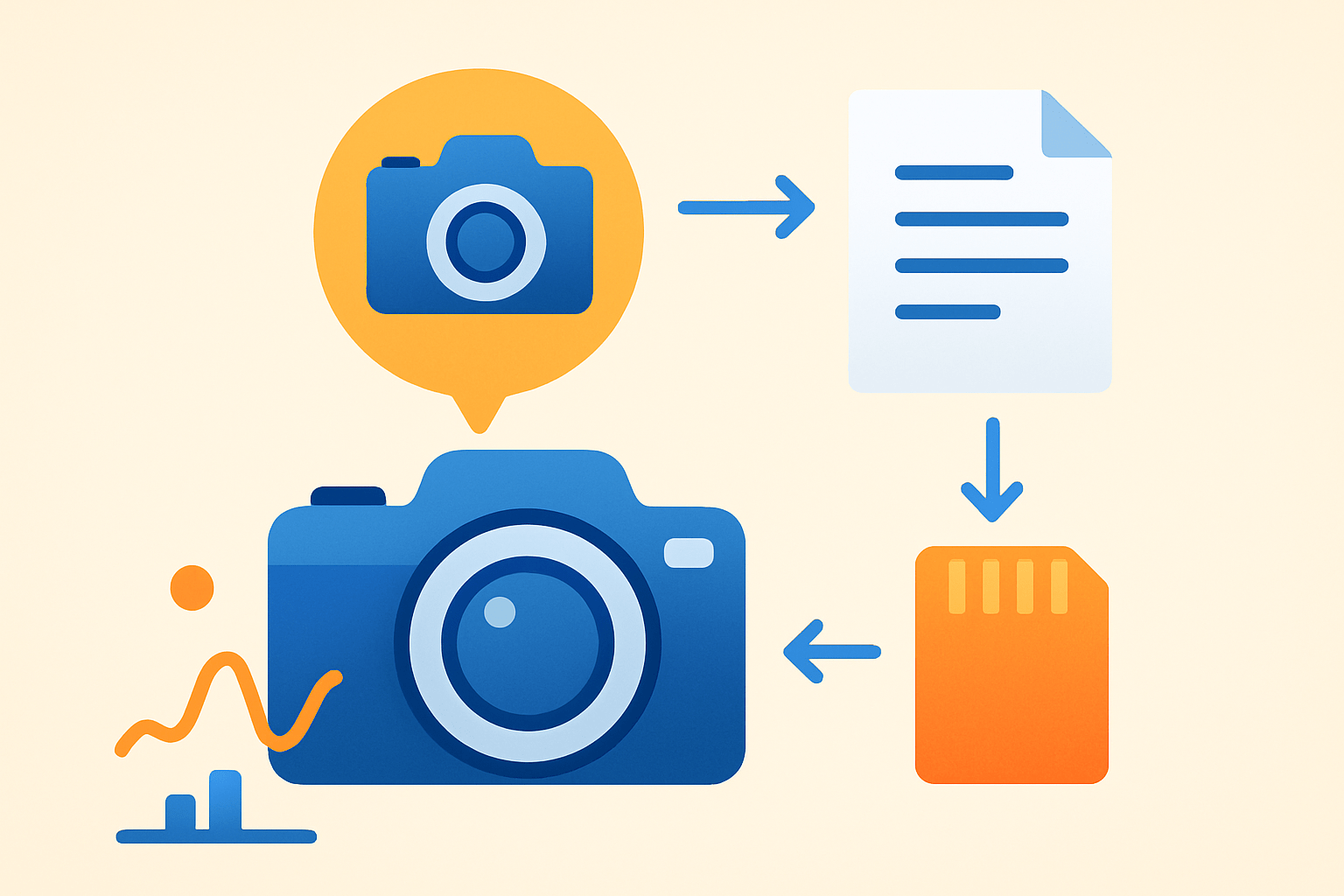
Sasson’s prototype followed a simple path from light to numbers. Light passed through a lens to a CCD image sensor, became an electrical signal, was converted by an ADC into digital data, stored on tape, and then played back to a screen.
The CCD sensor acted like a checkerboard of tiny buckets that collect light. Each bucket measured brightness at its spot, creating a small electrical charge that matched how much light fell there.
Those charges left the chip as an analog stream. An analog-to-digital converter sampled the stream and turned each pixel into a number a computer could save and read later.
Resolution was about 100 by 100 pixels, or roughly 0.01 megapixel, and the pictures were black and white. Capturing a frame took around 23 seconds, which was fine for proving a point but far too slow for everyday shooting.
The camera stored those numbers digitally on a standard cassette tape. A separate playback unit read the tape and displayed the picture on a television, which made the new idea easy to show to non-engineers.
Early digital cameras used CCD sensors because they delivered low noise and consistent quality across the chip. CMOS sensors existed, but they needed time to match CCD image quality and to benefit from better manufacturing processes.
As products reached consumers, file formats became a big deal. Early cameras often used custom encodings, and then JPEG emerged in the early 1990s as the common standard, which made sharing and storage much easier.
This is the heart of what makes a camera “digital.” The lens still gathers light like a film camera, but everything after the sensor becomes math, memory, and electronics.
Commercial Introduction of Digital Cameras
Turning a lab demo into something people could buy took real time. The first products appeared in stages, beginning with electronic still cameras in the 1980s and moving to true digital systems in the 1990s.
Sony’s Mavica in 1981 recorded video-like frames to a floppy disk and played them on a TV. It was not a fully digital still camera, but it bridged film and screens and showed how storage could replace negatives.
Kodak’s DCS 100 arrived in 1991 and targeted professionals. Built on a Nikon F3 body with a digital back and a shoulder-worn storage unit, it offered about 1.3 megapixels and proved its worth in newsrooms despite a high price.
Around 1990–1991, the Dycam Model 1, also known as the Logitech FotoMan, reached early consumers with simple, low-resolution images you could transfer to a PC. It was basic and costly, but it hinted at a new category beyond film.
In 1994, Apple’s QuickTake 100 brought easy software and 640-by-480 images to a wider audience. It cost far less than pro gear and gave families their first taste of simple, all-digital snapshots.
In 1995, Casio’s QV-10 added a rear LCD screen for preview and playback, changing how people composed and reviewed shots. That tiny screen quickly became a staple on point-and-shoot cameras.
Why such a long delay after 1975? Sensors and memory were expensive, image quality was limited, home printing was awkward, and computers were slow. Kodak also worried that cheap digital pictures might undercut its film and paper business.
By the late 1990s, resolution climbed and prices tumbled, and in 1999 the Nikon D1 put an integrated DSLR into pro hands at a disruptive price. In the 2000s, digital cameras took over, and after 2007 smartphones drew casual shooters away from compact cameras.
For a deeper look at how the first digital camera idea grew into a market, long-view histories and interviews fill in the gaps. They show why the answer to what year did digital cameras come out depends on whether you mean a lab milestone or a product on a shelf.
Key Milestones in Digital Camera Development
1957: Russell Kirsch’s team scanned a small photograph of his son to 176 by 176 pixels. This first digital image proved that pictures could live as data.
Late 1960s: At Bell Labs, Willard Boyle and George E. Smith invented the CCD sensor in 1969. The device turned light into electric charges across a grid, unlocking solid-state imaging.
1975: Steven Sasson at Kodak built the first self-contained digital still camera. It stored black-and-white images to cassette tape and weighed about eight pounds.
1980s: Electronic still cameras like Sony’s Mavica recorded analog video frames to disk. They were stepping stones that accustomed users to screens and removable media.
Early 1990s: Professional digital systems reached the market, including Kodak’s DCS line and other hybrids that attached to film camera bodies. News agencies adopted them for speed despite high costs.
Mid-1990s: Consumer models arrived, from Apple’s QuickTake to Casio’s QV series and Dycam’s early compacts. Resolution was modest, but setup and sharing improved with PCs and standard cables.
Late 1990s: Integrated pro DSLRs appeared, with Nikon’s D1 in 1999 marking a shift in performance and price. Consumer cameras became cheaper and more capable with each season.
2000s: DSLRs went mainstream, CMOS sensors improved rapidly, and the megapixel race drove marketing and upgrades. Memory cards expanded and batteries lasted long enough for full days of shooting.
2007 onward: Smartphones, led by the iPhone, began a rapid rise in camera quality and convenience. Point-and-shoot sales declined as phones became the camera most people carried.
2010s: Mirrorless cameras gained momentum with fast autofocus, smaller bodies, and excellent video. Adapters and new lens lines broadened creative options.
Today: Computational photography, stacked sensors, and improved lenses raise quality in both phones and dedicated cameras. The craft remains the same, even as the tools keep getting smarter and smaller.
What People Ask Most
What year did digital cameras come out?
Digital cameras were first made as a prototype in 1975, and the first consumer models came out in the late 1980s and early 1990s.
How did digital cameras change everyday photography?
They let people see photos instantly and delete bad shots, making photography easier and cheaper. They also made it simple to share and edit photos on computers and the web.
Are digital cameras better than phone cameras for beginners?
Many beginners find phone cameras easier because they are always with you and simple to use. Dedicated digital cameras still offer better zoom, battery life, and handling for learning photography.
Can I learn photography on a digital camera without studying technical terms?
Yes, you can learn by practicing with automatic modes and simple settings, then slowly try basic controls like exposure and focus. Hands-on use and reviewing your photos is the fastest way to improve.
Did digital cameras immediately replace film cameras?
No, the switch was gradual as people kept using film for years for its look and quality. Digital cameras became dominant only after they improved and became more affordable.
What are common beginner mistakes with digital cameras?
Beginners often rely only on auto mode, ignore lighting, and forget to back up photos. Taking time to learn composition and check exposure can fix most mistakes.
How should I store photos from an old digital camera to keep them safe?
Move them to a computer or cloud storage and keep at least one backup on a separate drive. Regularly check files and update storage to avoid loss from old formats or failing media.
Final Thoughts on What Year Digital Cameras Came Out
If you came here asking what year did digital cameras come out, this guide gave the short answer—1975 for the first self‑contained prototype and the early 1990s for real consumer models—and then unpacked the why and how (keyword 270). You now have a tidy timeline, the inventor’s story, and a simple tech map that connects tiny light‑sensors to the phones in our pockets. That mix of a quick snippet plus context is what makes this useful whether you need a fast fact or a fuller explanation.
Do keep one caution in mind: sources sometimes disagree on dates and model names, so a little variance is normal when you dig deeper. Still, students, photographers, and curious readers will find the clear chronology and plain‑English tech notes the most helpful. We started with a plain question and left you with a clear map from lab prototype to everyday cameras—so enjoy watching the next chapter unfold.




0 Comments