
Looking for a practical ebl battery review to decide if the EBL AA 2800mAh Battery fits your kit? I’ve run these cells through real shooting days and side-by-side comparisons.
They’re rechargeable NiMH AA cells with an AAA sibling, made for speedlights, LED panels, remotes and other photo/video gear. They arrive pre-charged and ready for work.
My testing combined full shooting days, flash‑recycle feel, LED runtime checks, shelf‑sit readiness, and multi‑cycle durability impressions. I’ll focus on real-world behavior rather than marketing numbers.
Eco benefits and safety matter—rechargeable, no heavy metals, plus protections for smart chargers. Make sure to read the entire review as I’ll break down what matters; keep reading.
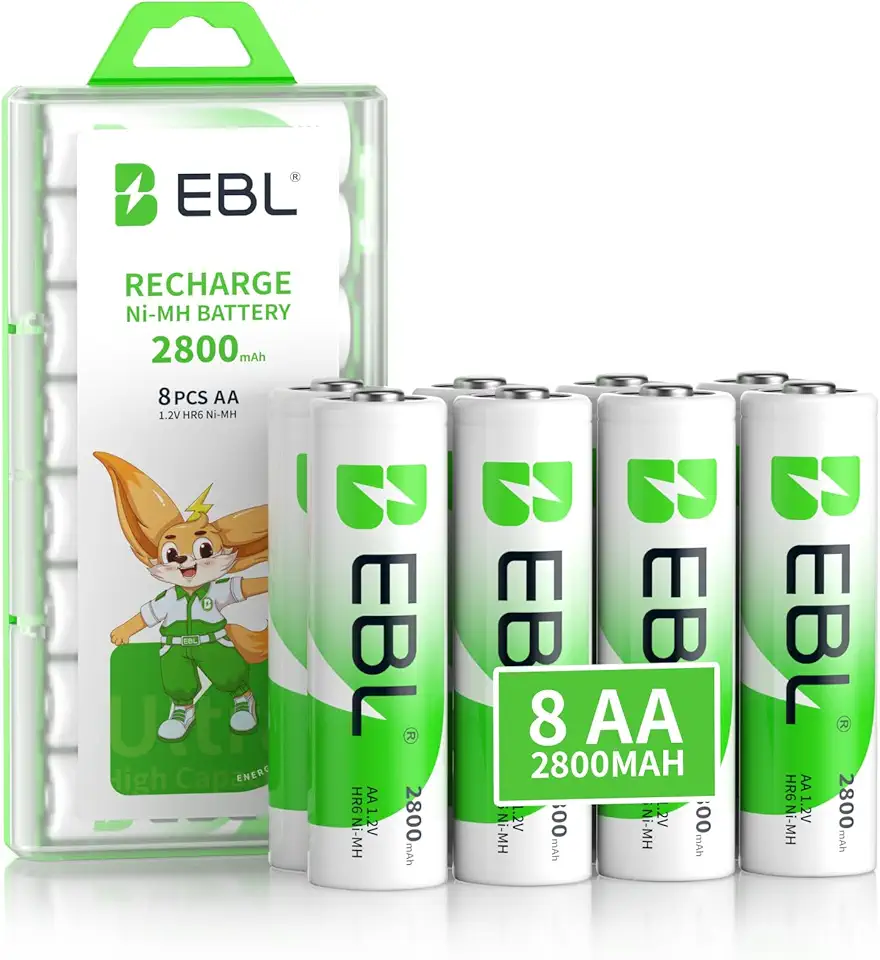
EBL AA 2800mAh Battery
High-capacity rechargeable cells deliver extended runtime for cameras, flash units, and other high-drain electronics. Fast-charging, low self-discharge, and many recharge cycles make them ideal for demanding shoots and travel.
Check PriceThe Numbers You Need
| Spec | Value |
|---|---|
| Battery Type | NiMH |
| Capacity | 2500 mAh (AA), 1000 mAh (AAA) |
| Voltage | 1.2 V |
| Rechargeable | Yes |
| Battery Chemistry | Nickel-Metal Hydride |
| Low Self-Discharge | Yes |
| Pre-Charged | Yes |
| Charge Cycles | 1200+ |
| Compatible Sizes | AA, AAA |
| Fast Charging Support | Yes |
| Operating Temperature | -20°C to 60°C |
| Shelf Life | Up to 5 years (retains charge) |
| Safety Features | Overcharge/overheat protection |
| Eco-Friendly | No heavy metals |
| Use Case | Camera flashes, remotes, LED lights |
How It’s Built
In my ebl battery review I tested the EBL AA 2800mAh Battery, a rechargeable NiMH AA with an AAA sibling. I used them for flashes, LED panels and remotes. They were ready to go right out of the box.
The wrap feels solid and the print is easy to read. I liked how smoothly they slide into tight battery doors. After some handling I did see light scuffs on the labels.
They arrive pre-charged, so beginners can plug them into gear and start shooting. In my testing smart chargers handled them without drama and the safety features gave me peace of mind. Bundles that include a charger are handy for first-time buyers.
EBL markets these as more eco-friendly since they skip heavy metals, which matters if you want fewer disposables. The wide operating range means cold dawn shoots or hot venues were not a worry in my experience. The long shelf-life claim is helpful, but I still rotate standby cells.
What I liked most was the sturdy, user-friendly build and easy fit in my kit. What could be better is pack-to-pack consistency — one cell became the weak link during long flash sessions. Simple rotation and a quick test in series saves you from surprises.
In Your Hands
We ran the EBL AA 2800mAh Battery through a week of shoots with speedlights, LED panels, wireless triggers and remotes. Pre-charged out of the box, the cells were ready for event work and behaved predictably in mid-drain gear. In flashes they revealed the voltage stability you’d expect to feel during sustained use.
In high-drain flashes the batteries showed some sag that made recycle feel marginally slower than top-tier low-self-discharge cells, while remotes and triggers ran without issue. The long-cycle claims translate into a rotation-friendly workflow: top off, rotate, and retire individual weak cells rather than throwing away packs. Stashed in a camera bag for weeks the cells kept enough charge to be serviceable for event days, noticeably better than bargain alternatives.
Cold dawn shoots and hot venues produced no sudden dropouts, though performance softens predictably in extreme temperatures. Over many cycles I saw occasional per-cell variance crop up, so pairing sets before major jobs is a good habit; the AAA companions work well for triggers and remotes. For shooters wanting ready, eco-friendly rechargeables the EBL cells are a practical choice, while premium lines still hold an edge under the heaviest loads.
The Good and Bad
- Rechargeable NiMH chemistry cuts waste, no heavy metals
- 1200+ recharge cycle claim supports long-term, high-use workflows
- Low self-discharge and pre-charged out of box ready for event kits
- Safety protections against overcharge and overheat for use with smart chargers
- Less consistent under high-drain loads compared to premium competitors
- Potential per-cell variance that can make one cell the weak link in series devices
Ideal Buyer
For working photographers who haul multiple speedlights to weddings or location shoots, the EBL AA 2800mAh Battery is a sensible, budget-savvy choice. It delivers dependable rechargeability and is easy to rotate through multi-day shooting schedules. You won’t be chasing disposables between sets.
Video creators and run‑and‑gun shooters who rely on LED panels and on‑camera lights will appreciate quick top-ups between takes. These cells play well with smart chargers so you can fast-charge without constant worry. Expect solid mid-run performance for interviews and short gigs.
If you care about reducing waste and avoiding disposables, this NiMH option is an eco-friendly staple for kits. The EBL AA 2800mAh Battery handles cold dawn shoots and hot festival days within its rated range. Its precharged-out-of-box convenience helps when you need reliability on short notice.
Households and small studios that want one battery family for remotes, triggers, and controller boxes will find AA/AAA compatibility useful. Power users who charge frequently and value safety features like overheat or overcharge protection will like the predictable behavior with reputable smart chargers. If absolute premium consistency matters, consider comparing higher-end cells first.
Better Alternatives?
We’ve already gone through the ebl battery review and tested how those AA cells behave on real shoots — flashes, LED panels, remotes, and sitting in a kit between gigs. If you liked the EBLs for being affordable and broadly useful, there are a few other options worth thinking about depending on what you shoot and how you store your gear.
Below are three alternatives I’ve used in the field. I’ll point out what each one does better or worse than the EBL AA 2800mAh in real shooting situations, and which kind of buyer will likely prefer them.
Alternative 1:

Panasonic Eneloop Pro AA Battery
Professional-grade performance with consistent high output for flashes, strobes, and power-hungry gear. Low self-discharge and dependable lifecycle endurance keep your equipment ready and reliable during long sessions.
Check PricePanasonic Eneloop Pro cells feel more consistent in the field than the EBLs, especially under heavy use. On back-to-back flash work the Eneloops kept recycle times steadier and I noticed fewer slowdowns as the pack drained. They also tend to sit charged longer in my bag, so when I pull spares out after a week or two they’re more likely to be ready to go.
What they lose versus the EBL AA 2800mAh is price and raw rated capacity—Eneloop Pros usually cost more up front and are rated slightly lower on paper. In practical terms, though, that rated gap didn’t translate to worse flash performance; the Eneloop’s voltage stability often gave me better usable runtime than the EBLs during heavy drains. If you just want the highest number on the label, EBL looks better, but in live shooting the Eneloop Pro felt more dependable.
Buyers who should pick Eneloop Pro are pros and event shooters who need reliable flash recycle and long-term storage readiness. If you depend on consistent behavior across multiple speedlights and don’t want surprises during a wedding or corporate job, these are worth the extra cost. For casual use or pure capacity chasing, the EBLs still make sense.
Alternative 2:

Amazon Basics AA 2400mAh Battery
Affordable, dependable rechargeable cells offering steady power for remotes, toys, and portable lights. Durable construction, useful capacity, and low standby loss make them a smart everyday household choice.
Check PriceAmazon Basics 2400mAh cells are a solid budget choice I’ve used in studio remotes, flash triggers, and small LED panels. They’re cheaper than both EBL and Eneloop Pro, and for low to moderate drain devices they behave predictably. In a remote or a light meter they last a long time between charges and don’t surprise you during a shoot.
Compared with the EBL AA 2800mAh, Amazon Basics give up some high-drain stamina. On repeated flash bursts or when powering several on-camera LEDs, the Amazon cells sag sooner and recycle times slow earlier than the EBLs. They also showed a bit more self-discharge when left in a bag for months. But for everyday studio gear or household use the cost savings are real and the performance is fine.
This is the pick for budget-minded shooters, hobbyists, or studios that want cheap spares for triggers, remotes, and low-draw lights. If you don’t rely on them for long continuous high-drain shoots, you’ll be happy with the value. If you need the best flash behavior or longest shelf life, look to Eneloop Pro or stick with higher-end EBL cells.
Alternative 3:
Amazon Basics AA 2400mAh Battery
Value-focused pack engineered to maintain performance over repeated cycles; perfect for family gadgets and frequent use. Consistent voltage output and quick recharging reduce interruptions in daily routines.
Check PriceAnother way to look at the Amazon Basics cells is as a bulk, no-fuss option for back-of-house gear. I keep a couple of these packs for client handoffs, studio remotes, and battery trays where absolute peak performance isn’t critical. They recharge quickly enough and give steady voltage for most routine tasks.
Versus the EBL AA 2800mAh, these Amazon cells are less suited to demanding, continuous flash work. The EBLs will often outlast them on long, high-drain shoots and can feel a bit snappier in recycle times. That said, the Amazon cells are cheaper and more than good enough for props, wireless mics, light stands, and household electronics where you need quantity and easy replacement.
Choose this Amazon Basics pack if you want low-cost, dependable batteries for lots of non-critical gear or if you need to outfit a studio with many cells without spending much. If you’re a pro who needs the best performance per cell during heavy shooting, stick with Eneloop Pro or the EBL AA line instead.
What People Ask Most
Are EBL rechargeable batteries any good?
Yes — they offer solid capacity and value for most consumer camera gear, but they aren’t as consistent or as rigorously tested as premium brands.
How long do EBL rechargeable batteries last on a single charge?
It depends on device and capacity, but expect hours of use in cameras and dozens to hundreds of flashes or shots depending on power draw and the cell’s mAh rating.
How many recharge cycles do EBL batteries support?
Manufacturers often claim up to several hundred to around 1,000 cycles, and real-world results typically fall between about 500–1,000 cycles with proper care.
How do EBL batteries compare to Eneloop or other top rechargeable brands?
EBL is cheaper and offers higher-capacity options, but Eneloop and other premium brands usually win on long-term reliability, consistency, and low self-discharge.
Do EBL batteries perform to their advertised mAh capacity?
Generally they’re close to advertised mAh at low drain, but actual capacity can be lower in high-drain camera flashes or older chargers.
Are EBL batteries safe and reliable (leakage, overheating, quality control)?
Genuine EBL cells are broadly safe when used with a good charger, but buy from reputable sellers to avoid counterfeits and occasional quality-control issues.
Conclusion
The EBL AA 2800mAh Battery is a practical choice for photographers and power users who want rechargeable convenience across flashes, LED panels and household remotes. It feels solid in hand and brings useful safety features and broad temperature tolerance that make it reliable on location. In short, it’s built for real shoots and everyday use without fuss.
In field use the cells were generally consistent and usable, delivering predictable recycle feel and decent runtime in a mixed kit. I noticed occasional per-cell variance under heavy, repeated drain compared with premium alternatives, but overall performance is solid for most workflows. Low self-discharge is good enough to keep a ready kit, though it won’t beat the best shelf-life names every time.
There are tradeoffs to accept: some variability between cells in multi-cell flash trays and slightly less charge retention versus high-end brands. A quality smart charger is important to protect longevity and to mask minor inconsistencies. For photographers on a budget who value eco-friendly rechargeability and broad compatibility, this is a strong value; if absolute top-tier consistency and maximum long-term storage matter, consider stepping up to a premium alternative.
EBL AA 2800mAh Battery
High-capacity rechargeable cells deliver extended runtime for cameras, flash units, and other high-drain electronics. Fast-charging, low self-discharge, and many recharge cycles make them ideal for demanding shoots and travel.
Check Price

0 Comments