
What if the difference between a forgettable frame and a film that stays in memory came down to a single light? Lighting dictates mood, sculpts faces, and guides the viewer’s eye in ways lenses or color grading alone cannot.
In this ultimate guide we put five standout filmmaking lights through hands-on testing across real shoot scenarios. You’ll find options that span cinema-grade full-spectrum panels, precise RGB fixtures, high-output COBs, budget continuous kits, and compact one-light setups for interviews and vlogs. We look beyond spec sheets to evaluate color fidelity, build quality, ergonomics, portability, and how each light behaves on a real set.
Expect candid pros and cons, notes on modifier compatibility, and practical tips for pairing lights with common camera setups. We also flag practical pitfalls and setup headaches you’re likely to hit on location. The goal is simple: help you pick the right tool so your lighting choices support the story, not the other way around.
Whether you’re an indie director, a run-and-gun creator, or a studio tech building a kit, this guide is built to save time and money. Flip through the picks and real-world notes to find the light that helps your images breathe and your scenes read instantly.
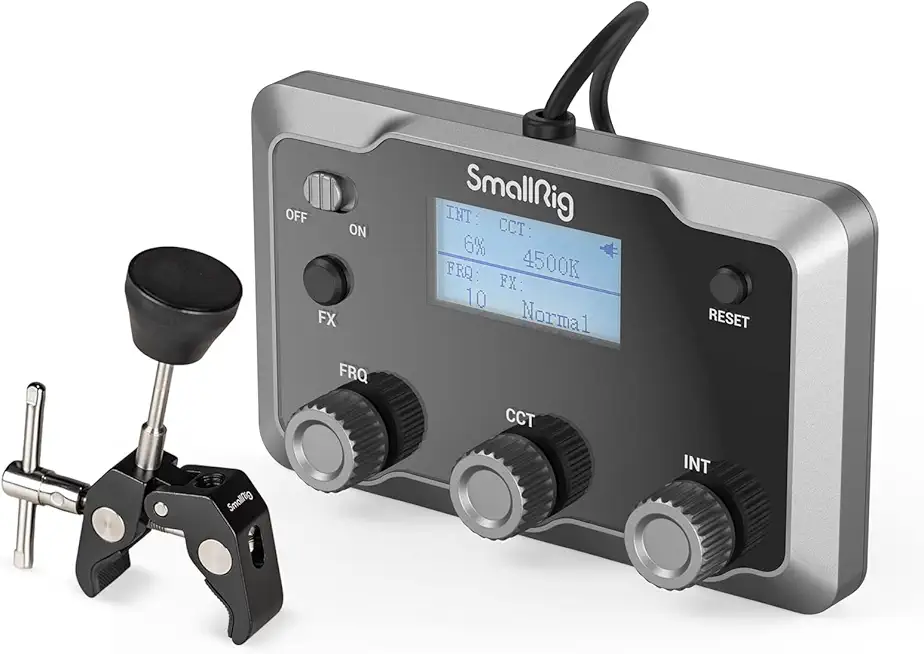
SMALLRIG Control Panel for RC350/RC450/RC220 PRO COB Video Light (2in LCD, Magic Arm)

GODOX SL-60W Kit LED Video Light 5600K with Softbox, 2.8m Stand, Bowens Mount
1. Rotolight AEOS 2 Pro

Rotolight AEOS 2 PRO RGBWW LED Light with HSS Flash
Compact, ultra-fast full-spectrum RGB lighting with high-speed sync flash, cinematic color control, and precise illumination for pro video and photography.
Check PriceThe Rotolight AEOS 2 Pro is a high-end, full-spectrum LED panel built for filmmakers who need cinematic control on location. It feels like a studio tool in a portable package, designed to deliver creative looks without hauling a full lighting truck.
Color is where the AEOS 2 Pro really shines — literally and figuratively. It offers millions of colors and cinema-grade presets, including Roy Wagner and Stefan Lange looks, and the responsive color touchscreen makes dialing those in fast. The on-screen color matches what you see in the real world, so what you set is what you get on camera.
Rotolight boosted output by 25% over the predecessor, which gives you the headroom to compete with sunlight and to effectively fill larger spaces. Despite that extra punch, the unit remains lightweight for its class while keeping a robust build suitable for location work. That balance makes it a solid choice for solo operators who need portability without compromising quality.
This light is best for advanced shooters and indie filmmakers who want creative control and cinematic presets at their fingertips. It’s intuitive for experienced users, but note the downsides: it’s a significant investment and has a steeper learning curve for beginners. If budget or simplicity is your top priority, this may be more tool than you need. If, however, you want studio-quality looks on location and value color fidelity, the AEOS 2 Pro is mostly a very good match.
- Millions of colors & cinema-grade presets
- Responsive color touchscreen with accurate on-screen color
- 25% brighter than predecessor
- Lightweight yet robust for location work
- High cost / significant investment
- Steeper learning curve for beginners
2. Nanlite Forza 60C

NANLITE Forza 60C RGBLAC 88W LED Video Light (1800-20000K)
High-output, compact LED delivering broad 1800–20000K color range, adjustable RGB tones, and efficient 88W performance for versatile studio and location shoots.
Check PriceThe Nanlite Forza 60C is a compact RGBLAC spotlight built for filmmakers who want precise color control without hauling heavy kit. Its RGBLAC system lets you dial in accurate, creative color and match practicals or gels with confidence. This makes it ideal when skin tones and subtle tints matter.
Despite its small footprint, the Forza 60C delivers a powerful, focused output that works brilliantly as a highlight or accent light. I use it to carve out hair light and rim detail on location because it punches through backgrounds without overwhelming the scene. It’s a great tool for adding polish to a one-operator setup.
Thermals and noise are important on set, and the Forza 60C runs relatively cool with minimal fan noise. That low acoustic profile is a real plus for interviews and dialogue-heavy scenes where you can’t mask fans in post. Its portability also makes it a favorite for run-and-gun shoots.
Where the light truly stands out is its animated effects and creative presets. Those are fantastic for narrative and commercial work where you’re shaping mood and want practical-style effects without rigging. However, the effects are niche; if you mainly need a straightforward key or fill, they may be overkill.
Value is the trade-off: the Forza 60C is on the pricier side compared to similar-sized fixtures. If you don’t need advanced color tools or animated effects, the cost can be hard to justify. But for cinematographers wanting a small, color-accurate, quiet accent light, it’s a strong contender.
- RGBLAC accurate, creative color
- Powerful, focused output in small package
- Runs relatively cool with minimal fan noise
- Wide range of animated lighting effects
- Pricey compared to similar-sized lights
- Effects have niche appeal
3. SmallRig RC 350D COB LED Video Light
SMALLRIG Control Panel for RC350/RC450/RC220 PRO COB Video Light (2in LCD, Magic Arm)
Intuitive 2-inch LCD control module with articulating magic arm, enabling precise onboard adjustments and secure mounting for COB video lights.
Check PriceThe SmallRig RC 350D is a high-powered COB LED designed to behave like a proper workhorse on both studio and location shoots. It delivers the kind of output and control you expect when you need a reliable key or dramatic source without fiddly temperamental behavior.
What stands out is the powerful, even output — strong enough for keying, interviews, and dramatic scenes where consistent coverage matters. That evenness makes it easy to shape with modifiers and predictable when matching multiple fixtures.
It also includes built‑in special lighting effects that are genuinely useful for narrative and dramatic productions, not just party tricks. Those effects give you quick practicals and atmosphere in-camera, which saves time and can spark creative looks on set.
On set the unit behaves like a pro piece of kit: quiet fans that don’t interfere with audio and a solid, professional build that takes the knocks of location work. That reliability matters when you’re juggling crew, talent, and tight schedules — you want lights that disappear into the background and simply perform.
There are trade-offs. The RC 350D sits at the high end of SmallRig’s range and is positioned as an expensive option, so it’s an investment rather than an impulse buy. A few users have also reported companion app connectivity issues, which can be a frustration if you plan to rely on remote control.
If you’re a dedicated filmmaker or run a production house, this is a dependable mainstay that covers key, fill, and creative dramatic needs very well. If you’re a casual creator or on a tight budget, the price and occasional app hiccups may make something simpler a better fit.
- Powerful, even output
- Built-in special lighting effects
- Quiet fans — minimal audio interference
- Solid, professional build quality
- High-end / expensive
- Some app connectivity issues reported
4. Godox SL-60W Lighting Kit
GODOX SL-60W Kit LED Video Light 5600K with Softbox, 2.8m Stand, Bowens Mount
Complete daylight-balanced kit with softbox, tall stand, and Bowens mount for smooth, flattering light ideal for interviews, streaming, and small studios.
Check PriceThe Godox SL-60W is a budget-friendly continuous LED kit that punches well above its price class. It’s aimed at semi-pros, content creators, and small studios who need reliable, simple lighting without a lot of fuss.
Out of the box it delivers impressive output — 18,600 lux at 1m with the reflector — which makes it capable as a key for interviews, YouTube setups, and product videography. Color accuracy is strong too, with a reported CRI of 96, so skin tones and product colors render naturally under the light.
Practically speaking, the integrated power supply (no external brick) keeps setups cleaner and makes it easier to move between rooms or small studios. Fans are quiet with minimal noise, so you can use it on interview shoots or tutorials without worrying about audio contamination.
There are a couple of compromises to keep in mind. Modifier compatibility is a bit limited because there’s no umbrella mount, so if your workflow depends on umbrellas you’ll need adapters or alternative softboxes. Some operators also note the handle ergonomics aren’t the most comfortable for frequent repositioning.
For a photographer or videographer building a small, efficient kit, the SL-60W is a solid value — bright, color-accurate, and practical for green screen, tutorials, and product work. If you need an umbrella-friendly fixture or an ergonomically tuned grip for heavy daylong moves, consider those limits before you buy.
- 18,600 lux at 1m (with reflector)
- High color accuracy — CRI 96
- Integrated power supply (no external brick)
- Quiet operation, minimal fan noise
- No umbrella mount
- Handle ergonomics less comfortable for some
5. Amaran 100d One-Light Kit

Amaran 100dS 100W COB Daylight LED Video Light
High-output 100W COB daylight source delivering focused, flicker-free illumination with robust build and professional color accuracy for video production.
Check PriceThe Amaran 100d is a compact LED that I reach for when I need a reliable one-light kit for interviews, vlogging, and small filmmaking. It’s lightweight and easy to transport, so it’s perfect for run-and-gun shoots or a solo operator packing minimal gear.
Its high color accuracy and good skin-tone reproduction make it especially useful as a staple key light. I’ve found it reproduces faces naturally, which saves time in color grading and keeps subjects looking flattering on camera.
It’s also compatible with industry-standard softboxes, umbrellas, and domes, so shaping and softening the light is straightforward. Because the unit runs quietly, it’s safe to use on audio-critical shoots without worrying about fan noise leaking into your recordings.
Be realistic about output: the 100d has lower output than larger units, so it’s not the best choice for lighting very large spaces or overpowering daylight. In practice, you’ll often pair it with diffusion tools or other modifiers to get that soft, flattering look I prefer for interviews and narrative close-ups.
All in all, if you’re a budget-conscious creator or small production looking for a portable, color-accurate key light, the Amaran 100d is a smart, practical option. It gives professional-looking results when used with the right diffusion and modifiers.
- Compact and lightweight
- High color accuracy; good skin tones
- Works with standard softboxes/umbrellas/domes
- Quiet operation for audio shoots
- Lower output for large spaces
- Often needs extra modifiers for soft light
Key Factors for Choosing Lights
Think of lights as part of the cast — they need to support the story, not distract from it. Before picking gear, decide the mood: warm and intimate, cold and clinical, or high-contrast and dramatic. That choice narrows your options and guides modifiers and color decisions.
Lean on fundamentals; three-point lighting is a compact language for shadow, depth and subject separation. Key sets the character, fill controls shadow strength, and a backlight gives separation from the background. Use the system as a flexible starting point rather than a strict rule.
One of the biggest artistic calls is hardness versus softness. Soft light flatters faces and reads as natural, while hard light adds texture, tension and edge. Choose modifiers accordingly: diffusion for softness, bare or focused optics for harder highlights.
Color temperature shapes time of day and emotion more than almost anything else. Keep temperatures consistent or intentionally mixed with gels and white-balance adjustments to sell the look. Small shifts in color can turn a morning into a late-night scene, so be deliberate.
Control over intensity lets you guide the eye and create depth. Remember the inverse square law — moving a light a little changes falloff dramatically, which is a useful creative tool. Dimmers, flags and scrims give nuanced control without changing color or quality dramatically.
Equipment choices should be practical. LEDs are portable, efficient and easy to color-adjust, while tungsten still has its warm character and costs in heat and power. Prioritize lights that accept common modifiers and consider fan noise, battery options and on-location ergonomics.
In short, choose lights that match the mood and give you control. Don’t chase raw output alone; prioritize color accuracy and modifier compatibility. When in doubt, rent a unit and test it in the real scenarios you shoot — the hands-on lesson is worth the price.
Achieving Cinematic Lighting
Lighting is storytelling. Before you place a single lamp, decide the mood, where shadows should fall, and what emotion the scene must sell.
Three-point lighting remains the quickest way to sculpt a subject. Place the key at a three-quarter angle (around 4–5 o’clock) and slightly above eye level; use a soft fill to tame shadows and a backlight to carve separation.
Decide between soft and hard light with intent. Soft light—made with diffusion, large softboxes, or bouncing off walls—flatters skin and feels natural; hard light from small, focused sources adds texture and tension, useful when you want edges and character.
Practical lights—table lamps, candles, neon signs or a TV—do double duty as set dressing and motivated sources. Match their color temperature with subtle gels or use off-camera fixtures to reinforce them so the light reads as coming from the visible source.
Create depth by lighting foreground, subject, and background independently. A rim or hair light lifts the subject and separates them from the frame. Choose lens and aperture to control how much background lives in or out of focus.
Respect falloff: moving a light a few feet can change exposure dramatically because of the inverse square law. Feather the edge of your key to avoid hot spots, and use flags or cutters to keep spill off areas you want to stay dark. Small angle and distance tweaks often beat turning a fixture up to full blast.
Think in ratios and color to shape mood: a 2:1 or 4:1 key-to-fill ratio controls contrast, and pairing a warmer key with a cooler fill creates a subtle emotional push/pull. Dial gels or kelvin-tuneable LEDs to taste, check on a calibrated monitor, and always run quick tests—sometimes holding a touch of shadow and protecting highlights is the fastest route to a cinematic image.
What People Ask Most
What kind of lights do filmmakers use?
Filmmakers use a range of fixtures including modern LEDs and traditional continuous sources to shape light and color. They pick lights based on portability, color control, and how well the fixture fits the scene’s needs.
What is the best lighting setup for filmmaking?
There is no single best setup; the right arrangement depends on the story and the mood you want to create. Effective setups define the subject, control shadows, and create separation from the background.
Are LED lights suitable for filmmaking?
Yes, LED lights are widely used for their efficiency, color options, and flexibility on set. They are particularly valued for portability and ease of control in a variety of shooting situations.
How many lights do you need for a film shoot?
The number of lights depends on scene complexity and the visual goals you have. Simple scenes can work with a single well-placed source, while more elaborate setups use multiple lights to build depth and mood.
What color temperature is best for filmmaking?
The best color temperature is the one that supports the scene’s atmosphere and maintains consistency across your sources. Match or deliberately contrast practicals and ambient light to reinforce the desired mood.
What is three-point lighting and how is it used in film?
Three-point lighting uses a key light to define the subject, a fill light to soften shadows, and a backlight to separate the subject from the background. It’s a foundational method for creating depth, control, and a natural sense of shape.
How do cinematographers choose the right lights for a scene?
Cinematographers weigh the story, location, required color accuracy, and practical constraints like noise and portability. They also consider how modifiers and placement will achieve the desired contrast and texture.
Conclusion for Best Filmmaking Lights
To recap: the AEOS 2 Pro, Forza 60C and SmallRig RC 350D are geared toward feature‑film and professional productions, while the Godox SL‑60W and Amaran 100d offer strong, budget‑friendly options for semi‑pro and prosumer creators.
Balance practical factors—noise, portability, color accuracy, modifier compatibility and budget—against the creative looks and workflow you need for each project.
Let story and mood drive your lighting choices, using the right combination of control and simplicity to support the scene rather than overwhelm it.
If you’re looking to improve, read more articles on our site for practical tips and techniques you can apply on your next shoot.
Have a question or want to share your experience with any of these lights? Leave a comment below and we usually reply within a few hours.



0 Comments