
Ever wondered what separates a merely detailed close‑up from an image that stops viewers in their tracks? Choosing the right lens is often the single biggest factor in successful macro photography. This guide cuts through hype and points you toward practical choices for the best lenses for macro photography so you can buy with confidence.
Whether you’re a seasoned macro enthusiast chasing tiny insects in the field or a curious beginner exploring tabletop florals, this list is for you. It focuses on lenses that deliver crisp detail and usable working distances. You’ll also see which tools fit different budgets and shooting styles without wasting money on features you won’t use.
We put lenses through real‑world use to highlight how reach, stabilization, autofocus behavior, and ergonomics affect results. The comparisons span extreme magnification options and more versatile macro primes that double as short telephoto lenses for portraits. Along the way we note ease of use in the field, compatibility with lighting, and overall value.
Expect concise, practical buying advice and hands‑on tips that translate to sharper, more compelling close‑ups. We avoid dense lab talk and focus on what photographers actually notice when shooting tiny subjects. Read on to find the macro lens that best fits your kit, workflow, and creative goals.
1. OM System 90mm Macro IS PRO
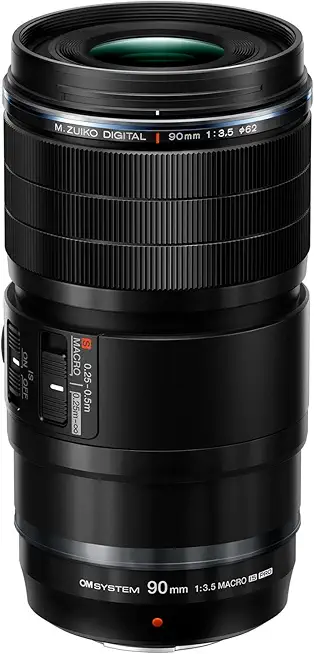
OM System M.Zuiko Digital ED 90mm F3.5 Macro Micro Four Thirds
Compact, high-resolution macro lens delivering 1:1 magnification, crisp detail and smooth bokeh for close-up creativity.
Check PriceThe OM System 90mm Macro IS PRO is a Micro Four Thirds specialist built to push close‑up work further than a typical macro. It delivers 2.0x magnification — twice life‑size — so you get detail beyond the common 1:1 standard.
In S Macro mode it focuses down to 22.4 cm, and that’s enough to fill the frame with a subject roughly 9.7 × 6.5 mm. That kind of reach lets you capture tiny insect eyes or texture crops without resorting to stacking or extreme extension tubes.
If you need even more reach, the lens accepts 1.4x and 2x teleconverters, which is rare in the macro world and useful when you want extreme close‑ups without changing your working distance. Be prepared to adapt lighting and technique as magnification climbs.
One of the most practical features for field use is its built‑in optical image stabilization rated at 6 stops — a genuine advantage for handheld macro work where tripods are impractical. Combined with the lens’s weather protection, you can shoot damp meadows and windy conditions with confidence.
Construction is rugged and weather‑sealed to IP53, so it’s designed for outdoor use rather than purely studio work. As a tool it’s mostly excellent for serious macro shooters who want extreme close‑ups and handheld capability, though newcomers should expect a learning curve and a higher price point.
- 2.0x magnification (twice life‑size)
- Minimum focus 22.4 cm; frame ≈ 9.7 × 6.5 mm
- Works with 1.4x and 2x teleconverters
- Built‑in optical IS rated for 6 stops; IP53 weather‑sealed
- Steeper learning curve for new users
- Relatively expensive compared to simpler macro lenses
2. Laowa 25mm Ultra Macro 2.5–5x

Venus Laowa 25mm f/2.8 2.5-5x Ultra-Macro Nikon F
Ultra-high magnification for revealing microscopic textures, wide-angle perspective, and precise manual control for striking extreme close-ups.
Check PriceThe Laowa 25mm f/2.8 2.5x–5x Ultra Macro is a specialist’s tool for extreme close-up work, offering magnification up to 5x — far beyond the standard 1:1 — so you can capture micro details that are otherwise invisible. That level of magnification makes it ideal for tiny subjects like insect eyes, micro textures, and tiny mechanical parts, but it also means working distances are very short and lighting and stability become critical.
This lens is fully manual: both focus and aperture are controlled by hand with no electronic communication with the camera. Because of that, it’s best used on a tripod with a macro rail for precision focus stacking and composing; handheld shooting is impractical for most subjects at these magnifications.
One thoughtful part of the design is the slim tapered barrel, which reduces subject shadowing and makes it easier to position lights close to the subject. That slim profile helps you get clearer, better-lit shots without the lens blocking your flash or LED ring lights.
Laowa offers this optic across many mounts — Canon EF, Nikon F, Sony E, Canon RF, Nikon Z, Pentax K, L-mount — and it covers full-frame sensors, so it’s widely compatible with different systems. Compared with other ultra-macro options, it’s also an affordable way to reach extreme magnifications without spending a fortune.
If you’re a patient shooter who enjoys technical work like focus stacking and controlled lighting, this lens is brilliant. If you prefer autofocus, quick handheld shooting, or automatic metering, the manual nature and lack of electronics will be frustrating.
- Exceptional magnification up to 5x
- Slim design reduces shadowing
- Wide mount compatibility (EF, F, E, RF, Z, K, L)
- Affordable vs other ultra-macro options
- Fully manual focus and aperture — challenging for beginners
- No autofocus or electronic metering
3. Nikon Z MC 105mm VR S

Nikon NIKKOR Z MC 105mm f/2.8 VR S Z mount
Stabilized medium-telephoto macro producing buttery bokeh, fast aperture and professional sharpness for portraits and intricate close-up work.
Check PriceThe Nikon Z MC 105mm f/2.8 VR S delivers true 1:1 life-size magnification, so you can fill the frame with tiny subjects without accessories. It’s optimized for close work, letting you capture fine textures and tiny details at life-size reproduction.
Image quality is outstanding — razor-sharp across the frame from f/2.8 to f/11. Chromatic aberration and distortion are very well controlled, so files need minimal correction in post.
Autofocus is accurate, but somewhat slow and can hunt before locking. That makes the lens better suited to controlled subjects or studio setups than frantic, fast-moving insects.
Handling feels professional. The lens has a pro-grade build with weather sealing, a multi-function OLED barrel display, a customizable control ring, a focus limiter, and a focus-hold button for precise work.
Stabilization is strong in practice because optical VR pairs with camera-body stabilization. That VR + body-IS synergy makes handheld macro shooting far more usable, especially when you need mobility or can’t use a tripod.
As a working photographer, you’ll appreciate the combination of top-tier optics, solid build, and thoughtful controls. If you prioritize ultimate image quality and reliable handheld performance in studio and field work, this lens is mostly a very good fit — keep in mind the AF behavior and its heft/cost when deciding.
- 1:1 life-size magnification
- Razor-sharp from f/2.8 to f/11
- Pro-grade build with weather sealing and OLED display
- Optical VR + body IS works well handheld
- AF can be noticeably slow and hunt
- Heavier and more expensive than some alternatives
4. Sigma 105mm DG DN Macro Art

Sigma 105mm F2.8 DG DN Macro Art Sony E-mount
Art-series optical performance with silky bokeh, accurate autofocus, and 1:1 reproduction for studio and field macro excellence.
Check PriceThe Sigma 105mm f/2.8 DG DN Macro Art (Sony E and L-mount) is a true 1:1 life-size macro that delivers super-sharp images and reveals ultra-fine detail — perfect for insects, textures, and any subject where resolution matters. Its f/2.8 aperture gives you control over background separation, so it doubles nicely as a short-tele portrait lens when you need pleasing subject isolation.
Handling feels professional: the lens is weather-sealed and includes an aperture control ring with click/declick options, plus an autofocus range limiter to speed up close-work. Those tactile controls make it much easier to work in the field and switch between critical macro focus and slightly longer portrait distances.
Autofocus performance is fast and accurate, which helps when shooting live subjects or working handheld; you’ll find it suitable for both macro and short-tele portraiture. Be aware, though, there is no built-in optical image stabilization, so this lens depends on your camera’s in-body IBIS or on a tripod for the steadiest results at high magnification.
If you shoot on a mirrorless body with good IBIS, this Sigma is an excellent, versatile choice — razor-sharp for close detail and comfortable enough for portraits. If your camera lacks stabilization or you need an ultra-light setup, the Sigma’s larger/heavier footprint and lack of optical IS could be limiting factors.
- Outstanding sharpness and detail
- Weather-sealed build with refined handling
- Fast, precise autofocus
- Versatile for macro and portrait work
- No optical image stabilization
- Larger and heavier than some macro primes
5. Tamron 90mm Di III VXD

Tamron 90mm F/2.8 Di III VXD 1:1 Macro Sony E-mount
Fast-aperture macro delivering true 1:1 magnification, snappy focus, crisp detail and pleasing background separation for close-up artistry.
Check PriceThe Tamron 90mm f/2.8 Di III VXD is a compact, lightweight 90mm macro built for Sony E and Nikon Z shooters. It offers a true 1:1 life-size magnification that handles tiny subjects without hand-holding you back from portraits.
Optically it’s superb — very sharp with a pleasing bokeh thanks in part to its 12‑blade circular aperture. That rendering makes it a great dual-purpose lens for intimate insect work and flattering close-up portraits.
Autofocus is driven by Tamron’s VXD motor, which is fast, quiet, and precise. In practice that means you can chase small, skittish subjects handheld more often than you’d expect with a macro lens.
Build-wise it’s weather resistant and intentionally compact, so it’s easy to carry on long walks or into fieldwork. Minimal focus breathing also makes it friendly for video shooters who need consistent framing while racking focus.
It also pairs very well with flash and off-camera lighting because of its close-working distance and optical performance. That combination helps overcome the one clear weakness: it lacks built-in image stabilization.
If you mostly shoot handheld and your camera has IBIS, or you use flash and a tripod for critical shots, this lens is a strong, versatile choice. If you routinely shoot in very low light without support, plan to add lighting or a stabilization solution.
- Sharp optics and attractive bokeh
- Fast, lightweight, quiet autofocus
- Weather-sealed; good minimum focusing distance and 1:1 magnification
- Minimal focus breathing — video-friendly
- No built-in image stabilization
- May require additional lighting in low light
What Are Extension Tubes
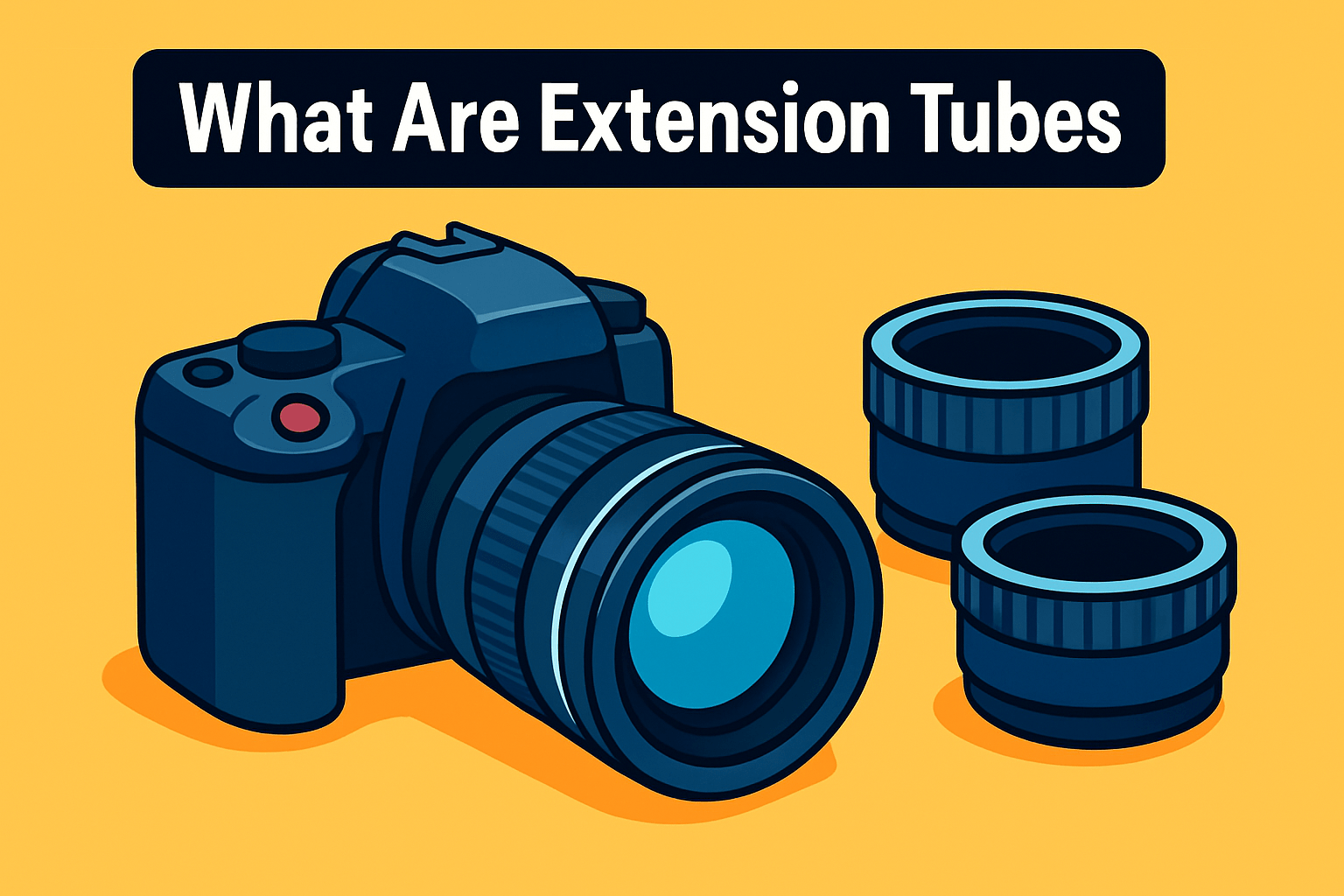
Extension tubes are hollow spacers that sit between your camera body and lens. They contain no glass, but by increasing the distance between the lens and sensor they let the lens focus much closer and boost magnification.
How much closer depends on the tube length relative to your focal length. For example, a 20mm tube on a 50mm lens gives a larger proportional boost than that same tube on a 100mm lens, and you can stack tubes for even more magnification—at the cost of working distance.
There are trade-offs. With tubes attached you lose infinity focus, so the lens only works for close subjects, and there’s noticeable light loss—your effective aperture increases—so expect longer exposures or the need for extra lighting.
Depth of field also becomes razor-thin when you’re this close, so stop down and consider focus stacking to get usable depth. Optical performance when stopped down can be very good, but corners often won’t match a purpose-built macro lens.
In the field I use a tripod, live view with focus peaking, and a macro rail for precise framing, plus a small flash or LED panel to compensate for light loss. Modern tubes with electronic contacts keep aperture control and sometimes autofocus working, which makes them far friendlier than the old manual-only rings. Don’t over-stack tubes unless you’re prepared for very small working distances and more light loss.
They’re a fantastic, inexpensive way to experiment with close-ups using lenses you already love. Start with a single 12–20mm tube on a 35mm or 50mm prime, practice on static subjects, and you’ll quickly learn how to balance aperture, stacking and lighting to get the best results.
Why You Don’t Need a Macro Lens
You don’t need a dedicated macro lens to start making compelling close-ups. If macro is something you’ll do occasionally or want to try without a big outlay, extension tubes are a practical way to turn the glass you already own into a macro tool.
Extension tubes are simple hollow spacers that sit between your lens and camera body, increasing the distance from the optics to the sensor so the lens focuses much closer. The magnification you get depends on the tube length relative to your lens focal length, and you can stack tubes for more reach — for example a 20mm tube gives a proportionally larger boost on a 50mm than on a 100mm.
They’re compact, inexpensive and excellent for learning the craft. Many modern tubes keep electronic contacts so autofocus and exposure metering continue to work, which makes them surprisingly friendly out in the field.
There are trade-offs, though. Tubes prevent your lens from focusing to infinity and you’ll lose some light, so exposure adjustments are necessary. Depth of field becomes incredibly shallow; stopping down and using focus stacking will help recover sharpness and detail.
In image quality terms, extension tubes can deliver very pleasing results when you stop down and stack, but dedicated macro lenses still have the edge for edge-to-edge sharpness and everyday versatility. A true macro prime will let you go from infinity to 1:1 and still serve as a great portrait or product lens.
My rule of thumb as a working photographer: use extension tubes to experiment, to learn lighting and stacking workflows, or when you only need occasional close-ups. If macro is a core part of your work, invest in a proper macro lens; if you’re testing the waters, tubes are the smarter, more portable first step.
What People Ask Most
What focal length is best for macro photography?
There is no single best focal length; the right choice depends on your subject and how much working distance you need. Shorter macro focal lengths are compact and good for stationary subjects, while longer macro lenses give more space between you and the subject.
Do I need a dedicated macro lens for macro photography?
No, a dedicated macro lens is not strictly required to get close-up results. Alternatives like extension tubes can provide magnification, but a dedicated macro lens is more convenient and versatile for consistent, high-quality close-up work.
Can you use a standard lens for macro photography?
Yes, standard lenses can be adapted for close-up work using extension tubes or close-up adapters. Expect a reduced focusing range and shallower depth of field, so support and careful technique are often needed to achieve sharp results.
What does 1:1 magnification mean in macro lenses?
It means life-size reproduction on the camera sensor, so the subject is recorded at the same size on the sensor as it is in reality. This is a common reference for true macro capability.
Are extension tubes effective for macro photography?
Yes, extension tubes are an effective and affordable way to increase magnification with existing lenses. They limit focus range and require exposure and depth-of-field adjustments but are a practical option for experimenting with close-up work.
What aperture should I use for macro photography?
Use a relatively small aperture to increase depth of field and consider focus stacking for greater overall sharpness. Be aware that stopping down and close focusing reduce available light, so plan your lighting accordingly.
How close does a macro lens need to be to the subject?
The required distance varies by lens and the magnification you want to achieve, so minimum focus distance depends on the lens design. If you need more working space from the subject, choose a longer focal length macro lens.
Conclusion for Best Lenses for Macro Photography
This roundup is meant to help you weigh practical trade-offs: choose extreme magnification when you need tiny-detail close-ups, opt for pro-grade optics and controls when edge-to-edge image quality matters, favor versatile fast-AF options for handheld or hybrid work, or use extension tubes as an affordable way to experiment.
Your best pick depends on subject, shooting style and budget—studio tripod work and pixel-peeping call for different tools than fast handheld insect hunting or portrait/macro hybrid use.
If you want to keep learning and sharpen your technique, explore more articles on the site for lens comparisons, shooting tips and real-world workflows to build confidence behind the camera.
Have a question or want to share your own experiences with close-up gear? Leave a comment below—we usually reply within a few hours.


0 Comments