
Want to freeze a hummingbird’s wingbeat or frame a distant raptor in sharp detail without blowing your budget?
This ultimate guide compares five budget-friendly cameras that deliver the field-ready features birders need, translating technical tradeoffs into clear, money-smart choices so you can focus on birds instead of gear anxiety.
Bird photography pushes cameras to their limits — tiny fast subjects, long distances, and shifting light make every specification matter in the field.
We’ll weigh the practical balances: portability versus telephoto reach, autofocus speed and tracking, sensor image quality, stabilization strategies, and weather sealing so you know which compromises are acceptable for your shooting style.
Whether you’re a weekend birder stepping up from a smartphone or a budget-conscious enthusiast planning long mornings at the marsh, this guide is built around value and real-world usability.
Expect candid assessments of handling, battery life, and performance so you can pick a setup that matches your stamina for hiking, travel, and patient stakeouts.
We strip away marketing noise and focus on what truly matters in the field — sharp focus on birds, usable telephoto reach, steady shots, and weather-ready durability.
Read on to discover which five cameras give you the best birding bang for your buck and which tradeoffs will suit your favorite habitats and subjects.
1. Olympus OM-D E-M10 Mark IV

OM System E-M10 Mark IV Micro Four Thirds Camera
Compact mirrorless powerhouse with impressive stabilization, fast autofocus, and creative features ideal for travel, street, and everyday photography.
Check PriceIf you’re just getting into birding and want a camera that won’t weigh you down, the Olympus OM-D E‑M10 Mark IV is a smart pick. It’s recommended for starters and budget‑conscious bird photographers who value portability and straightforward handling.
Being a Micro Four Thirds system, it balances image quality with lens portability — so you can carry longer glass without collapsing your back on a long hike. Users praise its compactness, lightweight design, good ergonomics and accessible controls, which makes long days in the field far more pleasant.
The in‑body image stabilization (IBIS) is a real advantage for handheld shots and when you need to drop shutter speeds a touch. Burst shooting is reasonably fast to catch sequences of bird movement, so you’ll grab more keeper frames during action.
Autofocus is the one area to temper expectations: AF tracking can be unreliable for very fast or erratic subjects, and users note struggles with birds in rapid, unpredictable flight. That said, for perched birds, slow flyers or beginners learning to nail composition and timing, the camera’s AF is manageable.
In short, the E‑M10 Mark IV is mostly good for birders who prioritize portability, stabilization and ease of use over ultimate reach and pro‑level tracking. If you’re starting out or favor hiking light, it’s a practical, enjoyable tool; if your main targets are fast, distant fliers you may eventually want more telephoto reach or advanced AF.
- In-body image stabilization (IBIS)
- Lightweight and highly portable for travel and hiking
- Good image quality for a budget mirrorless Micro Four Thirds camera
- Reasonably fast burst shooting for bird movement
- AF tracking can be unreliable for very fast or erratic subjects
- Limited telephoto reach vs. larger-sensor systems unless paired with expensive lenses
2. Sony RX10 IV Bridge Camera

Sony DSC-RX10 III Cyber-shot
Versatile all-in-one bridge featuring a long zoom, large sensor, and high-speed shooting for wildlife, sports, and travel convenience.
Check PriceThe Sony RX10 IV is a true all‑in‑one for birders who want massive reach without carrying multiple lenses. It uses a fixed 1‑inch sensor and delivers a built‑in 600mm equivalent reach, so you can ID distant birds and fill the frame quickly in the field.
For action shots it shines: 24 fps burst with minimal rolling shutter and strong AF tracking make it easy to follow fast wingbeats. The autofocus is quick and reliable, so you spend less time missing shots and more time shooting.
Build quality is a plus for outdoor use. The body is rugged and weather‑sealed, and the high‑resolution EVF helps when the sun is bright or you’re glassing birds in dense cover.
Battery life is longer than most comparable bridge cameras, which matters on long mornings of stakeouts and migration watches. The convenience of an all‑in‑one package also makes it ideal for travel, backpacks, and days when you don’t want lens swaps.
The tradeoffs are real, though manageable depending on your priorities. The smaller 1‑inch sensor won’t match the image quality or high‑ISO performance of larger‑sensor interchangeable systems, so expect more noise in low light and less dynamic range. And because the lens is fixed, you can’t upgrade optics later if you want faster glass or different focal behavior.
Overall, if you value reach, speed, weather resistance and a single‑body workflow, the RX10 IV is a compelling, budget‑minded choice for serious casual birding and travel photography.
- Built‑in 600mm equivalent reach
- Fast 24 fps burst and strong AF tracking
- Weather‑sealed, rugged construction
- Long battery life for long shoots
- Smaller 1‑inch sensor limits image quality/high‑ISO
- Fixed lens — no option to upgrade optics
3. Nikon D7500 With Tamron 100-400mm

Tamron 100-400mm F/4.5-6.3 VC USD Telephoto Zoom Lens for Nikon DSLR
Lightweight super-telephoto zoom delivering sharp images, effective vibration compensation, and close-focusing reach for distant subjects and action.
Check PriceThe Nikon D7500 paired with the Tamron 100‑400mm is a solid mid‑level DSLR choice for birding on a budget. It delivers strong image quality and reliable autofocus that make it easier to capture fine plumage detail and quick bird movements. The Tamron 100‑400mm adds the telephoto reach you need for distant subjects without breaking the bank.
As a photographer who spends long days in the field, I appreciate the D7500’s rugged, comfortable body and its optical viewfinder. The tactile handling helps when you’re tracking fast birds and composing through variable light. Users report the system as well‑rounded and dependable for serious hobbyists.
The lens itself earns praise for reach and sharpness, which translates to usable, crop‑friendly images for IDs and prints. Autofocus performance on the D7500 handles most fast bird action well, so you won’t miss as many flight sequences. Just be mindful that this combo is heavier than many mirrorless or bridge options.
If you plan long hikes, factor weight into your setup and consider a monopod or sturdy strap; the payoff is higher image quality and a long zoom range at a sensible price. If you prefer silent shooting modes or the latest mirrorless AI eye/face detection, this won’t offer those features. For shooters who love an optical viewfinder and proven ergonomics, it’s mostly a win.
- Excellent image quality and sharpness for bird detail
- Robust build and comfortable handling
- Long zoom lens suited for distant subjects
- Good autofocus for fast bird movements
- Heavier and bulkier than mirrorless or bridge options
- Lacks mirrorless benefits like silent shooting or face/eye detection AI
4. Canon EOS R8
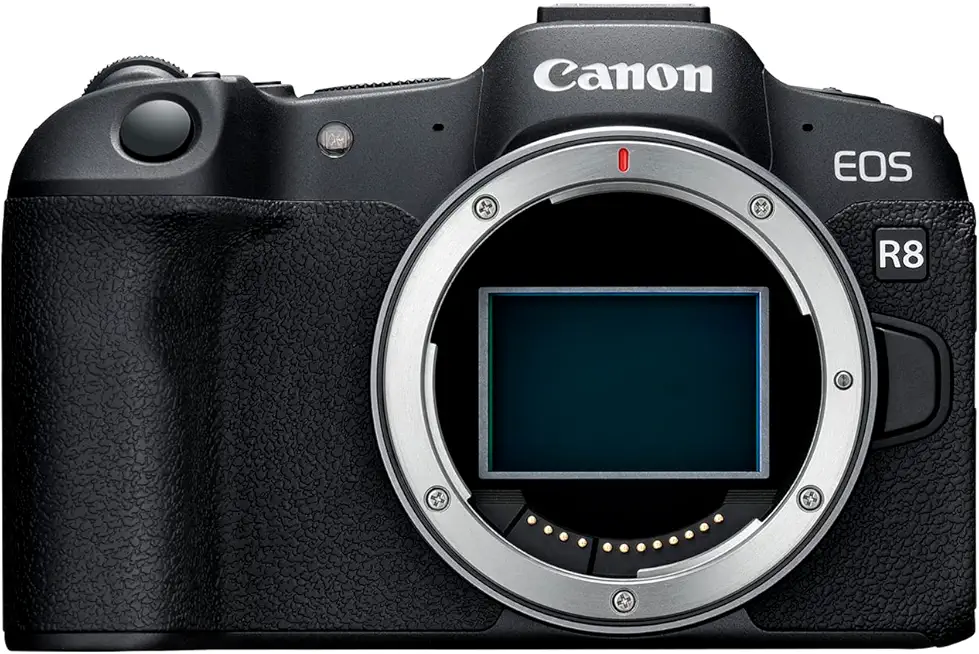
Canon EOS R8 Mirrorless Camera Body
High-performance full-frame option offering excellent low-light sensitivity, rapid autofocus, and cinematic video capabilities for creators and professionals.
Check PriceThe Canon EOS R8 is a compelling entry‑level full‑frame mirrorless for birding, especially if you want top-tier autofocus and image quality without hauling a heavy pro rig. It sports Dual Pixel CMOS AF II with dedicated bird and animal detection, which makes locking onto small, erratic subjects much less frustrating in the field.
Where this body really shines is action: the electronic shutter delivers very fast continuous shooting — up to 40 fps — so you can capture wingbeats and split‑second behavior sequences. The combination of high burst rates and the advanced AF tracking dramatically increases keeper rates for quick, nervous birds.
Because it’s full‑frame, you get the usual benefits: superior image quality, stronger low‑light performance and broader dynamic range that helps pull detail from tricky backlit scenes. Users also highlight that the R8 balances that performance with a compact, lightweight body relative to other full‑frame cameras, so it’s easier to carry on long walks or dawn patrols.
Practical caveats: many birders appreciate the silent electronic shutter in quiet situations, but battery life can feel limited during extended shooting sessions. Also, to reach distant subjects you’ll need investment in compatible RF telephoto lenses, which is something to factor into your budget if you want serious reach.
- Dual Pixel CMOS AF II with bird/animal tracking
- Very fast electronic continuous shooting (40 fps)
- Full‑frame image quality and low‑light ability
- Compact and lightweight for a full‑frame body
- Battery life can be limited during extended shooting
- Requires investment in compatible RF telephoto lenses for reach
5. Canon EOS R10
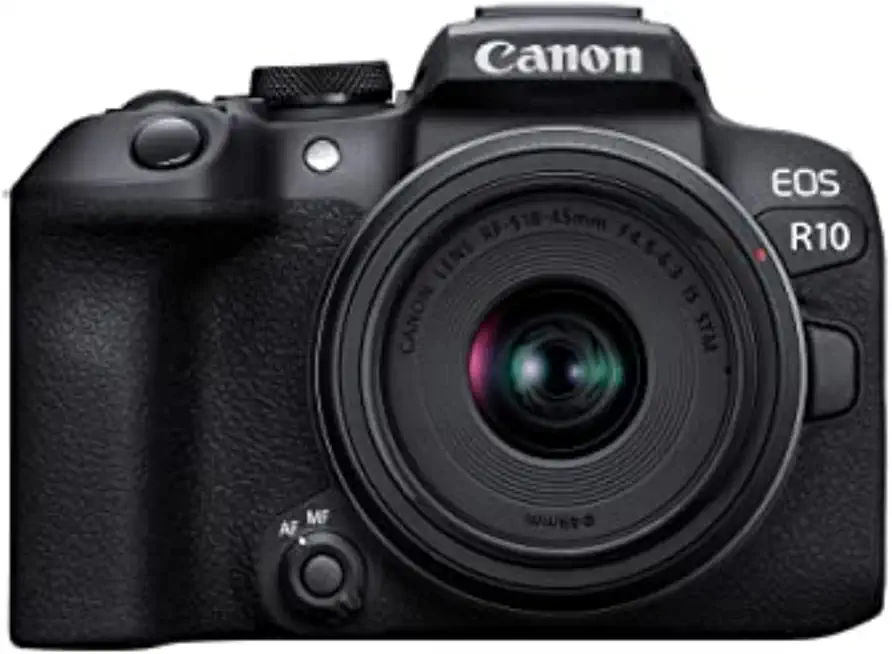
Canon EOS R10 Mirrorless Camera with RF-S 18-45mm Lens
Compact kit delivering agile performance, quick autofocus, and a versatile wide-to-standard zoom—perfect for vlogging, learning photographers, and everyday use.
Check PriceThe Canon EOS R10 is an affordable APS‑C mirrorless that delivers the core features birders need without breaking the bank. Its standout asset is a strong autofocus system with animal eye detection and a joystick for fast AF point control. That combination makes it a very practical everyday birding camera.
In real use the R10 shines on moving subjects. Users consistently praise its excellent AF for fast birds and the quick responsiveness you get from the joystick. Add good burst speeds and a comfortable ergonomic grip, and you have a camera that helps you hold steady on skittish subjects and capture decisive moments.
The APS‑C crop factor is another real-world advantage for birders on a budget. That extra reach effectively extends the focal length of your lenses, letting you frame tighter on distant birds without investing in large telephotos. Just be mindful that the body is not weather‑sealed, so plan around rain and coastal spray.
There are a couple of practical caveats. The mechanical shutter can be noisy and may disturb wary birds if you’re not careful. You can switch to the silent electronic shutter to reduce disturbance, but be aware that it may introduce distortion or banding in some lighting conditions. Overall, the R10 is a strong value proposition for birders who prioritize autofocus, reach, and handling over pro‑level weather protection.
- Effective animal eye AF and joystick for quick AF point selection.
- Good burst speed and comfortable handling.
- APS‑C crop factor enhances telephoto reach on budget lenses.
- Silent shutter option to reduce disturbance.
- No weather sealing; vulnerable in harsh conditions.
- Mechanical shutter noise may disturb wildlife if silent mode is not used.
Choosing Budget Birding Lenses
Choosing the right lens will make more difference to your bird photos than the camera body. For most budget birders I aim for something in the 100–600mm equivalent range. That span gives you the reach to isolate small birds and the flexibility to work from varying distances.
Zooms are the practical choice for beginners. Lenses like the Tamron SP 150–600mm or the Sigma 100–400mm give huge framing versatility and let you learn composition without constantly changing glass. If you want crisper detail and better low‑light performance, a prime such as a 300mm f/4 is lovely, but it narrows your composition options and often adds weight.
Stabilization matters more than many realize. If your camera has IBIS you can get away with lighter, non‑stabilized glass; without IBIS pick lenses with strong VR/IS. Good stabilization lets you handhold at longer focal lengths and still get usable shots during those long waits on a branch or in a hide.
Weight and portability often dictate how much you’ll actually use the gear in the field. A lighter zoom will get more outings than a heavy pro prime. Remember that APS‑C bodies effectively extend reach, so pairing a 100–400 on a crop body can be a very economical route to extra reach.
Also consider build and compatibility. Weather sealing is worth the premium if you shoot dawn, rain or shorelines. If you plan to use a teleconverter, verify the lens supports it and that AF performance remains acceptable; 1.4× is a useful compromise, 2× can be a real image‑quality and AF tradeoff.
Finally, prioritize reliable AF motors and lens‑to‑body synchronization. Fast, consistent AF tracking beats a marginally sharper lens when a bird is fleeting by. My practical tip: start with a versatile, stabilized zoom—buy used if needed—and upgrade to a prime once you’ve settled on the subjects and shooting style you love.
Autofocus Coverage and Speed for Birding
Autofocus is the difference between a keeper and a blurred memory when birds are on the wing. For birding you want a system that not only locks focus quickly, but keeps tracking when the subject darts, turns, or flies toward you. That means continuous AF with a strong predictive algorithm, plenty of AF points across the frame, and wide coverage so you can compose with the bird off‑center without fighting the camera.
Mirrorless bodies with animal or bird detection give a clear advantage because they can intelligently prioritize a bird’s head or eye. But a fast AF motor in the lens and good body‑lens communication matter just as much — a great sensor with weak lens pairing will still miss shots. On budget setups you can still get excellent results by choosing cameras with proven continuous tracking and pairing them with lenses known for reliable, quick AF performance.
In the field, technique counts. Use continuous‑servo AF and back‑button focus to avoid your camera refocusing at the worst moment. Try zone or expandable‑point modes rather than a single tiny point for unpredictable flight; they give the AF system a little breathing room to reacquire mid‑sequence.
Be mindful of light and aperture. Faster glass yields both better AF performance and higher keeper rates in low light, while teleconverters can reduce AF speed or stop it altogether on some bodies. If you’re chasing small, fast species increase shutter speed and rely on high burst rates paired with tracking AF to improve hit rate.
Finally, prioritize AF speed and coverage over sheer megapixels when choosing a birding camera. A slightly lower‑res body that nails focus consistently will give you far more usable images than a high‑res camera that hesitates on the crucial moment. In short: fast, wide, and reliable AF — plus practice with your settings — is the secret to more keepers in the field.
What People Ask Most
What features should I look for in a budget camera for birding?
Look for reliable autofocus, good telephoto reach and effective stabilization to help capture distant, fast-moving subjects. Also consider portability, battery life and basic weather resistance for use in the field.
DSLR or mirrorless: which is better for bird photography on a budget?
Either format can work well depending on your priorities. Mirrorless often offers modern autofocus and compact bodies, while DSLRs provide a familiar handling experience and optical viewfinders.
How important is autofocus speed for birding cameras?
Autofocus speed is very important because it reduces missed opportunities when birds move quickly or erratically. Consistent tracking and quick focus response make it easier to keep subjects sharp.
What focal length or zoom range do I need for bird photography?
Long telephoto reach is typically most useful to bring distant birds closer, while zoom lenses give flexibility for framing. Choose a range that balances reach with the weight and portability you can comfortably carry in the field.
Can a bridge or compact camera be suitable for birding?
Yes, bridge and compact superzoom cameras can be excellent for identification and casual bird photography because they offer long reach in a single, convenient body. The tradeoff is generally smaller sensors and lower low-light performance compared with larger-sensor interchangeable systems.
What lenses work best for birding with an entry-level camera?
Telephoto zooms that provide reach and image stabilization are a strong choice for versatility and easier framing. Prime telephotos can offer better image quality but tend to be heavier and less flexible for changing compositions.
How does sensor size affect bird photography performance?
Sensor size influences image quality and low-light ability, with larger sensors generally delivering cleaner results in dim conditions. Smaller sensors can help extend apparent reach and allow for lighter, more compact systems, so there is a tradeoff between image quality and practicality in the field.
Conclusion for Best Budget Birding Cameras
Whether you value portability, raw image quality, built‑in reach, or the best autofocus you can afford, these five budget options show there’s a practical birding camera for almost every priority and budget.
Weigh the core tradeoffs—autofocus speed and tracking, telephoto reach, stabilization, portability and weather resistance—against how and where you plan to shoot to find the best balance for your needs.
If you want to keep improving your skills and gear knowledge, take a look at more guides and reviews on the site to deepen your understanding and sharpen your techniques.
Have questions about a specific setup or your own shooting goals? Leave a comment below and we usually reply within a few hours.



0 Comments