
What’s the one camera that will make your TikToks look like they were shot by a pro without a film school degree? From pocket gimbals to rugged action cams and compact mirrorless bodies, we tested five standouts. These are the best cameras for filming TikToks in 2026, chosen through hands-on trials and creator feedback.
We combined expert lab testing with real-world shoots and user reviews. That meant shooting vertical clips, rapid edits, and everyday vlogging scenarios to see what truly holds up. Reliability under pressure mattered as much as headline specs.
This guide gives crisp pros and cons for each pick. It also explains which type of creator each camera suits — casual storytellers, selfie-vloggers, fast-action shooters, and creators who prioritize cinematic color. You’ll get practical buying advice so your choice matches both style and budget.
We paid special attention to autofocus, stabilization, ergonomics, and vertical-shooting workflows. We also flagged trade-offs like battery life versus portability and advanced controls versus ease of use. The goal was usefulness first, gear lust second.
Flip through the selections and you’ll quickly find the best camera for filming TikToks for your needs. Expect clear verdicts and honest guidance so you can spend less time researching and more time creating.
1. Sony ZV-E10 II Overview

Sony ZV-E10 II with lens
Compact mirrorless camera engineered for vloggers: superb autofocus, clear 4K imagery, flip-out screen and clean audio options for effortless content creation.
Check PriceThe Sony ZV-E10 II Overview is a compact APS-C mirrorless choice built for creators who prioritize image quality and ease of self-shooting. It houses a 26MP APS-C Exmor R sensor that delivers strong detail and color rendering, so your TikToks look noticeably more polished than typical smartphone clips.
Autofocus is a standout here: advanced AF with real-time tracking keeps faces and subjects sharp while you move or change scenes. That reliability lets you focus on performance and composition rather than babysitting focus during a take.
Video specs are creator-friendly — 4K up to 60p and cinematic, vlog-oriented settings mean you can capture smooth, high-resolution footage with pleasing color straight out of camera. Those creative settings are tailored for social media workflows, reducing time spent in post.
Ergonomically the ZV-E10 II stays lightweight and very portable, and the vari-angle flip-out touchscreen makes confident selfie framing effortless. The bright front-facing screen really helps when recording yourself, though be aware the menu system can feel complex at first.
Overall, this camera is excellent for TikTok creators who want a clear step up from phones without lugging a large rig. It’s especially good if you move a lot in your shots or want reliable autofocus and high-quality 4K. Just plan for shorter shooting blocks or extra batteries, because battery life could be better for long days.
- Fast, reliable autofocus for dynamic TikTok shooting
- Lightweight and portable
- Excellent 4K detail and color accuracy
- Creative settings tailored for social-media vlogging
- Menu system can confuse beginners
- Battery life could be better for extended shooting days
2. Fujifilm X-T200 Overview

Fujifilm X-T200 with XC15-45mm lens
Stylish lightweight mirrorless offering vibrant color science, intuitive controls, touchscreen, and versatile kit lens for stunning stills and smooth video.
Check PriceAs a photographer who shoots a lot of short-form video, I appreciate what the Fujifilm X-T200 brings to TikTok creators. It pairs a 24.2MP APS-C CMOS sensor with Fujifilm Film Simulation modes, so your clips look cinematic straight out of camera without heavy grading.
The 3.5-inch vari-angle, high-resolution touchscreen makes framing vertical selfies and vlogs effortless. The flip screen is bright and large, which is a real quality-of-life improvement when you’re shooting alone.
Video specs are practical for social use: 4K up to 29.97 fps, and Digital Gimbal stabilization in Full HD for smoother handheld footage. Do note the 4K recording is limited to 15 minutes per clip, so plan for shorter takes or frequent stops in longer sessions.
Autofocus is an intelligent hybrid system (phase + contrast detection) that performs well in good light, making it a great starter camera for beginners and intermediate creators moving up from smartphones. However, AF can slow down in low light or complex scenes, so you may need extra lighting or manual focus in those situations.
- Bright 3.5-inch vari-angle touchscreen
- Light and compact for easy handling
- Digital Gimbal stabilization for smooth Full HD footage
- Film simulations deliver attractive color without editing
- 4K limited to 15 minutes per clip
- Autofocus slows in low light or complex scenes
3. GoPro HERO11 Black Overview

GoPro HERO11 Black
Ultra-durable action camera with top-tier stabilization, waterproof design, high-resolution capture, and advanced time-lapse modes for extreme sports and adventures.
Check PriceAs a photographer who shoots action and lifestyle content, I reach for the GoPro HERO11 Black when I need rugged, no-fuss results. Its 5.3K video capture gives me plenty of resolution to reframe and crop vertical TikTok clips without losing detail.
HyperSmooth 5.0 stabilization is a game changer — footage is so steady that I often skip a gimbal altogether. The wide-angle lens and waterproof, durable build let me mount it on helmets, boards, or bikes and still get immersive, energetic shots.
The simplified UI and improved companion app make quick setups and edits possible between takes, which matters when you’re working fast for social content. It’s compact and easy to mount, so you can explore creative angles that stand out on feeds.
Be mindful of limits: shooting at 5.3K eats battery life fast, so plan for short bursts or bring spares. Also, the small sensor means it won’t match mirrorless cameras in dim or low light, so favor daylight or well-lit scenes for best results.
Overall, the HERO11 Black is mostly a win for creators who prioritize motion, durability, and portability. If your TikToks lean toward action, POV, or outdoor lifestyle content and you value smooth, ready-to-go footage, this camera will serve you well — just prepare for shorter runs at highest resolution.
- 5.3K capture for clean vertical crops
- HyperSmooth 5.0 — rock-solid stabilization
- Extremely rugged and waterproof
- Compact and easy to mount for creative angles
- Battery life limited at 5.3K
- Small sensor struggles in low light
4. Fujifilm X-S20 Overview
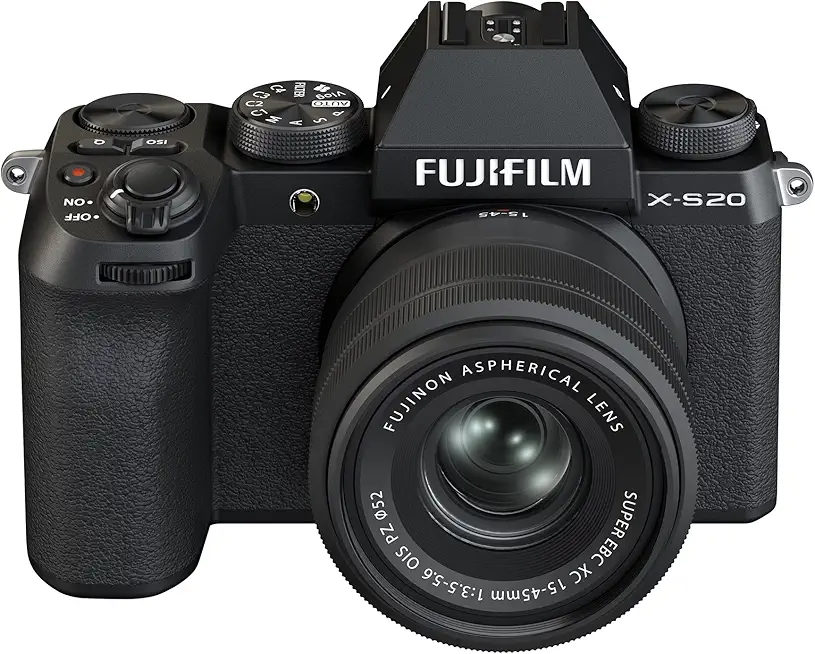
Fujifilm X-S20 with XC15-45mm kit
Hybrid powerhouse with in-body stabilization, professional video features, film simulations, and a light kit lens for versatile photography and vlogging.
Check PriceIf you want a camera that leans toward serious video work while still handling strong stills, the Fujifilm X-S20 is a compelling pick. It pairs a 26MP APS-C sensor with Fujifilm’s Film Simulation modes for immediately pleasing, cinematic color straight out of camera.
For video creators, the X-S20 goes beyond basic specs: 6.2K open-gate capture and 4:2:2 10-bit internal recording give you rich color and latitude for grading. The advanced AI-driven subject-detection autofocus, which excels down to −7 EV, keeps faces and moving subjects locked even in challenging light.
Stabilization and endurance are standout features for handheld or run-and-gun TikTok workflows. In-body image stabilization up to 6.5 stops and long battery life mean you’ll spend less on gimbals and batteries and more time actually shooting.
The camera’s tactile controls and retro styling make it pleasant to use, and built-in streaming features and vlog modes streamline social-first workflows. That said, it’s best suited to creators who want higher-end results and don’t mind a bit of complexity or a higher price point.
- Cinematic, colorful footage with creative profiles
- Strong autofocus and stabilization reduce accessory need
- Solid battery life for longer shoots
- Hybrid photo/video capabilities for versatile creators
- Price and complexity may intimidate casual or beginner TikTokers
- Smaller electronic viewfinder than some rivals
5. DJI Osmo Pocket 3 Overview

DJI Osmo Pocket 3
Pocket-sized gimbal camera delivering silky smooth footage, intuitive controls, high-quality video, and quick social-ready clips wherever you go.
Check PriceThe DJI Osmo Pocket 3 is a pocket gimbal camera that feels designed for creators who prioritize mobility and steady footage. Its built-in 3-axis stabilization and tracking let you capture smooth, professional-looking clips without lugging a separate gimbal. The unit is genuinely pocket-sized, so it’s ideal for spontaneous street shots, travel vlogs, or on-the-go TikToks.
Video quality punches above the form factor with 4K capture up to 120 fps, which gives you silky slow-motion options for dynamic moments. The 1080p front-facing display makes framing selfie-style vertical videos straightforward, so you can monitor composition and expression while shooting. The touchscreen interface is easy to navigate, which speeds up setup when you’re trying to capture a quick idea.
Smartphone connectivity streamlines transfer and upload, which is crucial when you want to push content quickly to TikTok. There are magnetic attachments available — including mounts and ND filters — that expand creative possibilities without complicating the base setup. In short, it’s tailor-made for creators who want a minimal rig that still delivers stabilized, social-ready footage.
Be realistic about its limits: the smaller sensor means low-light performance and depth-of-field control won’t match an APS-C mirrorless. You’ll also miss some manual control finesse compared with larger cameras, so if you crave full exposure and color grading flexibility, this may feel restrictive. For most TikTok creators prioritizing portability and stability, though, the Pocket 3 is a strong, practical choice.
- 3-axis stabilization for gimbal-smooth footage
- 4K up to 120 fps for quality slow motion
- 1080p front-facing display for selfie framing
- Magnetic mounts & ND filters expand options
- Smaller sensor limits low-light performance
- Fewer manual controls than mirrorless/DSLR
Choose the Right TikTok Camera
Picking the right camera for TikTok isn’t about the highest megapixel count — it’s about matching the tool to the job. Think first about how you shoot: are you mostly talking to camera, chasing action, or creating stylized, cinematic clips? That decision narrows the field far more than specs alone.
If you mainly film selfie-style vlogs, prioritize a flip-out touchscreen and strong face-tracking autofocus. Cameras with bright front-facing displays and reliable AF keep you framed and in focus while you move, which makes single-operator shooting far less stressful.
For action and outdoor content, stabilization and durability matter most. An action camera or a pocket gimbal camera will let you mount, run, and ride without worrying about shaky footage. These smaller systems also make it easier to capture immersive angles that stand out in a crowded feed.
Autofocus and stabilization are the features that translate directly to watchable clips. Look for AI-driven subject detection, in-body or electronic stabilization, and responsive tracking for moving subjects. As for resolution, 4K at 30–60p is plenty for the platform; higher-res files are useful only if you plan to crop or downscale for quality.
Budget-wise, sensor size improves low-light and depth of field, but you don’t always need APS-C or full-frame to make great content. Used entry-level mirrorless bodies or pocket cameras with excellent AF and stabilization often deliver the best real-world value. Remember that practical features — flip screens, good onboard mics or mic inputs, vertical shooting modes — often matter more than raw specs.
Finally, don’t overlook lighting and sound. A modest light and a lavalier will raise production value more than swapping cameras. If possible, try holding and shooting with a camera before buying; comfort, menus, and ergonomics influence how often you’ll actually pick it up and create.
Balance Budget and TikTok Image Quality
As a working photographer who shoots lots of short-form video, I always tell creators to balance what they can afford with what they’ll actually use. You don’t need the biggest sensor to make scroll-stopping TikToks; you do need tools that solve your real problems, like shaky footage, poor sound, or frustrating autofocus.
Sensor size matters for dynamic range, low-light performance, and background separation. APS‑C or full‑frame bodies give nicer bokeh and cleaner low‑light footage, but they cost more and often need lenses and accessories. Smaller sensors paired with great stabilization and dependable AF can still produce vibrant, professional-looking vertical clips that perform well on social platforms.
Buying used or opting for entry‑level mirrorless is one of the smartest moves. Cameras like earlier Sony ZV models or an R50 in good condition will give you 4K, fast AF, and portability for a fraction of a new flagship. When shopping used, check shutter count, test autofocus, and confirm return policies so you don’t get stuck with a dud.
Action cams and pocket gimbal cameras are excellent budget alternatives when movement and convenience are priorities. Devices like the GoPro HERO11 or DJI Pocket 3 make stabilized, vertical-friendly footage with minimal fuss. The tradeoff is less depth‑of‑field and reduced low‑light performance compared with larger sensors.
Remember that functional features often beat headline specs. A reliable flip screen, solid AF, good IBIS or electronic stabilization, and a form factor you can shoot with comfortably will improve your output more than chasing extra megapixels. Also consider codecs and frame rates—4K30 or 60p is plenty for TikTok and gives you room to crop vertically.
Finally, invest where returns are highest: lighting, microphones, and simple supports. A small LED panel, a lav mic, and a stable tripod or mini‑gimbal will lift your production value far more than upgrading to the next camera body. If you want a cinematic look without breaking the bank, a fast budget prime lens or a rented lens for a day will do wonders.
Pick the kit you’ll actually carry and use. If in doubt, rent a higher‑end camera for a shoot rather than buying it outright—your content will thank you more than the spec sheet ever will.
What People Ask Most
What camera do most TikTok creators use?
Creators use a mix of smartphones, compact cameras, and mirrorless models depending on their needs. Pick the option that matches your shooting style and budget.
Is an iPhone good for filming TikToks?
Yes, modern smartphones are very capable for TikTok and are convenient for quick shooting and uploading. Adding a small microphone or extra lighting can noticeably improve the results.
Do you need a DSLR or mirrorless camera for TikTok?
No, you don’t need a DSLR or mirrorless to make TikToks; smartphones and action cameras often suffice for most creators. Mirrorless cameras are useful if you want more control and higher image quality.
What camera settings are best for filming TikTok videos?
Choose settings that keep subjects in sharp focus and the exposure consistent for your scene. Use the highest quality recording mode that still fits your editing and upload workflow.
What camera features should I look for when filming TikToks?
Prioritize reliable autofocus, a flip or front-facing screen, and good stabilization for moving shots. Also consider battery life and options for improving audio.
How can I improve the video quality of my TikToks?
Improve quality with consistent lighting, clear audio, and steady framing. Simple accessories like a microphone or a small light often make the biggest visible difference.
Can a compact point-and-shoot camera be used for TikTok?
Yes, a compact point-and-shoot can be excellent for TikTok if it offers decent autofocus and a usable screen. They are portable and easy to operate for everyday content creation.
Conclusion for Best TikTok Cameras
We evaluated five cameras through the lenses of autofocus, stabilization, portability, and ease of use to give creators clear, practical options for filming TikToks.
Your ideal choice should match how you shoot and your budget—prioritize flip screens for selfie vlogs, rugged stabilization for action, or hybrid mirrorless for higher image quality, and remember that better lighting and a good microphone often improve perceived quality more than a camera upgrade.
Think about the features you’ll actually use and balance capability against complexity so you spend more time creating and less time wrestling with settings.
If you want to sharpen your filming and editing skills, explore more articles on our site for hands-on tips, comparisons, and workflow ideas to level up your content.
Have a question or need personalized advice for your setup? Leave a comment below—we usually reply within a few hours and are happy to help.


0 Comments