
Ever stood at a trailhead and wondered which camera will fit in your pack, survive a downpour, and still deliver frame-worthy images at the summit?
This guide rounds up five top travel-and-hiking cameras for 2026, spanning rugged compacts, pocket zooms, compact APS-C hybrids, and lightweight full-frame systems.
Each selection aims to balance portability with performance so you don’t sacrifice image quality when you choose to travel light.
We judged candidates on the practical metrics that matter on the trail: weight and carry comfort, weatherproofing and build toughness, and image quality across varied light.
Autofocus speed and tracking, stabilization for steady handheld shooting, battery endurance for long days, and lens flexibility for wide vistas to distant wildlife were also decisive factors.
Usability in the field—ergonomics, menu clarity, and whether the camera is forgiving for casual shooters—rounded out our approach.
Whether you prioritize ultralight packing, rugged go-anywhere durability, or full-frame low-light detail, these five picks cover the spectrum of trail-ready choices for 2026.
Flip through the reviews to find the camera that matches your rhythm on the trail and helps you make the most of every mile.
Each review pairs hands-on impressions with clear buying context so you can match a camera to your route, shooting style, and budget.
1. Sony a6700 for Travel and Hikes
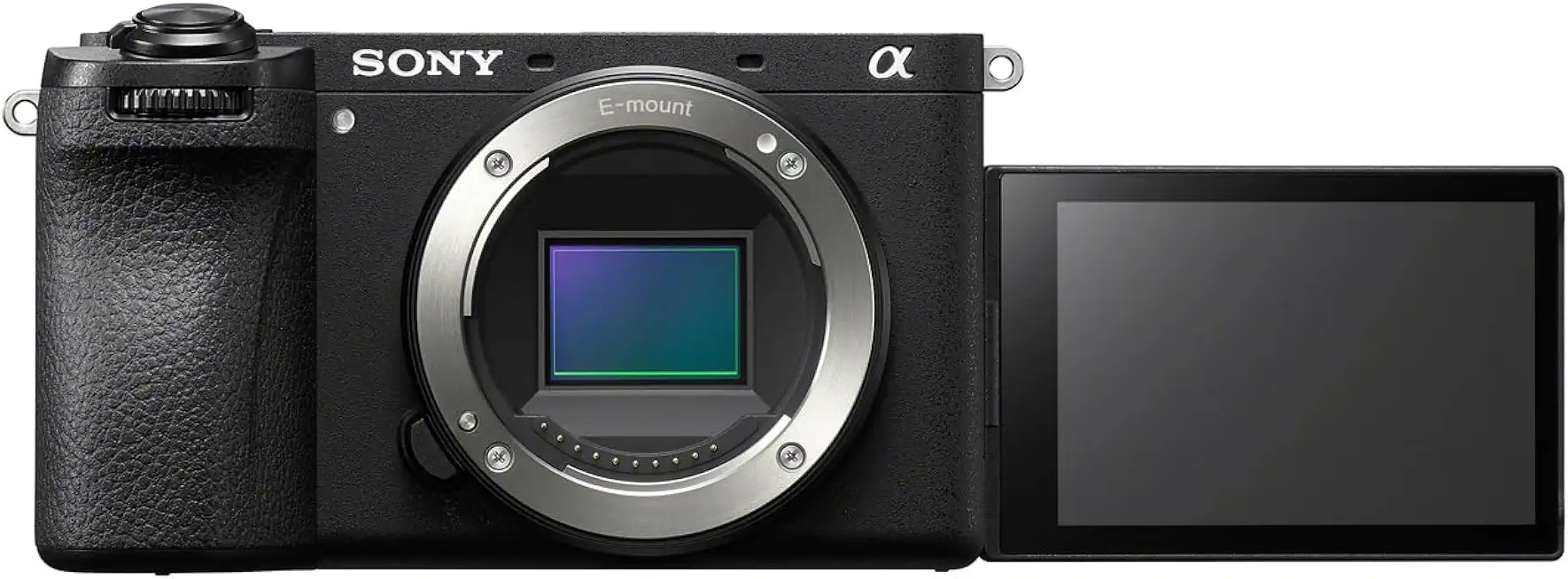
Sony Alpha 6700
Compact APS-C mirrorless delivering fast autofocus, high-resolution imagery, and versatile video features for creators and enthusiasts.
Check PriceThe Sony a6700 is a compact workhorse for travel and hiking, weighing just ~1 lb 1.4 oz with battery and card, so it’s easy to carry all day without killing your shoulders. Its 26 MP Exmor R APS‑C BSI CMOS sensor punches well above its weight, delivering detailed files that crop or print nicely while staying lighter than full‑frame options.
For filmmakers and adventurous shooters the a6700 is especially compelling: UHD 10‑bit 4K up to 120p (oversampled from 6K) gives you clean slow‑motion and latitude for grading with S‑Log or cinematic S‑Cinetone straight from the camera. The body is magnesium alloy and dust‑ and moisture‑sealed, so it stands up to trail dust and light rain when you’re moving between viewpoints.
In real use the camera feels like a true travel companion. Sony’s AI autofocus is fast and accurate on moving subjects, and the image stabilization noticeably cuts handheld blur on hikes and summit scrambles — I’ve come away with tack‑sharp frames in mixed lighting more often than with similar‑sized bodies.
There are a couple of practical caveats: battery life is limited on long outdoor shoots, so bring spares if you plan multi‑day outings or lots of 4K/120p recording. The menu system can be dense at first, so spend a session customizing buttons and quick menus before you head into the field to avoid fumbling on the trail.
- Excellent image and video quality for its size and weight
- Compact, durable magnesium alloy body with dust/moisture sealing
- Fast, accurate AI autofocus for dynamic hiking scenes
- Effective image stabilization reduces handheld blur
- Limited battery life on extended outdoor shoots
- Complex menu system for beginners or quick field changes
2. OM System Tough TG-7 Rugged Compact

OM SYSTEM Tough TG-7
Rugged waterproof compact built for adventure, shockproof and freezeproof with macro capabilities for close-up exploration outdoors.
Check PriceThe OM System Tough TG-7 is a compact point-and-shoot built for getting out there and not worrying about your gear.
Its rugged construction is genuinely confidence-inspiring: waterproof, shockproof, freezeproof, and dustproof so you can keep shooting in messy conditions.
Specifically, it’s rated waterproof to depths up to 147 feet and will operate at temperatures as low as 14°F, which makes it an excellent choice for alpine lakes, wet trails, and cold-weather treks.
What makes the TG-7 shine on the trail is its macro prowess and dedicated underwater photography modes.
If you love close-ups of flowers, insects, or textured rocks, this camera delivers shots you’d normally need a specialist setup for.
As a photographer, I appreciate the simple, straightforward controls when conditions are rough — you don’t want fiddly menus when it’s raining or cold.
Keep in mind the trade-offs: image quality is decent for its class but falls short of larger-sensor mirrorless cameras, and the fixed lens limits zoom range and creative flexibility.
So choose the TG-7 if your priority is a grab-and-go, worry-free camera that survives everything the trail throws at it and excels at macro and underwater work. Avoid it if you need the low-light performance or versatility of interchangeable lenses.
- Extremely durable—survives drops, rain, snow, and dirt
- Simple, straightforward controls in harsh conditions
- Good macro and underwater options for outdoor scenarios
- Lightweight and carry-without-concern design
- Limited image quality and low-light performance vs. larger sensors
- Fixed lens limits creative flexibility and zoom range
3. Sony RX100 VII Pocket Zoom Power
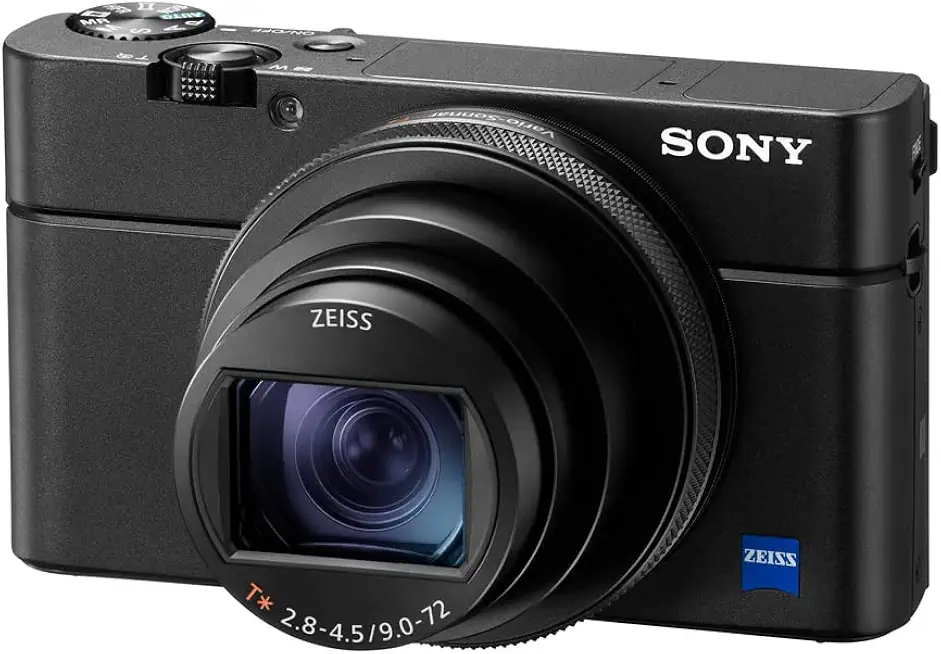
Sony RX100 VII (DSC-RX100M7)
Pocketable premium 1-inch-sensor camera with long zoom, blazing autofocus, and pro video features for travel and vlogging.
Check PriceThe Sony RX100 VII Pocket Zoom Power is a brilliant pocketable travel camera built around a 20 MP 1‑inch stacked CMOS sensor and a surprisingly versatile 24–200mm f/2.8–4.5 Zeiss zoom. Its compact body (Sony RX100 series ~8.5 oz) makes it easy to carry all day on long hikes without adding noticeable weight to your pack.
In practice this camera shines for daytime landscapes, trail portraits, and distant wildlife thanks to that long zoom and fast autofocus. Image quality is noticeably better than smartphones in daylight and moderate low light, and the burst mode helps you catch split-second action on the trail.
For video, 4K capability and a flip screen make the RX100 VII useful for vlogging and quick travel clips. The flip screen also helps with selfies and low-angle landscape compositions without fumbling with a tripod.
One-handed operation is a real plus on uneven terrain—you can adjust settings and shoot while keeping the other hand free for a trekking pole or map. The camera’s autofocus is reliable for unexpected moments, so you won’t miss wildlife popping into frame.
Be realistic about its limits: the 1‑inch sensor is excellent for portability, but it can’t match APS‑C or full‑frame bodies in very low light or at very high ISO. Battery life can also be short on extended shoots, so bring a spare if you plan long days away from power.
- 24–200mm Zeiss zoom in a pocketable body
- Fast autofocus and burst mode for action
- 20 MP 1‑inch stacked CMOS — better than phone shots
- Weighs ~8.5 oz — very portable for multi-day treks
- Limited low-light / high-ISO performance vs APS‑C/full‑frame
- Battery life can be short on extended shoots
4. Fujifilm X100VI Fixed-Lens Travel Favorite

Fujifilm X100VI
Rangefinder-style fixed-lens APS-C camera with classic film simulations, tactile controls, and sharp prime lens for street photography.
Check PriceThe Fujifilm X100VI is a delight to carry on trails where you want excellent images without the bulk of interchangeable lenses. It pairs an APS‑C 26 MP X‑Trans CMOS 4 sensor with a fixed 23mm f/2 lens (35mm equivalent), so you get sharp, characterful files in a compact package.
As a photographer I love its film simulation modes and strong JPEG output—those features cut down editing time and let you share keepers straight from the camera. The bright f/2 lens is surprisingly capable in low light, making dawn and dusk shots more usable without raising ISO too far.
Handling is intuitive. Fast, accurate autofocus and tactile controls—touch screen plus dials—make it easy to shoot quickly on the move. The camera’s weather-sealed body (with lens adapter/filter) adds confidence on dusty trails or in light rain, so you don’t shy away from changing light or terrain.
Because the lens is fixed, composition becomes a creative strength rather than a convenience—your eye learns to move. That said, the lack of a zoom does limit telephoto reach for distant wildlife, so consider your subject priorities before committing. Battery life is typically sufficient for a full day; bring spares for longer outings.
- Outstanding image quality and color straight from the camera
- Compact, discreet design ideal for travel and hiking without bulk
- Weather sealing protects against dust and light rain
- Bright f/2 lens suitable for low light
- Fixed lens limits telephoto reach and zoom flexibility
- Battery life may require carrying extras for long trips
5. Sony Alpha 7C II Compact Full-Frame
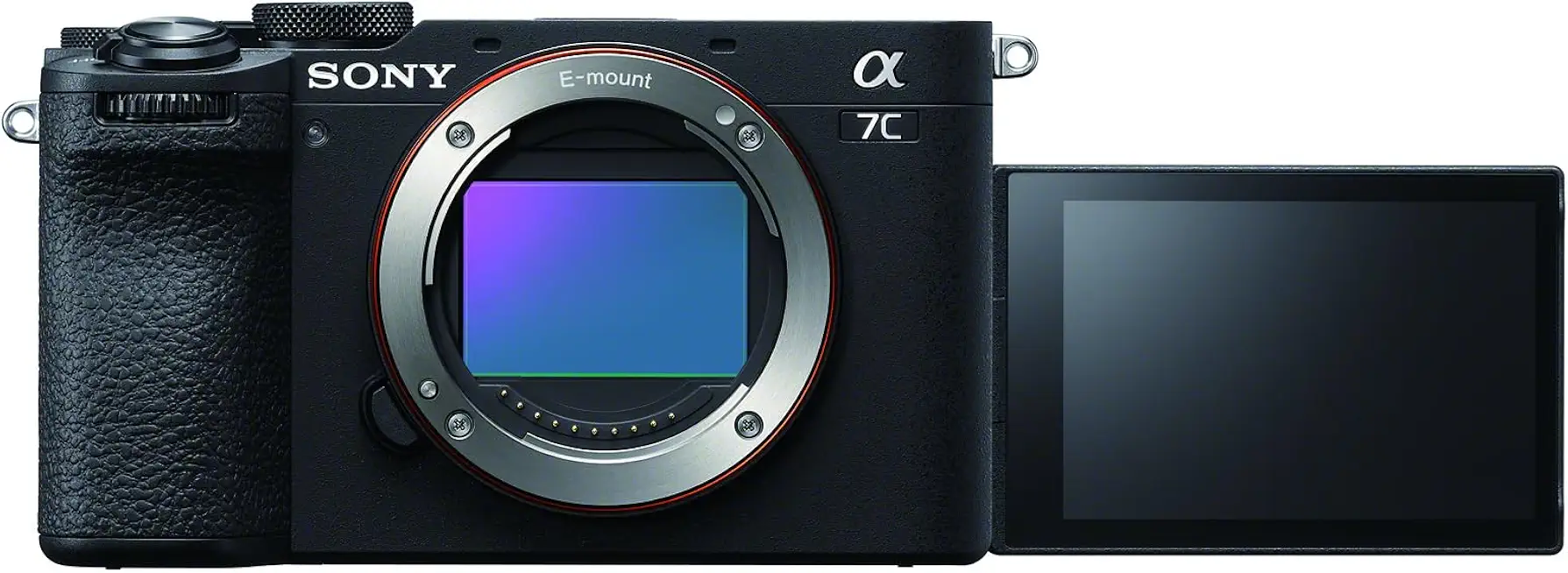
Sony Alpha 7C II
Compact full-frame mirrorless offering stabilized image capture, cinematic 4K video, and high-performance autofocus in a travel-friendly body.
Check PriceThe Sony Alpha 7C II packs a full-frame 24 MP sensor into what was the smallest full-frame mirrorless body at launch. That combination gives you true full-frame image quality without the bulk of traditional full-frame systems.
As a photographer who hikes often, I appreciate how its compact, lightweight design reduces fatigue on long days. You get strong autofocus and low-light performance, which means cleaner night-sky and indoor shots without excessive noise.
The flip-out touchscreen is a practical touch for travel video and creative low-angle landscapes. It also makes self-portraits and vlogging much easier on the trail.
In handheld situations the camera feels surprisingly steady thanks to good image stabilization and fast AF. That allows you to shoot handheld in more situations and leave a tripod at home more often.
Do expect it to draw more attention than tiny compacts—people notice a full-frame camera. But that trade-off comes with notably better detail and dynamic range in your images.
If you’re moving from an entry-level kit, plan for a bit of a learning curve and a higher price tag. Still, for travelers and hikers who prioritize image quality and compactness, the 7C II hits a sweet spot.
- Full-frame detail and dynamic range
- Compact, lightweight design for prolonged carrying
- Strong autofocus and image stabilization for handheld shots
- Flip-out screen increases shooting flexibility
- Higher cost and learning curve vs. beginner cameras
- Not pocketable like small compacts—requires a bag
Size and Weight Tips for Hiking Cameras
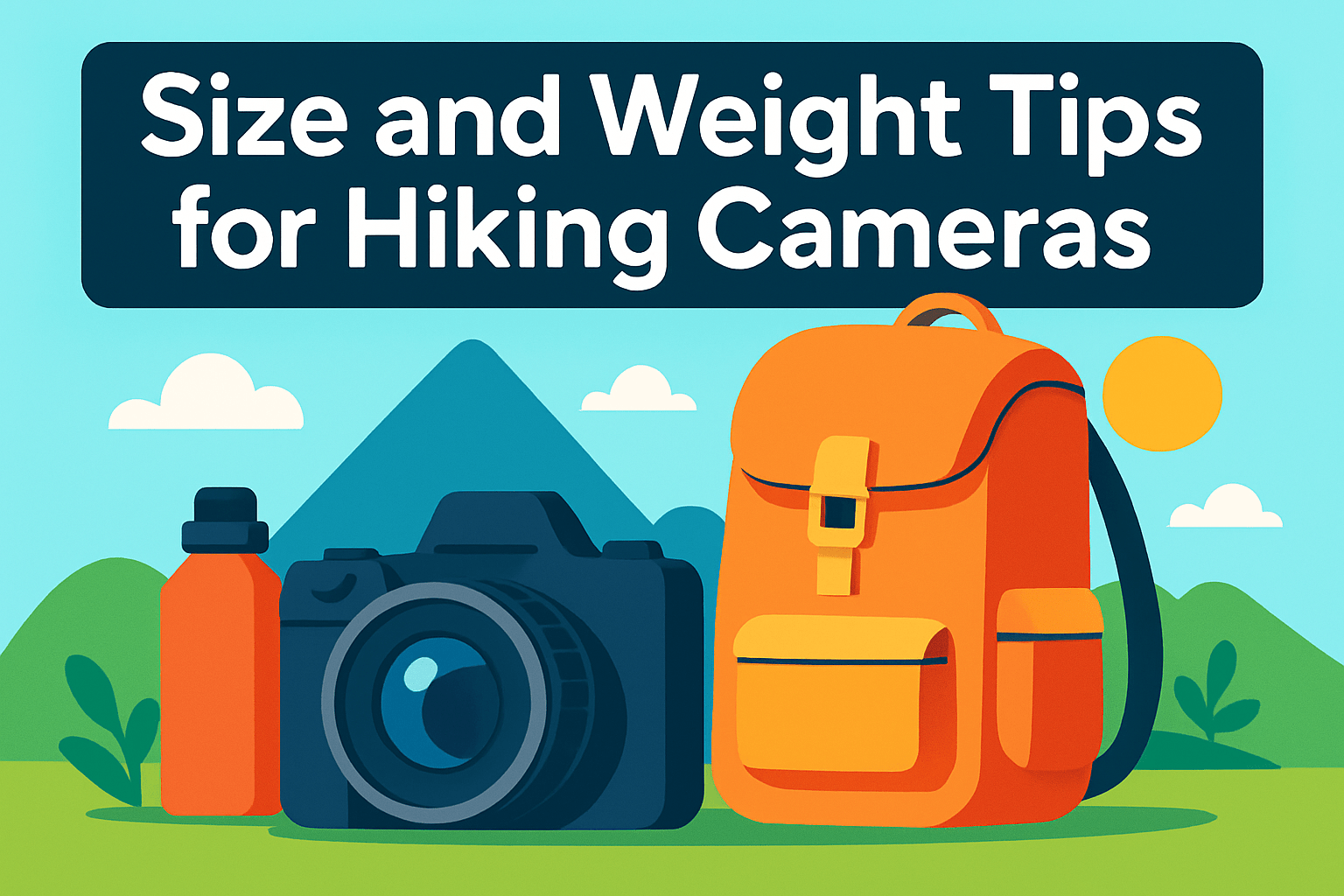
When you’re out on a trail, every ounce matters. The trade-off is simple: smaller cameras like the Sony RX100 (around 8.5 oz) let you move faster and shoot more casually, while larger systems with bigger sensors deliver superior image quality but add noticeable weight to your pack.
Think in terms of purpose, not prestige. If you mostly want landscapes and day-hike snaps, a pocketable camera or a compact APS‑C body such as the Sony a6700 (about 1 lb 1.4 oz with battery) will keep fatigue down and still give great results. For serious low‑light work or night-sky shots, a compact full‑frame like the Alpha 7C II gives you better high-ISO performance for a modest weight penalty.
Lens choices matter more than body weight. Bringing a single versatile zoom often beats hauling multiple primes on a long hike. If you do opt for multiple lenses, pick one walk-around zoom and one light prime or telephoto to cover wide landscapes and distant wildlife without doubling your load.
Stabilization can change your kit list. Modern IBIS systems let you ditch a full-size tripod for many handheld shots; Fujifilm’s X‑T5-class stabilization, for example, makes low‑light handheld photography practical and saves you several pounds. For deliberate long-exposure work, bring a small carbon-fiber travel tripod or a pocketable tabletop tripod instead of a heavy studio leg.
How you carry gear affects how far you’ll go. Use a dedicated camera backpack or a hip-belt pouch to distribute weight and keep the camera accessible. A comfortable strap and quick-access pouch reduce the temptation to leave the camera in your pack when a moment appears.
Don’t forget consumables. Batteries and memory cards are light insurance; spare batteries are far easier to carry than regrets on summit photos. Finally, if you want worry‑free rough-and-wet hiking, consider a rugged point‑and‑shoot like the OM SYSTEM TG‑7 so you can focus on the trail, not the gear.
Weatherproofing and Durability for Hiking Cameras
When you’re hiking, durability isn’t a nice-to-have — it’s the difference between photos and frustration. Know first that “weather-sealed” mirrorless bodies and lenses protect against rain, dust, and light spray, but they’re not the same as a fully waterproof rugged camera. Rugged compacts like the OM SYSTEM Tough series are built to be dunked, dropped and frozen; models in that line are rated for deep water and sub-freezing use, whereas most mirrorless bodies will shrug off drizzle but won’t survive submersion.
Practical prep keeps gear working on the trail. Always confirm seals and covers before you leave home; zippers, battery doors and lens mounts are the usual weak points. Pack silica packets in your camera bag, use a dry bag for long storms, and carry a simple neoprene rain cover that fits quickly over the camera and lens when the sky opens.
Cold and condensation are sneaky killers of performance. Batteries drain faster in low temperatures, so rotate spares in an inner pocket and avoid leaving electronics exposed during breaks. When you come inside, put the camera in a sealed plastic bag until it warms to room temperature — that prevents moisture forming on internal components.
For dust, sand, and lens changes on windy trails, be cautious: changing lenses in gusty conditions invites grit into the sensor and mount. Use the camera body cap when swapping or wait for a sheltered spot. Regularly blow out crevices with a hand blower and gently wipe exposed surfaces with a microfiber cloth.
Finally, plan for shocks. A good strap, a padded hip pouch or a small hard case for transport prevents most drop damage. Durability is a balance: choose gear that matches how rough you’ll be with it, and back that choice up with simple protection and common-sense maintenance on the trail. Your camera will thank you with more usable frames and fewer headaches.
What People Ask Most
What is the best camera for travel and hiking?
There is no single best camera; the right choice depends on priorities like image quality, weight, durability, lens flexibility, and battery life. Pick a model that balances those factors for your route and shooting style.
What type of camera is best for travel and hiking?
Both mirrorless cameras and advanced compact point‑and‑shoots can be excellent for travel and hiking, with mirrorless offering higher performance and compacts maximizing portability. Choose the type that fits how much gear you want to carry and the kinds of photos you plan to take.
Are mirrorless cameras better for travel and hiking?
Mirrorless cameras are popular because they often deliver strong image quality in a relatively small package along with advanced autofocus and stabilization. They are a great choice when you want good performance without excessive bulk.
Is a smartphone camera good enough for travel and hiking?
Smartphone cameras are very capable for everyday travel photos and quick sharing, making them a convenient option when traveling light. For low light, long reach, or higher image quality, a dedicated camera will generally perform better.
What features should I look for in a travel and hiking camera?
Prioritize weight and portability, some level of weather resistance or durability, reliable autofocus or stabilization, battery life, and lens options that match your shooting needs. Ease of use and repairability on the trail are also important considerations.
What lens should I bring for travel and hiking?
Opt for a versatile lens that covers wide landscapes and some telephoto reach to avoid carrying too many optics. If you prefer simplicity and lightness, a single fixed focal-length lens can deliver excellent image quality while keeping your kit compact.
Do I need a weather-sealed camera for hiking?
Weather sealing is strongly recommended if you expect rain, dust, or rough conditions, as it provides extra protection and peace of mind on the trail. For casual, fair‑weather trips, a non‑sealed camera can work if you use protective cases and practice careful handling.
Conclusion for Travel and Hiking Cameras
Choosing the right travel-and-hiking camera comes down to balancing your priorities: image quality, durability and weatherproofing, weight and portability, autofocus and stabilization, lens flexibility, and battery life.
The five models covered here span those trade-offs, from rugged point-and-shoots built to survive rough conditions to pocketable zoom compacts and compact full-frame bodies that favor low-light performance and dynamic range.
Think about the kinds of trails and subjects you shoot, carry only the gear you’ll actually use, and plan for practical needs like protective covers and spare power on longer outings.
If you want to sharpen your shooting and packing strategies, explore more of our site to find practical tips, gear comparisons, and how-to guidance that can help you get better results on the trail.
Have questions or want to tell us about your favorite hiking camera? Leave a comment below and we usually reply within a few hours.


0 Comments