
Ready to step up from your phone and finally love the photos you take? Choosing your first camera shouldn’t feel like decoding a manual or hunting through jargon-filled spec sheets.
This guide curates the five best digital cameras for beginners for 2026, selected from expert reviews, thousands of user ratings, and hands-on, real-world usage. Each pick balances simplicity with room to grow, so you won’t outgrow the system after a few months. We focused on cameras that deliver strong results without demanding a steep learning curve.
For every model you’ll get a short real-world summary, a clear set of pros and cons, and an ideal-buyer note explaining who the camera suits best. Expect tight, practical advice rather than long spec dumps—so you can decide quickly whether to test a camera in person.
Whether you want compact point-and-shoot ease, a travel-friendly mirrorless system, or a video-ready camera for vlogging, these choices cover the main beginner needs. We weigh ergonomics, image quality, autofocus, battery life, and lens options so the recommendation matches how you’ll actually shoot. The goal is to help you pick a camera that feels right in your hands and sparks creativity.
Flip ahead to see our five top picks for 2026 and find the best digital camera for beginner that fits your budget, style, and ambitions. Buy the camera that makes you want to get outside and practice.
1. Canon EOS R100 Overview

Canon EOS R100 with RF-S 18-45mm f/4.5-6.3 IS STM lens
Beginner-friendly mirrorless kit offering lightweight handling, stabilized versatile wide-to-standard zoom, sharp images, and easy automatic modes for everyday photography.
Check PriceThe Canon EOS R100 is a mirrorless camera with an APS-C 24MP sensor that delivers surprisingly solid still-image quality for its price. As a working photographer, I appreciate that its images can match higher-priced Canon models that use the same sensor—so you get clean files without paying a premium.
Ergonomically the R100 is comfortable and compact, designed for smaller hands and an easy smartphone-to-camera transition. That compactness makes it a practical walk-around camera when you want better image quality than a phone without extra bulk.
Autofocus is one of the R100’s strongest points: Canon’s reliable Dual Pixel AF keeps shots sharp without needing complex menu diving. For a beginner this means more keepers straight out of the camera, especially for portraits and casual events.
Video capability is basic—4K/30fps at 8-bit—so it’s fine for casual clips but not ideal if you plan to do serious filmmaking or heavy grading. Also, the rear LCD is fixed and non-touch, which limits shooting angles and makes menu navigation less fluid than touch-enabled models.
Overall, this is a camera aimed at beginners who want an interchangeable-lens system, good photo quality, and a budget-conscious option. If your priority is still photography and easy handling, the R100 is a strong, straightforward choice; if you need advanced video features or a fully articulated touch screen, it may feel limiting.
- Reliable Dual Pixel AF
- Good still-image quality for the price
- Comfortable ergonomics for small hands
- Compact and straightforward to use
- Rudimentary video (4K/30fps, 8-bit)
- Fixed, non-touch rear LCD
2. Nikon D3500 Overview

Nikon D3500 with AF-P DX NIKKOR 18-55mm f/3.5-5.6G VR lens Renewed
Refurbished DSLR with lightweight kit lens, reliable vibration reduction, impressive battery life, and intuitive controls ideal for new photographers.
Check PriceThe Nikon D3500 is a classic entry-level DSLR built to take a beating and keep shooting, with a rugged feel and very long battery life that actually lets you forget the charger on weekend shoots. As a photographer, I appreciate how its optical viewfinder and solid build give a tactile, traditional shooting experience that teaches discipline in composition and exposure.
Its Guide Mode is the real standout for absolute beginners — it walks you through settings and explains photographic basics step by step so you learn while shooting, not just reading a manual. If you want to understand why aperture, shutter speed, and ISO matter, this camera gently forces you to learn them.
The deep, comfortable grip makes extended handheld sessions painless, and the image quality remains impressively strong for its class, still competing with some newer cameras on straight daylight performance. Autofocus is perfectly adequate for static subjects and basic action, though it won’t match the speed or tracking finesse of recent mirrorless models.
On the flip side, video is limited to 1080p Full HD, so don’t buy the D3500 if you plan heavy videography or vlogging. There’s also no vari-angle LCD and no weather sealing, which reduces flexibility for creative angles and makes it less forgiving in poor weather.
All told, the D3500 is a top pick if you’re an absolute beginner who prefers DSLR styling, wants to learn fundamentals, and values battery life and ergonomics over cutting-edge video features or mirrorless AF speed. It’s a camera that encourages learning and rewards good technique.
- Excellent battery life.
- Very beginner-friendly Guide Mode.
- Strong image quality that still competes with newer cameras.
- Solid, ergonomic grip and durable body.
- No vari-angle LCD (limits flexibility).
- No weather sealing (less reliable outdoors).
3. Canon EOS R10 Overview
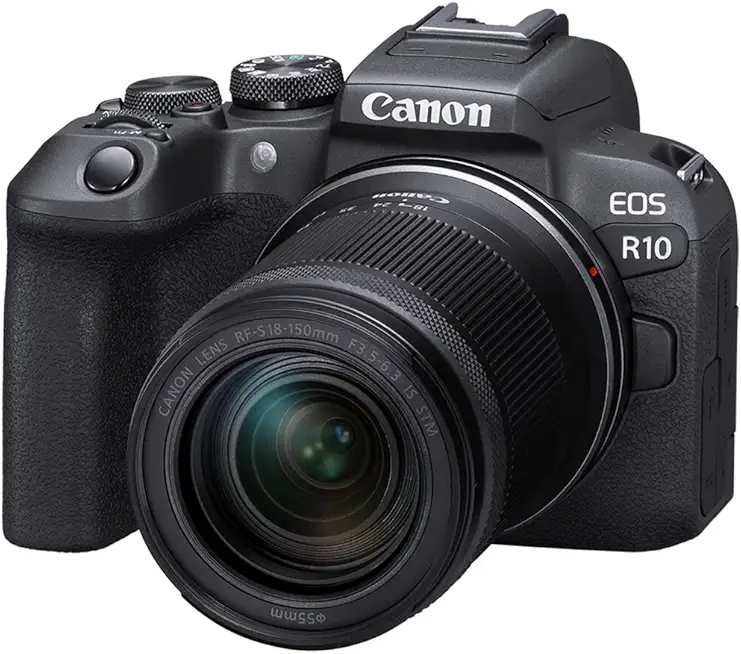
Canon EOS R10 with RF-S 18-150mm f/3.5-6.3 IS STM lens
Speedy APS-C mirrorless with long-range zoom, fast autofocus, and versatile 4K video capabilities for hybrid photo and video creators.
Check PriceThe Canon EOS R10 is a mirrorless APS-C camera with a 24MP sensor that feels like a true step-up for a beginner who wants room to grow. Its Dual Pixel autofocus is excellent in both stills and video, so you spend less time chasing focus and more time composing the shot.
Video capabilities are a standout — 4K up to 60fps gives you smooth, usable footage for vlogs and casual filmmaking without diving into complicated settings. For action and wildlife beginners the camera’s strong burst rate and accurate AF tracking means you can capture decisive moments more reliably than many entry-level models.
Handling is a plus: Canon’s familiar ergonomics make long shooting sessions comfortable, and controls are laid out in a way that feels natural to photographers moving up from compact or smartphone shooting. That said, the menu system and available settings are more complex than ultra-basic models, so there’s a learning curve if you’re brand-new to interchangeable-lens cameras.
Lens ecosystem is a practical consideration. The APS-C RF-mount selection is limited compared with long-established systems, though it’s growing — so expect better options over time, but don’t count on an exhaustive selection today.
If you’re a beginner willing to invest a bit more for better autofocus, faster burst performance, and true 4K/60fps video, the R10 is a very attractive all-rounder. It’s especially well suited to hobbyists, casual content creators, and anyone who wants a camera that handles both photos and video confidently.
- Excellent Dual Pixel AF for stills and video
- 4K/60fps video capability
- Comfortable, ergonomic design
- Strong burst rate for action shots
- Limited APS-C RF-mount lens options
- Menus/settings may overwhelm absolute novices
4. Sony ZV-E10 Mark II Overview

Sony ZV-E10 II with lens
Compact vlogging camera with excellent autofocus, flip-out selfie screen, improved audio options, and cinematic 4K capture for content creators.
Check PriceThe Sony ZV-E10 Mark II is a mirrorless APS-C camera with a 26MP sensor that’s clearly aimed at beginner vloggers and multimedia creators. In everyday use it delivers very good stills and outstanding video, so you get a camera that handles both photography and content creation without feeling like a compromise.
Video is the headline here: 4K at 24/30/60fps is available, and footage is sharpened by downsampling from 6K sensor data — you get crisp, detailed clips straight out of the camera. The sensor technology is shared with Sony cinema cameras, which explains the excellent low-light performance and the presence of dual native ISO for cleaner results in darker scenes.
Autofocus is another strength, especially for video work; the ZV-E10 Mark II tracks moving subjects very well and makes handheld run-and-gun shooting much less stressful. For street and casual photography it performs admirably too, so if you want one tool for both stills and vlogs this model is a strong candidate.
Ergonomically it’s compact and lightweight, which I appreciate for long shooting days and travel. Do note the stock grip can feel small for larger hands, and many users add accessories or a larger grip to improve handling.
One practical limitation is stabilization: in-body stabilization is limited, so external stabilization (gimbals or stabilized lenses) is often required for buttery handheld video. If you prioritize pure video quality, low-light performance, and autofocus in an easy-to-carry package, this camera is mostly a win.
- Outstanding 4K video (24/30/60fps).
- 26MP sensor — excellent still quality.
- Excellent autofocus for moving subjects in video.
- Compact and lightweight.
- Small default grip may need add-ons.
- Limited in-body stabilization; external stabilization often required.
5. Fujifilm X-S20 Overview
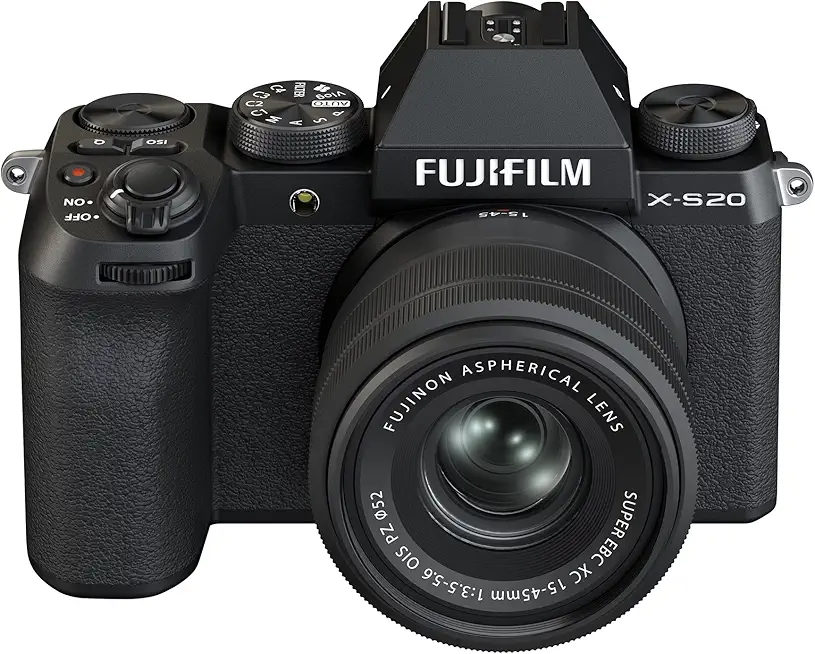
Fujifilm X-S20 with XC 15-45mm lens kit
Powerful compact APS-C body with in-body stabilization, beloved film simulations, responsive controls, and cinematic video features for enthusiasts and creators.
Check PriceThe Fujifilm X-S20 is a compelling mirrorless option for beginners who want gear that grows with them. It packs a 26.1MP APS-C sensor into a compact, travel-friendly body that feels at home on a weekend trip or a vlog shoot.
Where this camera really shines is video and stabilization. It records up to 6.2K/30fps and includes advanced video tools that make serious-looking clips easy to capture. The excellent 5-axis in-body stabilization means you can shoot handheld with confidence and get usable footage without always needing a gimbal.
For stills, Fujifilm’s film simulation modes are a delight. They give you creative, film-like colors straight out of the camera, so you can spend less time in post and more time shooting. The touchscreen and dedicated vlog mode also make framing and live-recording intuitive for newcomers to multimedia content.
That said, there are a couple of trade-offs to know about. Menus can feel complex at first, which may frustrate absolute novices who want a purely point-and-shoot experience. Autofocus performance is solid for most uses but can be slower than some competitors in fast-action scenarios, so it’s worth testing if you plan to photograph sports or quick-moving subjects.
Overall, if you’re a beginner leaning toward hybrid photo/video work and you value creative color options and excellent handheld video, the X-S20 is a very good choice. It’s geared toward creators who want a compact system that won’t hold them back as their skills advance.
- Excellent 5-axis IBIS
- 6.2K/30fps video
- Unique film simulation modes
- Compact, travel-friendly design
- Menus may overwhelm newcomers
- Autofocus can be slower than competitors
How to Choose a Camera
Start by being honest about where you are and where you want to go. A complete beginner who wants simple vacation snaps needs a different tool than someone aiming to learn manual exposure or make short films, so match the camera type to the primary use—portraits, landscapes, action, or video—before you get hung up on specs.
Sensor size matters more than megapixels. Larger sensors like APS-C or Micro Four Thirds give you cleaner low-light shots, shallower depth of field, and generally better image quality for prints and editing, while smaller sensors can limit how far you can push an image.
Think in systems, not just bodies. Interchangeable lenses are the easiest way to grow your capabilities; a body is just the start. Fixed-lens compacts are simpler, but if you want to learn and improve, plan your budget around one or two lenses you’ll actually use rather than chasing high-resolution numbers.
How a camera feels in your hands will decide how often you take it out. Pay attention to grip, control layout, and weight, because comfort affects shooting habits. If you can, try models in person to see whether the controls feel intuitive and the viewfinder or screen suits your style.
Autofocus performance and stabilization are the quiet heroes of good images. Reliable AF makes candid and action shots usable, while in-body or lens stabilization helps with handheld low-light work and smoother video—both are worth prioritizing if you shoot movement or night scenes.
Ease of use matters for sticking with photography: guided menus, scene modes, and in-camera aids shorten the learning curve. Also weigh the trade-offs between mirrorless and DSLR—mirrorless bodies are compact and strong on video, while DSLRs often give longer battery life and a traditional optical viewfinder.
Finally, ignore the megapixel hype and consider the ecosystem you’re buying into. Lenses, accessories, and future upgrades matter more than a headline spec, so choose a system that encourages you to pick up the camera and keep practicing.
Camera Types for Beginners
As a working photographer I tell beginners to start by picking the tool that fits how you’ll actually shoot. DSLRs are a classic choice: they offer interchangeable lenses, an optical viewfinder, robust bodies and long battery life. They can feel heavier, but that solidity helps when you’re learning exposure, composition and lens choices.
Mirrorless cameras are the other big category and are often a better fit for modern users. They’re lighter, quieter, and offer electronic viewfinders that preview exposure and color in real time. Mirrorless systems also push faster autofocus and stronger video features, though battery life can be shorter and some lens lineups are still growing.
Compact point-and-shoot cameras are unbeatable if portability and simplicity matter most. A fixed lens and fully automatic modes let you focus on framing and timing without wresting with settings. Keep in mind though that smaller sensors limit low-light performance and large print potential, and serious compacts with bigger sensors cost more.
Bridge cameras sit between compacts and interchangeable-lens bodies by packing a huge zoom into a single, versatile package. They’re ideal if you want reach—wildlife or travel—without buying multiple lenses. The trade-off is a smaller sensor and more bulk than a pocket camera.
Action cameras are purpose-built for adventure and hands-free video. They excel in rugged, fast-paced situations but aren’t the best choice if still-image quality is your priority. Use them when you need waterproofing, mounts, and durability more than flexibility.
Ultimately, choose for comfort and growth. Try cameras in hand, think about lens ecosystems, and consider battery life and ergonomics. Ignore megapixel hype; pick what keeps you shooting, and you’ll learn far faster than any spec sheet promises.
What People Ask Most
What is the best digital camera for beginners to learn photography?
There is no single best camera for everyone; choose one that is easy to use and encourages regular practice. Prefer a model that offers manual controls and the ability to grow with you, such as an interchangeable-lens system.
What camera should a beginner start with?
Start with a camera that matches your shooting goals and feels comfortable in your hands. Look for simplicity in operation, clear menus or guided modes, and options to learn manual settings as you progress.
Should beginners get a DSLR or a mirrorless camera?
Both DSLR and mirrorless cameras can be excellent for beginners, so pick the system that fits your priorities. Mirrorless bodies tend to be more compact and strong for video, while DSLRs offer a traditional shooting experience and long battery life.
What features should beginners look for in a digital camera?
Prioritize ease of use, reliable autofocus, and a comfortable grip, along with options for manual control and lens interchangeability. Good stabilization and a supportive brand ecosystem for lenses and accessories will help you grow.
How many megapixels do I need for beginner photography?
Megapixel count is less important than sensor size, lens quality, and shooting technique for most beginners. Focus on learning exposure, composition, and using a camera that produces images you are happy with.
Are compact point-and-shoot cameras good for beginners?
Compact cameras are great for portability and simple, everyday shooting, making them a fine choice for casual beginners. They usually offer fewer manual controls and a smaller sensor, which can limit flexibility as you advance.
Can a beginner learn photography using a smartphone instead of a digital camera?
Yes, smartphones are perfectly capable of teaching composition, lighting, and basic exposure principles and are convenient for practice. A dedicated camera will offer more control and expansion options when you decide to deepen your skills.
Conclusion for Best Beginner Digital Cameras
Choosing the right beginner camera is about balancing ease of use, image quality, portability, and room to grow, so match your choice to how and what you want to shoot. Assess your skill level and interests first, then pick a camera type and system that encourages you to learn and expand.
Beyond specs, the best decision is the one that makes you excited to go out and practice—comfort, controls, and a system you can grow into matter more than headline numbers. Small compromises in features are worth it if the camera actually gets used and helps you improve.
If you want to keep learning and refine your choices, read more of the articles on our site for practical tips, comparisons, and shooting advice tailored to beginners. These resources are designed to help you build skills at your own pace without getting overwhelmed.
Have a question about any of the cameras or your own shooting goals? Leave a comment below and we usually reply within a few hours to help you pick the right path forward.


0 Comments