
Want to make your next drone shot go viral, capture cinematic travel sequences, and stop second-guessing gear choices? This guide is written specifically for content creators who prioritize striking visuals, reliable tracking, and fast, repeatable workflows on tight schedules.
We profile five standout drones suited to different budgets, shooting styles, and portability needs so you can match gear to creative goals. You’ll also find a camera-quality deep dive that demystifies sensors, resolution, and color profiles, plus a clear explainer on follow-me tracking technology.
You’ll get hands-on guidance about what truly impacts footage — dynamic range, low-light performance, gimbal stability, and native vertical capture for social platforms. Practical flight considerations like obstacle sensing, transmission reliability, and real-world battery trade-offs are also unpacked for realistic expectations.
Beyond specs, expect candid notes from real-world shooting: which automation helps solo creators, how stability holds up in wind, and when ultra-portable design beats long flight time. Short, tactical tips on RAW capture, color workflows, and creative gimbal moves will help you create faster and cleaner footage.
Whether you make travel vlogs, action sports edits, or polished cinematic shorts, this guide helps you pick the best drone for content creators based on workflow needs. Turn the page for concise picks, practical camera advice, follow-me tips, and an FAQ that answers the common dilemmas creators face.
1. DJI Mini 4 Pro
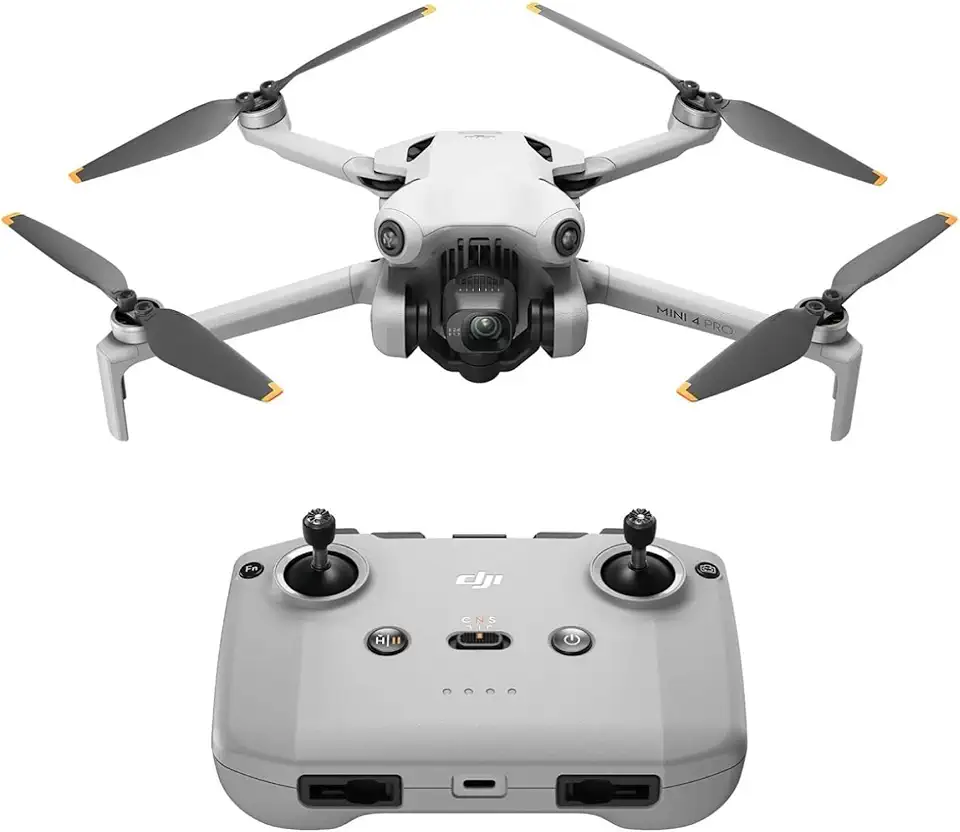
DJI Mini 4 Pro RC-N2
Ultra-light 4K aerial camera with intelligent obstacle avoidance, extended flight time, and cinematic stabilization for effortless professional-quality footage.
Check PriceAs a working photographer who shoots travel and quick social edits, the DJI Mini 4 Pro feels like a camera-first tool disguised as a toy. Its sub-249g weight makes it absurdly easy to carry—no extra baggage fuss and it’s genuinely favored for travel shoots where every gram counts.
What really sells it for solo creators is ActiveTrack 360°, which follows you smoothly from all directions with minimal lag. That makes hands-free vlogging, action sports clips, and cinematic approach shots far more reliable when you’re the only operator.
The Mini 4 Pro is also very stable in flight and holds well in moderate wind, which translates to usable footage out of the gate without heavy stabilization work in post. Omnidirectional obstacle sensing adds a layer of confidence when flying in tighter environments or around trees and buildings.
Portrait/vertical shooting is a genuine feature here, not just a cropped afterthought—creators who make Instagram Reels or TikToks will appreciate the true vertical mode for mobile-first delivery. Controls are responsive and accessible, so even newer pilots can get clean results quickly.
There are trade-offs: it can struggle in strong winds, so plan shoots around calmer conditions or be ready for some stabilization fixes in editing. Battery life is shorter than some competitors, so serious shooting days mean carrying spare batteries to avoid interruptions.
- ActiveTrack 360° — smooth, reliable subject tracking
- Very stable flight and responsive controls
- Omnidirectional obstacle sensing for safer flights
- True vertical video mode ideal for Reels/TikTok
- Less stable in strong winds
- Shorter battery life — need spares for long shoots
2. DJI Air 3

DJI Air 3 RC-N2
Dual-camera powerhouse delivering long-range performance, precision tracking, and vibrant HDR imaging for inspired skyward storytelling.
Check PriceAs a working photographer I value tools that let me change perspective on the fly, and the DJI Air 3 does that effortlessly thanks to its dual‑camera system — a wide‑angle plus a 3x telephoto — so you can go from establishing landscape shots to tight subject isolation without swapping gear. That flexibility makes it a real time‑saver when shooting travel sequences or run‑and‑gun commercial work where repositioning isn’t an option.
ActiveTrack 5.0 is another standout: it provides smooth, reliable subject tracking and lets you switch perspectives while following your subject without losing the frame. Combine that with OcuSync 4.0 transmission and you get a strong signal and dependable control at distance, which reduces the stress of long follow shots and gives you confidence to push for bolder compositions.
Battery life is a practical win — the Air 3’s 46‑minute flight time means fewer battery swaps and longer continuous capture windows, great for golden hour runs or extended scouting sessions. Do keep in mind it’s slightly heavier than DJI’s Mini series, so if ultra‑light travel packing is your priority you may notice the weight difference.
Finally, the dual‑camera approach is powerful but can feel overwhelming at first if you’re new to multi‑lens drones; there’s a small learning curve to optimally use telephoto framing and switching dynamics. For creators who want one drone that covers wide vistas and close telephoto drama with long endurance and solid transmission, the Air 3 is a compelling, mostly forgiving tool.
- Dual‑camera setup: wide + 3x telephoto
- ActiveTrack 5.0 for smooth tracking
- 46‑minute flight time
- OcuSync 4.0 reliable transmission
- Slightly heavier than Mini series
- Dual‑camera system can overwhelm beginners
3. DJI Flip
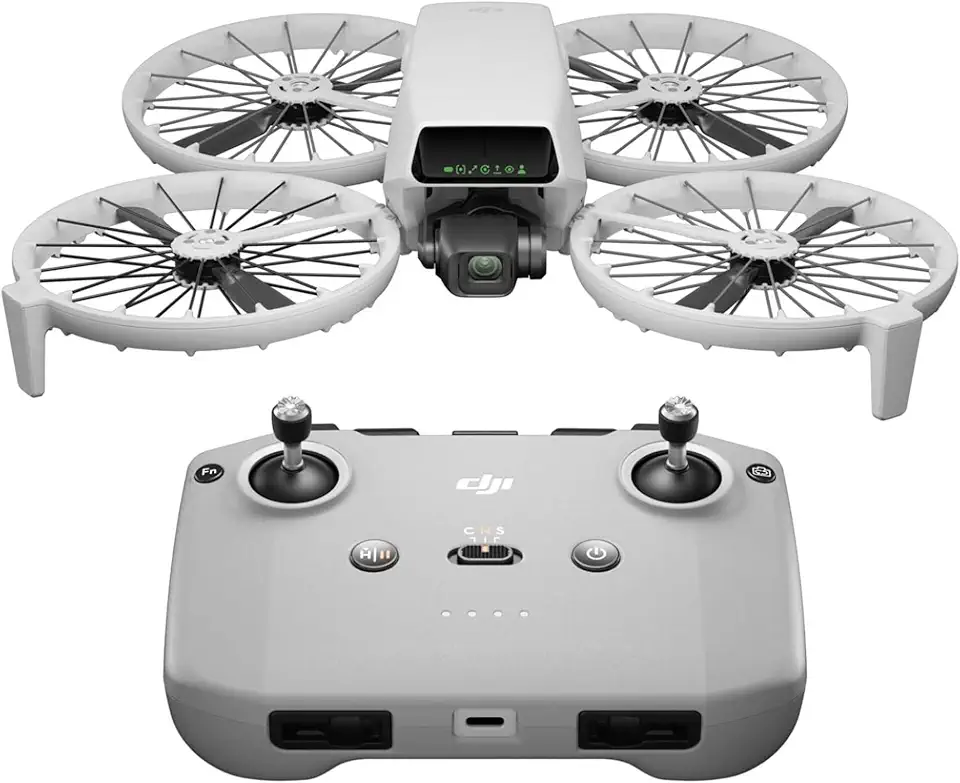
DJI Flip RC-N3
Compact, foldable controller offering responsive haptics, customizable controls, and seamless mobile pairing for intuitive flight management.
Check PriceAs a photographer who often shoots in tight spaces and around people, the DJI Flip stands out for its thoughtful safety and usability features. Its propeller guards and compact design make indoor and close-quarters shooting much less stressful, so I can focus on composition instead of worrying about blades.
The Flip’s AI subject tracking is refreshingly easy to set up and reliably keeps subjects framed, which is a huge help when I’m shooting solo. It records 4K HDR video and offers a vertical shooting mode that’s perfect for social platforms, giving me straight-to-feed footage without awkward crops.
Durability and safe operation around people are clearly priorities here; I’ve felt comfortable using it at events and around crowds. Palm takeoff and landing are small features that make a real difference — I can launch and retrieve the drone quickly without needing a controller every time.
Battery life is one area to watch: the Flip’s shorter runtime means I plan my shots and keep spares ready for longer sessions. Also, while its obstacle avoidance keeps things safer, forward-facing avoidance is basic, so I still fly cautiously in complex environments.
Overall, the DJI Flip is an excellent choice for content creators focused on social video, indoor shoots, or situations where safety and simplicity matter. If you want a compact, beginner-friendly drone that nails vertical content and solo tracking — and you’re prepared to manage battery swaps and cautious flying in tight obstacle fields — this one’s worth a close look.
- Very safe and durable for close-quarters shooting
- Easy-to-use AI tracking for solo content creators
- Excellent vertical video mode for social platforms
- Palm takeoff/landing user-friendly for beginners
- Shorter battery life limits long sessions
- Forward-facing obstacle avoidance is basic
4. HoverAir X1 Pro Max

HOVERAir X1 ProMax
High-performance quadrotor with boosted motors, precision GPS, and pro-level stabilization for smooth, cinematic aerial shots.
Check PriceAs a photographer who often travels light, the HoverAir X1 Pro Max feels designed for creators who need great footage without the bulk. Its ultra-portable design and simple controls make it an easy grab-and-go option for quick shoots and spontaneous moments.
The automated flight modes, including subject tracking, are reliable and straightforward to use, which means you can focus on framing and composition instead of piloting. For solo creators who value simplicity, those modes will get you usable, cinematic shots fast.
What surprised me was the video quality: 8K and 4K video capabilities are impressive given the drone’s small size. If you want high-resolution clips for cropping or pushing into larger projects, the X1 Pro Max punches above its weight.
Another practical touch is the full LED display that gives clear flight-mode indication; it’s a small feature but very handy when you’re switching modes quickly between takes. That clarity helps prevent confusion on set and speeds up workflow during fast-paced shoots.
However, there are trade-offs. The battery life is short, so plan for multiple batteries or short bursts of shooting rather than marathon sessions. Also, the drone lacks a 90-degree camera rotation, so it doesn’t offer true vertical shooting for social-first formats without cropping.
- Ultra-portable; great for travel
- Reliable automated flight modes
- 8K and 4K video quality
- Clear full LED flight-mode display
- Short battery life
- No 90-degree camera rotation (no true vertical mode)
5. Skydio 2+

Potensic ATOM 2 Fly More Combo
Complete accessory bundle including extra batteries, prop guards, case, and chargers to maximize airtime and convenience.
Check PriceAs a photographer who relies on flights in busy locations, the Skydio 2+ stands out because its 360-degree collision avoidance is genuinely reassuring. It lets you focus on framing and movement without constantly babysitting the drone around trees, rocks, or crowds.
The subject tracking is simple to set up and very effective for both people and vehicles, which makes it a go-to for solo creators and action shoots. Automated flight features also help first-time fliers get good shots quickly, so you can achieve usable footage fast even under pressure.
Image-wise the Skydio 2+ reliably delivers 4K at 60fps footage that’s more than adequate for social and many professional uses during daytime and well-lit conditions. If you plan a lot of golden-hour or low-light work, be aware the camera quality lags some competitors in those situations.
One practical limitation is a shorter transmission range compared with some other drones, so I avoid pushing it out for very long-distance scouting or high-altitude tracking. Overall, if your priority is aggressive obstacle avoidance and effortless, dependable tracking for dynamic shoots, the Skydio 2+ is one of the most user-friendly and safe choices.
- 360° collision avoidance
- Simple, effective people & vehicle tracking
- Automated flight features — great for beginners
- Reliable 4K@60fps footage
- Camera lags in low light
- Shorter transmission range
Camera Quality
Camera quality is more than pixels — it’s how a drone captures light, color, and motion to tell a story. For creators that means image fidelity, dynamic range, color science, and the flexibility to shape a shot in-camera and in post. Choosing the right sensor and codec determines whether your footage stands up on a big screen or a phone feed.
Sensor size is the first thing I check. Larger sensors — think 1-inch or bigger — gather more light, produce cleaner images with less noise, and deliver better dynamic range. For travel and vlogging, a 1-inch sensor is often the sweet spot: compact but capable of DSLR-like quality and a pleasing, shallow depth of field when you want subject separation.
Resolution and video capabilities matter next. 4K at 60fps is the baseline for smooth, crisp footage; higher resolutions like 6K or 8K give you more room to reframe. Look for 10-bit color and log profiles so you can grade footage without banding and preserve highlight and shadow detail.
Lens options and camera flexibility change how you tell stories. Dual-camera systems that offer wide and telephoto views let you switch perspectives on the fly, and variable apertures give real exposure and depth-of-field control. True vertical shooting is essential now — not a cropped afterthought — if your primary audience is mobile.
Stabilization is where the footage either feels professional or amateur. A solid 3-axis gimbal plus advanced stabilization algorithms keeps movements smooth even in wind. Use thoughtful gimbal moves — revealing shots, arc passes, and controlled push-ins — to create organic transitions that stand out.
Low-light performance and safety aids are practical concerns for golden-hour shoots. Bigger sensors and wide apertures help, and omnidirectional sensing or LiDAR can make low-light flying safer. Finally, always shoot RAW or high-bit video when possible and prioritize true vertical capture for social platforms — those choices give you the most creative freedom in editing.
Follow-Me Tracking
Follow-me tracking is the closest thing to having a dedicated camera operator when you’re shooting solo. Modern systems blend GPS with computer vision and AI to lock onto a subject and adjust the drone’s speed, direction and altitude in real time. When paired with omnidirectional obstacle sensing, tracking becomes far safer and much less stressful for creative shots in dynamic environments.
There are a handful of tracking flavors worth knowing. ActiveTrack follows from any angle and is great when you want the drone to mirror your movement. Spotlight keeps the camera locked on your subject while you control the drone’s motion. Point of Interest will circle a subject for that classic hero shot, and Parallel Track follows beside the subject for cinematic “sidecar” footage.
Good tracking starts with good hardware. Multiple vision sensors—forward, backward, up and down—plus robust AI reduce momentary loses and misidentification. Touch-based controls let you quickly select or switch subjects on screen, which is invaluable when something unexpected enters frame. For consistent results, feed the system clear, unobstructed views of your subject.
As a photographer, I use follow-me for run-and-gun vlogs, mountain biking and skiing sequences, and travel shots where I want natural motion without a crew. It’s equally effective for product demos: let the drone glide around an object while the camera maintains steady framing. Mixing modes—start with ActiveTrack, finish with a POI reveal—creates cinematic variety without extra equipment.
Tips that actually save time on set: keep the subject visible and avoid getting too close—give the drone room to maneuver. Prefer open areas for reliable GPS and vision tracking, but don’t be afraid to experiment in wooded or urban scenes once you’re comfortable. If the drone loses lock it will typically hover; use that moment to recompose and retarget.
Finally, plan your path. Scout probable obstacles, pick a background that enhances your subject, and rehearse the movement once or twice. With a little practice, follow-me tracking becomes a creative tool, not just a convenience—letting you focus on composition and storytelling while the drone handles the motion.
What People Ask Most
What is the best drone for content creators?
There is no single best drone; it depends on your priorities like portability, camera quality, flight endurance, and tracking capabilities. Choose a model that matches your typical shooting scenarios to get the most consistent results.
Which drone has the best camera for content creators?
The best camera is one that offers strong image fidelity, good dynamic range, and flexible color options such as RAW or log recording. Prioritize models that give you the editing latitude and low-light performance you need for your workflow.
What drone is best for professional videography and filmmaking?
Professional projects benefit from drones with larger sensors, robust gimbals, and manual controls for exposure and color. Look for units that support log profiles and professional recording formats to preserve quality through post-production.
What drone features should content creators look for?
Key features include high-quality stabilization, reliable subject tracking, obstacle sensing, and a capable camera system, along with portability and stable video transmission. These features help you capture steady, usable footage under real-world conditions.
What compact or portable drone is best for travel content creators?
Travel-friendly drones balance small size and ease of packing with good camera performance and quick setup. Pick a compact model that fits your carry routine so you can shoot more often without extra hassle.
What drone is easiest to fly for solo content creators?
Drones with intuitive controls, strong automated flight modes, and dependable obstacle avoidance are best for solo creators. Those features let you concentrate on framing and performance rather than constant piloting.
What drone is best for cinematic shots and gimbal stability?
For cinematic work, favor drones with high-quality multi-axis gimbals and advanced stabilization algorithms to maintain smooth motion. Also consider sensor and lens characteristics that enable shallow depth-of-field and clean low-light capture.
Conclusion for Best Drones for Content Creators
This guide wraps up the trade-offs every content creator faces: portability versus battery life, camera flexibility versus complexity, and advanced tracking versus safety systems when you’re on the move.
By comparing those core factors—image quality, subject-tracking reliability, obstacle sensing, and practical flight time—you can better match a drone’s strengths to your workflow, whether you prioritize travel convenience, vertical social clips, cinematic footage, or simple ease-of-use.
Practical takeaway: choose features that serve your primary needs and accept that every advantage has a compromise, then plan accessories and workflows (like spare batteries or learning a tracking mode) to fill gaps.
If you want to deepen your skills and make more confident gear choices, explore more of our how-to and gear guides on the site to build the techniques that fit your style.
Have a question or want advice on a specific setup? Leave a comment below and we usually reply within a few hours.


0 Comments