
Want your Android videos to sound as sharp as they look?
This quick buyer’s guide cuts through marketing hype and shows how to choose the best lavalier mic for Android.
We focus on real-world results, not glossy spec sheets.
The goal is reliable, usable audio that survives travel, interviews, and busy shoots.
Key selection factors to compare are battery life, wireless stability and range, noise cancellation, connector compatibility, and size.
These determine whether a mic is plug-and-play or a daily source of frustration.
Battery life matters more than you might think for long shoots and unpredictable schedules.
A few hours’ difference can decide if you finish a day of interviews or scramble for chargers.
Wireless stability and range decide if your audio drops out when you step away from the camera.
Good noise cancellation keeps voices clear in crowded streets or windy outdoor scenes.
Connector compatibility is essential on Android—some phones need adapters or USB‑C solutions.
Size and discreteness affect comfort and on-camera appearance during close-up shots.
Whether you’re vlogging, podcasting, running interviews, or teaching online, the right lavalier depends on your workflow.
Expect trade-offs between portability, battery stamina, and audio finesse—this guide helps you weigh them and choose the best lavalier mic for your Android setup.
1. DJI Mic 2 Overview

DJI Mic 2 (1 TX + 1 RX) wireless microphone
Studio-grade wireless audio with extended range, secure transmission, and long battery life—perfect for vloggers, interviews, and on-the-go recording.
Check PriceAs a photographer who also shoots a lot of behind-the-scenes and on-camera interviews, the DJI Mic 2 quickly became my go-to for run-and-gun situations. It’s widely used by vloggers, interviewers, and content creators for solo and multi-person shoots thanks to a plug-and-play setup and reliable wireless transmission with minimal dropouts.
Battery life is solid for day-long work: the transmitters last up to 5.5 hours and the receiver up to 5 hours, and the compact charging case is genuinely useful for travel and multi-location shoots. That runtime covers most shoots without constant battery swaps, which keeps the flow of production smooth.
Sound-wise I appreciate that it records 32-bit float audio directly to the transmitters — that practically eliminates clipping worries in hectic environments and gives you much more headroom in post. The intelligent adaptive noise cancellation also works well outdoors, so you get cleaner dialogue in windy or busy locations.
The wireless range is impressive, up to 250m, which is more than enough for walk-and-talks, remote interviews, or run-and-gun event coverage where you need distance without tethering. In practice the transmission feels stable and trustworthy, which lets me focus on framing and direction rather than audio dropouts.
Two practical caveats: the receiver is slightly bulkier than some competitors, so it can feel more noticeable when clipped to a belt or camera rig. Also, Bluetooth connection to smartphones can be finicky, especially with older Android devices, so test pairing before a live shoot.
- Extremely easy to set up and use
- Transmitters up to 5.5 hours; Receiver up to 5 hours
- Wireless range up to 250m
- Records 32-bit float audio to transmitters
- Receiver slightly bulkier
- Bluetooth finicky on older Android devices
2. Rode Wireless Micro Overview

RØDE Wireless Micro (2 mics) with charging case USB-C
Dual-channel wireless system with crisp pickup, compact charging case, and seamless USB-C recharging for multi-host podcasts and mobile creators.
Check PriceAs a photographer who often records interviews and behind-the-scenes audio on my phone, I appreciate how the Rode Wireless Micro focuses on smartphone-friendly convenience. Users report it works seamlessly with both Android and iOS, which makes it a reliable choice when I need quick, on-the-go capture without fuss.
The sound is praised as clear and natural, with balanced tonality that suits both speech and light musical backing. Noise reduction and gain control are effective tools here, so dialogue comes through cleanly in most mobile shooting scenarios.
Physically the transmitters are small and discreet, which matters on-camera — they don’t draw attention or create clothing noise when clipped properly. The wireless connection is described as reliable, so I can move around a set or stage without worrying about sudden dropouts during a take.
There are a couple of practical caveats to keep in mind. Battery life is average at around ~5 hours, so for long shoots you’ll want spare power or a charging plan. Also, gain control can be sensitive and may require careful adjustment to avoid clipping, especially with louder voices or sudden peaks.
- Simple plug-and-play setup with smartphones; no extra apps/adapters needed
- Excellent, balanced sound for speech and music
- Small, discreet transmitters — great for on-camera use
- Seamless integration with both Android and iOS
- Battery life average (~5 hours)
- Gain control can be sensitive; needs careful adjustment
3. Maono Wave T5 Overview

MAONO Wave T5 wireless lavalier microphone USB-C
Clip-on omnidirectional lavalier delivering clear vocal capture, low latency, and fast USB-C charging for interviews and livestreams.
Check PriceAs a photographer who also shoots quick-turnaround clips for social platforms, I appreciate the Maono Wave T5 for what it is: a purpose-built tool for short-form creators. It’s clearly aimed at TikTok, Reels and Shorts makers who need clean voice capture without fuss.
The setup is one of its biggest wins. Auto-pairing transmitters and simple LED indicators mean I can get rolling in seconds between takes, which keeps content workflows smooth on tight schedules.
Sound-wise the T5 delivers. The unit is reported to offer high-bitrate audio and exceptional noise cancellation that holds up in crowded or outdoor environments, so dialogue remains intelligible even when there’s a lot going on around you.
Physically it’s comfortable to work with: the lightweight, discreet profile minimizes interference with framed shots and is especially handy when shooting vertical video or handheld sequences. I can clip it, move quickly, and not worry about visible bulk ruining the composition.
There are trade-offs to keep in mind. Battery life is around 5 hours, which is decent for short shoots but means you’ll want a plan for longer days or multi-location runs. Also, some users find the receiver a bit bulky on smaller phones or compact rigs, so test-fit it with your setup before committing to a shoot.
- Exceptional noise cancellation
- Auto-pairing + LED indicators
- High-bitrate audio
- Lightweight, discreet for vertical video
- Battery life around 5 hours
- Receiver can feel bulky on smaller devices
4. SYNCO G2 Max Overview

SYNCO G2(A2) MAX dual wireless lavalier microphone
High-performance dual-lavalier set offering reliable connectivity, interference-free transmission, and professional sound for events, content creation, and field recording.
Check PriceAs a working photographer who often records interviews and behind-the-scenes commentary on location, I appreciate the SYNCO G2 Max for one clear reason: it was built to keep up. Android users in the field praise its long battery life — up to 8 hours — and generous wireless range of up to 200m, which means fewer interruptions and more flexibility when moving between shots or covering events.
Its feature set is practical rather than flashy. The omnidirectional polar pattern and effective noise cancellation handle windy streets and busy outdoor environments better than many portable lavalier systems, while the 6-level gain control gives you precise adjustment on the fly so dialogue stays clean without pushing into distortion. The trade-off is that the transmitters are a touch larger than some competitors, so they’re a bit more noticeable on tight-framed interviews.
Bottom line: if you shoot run-and-gun video or conduct on-location interviews with Android gear, the SYNCO G2 Max is a strong choice — especially when long runtime and reliable long-range transmission matter more than ultra-compact transmitters. Be mindful that in very crowded RF environments the connection can sometimes wobble, so if you’re regularly in dense festival or expo settings, keep a backup plan (or a short wired option) handy.
- Up to 8 hours battery life
- Transmission range up to 200m
- 6-level gain control for precise adjustment
- Reliable noise cancellation in noisy outdoor settings
- Transmitters slightly larger than some competitors
- Connection can be less stable in very crowded environments
5. BOYA Mini Wireless Lavalier Microphone Overview
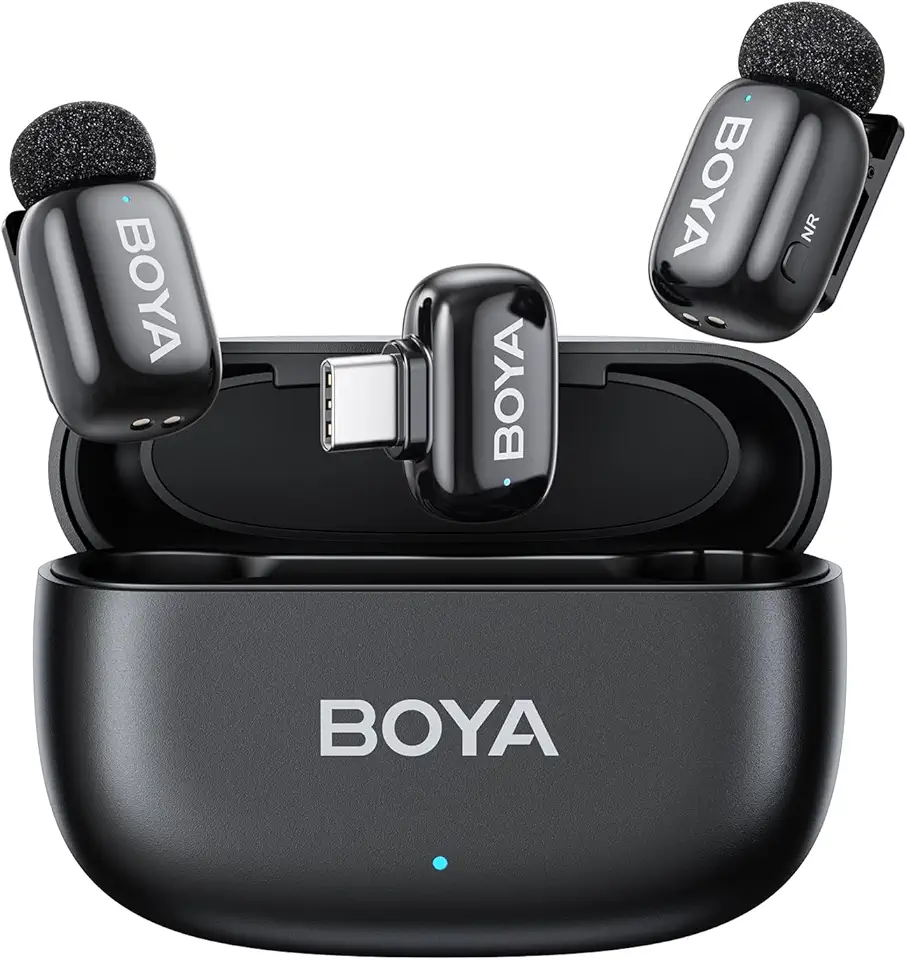
BOYA Mini wireless lavalier microphone USB-C with charging case
Ultra-compact wireless lavalier with neat charging case, plug-and-play simplicity, and clear audio suited for travel and social videos.
Check PriceAs a photographer who often shoots on the run, I appreciate the BOYA Mini Wireless Lavalier for its no-fuss, budget-friendly approach. It’s very affordable and accessible for beginners, yet delivers decent speech audio that translates well to interviews and casual recordings.
The unit is compact and discreet, so it doesn’t draw attention on camera or interfere with framing. Users report it works well with smartphones and cameras, and the setup is simple—great when you need a quick, reliable solution for a single subject.
In real-world use the BOYA shines for short-range work: reliable wireless connection for interviews, run-and-gun shoots, and casual content creation. However, its audio can lack clarity in noisy environments, so it’s best suited to controlled indoor settings or quiet outdoor spots rather than loud, chaotic scenes.
Battery life is average at around ~5 hours, which is enough for most interviews and short sessions but means you’ll want a backup or a way to recharge for longer days. Overall, if you need an inexpensive, compact lavalier that simply works for voice capture on phones and cameras, the BOYA Mini is a solid choice—just be mindful of noisy locations and longer shoots.
- Very affordable for beginners
- Compact, discreet design
- Simple setup—works with smartphones and cameras
- Reliable short-range wireless for interviews
- Can lack clarity in noisy environments
- Battery life only ~5 hours
How to Choose a Lavalier Microphone
When I pick a lavalier for a shoot, the first question is mobility. If your subject moves or you’re shooting run-and-gun vlogs, wireless is almost always worth the trade-offs. For static interviews or voiceovers a wired mic gives rock‑solid connection and no batteries to worry about.
Noise environment shapes directionality choices. Omnidirectional mics are forgiving when people turn their heads or move, and they work well in controlled indoor spaces. For windy streets or noisy events, a directional or strong noise‑cancelling system will keep the voice clear.
Sound character matters more than spec sheets. Look for a wide frequency response and good sensitivity so dialogue sounds natural. Also check whether the system has useful gain control; that saves you from clipping on loud takes or boosting thin voices later.
Battery life and wireless range are practical concerns. For long days choose a system rated for extended use, and if you film outdoors consider long-range transmission to avoid dropouts. Remember the trade-off: bigger batteries often mean larger transmitters.
Connector compatibility is a make-or-break detail for Android. Confirm if the mic uses TRS, TRRS, USB‑C or Bluetooth, and whether your phone needs an adapter. Some wireless systems pair cleanly with phones, while others can be finicky on older Android models.
Size and clip design affect both sound and aesthetics. A small, sturdy clip keeps the capsule stable and reduces clothing noise. I route cables under layers and use a tiny foam windscreen outdoors for less rustle and puffing sounds.
Auto‑pairing and simple LED feedback really speed production. When I’m on location I don’t want fiddly setups; systems with automatic pairing or clear indicators cut setup time and stress.
Finally, match the mic to your primary use—long battery life for all-day shoots, compact transmitters for on‑camera work, or superior noise cancellation for crowded streets. Trade-offs are normal; choose the one that fits how you actually shoot.
Common Uses for Lavalier Microphones
Lavalier mics are one of those small tools that solve big problems on set. They’re discreet, keep subjects hands-free, and capture voice consistently close to the source — which is why I reach for them for so many jobs.
For broadcasting and run‑and‑gun journalism, lavaliers let a reporter move and talk without worrying about holding a microphone. Clip the mic near the collar or lapel and use a windscreen outdoors; that simple setup keeps dialogue intelligible even when subjects are pacing or turning toward cameras.
On video shoots and documentaries they’re invaluable for natural-sounding dialogue. You can hide them under clothing for a clean look or use dual transmitters for two speakers. I always record a backup feed when possible, because a discreet mic failing mid‑take is harder to recover than a boom drop.
In presentations, theatre, fitness classes and live events the freedom of movement is the main advantage. Secure the clip well and tuck cables so they don’t snag. For noisy spaces, choose a model with good noise rejection or a directional pickup to keep the voice forward and background noise lower.
Podcasters, streamers and educators benefit from consistent close-range audio without a handheld mic getting in the way. Lavalier placement and gain control matter more than brand here; a well-placed omni mic often sounds more natural than an overdriven headset.
Some practical habits will save you headaches: test levels before rolling, swivel the clip to avoid clothing rustle, carry spare batteries or a charging case, and use small wind protection outdoors. These small steps keep your recordings clean and make lavaliers feel like an extension of your lighting and lens kit.
Ultimately, match the lavalier to the use: choose long battery life and range for events, strong noise handling for outdoor shoots, and a tiny, discreet pack for on‑camera work. When used thoughtfully, they turn even noisy environments into usable audio sessions.
What People Ask Most
What is the best lavalier mic for Android phones?
There is no single best option; the right choice depends on your priorities like battery life, wireless stability, noise handling, connector compatibility, and size. Consider trade-offs and match a model to your typical use case for interviews, vlogging, or studio work.
Can any lavalier microphone work with Android devices?
Not necessarily—connector type and how the system transmits audio determine compatibility. Some mics plug straight into phones while others require adapters or specific pairing methods, and wireless implementations can vary between systems.
How do I connect a lavalier mic to my Android phone?
For wired mics, use the compatible plug or a USB‑C adapter if required by your phone. For wireless systems, follow the transmitter/receiver pairing steps or use Bluetooth where supported and rely on auto‑pairing and LED indicators when available.
Do lavalier mics improve audio quality on Android devices?
Yes, lavalier mics typically deliver clearer, more natural speech and reduce background noise compared with built‑in phone microphones. Noise cancellation and good placement further improve intelligibility in noisy environments.
Do I need an adapter to use a lavalier mic with Android phones?
Many modern phones do require an adapter depending on the mic’s connector and the phone’s port. Check the mic’s connector type and your phone’s input options before purchasing, since some mics offer mobile-friendly plug‑and‑play compatibility.
What features should I look for in a lavalier mic for Android?
Prioritize battery life, wireless range and stability, noise cancellation, connector compatibility, size and discreetness, and useful controls like gain adjustment. Choose features based on whether you need mobility, long sessions, or reliable outdoor performance.
Are wired or wireless lavalier mics better for Android recording?
Wired mics provide a stable direct connection but limit movement, while wireless systems allow freedom of movement at the cost of battery management and potential connection variability. Evaluate which trade‑offs matter most for your shooting style and environment.
Conclusion for Best Lavalier Mic for Android
Choosing the right lavalier for an Android phone comes down to matching mobility, battery life, noise handling, and connector compatibility to your primary use case rather than hunting for a single “best” option.
Weigh the trade-offs outlined above—wireless freedom versus wired stability, compact transmitters versus longer battery life, and stronger noise cancellation versus simpler plug-and-play setup—to find the mic that fits how and where you shoot.
If you want to sharpen your gear choices and recording technique, browse more articles on the site to build skills and confidence with mobile audio and on-camera workflows.
Have a specific setup or question? Leave a comment below with your use case or experience and we usually reply within a few hours.


0 Comments