

What makes a portrait stop a viewer and another fade into the scroll? Lens choice shapes intimacy, depth and mood in ways many photographers underestimate. This guide compares five top portrait lenses and delivers practical buying guidance grounded in actual shooting experience.
We cut past spec sheets and marketing blurbs. You’ll find candid, real-world feedback from studio and location shoots. We’ll weigh the everyday pros and cons photographers report, from rendering and bokeh to handling and reliability.
We also explain how focal length and lens type change perspective, compression, and subject isolation. That helps you match focal length to portrait style—tight headshots, half-body portraits, or environmental work. Understanding these differences saves time on set and yields more flattering results.
This guide is for working pros, ambitious hobbyists, and anyone buying their next portrait lens. I’ll discuss practical trade-offs like creamy background separation versus size and weight, and autofocus speed versus price. Expect clear recommendations that respect budget, shooting conditions, and aesthetic priorities.
By the end you’ll know which lenses tend to produce dreamy bokeh, which ones are easy to carry all day, and which deliver the sharpness you need in low light. No fluff, no jargon. Just tested, photographer-to-photographer advice to help you choose with confidence.
1. Sirui Aurora 85mm f/1.4 Overview

Sirui Aurora 85mm F1.4 AF lens for Sony E-mount
Creamy bokeh portrait prime with fast autofocus for mirrorless cameras, delivering dreamy subject separation and rich contrast.
Check PriceI reach for the Sirui Aurora 85mm f/1.4 when I need professional-grade portraits with minimal fuss. It’s praised for excellent low-light performance and delivers consistently sharp results with vibrant color and minimal chromatic aberration even wide open.
The fast f/1.4 aperture gives a smooth, creamy bokeh that really isolates the subject and makes backgrounds melt away. Images come through with high contrast and rich color rendition at that wide aperture, so skin tones and details feel pleasing and natural.
At 85mm the compression is flattering for close-up portraits and headshots, making facial features look natural and well-proportioned. Cross-platform compatibility is a useful bonus if you work across different camera systems or like to switch bodies.
Handling is a strong suit: the lens is lightweight and compact, comfortable for extended handheld use and ideal for travel or long sessions. In real shooting the Aurora shows minimal optical flaws — low distortion and very little aberration — so you spend less time fixing files in post.
No lens is perfect: autofocus can be slightly slower in low light compared with higher-end competitors, and build quality isn’t as robust as premium glass. Still, if you prioritize creamy bokeh, excellent color, and a portable setup for portraits and headshots, the Sirui Aurora 85mm f/1.4 is a compelling, practical choice.
- Sharp, high-contrast images with excellent color rendition at f/1.4
- Lightweight and compact—good for on-the-go work
- Minimal optical flaws (aberration, distortion) in real shooting
- Smooth, pleasing bokeh for subject separation
- Autofocus can be slightly slower in low light versus higher-end competitors
- Build quality not as robust as premium lenses
2. Sony FE 85mm f/1.2 GM Overview

Sony FE 85mm f/1.4 GM
Professional-grade short telephoto with exceptional sharpness, gorgeous bokeh, and reliable low-light performance for demanding portrait work.
Check PriceThe Sony FE 85mm f/1.2 GM is widely regarded as a top-tier portrait lens for Sony users. It’s built to deliver the image quality that professional portrait photographers demand.
Optically it delivers ultra-sharp images with exceptional subject separation and creamy bokeh, especially when shot wide open at f/1.2. You’ll notice strong contrast and excellent detail retention in portraits, even in challenging lighting.
Low-light performance is a real strength; the wide f/1.2 aperture lets you keep shutter speeds higher and noise lower without sacrificing background separation. That capability makes it a reliable choice for both dim studio setups and evening event work.
Autofocus is fast and accurate, and it’s trusted by pros shooting studio and events where decisive moments matter. The responsiveness and precision mean fewer missed frames and more keepers when subjects move or expressions change.
Make no mistake: this lens is aimed at serious shooters who want the best rendering and shallow depth of field. It’s an investment in image quality — but be realistic about the trade-offs, since it is heavy and the price point can put it out of reach for casual photographers.
- Outstanding sharpness and contrast at maximum aperture
- Exceptional, dreamy bokeh
- Fast and reliable autofocus in challenging lighting
- Excellent low-light capability
- Heavy—can be tiring during long handheld shoots
- Price can be prohibitive for casual or hobbyist photographers
3. Zeiss Batis 85mm f/1.8 Overview

ZEISS Batis 85mm f/1.8 for Sony E-mount
Precision-engineered optic offering striking color rendition, edge-to-edge sharpness, and smooth rendering ideal for artistic portraits.
Check PriceThe Zeiss Batis 85mm f/1.8 is a portraitist’s tool that balances optical quality with practical handling. It delivers consistently sharp results and beautiful color rendition, which means skin tones look natural and details stay crisp even when you push the file in post.
Its smooth bokeh is one of those subtle things that makes subjects stand out without drawing attention to the background. That creamy separation is perfect for headshots and tight three-quarter portraits where you want the face to pop against a soft backdrop.
Build quality feels substantial and professional, and Zeiss’s weather sealing gives you confidence to shoot in varied conditions. At the same time, the lens is compact and has a manageable weight, so it’s comfortable for full days on location or for travel assignments where you carry gear between shoots.
Autofocus is generally reliable in normal situations, but note it can be slightly slower than some newer lenses when you’re working in dim light or tracking fast movement. Also, some photographers report minor chromatic aberration in very high-contrast scenes, so watch highlights and edges in backlit setups.
Overall, if you prioritize build quality, color fidelity, and a classic 85mm rendering in a lens that won’t weigh you down, the Zeiss Batis 85mm f/1.8 is an excellent choice. It’s especially good for portrait shooters who value image rendering and weather resistance over the absolute fastest AF times.
- Sharp images with accurate color and contrast
- Smooth, pleasing bokeh for subject isolation
- Weather-sealed construction
- Compact and lightweight for travel
- Autofocus can be slightly slower than some newer lenses
- Minor chromatic aberration in high-contrast scenes
4. Nikon Nikkor Z 85mm f/1.2 S Overview

Nikon NIKKOR Z 85mm f/1.2 S
Ultra-fast aperture lens delivering creamy bokeh, superb subject isolation, and stellar resolution for emotion-driven portraiture.
Check PriceThe NIKKOR Z 85mm f/1.2 S is a lens I reach for when I need portraits that truly pop. Its combination of razor-sharp rendering and subject separation makes skin textures and eyes resolve with remarkable clarity, so your subject becomes the undisputed focus of the frame.
Wide open, the lens delivers creamy bokeh that separates the subject from the background without becoming mushy. That smooth out-of-focus quality, coupled with excellent detail retention even in low light, gives you beautifully nuanced images straight out of camera.
Autofocus is fast and accurate, which matters when working with moving subjects or when you’re shooting tethered in a studio with fleeting expressions. The responsiveness lets you chase dynamic moments without sacrificing precise focus on the eyes.
Physically, the build is robust and weather-sealed, so it’s comfortable taking on location work in varied conditions. Expect a premium feel and durability that stands up to regular professional use.
This lens is best for portraitists who prioritize image quality above all else — studio headshots, wedding portraits where bokeh and subject separation are key, and editorial work that demands maximum detail. If you need a lens that gives you creamy backgrounds, tack-sharp subjects, and confident AF, this is a standout choice.
The main trade-offs are practical: it’s a substantial piece of glass and represents a serious investment. If you’re often doing long handheld shoots or have a tight budget, factor those considerations into your decision.
- Outstanding sharpness and contrast at maximum aperture
- Exceptional bokeh quality
- Fast and reliable autofocus
- Robust build and weather sealing
- Heavy—can be tiring during long or handheld shoots
- Price may be prohibitive for casual or hobbyist photographers
5. Fujifilm XF 35mm f/1.4 R Overview

Fujifilm XF 35mm f/1.4 R
Classic wide-normal prime with bright aperture, delightful rendering, and tactile manual controls for street and everyday photography.
Check PriceThe Fujifilm XF 35mm f/1.4 R is a compact, bright prime that punches well above its weight for portrait work. Its f/1.4 maximum aperture gives you shallow depth of field and strong low-light capability, which helps when you need subject separation without cranking ISO.
Optically it’s consistently sharp with vibrant colors and smooth bokeh, so subjects look clean and three-dimensional. The rendering is pleasing for environmental and lifestyle portraits where you want context but still need the subject to pop.
Handling is a highlight — tactile controls and solid build quality make it enjoyable to use over a long day. Its compact, lightweight design also makes it ideal for travel and street shoots when you don’t want a heavy rig.
This lens delivers professional results across a wide range of lighting, so it’s a reliable everyday portrait option for shooters who move between studios, cafés, and on-location work. Keep in mind that the 35mm field of view is moderate wide-angle on APS-C and may require more working distance for flattering headshots.
If you favor environmental portraits, travel, or documentary-style portraiture, this lens is a great match: sharp, colorful, and with a pleasing out-of-focus quality. However, expect minor chromatic aberration in very high-contrast scenes, though it’s generally well-controlled and often correctable in post.
- Sharp images with excellent color accuracy and contrast
- Smooth, pleasing bokeh for subject separation
- Compact and lightweight—ideal for travel
- Tactile controls and solid build quality
- 35mm may be too wide for some traditional portrait work—needs more space
- Minor chromatic aberration in high-contrast scenes (generally well-controlled)
Choosing Focal Lengths for Portrait Styles
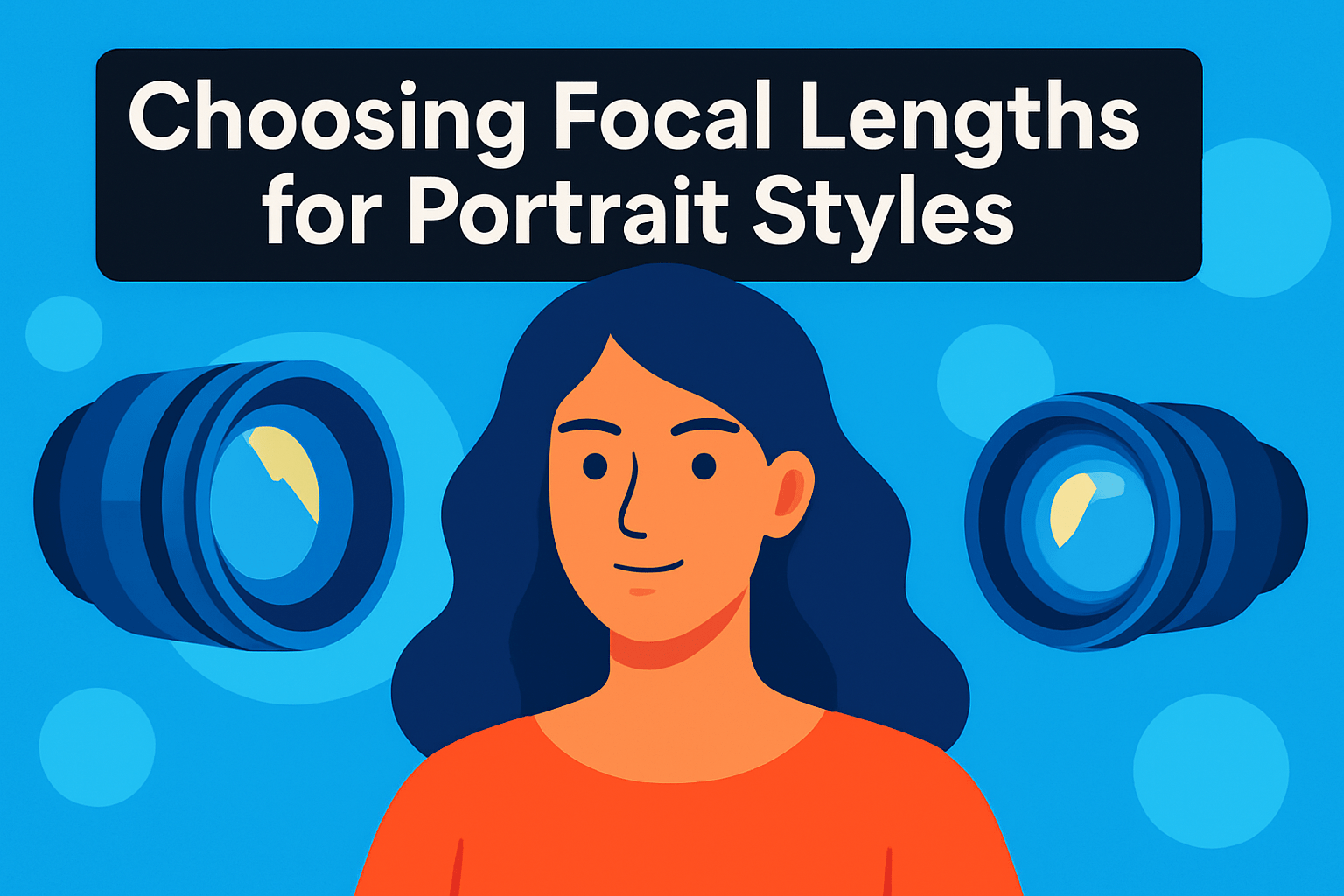
Focal length controls perspective, facial rendering and background compression. Pick the right one and you change the mood and how flattering a portrait looks.
Wide angles (16–24mm) create dramatic, expansive backgrounds and obvious distortion. Use them for environmental portraits, full-length fashion or large groups where context matters. Keep the subject centered when possible and avoid tight headshots unless you intentionally want distortion for creative effect.
35mm sits between wide and normal, offering context without extreme distortion. It’s great for environmental portraits and small groups. Get close for intimacy but avoid tight headshots unless posed carefully, or you’ll exaggerate noses and foreheads.
About 50mm gives a natural perspective with minimal distortion. I use it for upper-body portraits and street-style work when space is limited. It’s a reliable everyday choice, easy to learn and fast to frame.
85–135mm is the classic portrait range for a reason. Gentle compression flatters faces and yields creamy backgrounds and smooth bokeh. 85mm is the most versatile, while 105–135mm pull more compression for very tight headshots or editorial looks.
100–200mm and beyond deliver strong compression and extreme subject separation. They work especially well outdoors or when you can step back a lot. Be mindful of working distance, heavier gear and tighter framing that affects interaction with your subject.
A wide aperture amplifies the effect of longer focal lengths but demands precise focus. Cropping a wide shot won’t recreate telephoto compression, so don’t try to fake it. If you want that compressed look, change your distance and lens, and stop down for groups so everyone stays sharp.
My practical rule: carry one wider lens and one longer portrait lens and learn how each affects distance, posing and background. Practice in the rooms, streets and studios you shoot most and let focal length guide your choices to speed up shoots. That pairing covers most portrait styles cleanly and reduces time spent retouching.
Prime vs. Zoom: Choosing Portrait Lenses
Deciding between prime and zoom lenses is one of the most practical choices you’ll make as a portrait photographer. It’s not an either/or argument—it’s about prioritizing image quality, creative control, or flexibility depending on the job.
Primes often win for pure portrait look because their wide apertures (f/1.4–f/1.8, for example) give you the shallowest depth of field and the creamiest bokeh. Their simpler optical designs usually mean sharper images and fewer aberrations at wide apertures. Choosing a prime also forces you to move and think about composition, which often improves the final image.
Zooms shine when you need to adapt quickly: weddings, editorial days, or crowded locations where switching lenses interrupts the flow. They typically come with smaller maximum apertures (f/2.8–f/4), so you trade a little background separation and low-light headroom for convenience. That said, modern pro-grade zooms can still render excellent portraits and cover focal lengths you might otherwise need two primes for.
If I’m shooting in a controlled environment or aiming for tight headshots, I reach for my fastest prime every time. For run-and-gun assignments, group shots, or environmental portraits where framing needs to change on the fly, a reliable zoom is my go-to. Many photographers combine both approaches: primes for deliberate, artistic work and zooms for speed and coverage.
A practical way to build a kit is to start with a fast prime at the focal length you use most, then add a versatile zoom as needed. That gives you the image quality and subject isolation of a prime plus the flexibility to cover unpredictable scenes without swapping glass.
Ultimately, choose based on how you work rather than what looks best on paper; your shooting style and clients will dictate the right mix. If forced to pick one, prioritize a fast prime at your favorite portrait focal length—it’s the best single investment for classic portrait rendering.
What People Ask Most
What is the best lens for portrait photography?
The best lens depends on your portrait style, shooting conditions, and budget. Lenses that offer flattering compression and good subject separation are often favored for classic headshots, while wider lenses suit environmental portraits.
Which focal length is best for portrait photography?
Different focal lengths suit different portrait types: wider lenses work for environmental and group shots, midrange lenses offer a natural look, and longer focal lengths provide flattering compression for close headshots. Choose a focal length based on how you want to render perspective and background separation.
Is a 50mm lens good for portraits?
A 50mm lens is a solid, versatile choice for upper-body portraits and casual street-style work due to its natural perspective and minimal distortion. It can be less flattering for tight headshots compared with longer focal lengths.
Is an 85mm lens better for portraits than a 50mm?
An 85mm lens typically gives more pleasing compression and subject separation for close-up portraits and headshots. A 50mm remains more versatile for environmental or upper-body shots, so the better choice depends on the look you want.
What aperture is best for portrait photography?
Wider maximum apertures are often favored for strong subject separation and low-light capability. Many portrait photographers prefer lenses with very large apertures for creamy bokeh and control over depth of field.
Are prime lenses better for portraits than zoom lenses?
Primes are often chosen for their wider apertures and optical simplicity, which can produce superior subject isolation and sharpness. Zooms offer flexibility across focal lengths and are useful for events and fast-paced shoots where mobility matters.
Can you use a 35mm lens for portraits?
Yes, a 35mm lens works well for environmental portraits and group shots where you want to include context. It can feel too wide for traditional tight headshots and typically requires more space between photographer and subject.
Conclusion on Best Portrait Lenses
This comparison is meant to help you weigh the real-world strengths and trade-offs—optical performance, bokeh, autofocus behavior, build, weight and cost—so you can pick the tool that matches your priorities.
Keep in mind that focal length shapes perspective and compression: wider views favor environmental and group shots, mid-range lenses offer a natural look, and longer optics give flattering compression for tight headshots.
Similarly, primes and zooms serve different purposes: primes reward you with larger apertures and often crisper rendering while zooms buy flexibility and speed in changing situations, and many photographers use both depending on the shoot.
Match your choice to the portrait style you shoot, the working distance and lighting you most often face, and the budget and ergonomics you can live with.
If you’d like to sharpen your technique and lens decisions, explore more articles on the site to build skills and confidence at your own pace.
Please leave a comment with your questions or experiences below — we usually reply within a few hours and enjoy helping photographers refine their choices.



0 Comments