
Ever struggled to get studio-quality light inside your home or a cramped location? Lighting can make or break a photo, and the right fixture turns average shots into polished work. Whether you’re shooting portraits, product, or video, understanding light saves time and elevates your craft.
In this guide I compare five top indoor lights across different budgets and shooting needs, with hands-on insights rather than spec sheets. You’ll get practical tips for modifiers, window light techniques, and the common pitfalls to avoid. This isn’t a spec-heavy list; it’s a user’s guide grounded in real shoots.
I’ll break down each light’s strengths, real-world pros and cons, and who each unit really suits — from studio shooters to hybrid video creators. Expect concise, usable advice that helps you choose gear that fits your workflow, not just headlines and numbers.
Beyond gear, the guide shows how to tame window light, shape shadows with modifiers, and balance color for natural results. Short, actionable setups will help you get flattering portraits, crisp product shots, and clean video with less fuss.
By the end you’ll know which light matches your needs, how to pair it with diffusers or reflectors, and how many sources you really need. Read on for a practical, photo-tested roadmap to better indoor lighting. You’ll be ready to light confidently and avoid costly mistakes.
1. COLBOR CL220R RGB LED COB Light

COLBOR CL220R 220W RGB COB LED Video Light 2700-6500K
Powerful RGB COB light with wide color temperature range and adjustable intensity for dynamic video and photo lighting
Check PriceThe COLBOR CL220R RGB LED COB Light is a serious workhorse for studio and commercial shoots, packing a 220W RGB COB element that delivers punchy continuous light. It gives you both bi‑color and full RGB modes, so you can switch between accurate white light and creative color washes without changing fixtures. As a photographer who often needs both product and portrait fidelity, that flexibility is invaluable.
Output is impressive — up to 30,600 Lux at 1 m with the included reflector — so it handles tight product shots and lit backgrounds without immediately needing extra heads. Color fidelity is top tier with CRI/TLCI 97+, and the color temperature range of 2700K–6500K means skin tones and product colors stay natural across setups. That accuracy reduces time spent color‑matching in post.
For creatives the CL220R brings 13 built‑in lighting effects plus M/G color balance control, which is great for mood work or quick in‑camera looks. The full RGB gamut lets you dial in saturated hues for backgrounds or practicals while still maintaining precise white balance when needed. Those effects are practical, not gimmicky, especially when you want consistent repeatable looks.
Build and mounting are designed for studio use: NATO rail and Bowen’s mount compatibility make attaching softboxes, grids, or other modifiers straightforward. The unit feels robust and well put together, so it stands up to daily studio use. Modifier compatibility is a real advantage if you prefer shaping light precisely.
This light is aimed at professionals who need precise color, high output, and studio/commercial flexibility. It’s a great choice if you prioritize accurate skin tones and reliable product color rendering under continuous light. If you shoot client work where color is critical, this will save you time and headaches.
Two caveats: it’s bulkier and heavier compared with ultraportable heads, so it’s less ideal for fast location work. Also, the extensive feature set can be a little complex for beginners, so plan for a short learning curve.
- CRI/TLCI 97+ color accuracy
- 220W output; up to 30,600 Lux at 1 m
- Bowen’s mount & NATO rail for modifiers
- Full RGB modes + 13 built‑in effects
- Bulky/heavier for portable setups
- Feature set can be complex for beginners
2. Godox AD300Pro Flash and Strobe

GODOX AD300Pro 300W TTL HSS Portable Flash 2.4G 1/8000s
Compact 300W portable flash offering TTL and 1/8000s HSS for fast-action shooting and reliable off-camera performance
Check PriceGodox AD300Pro Flash and Strobe is an off‑camera flash/strobe that delivers a strong, consistent output suitable for indoor work. As a working photographer, you’ll appreciate its punch when you need a directional, high‑impact burst of light for portraits or small product setups.
It’s built for portability, so you can move quickly between studio corners and on‑location shoots without lugging heavy monolights. Reliable wireless control makes multi‑light setups straightforward, letting you focus on placement rather than cable runs.
Fast recycling times mean fewer missed frames during a session, which is essential for event coverage and energetic portrait work. And because it’s aimed at enthusiasts and pros who want affordable, high‑quality studio lighting for indoor and outdoor use, it represents a sensible middle ground between small speedlites and full studio packs.
There are trade‑offs: as a strobe it is not suitable for video where continuous light is required. Also the menu and feature set have a learning curve, so expect a brief adjustment period before getting the most out of its controls.
Given its combination of consistent, bright output, easy wireless setup, fast recycle, and good value, it’s a strong pick if you primarily shoot stills indoors and occasionally on location. If you need hybrid stills/video or continuous light for interviews and motion, you should consider a different type of light.
In short, for portrait, event, and product shooters who prioritize portability and powerful, repeatable bursts of light, the AD300Pro delivers the key strengths you need. Expect a short learning phase for menus, but otherwise you’ll gain a dependable, affordable strobe that fills many indoor lighting roles.
- Consistent, bright output
- Easy wireless setup
- Fast recycle
- Good value
- Not suitable for video (strobe)
- Menu/features have a learning curve
3. Rotolight AEOS 2 Pro

Rotolight AEOS 2 Pro RGBWW LED Light with HSS Flash
Lightweight RGBWW fixture delivering cinematic color control and integrated high-speed flash for versatile studio and location workflows
Check PriceThe Rotolight AEOS 2 Pro is a true hybrid light — it combines continuous LED and flash in one compact package. That makes it ideal when you need to switch between stills and video without changing fixtures.
Output is respectable for a compact unit, rated up to 11,700 Lux at 3 ft, which is plenty for single‑subject work, portraits, and many on‑location scenarios. Its color control is exhaustive: 2,500 digital filters and 16.7 million colors give you precise hues and creative looks without gels or complex setups.
Build quality and portability are two more strong points; the unit is described as compact and portable while maintaining a high level of construction. Practically speaking, that means you can toss it in a kit bag for location jobs and still rely on it in the studio.
Where it’s less strong is scale and budget. The AEOS 2 Pro is not the most powerful option for large sets or lighting several subjects at once, and it’s positioned as a premium product, so expect a higher price. For hybrid shooters who prioritize flexibility, color tuning, and a lightweight kit, this is a very compelling choice.
- Hybrid continuous LED + flash
- Compact and portable
- 2,500 digital filters; 16.7 million colors
- Up to 11,700 Lux at 3 ft
- Limited output for large scenes or big sets
- Considered a premium (pricey) product
4. FalconEyes RX18-TD LED Panel
High-output bi-color LED providing precise color tuning, flicker-free output and dependable power for demanding video shoots
Check PriceThe FalconEyes RX18‑TD is a large LED panel built around a tent‑style softbox that gives an ultra‑soft, flattering light. As a photographer I appreciate how that tent diffusion wraps light evenly around faces, which is exactly what portrait and beauty work needs.
Its light quality is very soft and forgiving, so skin textures look smoother and catchlights remain natural. Because of the panel size and diffusion it can light several people evenly, making it useful for small group headshots or multi‑talent YouTube setups.
Setup is honestly painless — tool‑free assembly gets you shooting fast, which matters on client days. You also get adjustable intensity and temperature and a touchscreen control for quick tweaks on set.
That touchscreen is handy for speed, though it’s less tactile than physical dials if you prefer knobs. The unit is described as portable, so you can move it between home studio and location, but be aware the overall footprint is large.
If your space is medium to large and you want soft, even light with fast setup, this is a great choice. If you work in very tight rooms or insist on physical controls, factor those two caveats into your decision.
- Exceptionally soft light
- Fast, tool‑free assembly
- Can light several people evenly
- Portable
- Large footprint may be too big for very small spaces
- Touchscreen controller less tactile than physical dials
5. Godox SL300II Bi Continuous LED

GODOX SL300II-BI 320W Bi-Color LED Video Light 2800-6500K
Versatile lighting accessory engineered for professional results, offering easy control, durable build, and consistent color accuracy on set
Check PriceThe Godox SL300II Bi is a continuous bi‑color LED built for studio shoots and video work where reliable, adjustable light matters. As a working photographer, I appreciate lights that give consistent results and this unit is aimed squarely at studio photographers and videographers who need bright, quiet continuous lighting.
Output is impressive: up to 99,300 Lux at 1 m with the standard reflector, so it easily serves as a strong key or fill when you need to overpower ambient light or light larger scenes. The bi‑color capability makes it simple to match window light or mixed indoor sources without wrestling with gels.
Practical workflow features stand out. It uses a Bowens S‑mount, so you can slap on most softboxes, beauty dishes, and other modifiers you already own for immediate versatility. There’s a cooling fan with a silent mode, which keeps the light usable on sound‑sensitive video shoots while maintaining consistent output.
Be realistic about portability: it requires mains power, so it’s less suited to battery‑dependent location work, and it’s a bit bulkier to move than compact on‑camera LEDs. If your work is predominantly studio or you frequently shoot controlled indoor video, the SL300II Bi is a strong, no‑nonsense option that balances raw output, color accuracy, and modifier compatibility.
- Very bright: 99,300 Lux at 1 m
- Quiet operation (cooling fan with silent mode)
- Bowens S‑mount — wide modifier compatibility
- Good color accuracy for skin tones/products
- Requires mains power (less portable)
- Bulkier to transport than smaller lights
Using Window Light Indoors
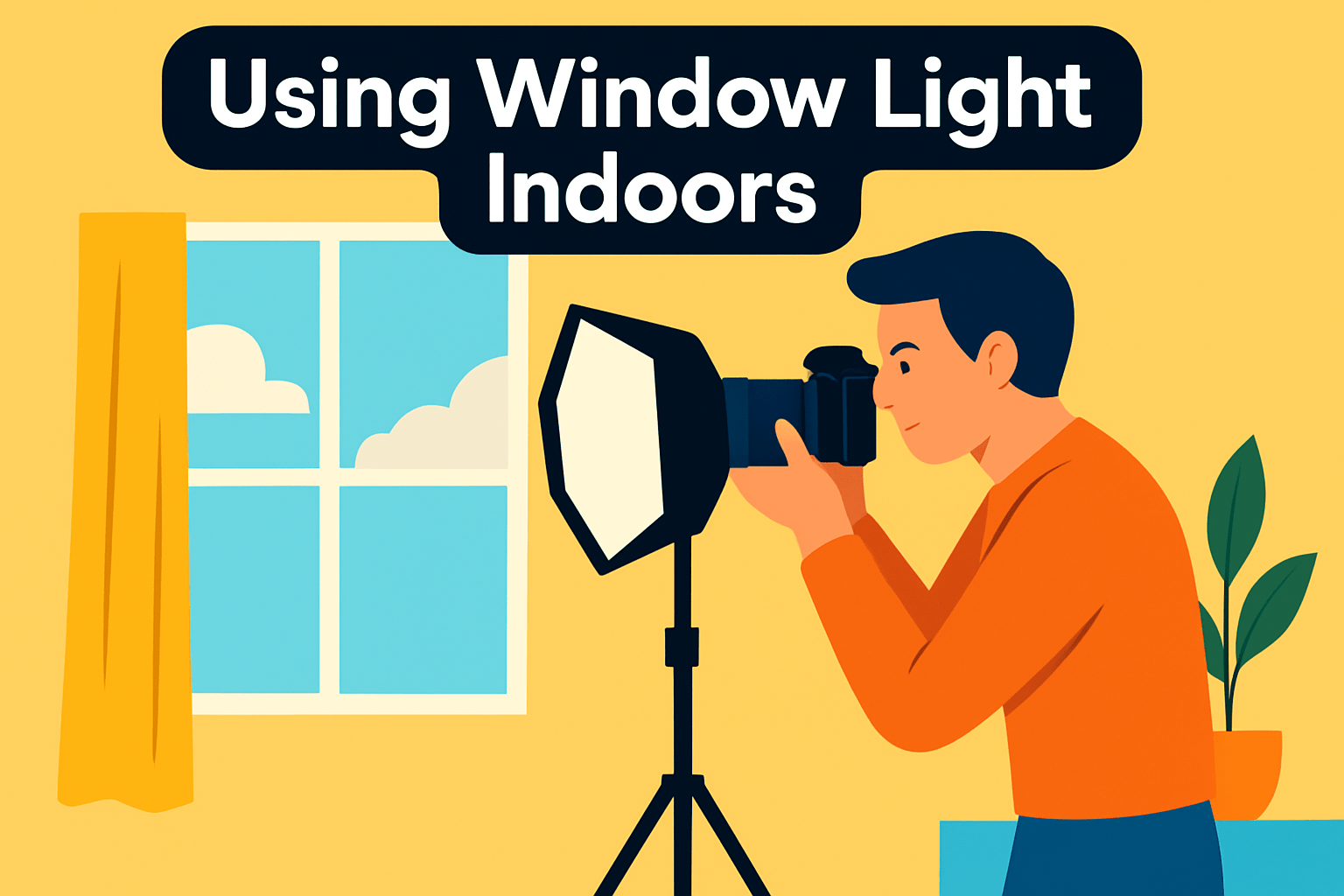
Window light is one of the simplest, most flattering tools you have. It can act as your main light, a fill, or a dramatic accent. When I set up a shoot I look at the window first — its size, direction and what the sun is doing.
For portraits the classic 45° placement gives pleasing modeling and natural depth. Put your subject about 45° from the window so one side of the face catches light and the other falls into gentle shadow. Facing the window produces soft, even illumination, while placing the subject between camera and window creates backlight for a rim glow or, if you underexpose, a silhouette.
If the sun is harsh, diffuse it with blinds, sheer curtains or shades. These treatments turn a hard point source into a larger, flattering one that keeps highlights under control. I also switch off other indoor lights to avoid mixed color temperatures and strange secondary shadows.
Know your window orientation. North-facing windows give soft, consistent light all day, while south-facing windows throw stronger directional sun mid-morning to mid-afternoon. The sun moves roughly 15° per hour, so shadows and angles change fast — plan short sequences or be ready to move with the light.
Window panes and blinds are free gobos; use them to paint lines and texture across faces or backgrounds for added mood. Move your subject closer to the window to sharpen those shadow edges, or step back to soften them. Often a slight tilt of the head or body will turn a distracting shadow into a useful compositional element.
Before grabbing extra gear, move the subject and camera — small adjustments usually fix placement and catchlights. When backlit, decide if you want detail or drama and expose for the subject or the background accordingly. If dynamic range is wide, bracket a few frames so you have options in post.
Lighting Modifiers for Indoor Photography
Light modifiers are the secret to making indoor photos look professional. They let you shape the same lamp or window into anything from creamy portrait light to punchy product illumination.
Diffusers soften and spread light, cutting harsh shadows and highlights. Use translucent fabrics, scrims or a lightweight panel between the source and subject; the bigger and closer the modifier, the softer and more flattering the light.
When window light is too strong, I hang a sheer or clip on a diffuser to turn contrast into gentle wrap. It’s perfect for portraits and small product shots because specular highlights disappear without losing form.
Reflectors are the fastest way to fill shadows and add catchlights. White gives neutral, soft fill; silver adds punch and contrast; gold warms skin tones—choose based on the mood you want.
Position a reflector opposite the main light and tilt it until the shadow shapes read naturally. Handheld reflectors let you shape catchlights precisely, while mounted reflectors free you to tweak the main light.
Combine diffusers and reflectors for real control: diffuse the main light and use a reflector to bring up shadow detail from a secondary angle. Start subtle and adjust distance and angle until faces look dimensional not flat.
For controlled studio looks use softboxes or beauty dishes for focused yet soft output, umbrellas for broad even coverage, and grids or snoots when you need a tight hair or rim light. These tools let you isolate subjects, control spill and add separation from backgrounds.
My workflow is simple: shape the key light first, then introduce fill, and finally add accent lights through grids or snoots. Small changes in size and distance change the mood dramatically—experiment until the light tells the story you want.
What People Ask Most
What type of lighting is best for indoor photography?
It depends on the subject and the mood you want to create. Choose lights that give you the control and color you need, and favor softer sources for flattering portraits.
Should I use continuous lights or strobes for indoor photography?
Continuous lights let you see the effect in real time and are useful for video or slow adjustments. Strobes provide short, powerful bursts ideal for freezing motion and working with fast shutter speeds.
What color temperature is best for indoor photography?
Match the light to the scene and the look you want, aiming for consistent color across all sources. If you need a natural look, balance the light so skin tones appear neutral and adjust white balance in camera as needed.
How do I set up lighting for indoor portrait photography?
Start with a main light placed to create pleasing modeling on the face, then add a softer fill to reduce unwanted shadows. Use a background or rim light if you want separation and more dimensionality.
How can I achieve natural‑looking light indoors?
Use large, diffused sources or window light and position them to create gentle shadows and highlights. Soften harsh direct light with curtains or diffusers and use reflectors to fill shadows subtly.
How many lights do I need for indoor photography?
It depends on the complexity of the scene and the level of control you want over shadows and background. Simple setups can work with a single main source, while more controlled looks often use additional lights for fill and accents.
What modifiers (softbox, umbrella, diffuser) work best for indoor photography?
Softboxes and diffusers produce soft, even light that flatters faces, while umbrellas give broad coverage for group shots. Reflectors are useful for filling shadows, and grids or snoots help focus light for more precise effects.
Conclusion for Best Indoor Photography Lights
In short, the best indoor light is the one that matches your priorities—output, color fidelity, portability, whether you need continuous, strobe or hybrid operation, and how well it accepts modifiers.
Pairing those hardware choices with practical techniques—window positioning, diffusers and reflectors—lets you shape flattering, natural results for portraits, product or video work.
Spend time experimenting with modifier size and placement, and choose lights that fit the scale and logistics of your shoots so you get consistent color and the look you want.
If you enjoyed this guide and want to sharpen your indoor lighting skills, browse more of our site’s articles for tips, workflows and practical examples to try on your next shoot.
Have questions or want feedback on a setup—leave a comment below and we usually reply within a few hours.


0 Comments