
Ever wondered whether medium format could be the secret ingredient that elevates your portrait work?
This guide cuts through the hype and highlights five medium format cameras that consistently deliver the color, tonality, and detail portrait photographers prize.
We evaluate each model across sensor and image quality, handling, autofocus behavior, and practical pros and cons you actually notice on a shoot.
That approach gives you a clear picture of how a camera performs in studio sessions, location work, and hybrid workflows.
Medium format often produces richer color rendition, smoother skin transitions, and a sense of depth that flatters faces in prints and editorial spreads.
But great results hinge on the whole package: lenses, ergonomics, and focus performance can make or break a portrait session.
We cover both modern digital bodies and classic film options, because portrait choices are ultimately aesthetic as much as technical.
You’ll see how each approach influences skin rendering, workflow, and final print appeal.
Be prepared for trade-offs too — larger bodies, different autofocus priorities, and price points that reflect medium format’s specialist status.
Some photographers embrace a slower, more deliberate workflow; others need responsiveness above all else.
We combine hands-on testing and photographer feedback to surface the best choices for portraiture right now.
Read on to discover which five options belong in a portrait photographer’s toolkit and which shooting styles they best serve.
1. Hasselblad X1D II 50C For Portraits

Hasselblad X2D 100C 100MP Medium Format Mirrorless Camera
State-of-the-art 100MP medium format sensor delivers astonishing detail, dynamic range, and natural color for high-end commercial, landscape, and studio photography
Check PriceThe Hasselblad X1D II 50C is a medium-format portrait tool that delivers exceptionally clean, painterly images. Its 50MP 43.8×32.9mm CMOS sensor gives you stunning color depth and sharp detail with roughly 14 stops of dynamic range — exactly what you want for skin tones and highlight retention.
Handling is a pleasure; the body is compact and ergonomic in a way that actually inspires you to slow down and compose. The high-resolution touchscreen and EVF make focusing and reviewing frames in the field comfortable and confidence‑inspiring.
On the portrait set the X1D II rewards deliberate shooting. Autofocus is contrast-detection only and lacks eye/face detection or continuous AF, so many photographers resort to manual focus for critical portraits. The modest burst rate (~2.7 fps) reinforces a considered, single-frame approach rather than chasing fast action.
Where it really shines is color and lighting control. Hasselblad color science combined with the sensor gives minimal post work for natural skin tones. If you work with flash, leaf-shutter lenses give flash sync up to 1/2000s, which is brilliant for balancing daylight and studio lighting. The Mark II improvements — better battery life and system responsiveness — plus Phocus Mobile iPad integration make tethered workflows and remote control very usable on professional shoots.
If you prioritize image quality, beautiful color and a tactile shooting experience over blazing AF or high burst speeds, the X1D II is an excellent portrait camera. It’s built for photographers who value deliberate craft, studio lighting flexibility and beautiful straight-from-camera color.
- Stunning 50MP image quality and ~14 stops dynamic range
- Compact, beautiful ergonomic design
- High-resolution touchscreen and EVF
- Flash sync up to 1/2000s with leaf-shutter lenses
- Slow, contrast-only autofocus; no eye/face detection
- Low burst rate (~2.7 fps) — not for fast action
2. Fujifilm GFX100S For Portraits

Fujifilm GFX 100S Body
Compact medium-format powerhouse with in-body stabilization, 102MP resolution, professional video and tethered workflow support
Check PriceThe Fujifilm GFX100S is a portrait powerhouse with a 102MP 43.8×32.9mm medium format sensor that delivers extraordinary detail and tonality. Its strong ISO performance up to about 6400 means you can keep clean skin tones without pushing noise too hard.
One of the biggest practical benefits is the 6 stops of in-body image stabilization (IBIS), which makes handheld portraits on location far more usable. That IBIS, combined with roughly 5 fps shooting, lets you capture subtle expressions without always relying on a tripod.
Autofocus is reliable in good light, so for studio and well-lit outdoor sessions you’ll find the GFX100S fast and dependable. In lower light the AF can slow down, so plan for careful focusing or use a tripod when the available light drops.
Fujifilm’s film simulations and in-camera skin smoothing are real time-savers for portrait work, often reducing the amount of retouching needed. The camera’s weather-sealed, robust build also lets you take it into varied environments without worrying about the elements.
Video capabilities are present — it records 12-bit ProRes RAW 4K/30p — but this body is primarily optimized for stills. If your main focus is high-resolution portrait photography with occasional pro-level video, this is a versatile match.
Users consistently praise the balance of enormous resolution and practical usability; the file sizes and level of detail also give you freedom to crop creatively while retaining superb image quality. Be aware that the body is bigger and heavier than smaller mirrorless options, which factors into comfort for long shoots.
- 102MP medium format resolution
- 6 stops IBIS for handheld portrait work
- Good AF and image quality in good light (~5 fps)
- Film simulations that flatter skin tones
- Bigger and heavier than smaller mirrorless bodies
- AF performance can degrade in low light
3. Fujifilm GFX50S II For Portraits
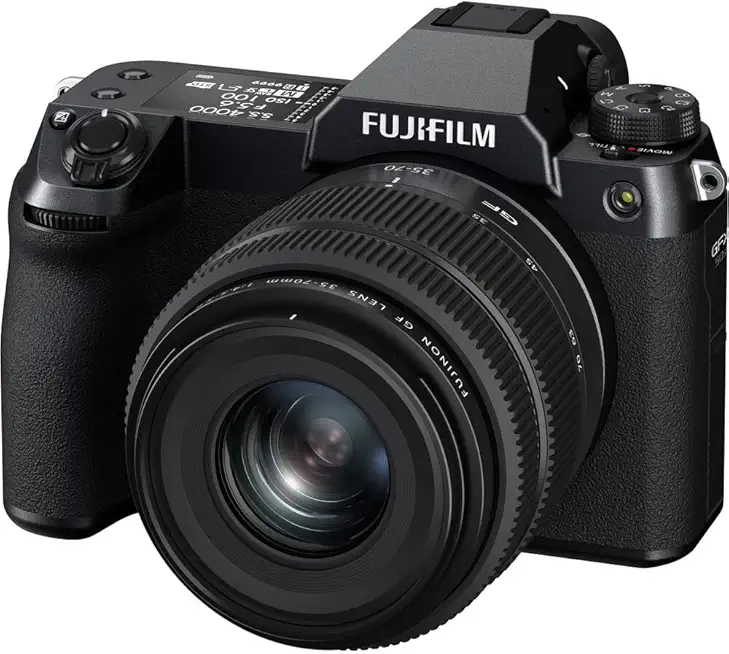
Fujifilm GFX50S II with GF 35-70mm Kit
Lightweight medium-format camera plus versatile 35–70mm zoom, delivering impressive 51MP detail, film-simulation color, and responsive autofocus for travel and studio
Check PriceThe Fujifilm GFX50S II is a serious portrait tool thanks to its 51.4MP 44×33mm medium format CMOS sensor that yields files made for large prints and detailed retouching. The classic Fujifilm color science and film simulations deliver flattering skin tones straight out of camera, which saves time in post.
Handling is pleasantly unobtrusive: the body is smaller and lighter than some other medium format options, so it’s genuinely travel-friendly for on-location shoots. IBIS with 6.5 stops of shake reduction makes handheld portrait work surprisingly reliable — useful for slower shutter speeds or working without a tripod.
Shooting is deliberate rather than frantic: continuous shooting runs at roughly 3 fps, which is fine for posed sessions and editorial portraiture but not ideal for fast-moving subjects. Video is limited to Full HD only, so if you need 4K video for hybrid work, this isn’t the camera for that purpose.
In short, the GFX50S II is a photographer’s medium format: excellent color and image quality, strong stabilization, and a compact enough package to take out beyond the studio. Choose it if you prioritize image fidelity, pleasing skin rendition, and portability over high frame rates or 4K video capabilities.
- 51.4MP 44×33mm medium format detail
- 6.5-stop IBIS for handheld shooting
- Beautiful Fujifilm color & skin tones
- Smaller, lighter — travel-friendly
- Slower burst shooting (~3 fps)
- No 4K video (Full HD only)
4. Hasselblad X2D 100C For Portraits
Hasselblad X2D 100C 100MP Medium Format Mirrorless Camera
Superior color rendering and tactile controls combine with lightning-fast operation and robust build for demanding commercial and fine-art imaging
Check PriceThe Hasselblad X2D 100C is a portrait photographer’s dream when image quality is the priority. Its 100MP 43.8×32.9mm CMOS sensor delivers gorgeous files with immersive color depth and outstanding dynamic range, so skin tones and fine detail look exceptional straight out of the camera.
Handling is thoughtful — the body feels excellent in hand and on a tripod, which encourages deliberate, composed shooting. Built-in 1TB SSD makes tethered shoots and in-camera backups much less stressful; you don’t have to worry about swapping cards mid-session.
Stabilization helps: the 5-axis image stabilization gives you a lot more freedom for handheld portraits in tricky light. Shooting speed is about ~3.3 fps, which is fine for posed or editorial work but not aimed at fast-paced assignments.
Autofocus uses 294 PDAF zones, which improve focus coverage, but the AF system is noticeably slower than modern full-frame alternatives. In practice that means this camera shines for planned, controlled sessions where you can compose, focus deliberately, and work with an assistant or tethered view.
There’s no video capability — this is a stills-focused tool through and through — and Hasselblad’s improved Phocus software does help speed up the post-shoot workflow. If you want the ultimate stills quality, rich color, and a professional, reliable tethering setup, the X2D 100C is an excellent choice.
- 100MP medium format image quality
- Built-in 1TB SSD for fast storage/backups
- 5-axis image stabilization for handheld work
- Strong build and excellent ergonomics
- Slow autofocus; not ideal for fast-paced shooting
- No video features
5. Mamiya 645 (Film Camera) For Portraits

Mamiya M645 M SLR Camera Body
Durable 645-format film SLR body offering modular lens compatibility, precise mechanical shutter, and a tactile, fully manual experience cherished by film photographers and collectors
Check PriceThe Mamiya 645 is a medium format film SLR that uses 120 roll film to produce 6×4.5 cm negatives, and that format is a big part of its appeal for portrait work. Those larger negatives deliver a classic film look with rich tonality and finer detail than 35mm, which translates to skin rendering that feels organic and three‑dimensional.
Handling is deliberately tactile: the system is modular with a wide range of quality lenses, so you can build a portrait kit that suits your style. Most shooting is manual, which encourages a slower, more considered approach that many portrait photographers actually prefer for connecting with subjects and nailing expression and pose.
In practice the Mamiya 645 shines when you want image character and control over the whole process. Portraits from this camera are often praised for sharpness and tonal richness, and it’s a favorite for photographers chasing a film aesthetic rather than clinical digital perfection. There are some electronic AF models in the lineup if you need a touch of automation, but the classic experience is manual focus and exposure.
It’s also a practical entry into medium format: the system’s modularity and lens choices make it more affordable for enthusiasts who want true medium format negatives without the digital price tag. Be realistic about workflow, though — film processing and scanning add time and cost, and manual focus/exposure can slow you down in fast sessions.
- Classic film look with rich tonality
- Uses 120 roll film producing 6×4.5 cm negatives
- Wide lens options via modular system
- More affordable access to medium format
- Requires film processing and scanning
- Manual focus/exposure slows shooting
Lens Selection For Medium Format Portraits
Lens choice is where medium format portrait work really comes alive. Because the sensor is larger, you get a different relationship between focal length, distance and depth of field than on smaller systems, so I usually think in 35mm-equivalent terms: aim for the classic 50–135mm range. On medium format that translates roughly to about 80–110mm for the most flattering headshots and short-telephoto portraits.
That 80–110mm sweet spot gives a pleasing compression of facial features and generous working distance so your subject feels comfortable. I reach for something like Fujifilm’s GF 110mm f/2 for studio or location work because it combines sharpness, micro-contrast and beautiful bokeh. For three-quarter or environmental portraits you can step a bit wider, but be mindful that wider lenses change perspective quickly on medium format.
Aperture selection matters more here than you might expect. Wide apertures such as f/1.7–f/2 give gorgeous subject separation and creamy backgrounds, but the plane of focus is very thin. If you want tack-sharp eyes, stop down to f/2.8–f/4 or back up your focusing technique so you don’t miss the critical plane.
Lens character is as important as specs. High resolution and strong micro-contrast will render skin detail and textures beautifully, while optical designs that control longitudinal chromatic aberration produce more flattering out-of-focus transitions. In practice I prefer primes for portraits because they generally deliver superior bokeh and rendering compared with zooms.
Don’t overlook practical features. If you shoot strobed portraits outdoors, leaf-shutter lenses (available in some systems) let you sync at very high shutter speeds for sharper images and creative fill-light control. Also consider weight and handling — a heavy long lens changes how you pose and move with subjects during a session.
Finally, test lenses on the bodies you plan to use. The way a lens renders skin tones, highlights and micro-detail is subjective and often the deciding factor. Shooting a handful of sittings with a lens will tell you more than any spec sheet.
Tips For Shooting Medium Format Portraits
Medium format rewards patience. With larger sensors and high resolution you can render skin and fabric with incredible detail, but that also means mistakes are obvious. Slow down, make deliberate choices about pose and expression, and take the extra shot to confirm tack-sharp focus on the eye.
Depth of field behaves differently than on 35mm systems. At similar framing you’ll get a shallower plane of focus, so stop down for three-quarter or full-body portraits, and open up for tight headshots to get that creamy separation. When shooting wide-open, focus carefully and watch subject tilt—every millimeter matters.
Choose your focal length with intent. On medium format you’ll generally aim for the 80–110mm equivalent range for flattering head and shoulder work. Lenses like the GF 110mm f/2 are delicious for isolation and bokeh, while slightly shorter optics give a more environmental feel without compressing features too much.
Lighting makes or breaks a portrait. Natural window light is unbelievably flattering and simple to shape with a reflector. For more control, take advantage of leaf-shutter lenses or high flash sync speeds to balance ambient and flash outdoors. Off-camera strobes let you cleanly shape catchlights and sculpt form.
Handling matters: heavier bodies benefit from solid support. Use a tripod when working in low light or when fine-tuning composition. If your camera has IBIS, take advantage of it for handheld location work, but remain mindful of slower AF on many medium format bodies—manual focus or single-point AF is often the smarter play.
Tether whenever possible. The file sizes and detail demand careful review, and tethering to a tablet or laptop helps you check focus, retouching needs, and skin rendering on a larger screen as you shoot.
Finally, embrace the medium format mindset: deliberate shooting, fewer frames, and attention to craft. Whether you’re on film or digital, treat each exposure as a finished piece and let the camera’s strengths—color, tonality, and resolution—do the storytelling for you.
What People Ask Most
What is the best medium format camera for portrait photography?
There is no single best option; the right camera depends on your priorities such as image quality, handling, autofocus, and budget. Choose a body that matches your shooting style and the lenses you plan to use.
Is medium format better than full-frame for portraits?
Medium format offers a different set of strengths, often favoring tonal richness and subject rendition, but it is not universally better. The best choice depends on trade-offs like portability, speed, and cost.
What are the advantages of medium format cameras for portrait photographers?
Medium format systems tend to deliver very fine gradation, color rendering, and a distinct look that many portrait shooters prefer. These qualities can reduce retouching and support large prints, while encouraging a deliberate shooting approach.
Which medium format sensor size is best for portraits?
There is no single best sensor size; different sizes balance image quality, lens options, and camera body size. Pick the format that fits your print requirements and handling preferences.
Do medium format cameras produce better skin tones for portraits?
Many photographers find that medium format color science and dynamic range render skin tones in a pleasing way with less aggressive processing. However, lighting, lenses, and workflow also play a large role in final results.
Are medium format cameras worth it for portrait photographers?
The value depends on your priorities and budget; they can be worth it if you need the distinctive image quality and can accept larger, slower systems. For others, high-end alternatives may offer a more practical balance of features and cost.
What lenses are recommended for portrait work on medium format cameras?
Short to medium telephoto primes with wide apertures are common portrait choices because they help isolate subjects and produce pleasing background rendition. Prioritize lenses known for sharpness and attractive bokeh to suit your aesthetic.
Conclusion For Best Medium Format Portrait Cameras
Medium format portrait systems differ most clearly in resolution and color science, autofocus speed and burst rate, stabilization and handling, plus whether they’re optimized for stills or film-style workflows.
Picking the right body comes down to matching those strengths—whether you prioritize ultimate detail and color, fast and flexible handling, superior flash sync, or a slower, more deliberate film approach—to your portrait workflow and shooting conditions.
Remember that medium format tends to reward careful composition and lighting, so consider trade-offs like size, speed and the extra steps of film or high-resolution digital workflows when planning shoots.
If you want to sharpen your portrait techniques and make the most of whichever system you choose, read more of our site’s guides and walkthroughs to build skills and confidence.
Have a question or want to share your experience with a particular camera or workflow? Leave a comment below and we usually reply within a few hours.



0 Comments